Day: March 25, 2019

  • Printing details, ingredients on imported goods: KCCI demands reviewing notification implementation date

    Printing details, ingredients on imported goods: KCCI demands reviewing notification implementation date

    KARACHI: Karachi Chamber of Commerce and Industry (KCCI) has demanded the commerce ministry to review the date of implementation of a notification regarding printing of details and ingredients on the imported goods.

    In a statement on Monday KCCI President Junaid Esmail Makda requested Advisor to PM for Commerce Abdul Razak Dawood to instruct relevant department to inform all concerned about the implementation date of SRO 237(I)/2019 i.e. July 1, 2019 to prevent blockage of clearance of pending consignments and direct the Ministry of Commerce & Textile (Commerce Division) to issue necessary amendment in the SRO stating the effective date as 1st July’2019.

    In a statement issued, President KCCI stated that SRO 237, which has been finalized and implemented without any consultation with the business community and other stakeholders, was not acceptable in its present state and it has to be reviewed in consultation with all stakeholders.

    Referring to a letter sent to PM’s Advisor and the discussions held with Chairman Businessmen Group & Former President KCCI Siraj Kassam Teli about the implementation of SRO 237(I)/ 2019 dated February 19, 2019, President KCCI said that although the PM’s Advisor clarified that the said SRO will be implemented from July 1, 2019 but no notification carrying the exact date of implementation has been issued so far which has created a confusing situation and resulted in blockade of containers at the ports which is totally contrary to government’s resolve towards the ease of doing business.

    He demanded that the losses suffered by importers on account of demurrage and detention due to the confusion must be waived off to provide some relief to perturbed traders who have been constantly approaching KCCI to seek assistance.

    “It is a matter of grave concern that Customs Authorities remain confined to SRO 237 and were not paying any attention to the hardships being faced by traders hence, the Ministry of Commerce must issue the clarification about the implementation date so that SRO 237 is not misused to create problems for traders”, he added.

    He said that since the effective date of 1st July’2019 was not mentioned in the SRO.237, in legal terms date of issue has been interpreted as the effective date, and customs officials at various levels have held the clearance of cargo on pretext of seeking clarification from FBR which led to delays and resulted in raising the costs of demurrage and detention to the importers.

    He was of the opinion that the implementation of said SRO from July 1, 2019 has provided sufficient time period of more than three months to foreign manufacturers of food stuffs to comply with recent amendments in the Import Policy Order 2016.

    According to SRO 237, it has been made mandatory that the ingredients and details of the imported food products (e.g. nutritional facts, usage instructions etc.) shall be printed in Urdu and English languages on consumer packaging while the logo of Halal certification body shall also be printed on the consumer packaging and the labelling shall not be in the form of a sticker, overprinting, stamp or scratched label.

    Moreover, the importers have been further advised that the shipment shall be accompanied by a Halal Certificate issued by Halal Certification Body, accredited with an Accrediting Body which is a member of International Halal Accreditation Forum (IHAF) or Standard Metrology Institute for Islamic Countries.
  • Equity market continues declining trend

    Equity market continues declining trend

    KARACHI: The equity market continued is declining trend on Monday and lost 403 points under selling pressure.

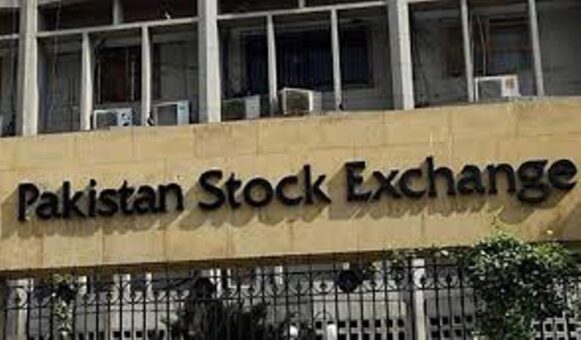
    The benchmark KSE-100 index of Pakistan Stock Exchange (PSX) closed at 38,129 points as against 38,532 points showing a decline of 403 points.

    KSE-100 index continued its downward trend that it picked earlier last week and gave no regard to the initial signs of recovery seen on Friday.

    Unlike past several sessions, the market opened on a downbeat with -12 points and the number kept growing to the downside till session’s end.

    Market saw a total draw down of -479 points and closed -448 points (unadjusted).

    Also, the traded volume registered lowest levels in recent times.

    Major contribution to traded volumes was observed in Power Sector (KEL), followed by Banks (BOP, BAFL).

    Prime Minister’s reference to large oil & gas discovery in Indus Offshore didn’t entice investors to take a large bet on OGDC/PPL and remained content on market price.

    Sectors contributing to the performance include E&P (-98 points), Cement (-64 points), Fertilizer (-63 points), Power (-29 points), Banks (-25 points).

    Volumes declined significantly to 56.4mn shares from 84.6mn shares (-33 percent DoD). Average traded value also declined by 40 percent to reach US$ 19mn as against US$ 31.5mn.

    Stocks that contributed significantly to the volumes include KEL, WTL, BOP, OGDC and BAFL, which formed 32 percent of total volumes.

    Stocks that contributed positively include PMPK (+10 points), MUREB (+5 points), PAKT (+4 points), HMB (+3 points), and MCB (+2 points). Stocks that contributed negatively include OGDC (-35 points), LUCK (-33 points), PPL (-29 points), POL (-24 points) and ENGRO (-21 points).

  • Rupee slides by five paisas against dollar

    Rupee slides by five paisas against dollar

    KARACHI: The Pak Rupee ended down by 5 paisas against the US dollar on Monday despite reports of inflows from China.

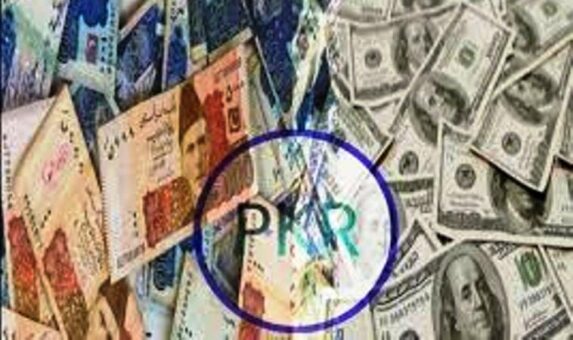
     The rupee ended Rs140.29 to the dollar from last Friday’s close of Rs140.24 in interbank foreign exchange market.

     The interbank foreign exchange market was initiated in the range of Rs140.25 and Rs140.30.

     The market recorded day high of Rs140.30 and low of Rs140.28 and closed at Rs140.29.

     Currency experts said that the rupee was under pressure due to ongoing talks of the government with IMF for new loan program.

     The exchange rate in the open market was remained stable.

     The buying and selling of dollar was recorded at Rs140.80/Rs141.30, the same level of last Friday’s in cash ready market.

  • Electronic Market protests against duty, taxes on mobiles

    Electronic Market protests against duty, taxes on mobiles

    KARACHI: Karachi Electronic Market on Monday protested against levy of 100 percent duty and taxes on used imported phones.

    The levy has froze all trading activities at the mobile market, said Muhammad Rizwan, President, Electronic Market.

    The market demanded the government of withdrawing mandatory requirement of approval from Pakistan Telecommunication Authority (PTA). Rizwan said that revenue had not been increased with the PTA condition.

    The protesters hold placard and demanded that curbs on used mobile phones would increased unemployment.

  • SBP estimates lower GDP growth, high inflation

    SBP estimates lower GDP growth, high inflation

    KARACHI: State Bank of Pakistan (SBP) has projected the real GDP growth for fiscal year 2018/2019 would be around 3.5-4 percent much lower than the actual target of 6.2 percent.

    The central bank in State of Pakistan Economy, Second Quarterly Report for Fiscal Year 2018/2019, issued on Monday the SBP further projected that the inflation would further increased to 6.5-7.5 percent during the current fiscal year as compared with actual target of 6 percent.

    The GDP growth for fiscal year 2017/2018 was 5.2 percent and inflation for the same year was recorded at 3.9 percent.

    The central bank estimated that remittances would be above the target during the current fiscal year to $21.5 billion. However, estimates for exports are at $25.5-27 billion lower than the target of $27.9 billion. Meanwhile, the estimates for imports have also been lowered to $54-56 billion from actual estimate of $58.5 billion.

    The SBP estimated that the fiscal deficit would be around 6-7 percent against target of 4.9 percent. The fiscal deficit was at 6.6 percent last year. The current account deficit would stay around 4.5-5.5 percent of the GDP as against the target of 4 percent.

    The SBP said that real GDP growth during FY19 is likely to moderate significantly, mainly due to slowdown in the growth of the agriculture sector and stabilization measures taken to preserve macroeconomic stability.

    This is in line with a further contraction in LSM during Q2-FY19. Moreover, given that public development spending, a key driver for private sector industrial activities, is unlikely to pick up anytime soon, the full year outlook for manufacturing activities remains subdued.

    Furthermore, private consumption is going to remain lower due to tighter monetary policy and pass through of exchange rate depreciation that has resulted in both higher energy prices and core inflation.

    In addition, the prospects for the upcoming wheat crop remain subdued in terms of growth. All these aspects are going to constrain the services sector in the coming months as well.

    Regarding price pressures, inflation is expected to remain high in H2-FY19. This is due to the second round impact of recent exchange rate depreciations, an upward adjustment in gas and electricity prices and higher budgetary borrowing from SBP.

    However, the lagged impact of policy rate increases would be instrumental in keeping demand pressures in check. Acknowledging these risks, SBP continues to project average CPI inflation at 6.5-7.5 percent for the full year.

    As noted earlier, the primary deficit has increased further while there has been a sharp reduction in development expenditures in order to improve the fiscal position.

    This situation has become more challenging as the growth in current expenditure inched up to 17.3 percent during the first half as compared to 13.5 percent last year.

    On the contrary, revenue collection has contracted by 2.4 percent during the same period as compared to the growth of 19.8 percent last year.

    Since there is limited room to curtail government expenditures in the coming months, it is the growth in revenues that would be instrumental in determining the overall fiscal position for FY19.

    Incorporating the performance of revenue collection during the second half in the last four years, SBP projects fiscal deficit to further deteriorate by 0.5 percent of GDP, which brings it close to the same level as in FY18.

    As for the external sector, while the CAD has improved by USD 1.7 billion during the first seven months of FY19, it is still high at USD 8.4 billion.

    Some improvement is expected to continue in the remaining months as imports are likely to contract further on account of moderating domestic demand and relatively low international oil price as compared to that at the beginning of FY19.4 However, merchandize exports are expected to miss the target due to waning demand in certain export destinations.

    Additionally, this is compounded by the competitive pressures in the international arena and the lack of diversified and higher value

    added products that can effectively utilise the export quotas allowed under specific trade agreements.

    Meanwhile on the external financing front, the efforts of the government have started to materialize in the shape of bilateral inflows from Saudi Arabia, UAE and China. Some of these inflows have already been realized, while rest are due in H2-FY19.

    Along with the Saudi deferred oil payment facilities, these inflows have an important role in meeting the external financing gap for FY19; thereby, relieving pressure on the foreign exchange reserves and mitigating volatility in the FX market.

    Related Stories
    SBP stresses urgent need to initiate structural reform in economy

  • FBR suspends customs officer

    FBR suspends customs officer

    ISLAMABAD: Federal Board of Revenue (FBR) has suspended an officer Pakistan Customs Service (PCS) BS-16 while taking disciplinary action against him.

    In a notification issued on Monday, the FBR while exercising powers under Government Servants (Efficiency & Discipline) Rules, 1973, suspended Mansab Shah, Inspector, BS-16, Model Customs Collectorate of Preventive, Lahore with immediate effect for a period of three months.

  • Tax rates for salary, business individuals

    Tax rates for salary, business individuals

    KARACHI: Following are the tax rates for individuals under First Schedule of Income Tax Ordinance, 2001.

    The tax rate as updated through Finance Supplementary (Amendment) Act, 2018 to Income Tax Ordinance, 2001, issued by Federal Board of Revenue (FBR).

    Rates of tax for individuals

    (1) The rates of tax imposed on the taxable income of every individual, not being an individual to which paragraph (1A) of this Division applies, shall be as set out in the following table, namely:—

    Table

    S. No.Taxable IncomeRate of Tax
    01Where the taxable income does not exceed Rs. 400,0000 percent
    02Where the taxable income exceeds Rs. 400,000 but does not exceed Rs. 800,000Rs1,000
    03Where the taxable income exceeds Rs. 800,000 but does not exceed Rs. 1,200,000Rs2,000
    04Where the taxable income exceeds Rs.1,200,000 but does not exceed Rs. 2,400,0005 percent of the amount exceeding Rs. 1,200,000
    05Where the taxable income exceeds Rs. 2,400,000 but does not exceed Rs. 3,000,00060,000 + 15 percent of the amount exceeding Rs. 2,400,000
    06Where the taxable income exceeds Rs. 3,000,000 but does not exceed Rs. 4,000,000150,000 + 20 percent of the amount exceeding Rs. 3,000,000
    07Where the taxable income exceeds Rs. 4,000,000 but does not exceed Rs. 5,000,000350,000 + 25 percent of the amount exceeding Rs. 4,000,000
    08Where the taxable income exceeds Rs. 5,000,000
     
    600,000 + 29 percent of the amount exceeding Rs. 5,000,000

    Provided that where the taxable income exceeds eight hundred thousand rupees the minimum tax payable shall be two thousand rupees.

    Salary persons

    (1A) Where the income of an individual chargeable under the head “salary” exceeds fifty per cent of his taxable income, the rates of tax to be applied shall be as set out in the following table, namely:—

    Table

    S.No.Taxable IncomeRate of Tax
    01Where the taxable income does not exceed Rs. 400,0000 percent
    02Where the taxable income exceeds Rs. 400,000 but does not exceed Rs. 800,000Rs1,000
    03Where the taxable income exceeds Rs. 800,000 but does not exceed Rs. 1,200,000Rs2,000
    04Where the taxable income exceeds Rs. 1,200,000 but does not exceed Rs. 2,500,0005 percent of the amount exceeding Rs. 1,200,000
    05Where the taxable income exceeds Rs.2,500,000 but does not exceed Rs. 4,000,00065,000 + 15 percent of the amount exceeding Rs. 2,500,000
    06Where the taxable income exceeds Rs. 4,000,000 but does not exceed Rs. 8,000,000290,000 + 20 percent of the amount exceeding Rs. 4,000,000
    07Where the taxable income exceeds Rs. 8,000,0001,090,000 + 25 percent of the amount exceeding Rs. 8,000,000

    Provided that where the taxable income exceeds eight hundred thousand rupees the minimum tax payable shall be two thousand rupees.

    Related Stories
    Income Tax Ordinance 2001: advance tax on paying education fee abroad
    Income Tax Ordinance 2001: advance tax on dealers, commission agents
    Income Tax Ordinance 2001: return filers can claim tax adjustment paid on educational fee
    Income Tax Ordinance 2001: Advance tax on sales to distributors, dealers and wholesalers
    Income Tax Ordinance 2001: advance tax on electronic media, cable operators