Day: April 28, 2019

  • Second phase of Pak-China FTA signed; two premiers witness signing ceremony

    Second phase of Pak-China FTA signed; two premiers witness signing ceremony

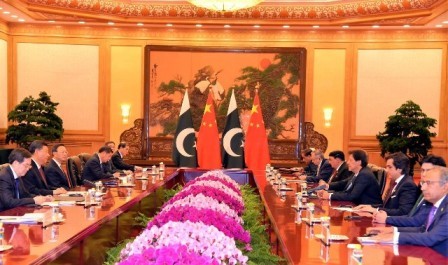
    ISLAMABAD: The second phase of Pakistan China Free Trade Agreement (FTA) signed on Sunday, which was witnessed by the premiers of both the countries.

    Prime Minister Imran Khan and Chinese Premier Li Keqiang witnessed the signing ceremony at a meeting on the conclusion of the 2nd Belt and Road Forum (BRF) in Beijing, a statement said.

    The list of MoUs/Agreements signed/exchanged on the occasion is as follows:

    i. Second Phase of China Pakistan Free Trade Agreement

    ii. Declaration for Completion of Preliminary Design of Phase-I for Up-gradation of ML-1 and Establishment of Havelian Dry Port under CPEC

    iii. MoU on Cooperation in the field of Marine Sciences between the China Geological Survey (CGS), Ministry of Natural Resources of China, the Institute of Oceanography, Ministry of Science and Technology.

    iv. MoU between CIDCA and Ministry of Planning, Development and Reform on Implementation of the Projects under JWG of CPEC on Socio-Economic Development.

    v. China-Pakistan Economic and Technical Cooperation Agreement

    vi. Rashakai SEZ Joint Venture and License Agreement between KPEZMDC and CRBC.

    The two prime ministers were accompanied by ministers and senior officials.

    Both leaders reaffirmed the time-tested and strong friendship between Pakistan and China and exchanged views on the myriad facets of bilateral engagement.

    The prime minister extended felicitations to the Chinese leadership on the successful holding of the 2nd Belt and Road Forum (BRF).

    Noting the depth and breadth of the Belt and Road Initiative (BRI), the Prime Minister said it was of immense significance for the world in terms of connectivity and shared prosperity.

    The two sides exchanged views on bilateral collaboration in the context of CPEC and prospects of further deepening economic linkages.

    Prime Minister Imran Khan underscored the importance of CPEC for Pakistan’s economy and noted with satisfaction its expansion into new areas of development – including industrial development; livelihood projects; social uplift; and agriculture in line with the priorities of government.

    He hoped that Chinese investment in Specialized Economic Zones (SEZs) would expand Pakistan’s industrial base and assist in diversifying its export basket.

    Underlining the steady growth of bilateral cooperation since the Prime Minister’s last visit to China in November 2018, Premier Li Keqiang expressed satisfaction at the positive momentum of CPEC projects.

    He hoped that the conclusion of the Second Phase of China-Pakistan Free Trade Agreement (FTA), would give further boost to trade and economic relations between the two countries.

    The two sides agreed to further deepen the political, security, economic, education, science & technology, cultural, and people-to-people relations.

    It was agreed to maintain the existing momentum of high level exchanges between the two countries.

    The two leaders also exchanged views on regional issues including peace efforts in Afghanistan and peace and stability in South Asia.

    They also agreed to closely coordinate in their endeavors.

  • PSX recommends aligning CGT on securities with immovable properties

    PSX recommends aligning CGT on securities with immovable properties

    KARACHI: Pakistan Stock Exchange (PSX) has recommended the government to align capital gain tax (CGT) on disposal of securities with the rates of CGT with immovable properties using same slabs of holding periods as those on real estate.

    The PSX in its proposals for budget 2019/2020 said that such proposal would encourage documentation in real estate activity, and lead to an easing of speculative pressure on real estate property prices in Pakistan.

    The PSX said that at present the tax rates on capital gains from the disposal of securities are prescribed using various slabs that denote the holding period of the securities.

    “The tax on these comparable slabs of holding periods of securities is higher than those for immovable property, and not aligned with the CGT on disposal of real estate, and result in making the real estate sector particularly appealing to investors when compared to capital markets.”

    The alignment of these tax rates will also lead to an easing of speculative pressure on real estate property prices in Pakistan, where much of the undocumented wealth has been currently flowing.

    The PSX proposed amendment in Division VII, Part I of the First Schedule to the Income Tax Ordinance, 2001, the following new table shall be interested in place of existing table:

    For securities acquired on or after July 01, 2016

    01. Where holding period of a security is up to on year: 10 percent for filer, 20 percent for non-filer

    02. Where holding period of a security is more than or equal to one year but less than two years: 7.50 percent for filers, 20 percent for non-filers

    03. Where holding period of a security is more than or equal to two years but less than three years: 5 percent for filers, 20 percent for non-filers

    04. Where holding period of a security is more than three years: zero percent for both filers and non-filers

    For securities acquired before July 01, 2016:

    05. Where holding period of a security is up to three years: 5 percent for filers, 20 percent for non-filers

    06. Where holding period of a security is more than three years: zero percent for both filers and non-filers.

    The PSX in its proposals for budget 2019/2020 said that such proposal would encourage documentation in real estate activity, and lead to an easing of speculative pressure on real estate property prices in Pakistan.

    The PSX said that at present the tax rates on capital gains from the disposal of securities are prescribed using various slabs that denote the holding period of the securities.

    “The tax on these comparable slabs of holding periods of securities is higher than those for immovable property, and not aligned with the CGT on disposal of real estate, and result in making the real estate sector particularly appealing to investors when compared to capital markets.”

    The alignment of these tax rates will also lead to an easing of speculative pressure on real estate property prices in Pakistan, where much of the undocumented wealth has been currently flowing.

    The PSX proposed amendment in Division VII, Part I of the First Schedule to the Income Tax Ordinance, 2001, the following new table shall be interested in place of existing table:

    For securities acquired on or after July 01, 2016

    01. Where holding period of a security is up to on year: 10 percent for filer, 20 percent for non-filer

    02. Where holding period of a security is more than or equal to one year but less than two years: 7.50 percent for filers, 20 percent for non-filers

    03. Where holding period of a security is more than or equal to two years but less than three years: 5 percent for filers, 20 percent for non-filers

    04. Where holding period of a security is more than three years: zero percent for both filers and non-filers

    For securities acquired before July 01, 2016:

    05. Where holding period of a security is up to three years: 5 percent for filers, 20 percent for non-filers

    06. Where holding period of a security is more than three years: zero percent for both filers and non-filers.

  • FTO recommends 20 percent increase in withholding tax rates

    FTO recommends 20 percent increase in withholding tax rates

    KARACHI: Federal Tax Ombudsman (FTO) has recommended 20 percent increase in adjustable withholding taxes in order to encourage income tax return filing.

    However, this deduction of withholding tax should not apply on salary income, the FTO said in its recommendation for federal budget 2019/2020.

    In order to encourage taxpayers to e-file income tax returns for claiming adjustment of adjustable withholding taxes, it was proposed that gradually all adjustable withholding taxes, excluding those on salary income, might be enhanced by at least 20 percent in the coming budget.

    The FTO also proposed that all current non-adjustable withholding taxes may be converted into adjustable withholding taxes by amending the relevant provisions of the income tax laws/rules.

    Further, in order to provide rights to taxpayers, the FTO said that a taxpayer should be given the right to approach the commissioner for the revision of assessment, as was available under original Section 138 of the Income Tax Ordinance, 2001.

    The FTO further suggested that income from pension was exempted from income tax, but pensioners were not eligible to avail benefits of provisions of withholding tax unless they were on active taxpayers list. It was therefore proposed that pensioners deriving income from pension only, be exempted from the provisions of withholding taxes applicable to non-filers.

  • Sales Tax Act 1990: IR officers authorized to arrest fraudsters

    Sales Tax Act 1990: IR officers authorized to arrest fraudsters

    KARACHI: The sales tax law has authorized officers of Inland Revenue to arrest persons committing fraud or any other offence.

    The Section 37A of the updated Sales Tax Act, 1990 issued by Federal Board of Revenue (FBR) explained the powers of IR officers for making arrests.

    Section 37A: Power to arrest and prosecute

    Sub-Section (1): An officer of Inland Revenue not below the rank of an Assistant Commissioner of Inland Revenue or any other officer of equal rank authorised by the Board in this behalf, who on the basis of material evidence has reason to believe that any person has committed a tax fraud or any offence warranting prosecution under this Act, may cause arrest of such person.

    Sub- Section (2): All arrests made under this Act shall be carried out in accordance with the relevant provisions of the Code of Criminal Procedure, 1898 (Act V of 1898).

    Sub-Section (3): deleted

    Sub-Section (4): Notwithstanding anything contained in sub-section (1) to subsection (3) or any other provision of this Act, where any person has committed a tax fraud or any offence warranting prosecution under this Act, the Commissioner may, either before or after the institution of any proceedings for recovery of tax, compound the offence if such person pays the amount of tax due along with such default surcharge and penalty as is determined under the provisions of this Act.

    Sub-Section (5): Where the person suspected of tax fraud or any offence warranting prosecution under this Act is a company, every director or officer of that company whom the authorized officer has reason to believe is personally responsible for actions of the company contributing the tax fraud or any offence warranting prosecution under this Act shall be liable to arrest; provided that any arrest under this sub-section shall not absolve the company from the liabilities of payment of tax, default surcharge and penalty imposed under this Act.

  • Bank holiday announced on May 01

    Bank holiday announced on May 01

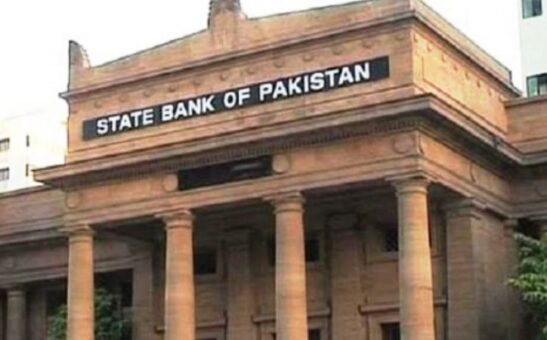
    KARACHI: State Bank of Pakistan (SBP) announced bank holiday on May 01, 2019 on account of Labour Day as declared by the federal government.

    The central bank in an announcement said that its offices would remain closed on Wednesday, May 01, 2019 on the occasion of Labour Day as declared by the government.