KARACHI: State Bank of Pakistan (SBP) on Saturday issued procedure for deposit of tax against foreign assets under Assets Declaration Ordinance, 2019.
(more…)Day: May 25, 2019
-

FBR notifies rules for applying amnesty scheme
KARACHI: Federal Board of Revenue (FBR) on Saturday issued rules for implementing tax amnesty scheme 2019.
The FBR on May 20, 2019 issued draft rules for inviting comments of stakeholders till May 22 to finalize the rules.
In this regard the FBR today (May 25) issued SRO 578(I)/2019 to issue the rules for Asset Declaration Ordinance, 2019.
Following is the text of the SRO 578(I)/2019:
Rule 1. Short title and commencement.
Sub-Rule (1): These rules may be called the Asset Declaration (Procedure and Conditions) Rules, 2019.
Sub-Rule (2): They shall come into force at once.
Rule 2: Definitions:
Sub-Rule (1): In these rules, unless there is anything repugnant in subject or context:
(a) ‘Ordinance’ means the Asset Declaration Ordinance, 2019; and
(b) ‘Value of assets’ means value as per Section 5 of the Ordinance as on the date of declaration.
Sub-Rule (2): All other words and expressions used but not defined in these rules shall have the same meaning assigned thereto under the Income Tax Ordinance, 2001, the Sales Tax Act, 1990, the Federal Excise Act, 2005, or the Benami Transactions (Prohibition) Act, 2017, the Ordinance and the rules made thereunder.
Rule 3: Manner of filing declaration:
Sub-Rule (1): For the purpose of Section 3 and 5 of the Ordinance, the declaration shall be filed on the form specified for the purpose on the web portal of the Board.
Sub-Rule (2): Where an asset declared by the declarant is only beneficial owned by the declarant or is owned by a Benamidar of the declarant, the name and identification of the legal owner or Benamidar shall also be declared.
Rule 4: Conditions for making declaration:
Sub-Rule (1): For the purpose of incorporation of undisclosed assets and undisclosed expenditure declared under the Ordinance:
(a) where income tax return for tax year 2018 has not been filed, the declarant shall, along with the declaration or such date as extended by the Board, file –
(i) income tax return for the tax year 2018; and
(ii) wealth statement or financial statement, as the case may be, as on June 30, 2018.
(b) where income tax return for tax year 2018 has been filed under the provisions of the Income Tax Ordinance, 2001, the declarant shall, along with the declaration or such date as extended by the board, revise –
(i) income tax return and financial statement for tax year 2018, if the declarant is a company; or
(ii) wealth statement or statement of assets and liabilities, if the declarant is an individual or an association of persons.
Sub-Rule (2): Where a person declares undisclosed sales in terms of Section 3, he shall declare the undisclosed sales subject to the Sales Tax Act, 1990 and the Federal Excise Act, 2005 from July 2014 to June 2018, in the first sales tax and federal excise return, due after the declaration.
Sub-Rule (3): For the purpose of Section 3 and 4 of the Ordinance, in case of payment of tax on foreign assets, –
(a) the fair market value and cost of such assets shall be declared in respective foreign currencies on board’s web portal;
(b) tax shall be paid in foreign currency as per procedure specified by the State Bank of Pakistan; and
(c) in case of tax payment after the June 30, 2019, liability of default surcharge shall be paid in foreign currency as per procedure specified by the State Bank of Pakistan.
Sub-Rule (4): For the purpose of clause (d) of Section 8 of the Ordinance, if such assets represent cash or any other form of foreign exchange bearer assets, the same or its proceeds shall be deposited and retained in a foreign bank account of the declarant till June 30, 2019 and bank statement as evidence thereof, shall be provided by July 30, 2019 or such date as extended by the Board.
Sub-Rule (5): For the purpose of clause (b) of Section 5 of the Ordinance, the value declared by the declarant as the fair value, cost or the price which the assets may ordinarily fetch on sale in the open market on the date of declaration shall be taken to be valid unless there is objective evidence to the contrary available with the Board.
Sub-Rule (6): Where foreign assets are shares of a company incorporated in Pakistan held by the declarant, whether beneficially or otherwise, it may be declared subject to the condition that such shares shall be repatriated into Pakistan with the prior approval of the State Bank of Pakistan and registration of such shares with the State Bank of Pakistan in the name of declarant on non-repatriable basis.
Sub-Rule (7): Where an asset being a receivable from a person is declared, complete particulars of the persons from whom the amount is receivable along with his identification and address shall also be declared.
Rule 5: Payment of tax for original demand:
For the purpose of sub-section (4) of Section 6 of the Ordinance, default surcharge and penalty shall not apply if, –
(a) tax determined by an Officer of Inland Revenue in the original order, is paid up to June 30, 2019; and
(b) such original order or an appellate order passed against such original order has not yet attained finality.
Explanation: An original order passed by an Officer of Inland Revenue or an appellate order passed by an appellate authority shall be taken to be final if no right of appeal has been provided against such orders or no appeal has been filed within the time limit prescribed under the applicable laws against such orders.
Rule 6: Payment of tax under other laws:
For the purpose of Section 4, 12 and 16 of the Ordinance, where the declarant has paid tax under the Ordinance, no tax shall be payable by the declarant under the Income Tax Ordinance, 2001, the Sales Tax Act, 1990 and Federal Excise Act, 2005 in respect of such undisclosed assets, undisclosed expenditure or undisclosed sales.
Rule 7: Revision of declaration:
Any person who having filed a declaration hereinafter referred to as the ‘original declaration’ discovers any omission, mistakes, computational error or wrong statement therein may file revised declaration within the due date specified in Section 3 of the Ordinance subject to the condition that the value of assets and the tax paid thereon shall not be decreased.
(PkRevenue.com takes no responsibility of any error of this text. The text is published in the interest of readers with ensuring no typo error.)
-
Pakistan needs to ensure direct import, exports: PSAA
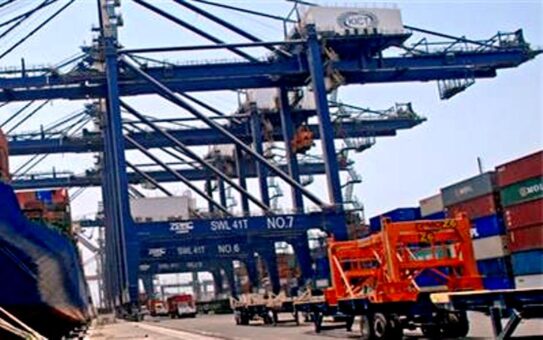
KARACHI: Pakistan exports need to maximize selling on C&F basis and imports to maximize buying on FOB basis in order to increase revenue earning along with reducing cost of doing business.
In a letter to Adviser Commerce, Textile, Industry, production and Investment, Abdul Razzak Dawood, Chairman PSAA said that this will ensure direct exports to end users and imports direct from producers and will cut out third party intervention.
One of the steps which is a major hurdle creating extra costs is freight tax, income tax ordinance 2001, section 7, sub-section (1), Para (a) and (b) and urged to revisit and deleted in total.
This will result in zero tax freight in Pakistan and eradicate time wasting red tapisim.
While giving example of export cargoes, he said that cargoes like cement clinker, rice etc, in shiploads which were being sold on C&F basis are now mostly sold on FOB basis.
One of the reasons is freight tax which is applicable as per income tax ordinance 2001.
Only few shipping agents /ship owners have the connections /papers work to get waiver of freight tax (Maximum freight tax is 8 percent on freight earned).
Therefore third parties are involved which buys FOB from Pakistan exports, arrange /charter ships, get freight tax waiver and sell to end users or actual buyers on C&F basis.
Giving example of import cargoes, he said when an imports wants to buy on FOB basis and arrange charter ship himself to save overall C&F cost then even on import cargo 8 percent freight tax on freight is attracted as per income tax ordinance 2001.
Also State Bank of Pakistan does not permit /delays in opening FOB letters of credit.
This again opens the door for third party intervention, they step in , receive the C&F letter of credit (thereby avoid freight tax) by FOB from suppliers, arranges /charter ships and sell C&F to Pakistani imports.
Therefore in actual fact negligible ‘if any’ freight tax is earned but it has negative impact for both importers and exporters of cargoes in shiploads/ chartered vessels.
As for as containerized cargoes are concerned, most of the shipping lines to get freight tax waivers as per existing bilateral trade agreements between Pakistan and other countries.
Therefore in actual fact there is no major earning of freight tax.
-

Weekly Review: PSX stabilization fund to keep positive sentiments
KARACHI: Stock market likely positive in the upcoming weeks amid activation of a PSX stabilization fund in the foreseeable future, analysts said.
This sentiment with also continue along with contraction in the Current Account Deficit (CAD) by 27 percent in 10MFY19 which may improve investor sentiments, analysts at Arif Habib Limited said.
However, they said, economic concerns are still hovering around for instance endless slide of Pak Rupee against the greenback and further rate hikes expected with inflation expected to tick higher post adjustment in utility prices (gas and electricity tariff hike).
This week trading commenced on a positive note despite a 150 basis points hike by the State Bank of Pakistan on Monday, which was higher than consensus expectation of 100 basis points.
To note, revival of investors’ confidence came on the back of a meeting held between stock brokers and Advisor to Prime Minister on Finance Hafeez Sheikh to form a PSX support fund for market stabilization along with approval of deferred oil payment facility of $3.2 billion with Saudi Arabia which will ease pressure on balance of payments’ and foreign exchange reserves.
The market is expecting a fund size of Rs17-20 billion, similar to one launched in 2009, which may invest in government owned companies in the upcoming weeks.
The benchmark KSE-100 index of Pakistan Stock Exchange (PSX) rebound and posted a positive return after seven weeks to close at 35,704 points, up by 2,537 points (highest increase in terms of points) or 7.65 percent WoW (10-year high return in terms of percentage).
Contribution to the upside was led by i) Fertilizer (+524 points), ii) Commercial Banks (+494 points), iii) Cements (+314 points), iv) Oil and Gas Marketing Companies (+273 points), and v) Oil and Gas Exploration Companies (+273 points).
Scrip wise major gainers were ENGRO (+172 points), LUCK (+167 points), FFC (+157 points), PSO (+136 points), and POL (+120 points).
Foreign buying continued this week clocking-in at USD 0.02mn compared to a net buy of USD 8.21 million last week.
Major buying was witnessed in Cement (USD 2.19 million) and Commercial Banks (USD 1.44 million). On the local front, selling was reported by Insurance Companies (USD 6.01 million) followed by Mutual Funds (USD 5.64 million).
That said, average daily volumes for the outgoing week were significantly up by 66 percent to 178 million shares likewise value traded increased by 44 percent to USD 40 million.
-

FBR advised to substantially reduce penalties on non-filing, late-filing of tax returns
The Pakistan Tax Bar Association (PTBA) has advised the Federal Board of Revenue (FBR) to significantly reduce penalties imposed on non-filers and late filers of income tax returns and wealth statements.
(more…) -

Installing scanners at Pak-China borders suggested to prevent misuse clearance under CPEC
KARACHI: Institute of Chartered Accountants of Pakistan (ICAP) has suggested to install scanners at Pak-China borders to stop misuse customs clearance of goods transported under China – Pakistan Economic Corridor(CPEC).
The ICAP in its tax proposals for budget 2019/2020 said that CPEC is a journey towards economic regionalization in the globalized world.
This will deepen and broaden economic links between Pakistan and China and will surly leave a positive impact on other countries of the region.
The success of CPEC is directly proportional to three factors viz. (a) security arrangements, (b) infrastructural development and (c) smooth e-based Customs operations.
Whereas, a number of initiatives are being taken, and proposed to be taken, on two fronts viz. security and infrastructure, but Customs operations, have hitherto been given little thought.
The ICAP presented following recommendations:
i. “SCANNERS” be introduced / installed at Pak China Borders and at Gwadar / Karachi Port in order to check / verify each and every container with its contents
to cross verify that the same have been exported / imported without its misuse.
ii. Scanning image of exports from China border should be compared with scanning image of goods delivered from Gwadar / Karachi port and vice versa for imports until then entry should remain open for scrutiny.
iii. Chinese exporters / importers should also file the entry in the WeBOC system of China, and Pakistan should have access to the China WeBOC system to mark green the container cleared in the WeBOC.
Entry to remain open until the same is verified by actual export / import routed through Gwadar / Karachi as such showing the containers not yet cleared or in transit or if not cleared after 7 days of being released from Pakistan port then marked red for being misused.
In such cases, show cause notices be sent to exporters / importers, as the case may be, for further inquiry.
iv. In case of exports, goods should only be allowed in containers loaded in China and evidence of shipping line booking and Bill of Lading be obtained as proper evidence.
v. There should also be a set up for custom offices after every 200 km intervals along the routes of CPEC to ensure effective monitoring of transit trade flows.
vi. In order to ensure swift and smooth monitoring, e-tagging be installed on vehicles carrying cargo.
When a vehicle crosses the designated customs office at the pre-marked route, the data of cargo movement would automatically enter the system showing location and brief description of goods, etc.
vii. The online movement of the cargo should be viewed by both customs offices at port of entry and exit. The containers carrying cargo be sealed and de-sealed by customs at entry and exit points respectively. This will ensure safety of the cargo and avoiding en-route pilferage.
viii. Both Governments must agree to strengthen customs controls at the border and to establish “Electronic Data Interchange” (EDI) linkage between Pakistan and China on “Real Time Basis” to ensure reconciliation of export/ import data of cargo routed through CPEC route.
ix. In case of imports, evidence of payment of goods by Chinese importer to their suppliers and submission of bank guarantee equivalent to government levies to be collected on China imports by Pakistan Customs before release.
Transit cargo will be transported from and to China, which needs Customs facilitation as well as monitoring both en-route and entry/exit stations to avoid menace like presently being faced due to Afghan Transit Trade.
CPEC also envisages establishment of export processing zones, special economic zones and free zones. This requires door-step Customs facilitation to ensure swift clearances of goods without any pilferages.
More importantly, the duty/tax free goods will be transported across Pakistan, which needs en-route monitoring so that the same are not pilfered en-route, jeopardizing the very essence of CPEC.
Moreover, any smuggling/pilferage of Chinese goods en-route will have direct and serious repercussions on Pakistani industry and duty paid goods.
“A case in hand is Afghan Transit trade cargo. It used to suffer from different infirmities, which kept on hindering its smooth operations. These issues ranged from mis-declarations, delays, isolated and partial e-monitoring, en- route pilferages, smuggling etc.”
A number of adhoc arrangements such as verifications of cross border certificates, random examinations at port of entry and enhancement of anti-smuggling operations etc. were made, but desired results could not be fetched.