Day: June 9, 2019

  • Proposals for budget 2019/2020 finalized; salary persons may get increase; rise in additional customs duty likely

    Proposals for budget 2019/2020 finalized; salary persons may get increase; rise in additional customs duty likely

    ISLAMABAD: The ministry of finance has finalized proposals for budget 2019/2020 and will get approval from the Cabinet before presenting in the Parliament on June 11, 2019.

    Prime Minister Imran Khan will chair the cabinet meeting on Monday in which the budget with record deficit will be approved.

    The sources said that the cabinet would approve budget with estimated Rs3,000 billion deficit.

    According to the proposals, the budget allocation for the defence would be around Rs1,250 billion, which will less than the allocation for the outgoing fiscal year.

    An amount of Rs2,500 billion has been proposed for the payment of interest on the loan, the sources said.

    The government may allocate Rs925 billion for the federal development expenditures.

    The Federal Board of Revenue (FBR) may be assigned Rs5,500 billion as tax target for the fiscal year 2019/2020. While, the estimated earning from non-tax revenue may be at Rs1,250 billion.

    The tax proposals would include:

    Sales tax on sugar would be increased from 17 percent from existing 8 percent.

    Income tax has been proposed on the earning of middle-man.

    Increase in duty and taxes has been proposed poultry, electron and several other items.

    Increase in additional customs duty is recommended from 2 percent to 3 percent.

    Abolishing zero rating for five export sectors is also part of proposals. It is worth mentioning that the prime minister has already announced to abolishing subsidy to zero-rated sector.

    The government likely introduce soft loan program for youth. An amount of Rs5 billion would be allocated for establishing agriculture institute.

    Decrease in fertilizers prices would be recommended.

    The government employees and pensioners may get increase of 10-15 percent. The proposal of increasing pay and pension would get approval at the cabinet meeting.

  • Profit on banking deposits: High tax rate planned for non-filers in budget 2019/2020

    Profit on banking deposits: High tax rate planned for non-filers in budget 2019/2020

    ISLAMABAD: A sharp increase in withholding tax rate (may be up to 30 percent) on profit on banking deposits has been planned for non-filers in order to make it almost impossible to stay remain unregistered, sources said.

    Sources told PkRevenue.com that Federal Board of Revenue (FBR) a large sum of banking system deposits were remained undocumented resulting large number of people out of tax net and massive tax evasion.

    Under Section 151 of Income Tax Ordinance, 2001 the withholding tax rate on profit on debt for filers is 10 percent with no limit on earned amount and 10 percent for non-filers up to Rs 0.5 million. However, 17.5 percent withholding tax rate for non-filers driving profit on debt above Rs0.5 million.

    The sources said that the tax rate for non-filers driving profit on debt above Rs0.5 million may be increased to 30 percent.

    According to State Bank of Pakistan (SBP) the total deposits of the banking system reached to all time high of Rs13.456 trillion by March 2019.

    The sources said that the proposed increase in profit on debt would force the people having undocumented or black money parked in the banking system to file their returns in order to reduce the tax impact.

    In return, the sources said, the FBR would get information of people having large amounts in the banking system.

  • Massive cut in tax exemptions, concessions likely in budget 2019/2020

    Massive cut in tax exemptions, concessions likely in budget 2019/2020

    ISLAMABAD: The government has planned to a massive cut tax in exemptions and concessions in the budget 2019/2020, which is scheduled to be announced on June 11, 2019.

    Sources told PkRevenue.com that the government had committed with the World Bank and other international agencies to withdraw large size exemptions given to various sectors and individuals in order to boost revenue collection, especially in the wake of difficult economic situation.

    The sources said that the Federal Board of Revenue (FBR) had already initiated policy making and would introduce phases to withdraw available tax concessions and exemptions.

    According to Pakistan Revenue Mobilization Program funded by the World Bank, the FBR had already launched several initiatives including ongoing review of tax policy to formulate a medium-term tax policy framework and propose measures to reduce tax expenditure for the budget 2019/2020.

    The cost of tax exemptions and concessions in the fiscal year 2017/2018 was around Rs541 billion, which included: income tax Rs61.78 billion; sales tax Rs281 billion; and customs duty Rs198.15 billion.

    The sources said that in the first phase around 50 percent exemptions and concessions would be withdrawn in the budget 2019/2020.

    The World Bank on Pakistan report said multiple exemptions and discounted rates to select industries, economic actors, and economic activities (e.g. sugar, textiles, and fertilizer industries; ‘associations’ in the real estate sector; imports for infrastructure projects under the China-Pakistan Economic Corridor) are granted in each year’s budget law, which distort competition and economic actors’ incentives. In FY2017/18, Pakistan’s tax expenditure (i.e., tax revenue foregone due to exemptions and concessional rates) was estimated at 2 percent of GDP, primarily due to exemptions from General Sales Tax (GST) and customs duties.

    “Substantial exemptions also apply to property taxes, whereby properties below a certain size are exempted regardless of location, while revenue is also lost due to unrealistically low valuations used for taxation purposes.”

    The Capital Gains Tax (CGT) returns negligible receipts due to the zero rate applied to capital gains from the sale of immovable property after more than four years of ownership, and rates of 5-10 percent for properties sold after one to four years of ownership, the report said.

    The present PTI-led government has issued a roadmap for stability, growth and productive employment issued in April 2019 and stated that tax policy has to balance the revenue objective with equity and growth objectives.

    Presently tax policy has a predominant revenue focus and as such is likely to create distortions in the economy which can adversely affect the growth and equity objectives.

    In addition, even the revenue objective is compromised by large scale exemptions. To correct this shortcoming, the government intends the following:

    i) Enact a law to ensure that no tax exemption is allowed through law or notification without an estimate of its cost independently by the tax department as well as the concerned ministry. Such cost will be made public before notification of the exemption.

    ii) Review all existing exemptions, with the purpose of eliminating as many of those as possible. Even if an exemption is to be retained its cost will be determined and made public. Ministry of Finance to publish annually a statement of tax expenditures to show how much revenue is being foregone due to exemptions.

    iii) Ensure that all exemptions, existing or newly proposed, will have a sunset clause (ideally not more than 5 years).

    iv) Publish a list of all government owned, quasi-government and government-linked enterprises availing tax exemption/concession in any way along with quantification of the tax expenditure. In addition, a plan be prepared for phasing out of these concessions.

    v) Withdraw FBR powers to issue SROs to grant exemptions. This power will vest only with the Parliament.

    vi) Ensure that all non-procedural existing SROs will expire at the end of the fiscal year. Steps taken over the last two years to incorporate all exemptions granted through SROs to be made part of the body of law.

  • Protest on June 10 against plan to abolish zero-rate sales tax

    Protest on June 10 against plan to abolish zero-rate sales tax

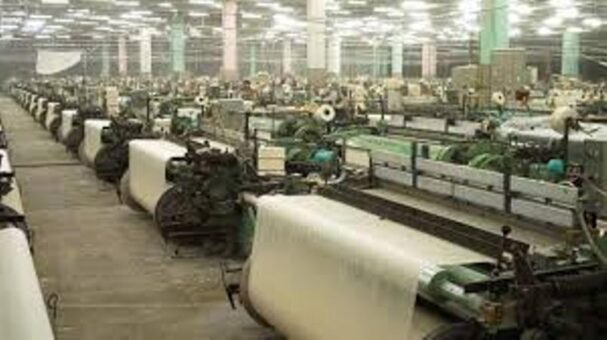
    KARACHI: Textile value added sector has announced to stage protest on Monday June 10, 2019 against proposed plan to abolish sales tax zero-rating for export sector.

    Muhammad Jawed Bilwani, Chief Coordinator for Five Zero Rated Export Sectors in a statement on Saturday said that the exporters and manufacturers would stage peaceful protest outside the Karachi Press Club and would also hold a press conference to explain the negative impact of this proposed plan.

    The government reportedly decided in principle to abolish zero rating for five export oriented sectors especially for textile from the next budget 2019-2020.

    According to estimates prepared by the FBR, the total value of domestic and exports stood at Rs3 trillion out of which approximately Rs1.2 trillion was exported while remaining share of Rs1.8 trillion being consumed into the country.

    The rate of GST might be less than 17 percent as the FBR considers that the higher rate at initial stage would create more problems so the rate might be fixed lower than the standard rate.

    Earlier in a joint press conference on May 28, 2019 the Chairmen of Value Added Export Sector Associations stated that discontinuation of zero rated status will result in ruin and disaster of export oriented industries, flight of capital, mass unemployment and huge foreign exchange losses.

    It will also lead to corruption in connivance with dubious FBR officials under the mode of flying invoices, over invoicing, frauds in refunds etc.

    Further, due to significant volumes of liquidity being stuck in the form of sales tax refunds, export growth will be severely affected and we may even witness a decline in exports.

    More than 200 billion rupees of exporters in Refunds of Sales Tax, Customs Rebate, Withholding Tax, DLTL & DDT are already held up with Government.

    They also conveyed serious apprehension on proposed abolition of Final Tax Regime (FTR) for exporters.

    The Chairmen and Representatives of Council of All Pakistan Textile Mills Associations, Pakistan Apparel Forum, Pakistan Hosiery Manufacturers & Exporters Association, Pakistan Textile Exporters Association, Pakistan Bedwear Exporters Association, Towel Manufacturers Association of Pakistan, Pakistan Cloth Merchant Association, Pakistan Knitwear and Sweater Exporters Association, Pakistan Denim Manufacturers & Exporters Association, All Pakistan Textile Processing Mills Association, Pakistan Readymade Garment Manufacturers & Exporter Association, Pakistan Cotton Fashion Apparels Manufacturers & Exporters Association, The Surgical Instrument Manufacturers Association of Pakistan, Pakistan Leather Garments Manufacturers & Exporters Association, Pakistan Tanners Association, Pakistan Sports Goods Manufacturers & Exporters Association, Pakistan Carpet Manufacturers & Exporters Association, All Pakistan Bedsheets & Upholstery Manufacturers Association have fervently appealed to continue the Zero-Rating Scheme in the national interest to uplift exports. The five zero rated sectors are already documented and contribute 70% of total Nation’s exports and generate 50% of total Nation’s employment.

    They added that collecting sales tax and then refunding – is a futile exercise which creates hassles for exporters and also opens flood gates of corruption. No collection and no refund of sales tax from five zero rated export sectors is a tried and tested formula for increasing revenue and exports. We must not forget that during last two decades the Government had tried to undo zero rating twice but miserably failed, hence, zero rating was reintroduced. The zero rated scheme, in consultation with stakeholders, can further be improved for much better outcome.

    They added that the Government rather than involving in futile exercise of collecting sales tax and then refunding should focus its energy on increasing the number of taxpayers. According to FBR, in year 2017 number of active taxpayers was only 1.13 million only (0.51% of total population).

    They warned that Government’s attempt to collect interest free money in shape of sales tax will put the country’s export at stake. Today, in this period of worst economic crisis, can we afford to do away with zero rated status for the five export oriented industries? they questioned. They cautioned that if the Zero-Rating Scheme is discontinued, 30 percent of the export will decline in first year. They urged the Government to broaden the tax-base rather than burdening the existing tax-payers and documented sectors of the economy.

    Pakistan rupee has been devalued approx. 20.16 percent against dollar from 123.6 to 149.07 in just 9 months. Such state of affairs when the dollar is appreciating and banks are also reluctant to fix dollar rates, the Textile Exporters will be aggrieved in case of BMR because some machineries are delivered in 6 to 8 months and cost of machinery is increased to 20% during the period. Previously, on assurances of the Government to continue zero rating, exporters made huge investment in shape of BMR.

    They articulated that the Government focused on enhancing exports and identified the Five Zero-Rated Export Sectors as the main engines of growth for this purpose whereby Power Division vide Notification SRO12(I)/2019 dated 1st January, 2019 has revised the power tariff for zero rated industrial consumers to net 7.5 cents / kwh and OGRA vide Notification dated 18th October 2018 has been fixed Gas tariff for Registered Manufacturers or Exporters of five Zero-Rated sectors and their Captive Power to Rs600/- per MMBTU but discontinuation of zero rating status from the five export sector will put all the hard efforts of the government in vain.

    The Federation of Pakistan Chambers of Commerce & Industry, Karachi Chamber of Commerce & Industry, Lahore Chamber of Commerce & Industry, Faisalabad Chamber of Commerce & Industry & Sialkot Chamber of Commerce & Industry have also supported the stance and demand of Value Added Export Sector Associations to continue zero-rating scheme for the betterment of economy and export enhancement.