Day: September 6, 2019

  • FBR simplifies tax rules to facilitate SMEs

    FBR simplifies tax rules to facilitate SMEs

    ISLAMABAD: Federal Board of Revenue (FBR) on Friday issued simplified tax rules for facilitation of small and medium enterprises (SMEs).

    FBR has changed the rules to facilitate Small and Medium Enterprises to enhance exports through Notification No. 1002(I)/2019 dated 06.09.2019 which has introduced amendments in original Notification 327(I)/2008 dated 28.03.2008.

    This is in line with the directives of the Prime Minister of Pakistan to simplify the tax laws and to automate the business processes to bring transparency in the system.

    In order to implement this vision, FBR under the leadership of Shabbar Zaidi, Chairman, has simplify this export scheme and provided new incentives for the business community.

    The Small and Medium Enterprise Units working under this scheme is the largest export promotion scheme presently being used by the export sector.

    Besides introducing amendments in the Export Oriented Units Scheme, the Federal Board of Revenue has also automated these processes in the computerized clearance system WeBOC. This will further reduce human interaction and create business friendly environment.

    According to the details, the retention period of plant, machinery and capital goods is reduced from 10 years to 5 years.

    This will help export industry to keep abreast of latest developments and trendsin the technology.

    If plant, machinery and capital goods are sold or otherwise disposed of before the expiration of five, then different slabs of duty and taxes are introduced whereas after five years disposal of such plant and machinery is allowed without payment of duty and taxes.

    Similarly, disposal mechanism of spares and replacement parts have been provided and now these parts are allowed to be disposed offafter three years.

    To address delays in processing, tiers of administration have been reduced. Now Regulatory Authority is created and the powers have been devolved to Additional Collectorfor grant, revalidate or amend EOU licenses.

    In the new scheme, if there are any problems, the businessman can approach Chief Collector of Customs for redressal of their grievances.

    In order to alleviate the burden of getting the analysis card issued from Input Output Coefficient Organization (IOCO) or Engineering Development Board (EDB) against each license, now if ratio in the analysis certificate is similar to the ratio determined in the previous year, then the Regulatory Authority will issue the license without seeking recommendations from IOCO/EDB.

    Moreover, the provision for issuance of the provisional analysis certificate has also been provided in the Export Oriented Unit Rules in case of delay caused by IOCO/EDB so that the processes of the Export Oriented Units may not get hurt.

  • KCCI warns of mass unemployment, business closure on new mini budget

    KCCI warns of mass unemployment, business closure on new mini budget

    KARACHI: Karachi Chamber of Commerce and Industry (KCCI) has warned the government of mass unemployment and closure of business as a result of any move to introduce mini budget or imposing additional taxes to bridge the fiscal deficit.

    In a statement on Friday, Acting President of KCCI Khurram Shahzad, while referring to various rumors and some media buzz going on about the announcement of yet another mini budget or imposition of additional taxes to overcome the yawning deficit, warned that any such move would prove ruinous for the economy as the industries and businesses, which were already underperforming due to imposition of exorbitant taxes in the budget for current fiscal year, will not be able to sustain the impact of more additional taxes.

    Khurram Shahzad stated that the business & industrial community was not in a position to bear any more of such shocks which would lead to closure of many businesses and cause massive unemployment which was already on the rise therefore, the government must strictly refrain from such an anti-business and anti-industry move.

    Referring to the forthcoming visit of the IMF team which is due after Aashura to discuss fiscal issues with special focus to restrict target of primary deficit within the desired limits, Khurram Shahzad pointed out that under IMF conditions, the primary deficit has to be brought down from 1.8 percent of GDP to 0.6 percent of GDP in the current fiscal year but, instead of declining, the deficit has gone all the way up to 3.6 percent.

    “It means that the government will have to carry out massive adjustments of Rs1,300 billion to reduce primary deficit to 0.6 percent of GDP which many experts believe will be done through another mini budget in which more additional taxes are likely to be imposed but this unwise move would plunge the country into further economic crises and the economy may reach to a point of no return,” he added.

    He said that Federal Board of Revenue (FBR), on one hand, has been claiming that the tax base has improved to 2.561 million taxpayers and the overall growth was also achieved while on the other, the State Bank of Pakistan (SBP) has forecasted further economic slowdown while the International Monetary Fund (IMF) has also expressed deep concerns over worsening fiscal front, creating a very confusing situation which was beyond business community’s understating. “We are totally confused about the ground realities as the statements given by FBR were contradicting what the State Bank and IMF have been forecasting”, he added.

    Khurram Shahzad said that the business & industrial community fully respects and appreciates the vision, thinking and resolution of Prime Minister Imran Khan which would certainly transform Pakistan into the most flourishing economy of the region but in order to pull the economy out of crises, the decision makers will have rethink all the strategies and policies which have proved counterproductive so far and instead of showing any signs of improvement, these measures have actually broken the backbone of common man due to across-the-board inflation and also radically enhanced the cost of doing business, resulting in the overall depressed performance of almost all the businesses including Large Scale Manufacturing Units, SMEs and export oriented industries and other businesses.

    “We, the business and industrial community of Karachi, are hoping that the PTI government would review all its existing policies and strategies which have failed miserably to provide any relief neither to the business & industrial community nor to common man and they come up with those practical steps in consultation with all the stakeholders which prove favorable for the economy, businesses and the common man,” he added.

  • Stock market gains 252 points on rate cut hopes

    Stock market gains 252 points on rate cut hopes

    The stock market surged by 252 points on Friday, driven by optimism surrounding a potential interest rate cut in response to the latest inflation figures.

    (more…)
  • Rupee appreciates by three paisas despite higher dollar demand

    Rupee appreciates by three paisas despite higher dollar demand

    KARACHI: The Pak Rupee appreciated by three paisas against dollar on Friday despite higher demand for import payments during upcoming holidays.

    The rupee ended at Rs156.35 to the dollar from previous day’s closing of Rs156.38 in interbank foreign exchange market.

    The foreign currency market was initiated in the range of Rs156.80 and Rs156.90. The market recorded day high of Rs156.80 and low of Rs156.30 and closed at Rs156.35.

    Currency experts said that the higher demand was seen earlier in the day due to upcoming weekly holidays and further two holidays on account of Ashura Muharram on Monday September 09 and Tuesday September 10.

    The exchange rate witnessed stable rupee value in open market.

    The buying and selling of dollar was recorded at Rs156.00/Rs156.50, the same previous day’s level, in cash ready market.

  • SBP imposes Rs805 million penalty on 10 banks for violating AML, due diligence, forex regulations

    SBP imposes Rs805 million penalty on 10 banks for violating AML, due diligence, forex regulations

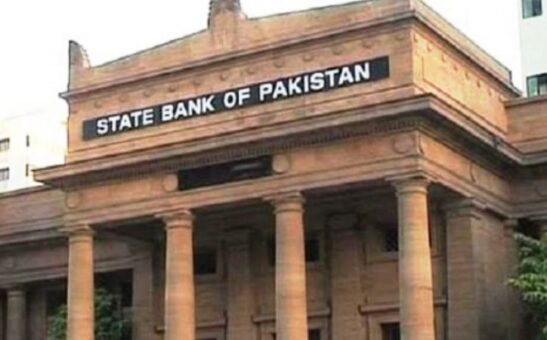
    KARACHI: State Bank of Pakistan (SBP) has imposed penalty amounting Rs805.1 million on 10 banks for violating anti-money laundering, due diligence of customers and foreign exchange regulations during the month of August 2019.

    The central bank issued details on Friday about action taken by the SBP against banks in order to plug loopholes in the banking system.

    The SBP initiated to make public the action taken by the central bank from July 2019 against commercial banks for violating prevailing rules and regulations and amount of penalty imposed on such banks.

    In the latest release of enforcement measures by the SBP also included action against leading banks including Habib Bank Limited and MCB Bank etc.

    The highest amount of penalty of Rs320.08 million has been imposed on Habib Bank Limited followed by MCB Bank of Rs159.152 million, Dubai Islamic Bank of Rs77.97 million.

    Following of are the significant enforcement actions by SBP during August-2019.

    01. Dubai Islamic Bank dated August 01 & 02, 2019:

    Violations in the areas of AML/CFT, Asset Quality

    Monetary penalty of Rs77.974 million was imposed mainly on deficiencies in the areas of AML/CFT. Moreover the bank has been advised timelines to rectify the operational lapses and improve the control environment to avoid recurrence of such lapses/violations in future.

    02. Habib Bank Limited dated August 02 & 03, 2019:

    Violations in the areas of AML/CFT, Consumer Protection

    Monetary penalty of Rs320.08 million was imposed mainly on deficiencies in the areas of AML/CFT and erroneous deduction of service charges from customers. The bank has been advised timelines to bring improvements in its systems/controls to avoid recurrence of such lapses/violations in future.

    03. MCB Bank Limited dated August 03, 2019:

    Violations in the areas of AML/CFT, Asset Quality

    Monetary penalty of Rs159.152 million was imposed mainly on deficiencies in the areas of AML/CFT. The bank has been advised timelines to improve the KYC/CDD processes and integrate eKYC system with core banking system.

    04. Silkbank Limited dated August 03, 2019:

    Violations in the areas of AML/KYC, Asset Quality

    Monetary penalty of Rs53.879 million was imposed mainly on violations of non-surrendering of unclaimed deposits, non-classification of loans and adjustment lending. Moreover, the bank has been advised timelines to classify advances & create provision there against and conduct

    05. Bank Alfalah Limited dated August 03, 2019

    Violations in the areas of FX Operations

    Monetary penalty of Rs52.795 million was imposed mainly on violations of foreign exchange regulations such as restrictions to remit import advance payments, export documentation and non-submission of documents against advance payments.

    06. Allied Bank Limited dated August 03, 2019

    Violations in the areas of AML/KYC, Asset Quality

    Monetary penalty of Rs32.755 million was imposed on breach of various limits of Equity Investment/related party and deficiencies in customer due diligence process. The bank has been advised timelines to bring equity Investment and exposure to related party group within the prescribed limit and revise KYC/CDD process.

    07. Sindh Bank Limited dated August 03, 2019

    Violations in the areas of AML/KYC, Asset Quality, FX Operations

    Monetary penalty of Rs15.088 million was imposed mainly on deficiencies in customer due diligence practices, imprudent lending practices, non-classification of loans. Moreover, in view of the strategic deficiencies in Transaction monitoring system & name screening process, the bank has been advised an action plan/timelines for replacement of their existing TMS and acquiring of name screening solution.

    08. Summit Bank Limited dated August 03, 2019

    Violations in the areas of AML/KYC, Asset Quality

    Monetary penalty of Rs13.072 million was imposed mainly on deficiencies in customer due-diligence process, mis-utilization of loans and non classification of loans. The bank has been advised to timely update customer profiles & properly document the reasons of large value transactions.

    09. JS Bank Limited dated August 05, 2019

    Violations in the areas of AML/KYC, Asset Quality, Corporate Governance

    Monetary penalty of Rs70.307 million was imposed mainly on deficiencies in customer due-diligence process, mis-utilization and non classification of loans etc. The bank has been advised timelines to enhance its systems/process for customer risk profiling (CRP), transaction monitoring and identification of Politically Exposed Persons (PEPs).

    10. Habib Metropolitan Bank Limited dated August 19, 2019

    Violations in the areas of FX Operations

    Monetary penalty of Rs10 million was imposed mainly on a violation of foreign exchange regulations relating to splitting of the import advance payments into smaller transactions.

    Related Stories

    SBP imposes penalty on four banks for violating AML/KYC

  • Prime minister directs FBR to monitor officials during market visits

    Prime minister directs FBR to monitor officials during market visits

    ISLAMABAD: Prime Minister Imran Khan on Thursday directed Federal Board of Revenue (FBR) to monitor its officials during their visit to different markets.

    Chairing a briefing on the performance and reforms in the FBR, the prime minister directed the revenue body to ensure the on-spot-recording of all of their officials interactions during visits to different markets.

    The prime minister said the elimination of corruption from the FBR and its reformation was the government’s priority.

    The revival of public trust in the FBR would also help broaden the tax net, he believed, said a PM Office statement.

    Briefing the prime minister about the performance of the FBR during the previous fiscal year, Chairman FBR Shabbar Zaidi said the board had collected Rs 579 billion revenue till August of the current fiscal, witnessing an increase by 14.65 percent.

    It was informed that this year, the number of filers had also increased by more than 783,000 taking the total number of the filers from 1,514,817 in 2017 to 2,561,099 this year.

  • Increasing Credit Risk: monetary tightening may dent borrowers repayment capacity

    Increasing Credit Risk: monetary tightening may dent borrowers repayment capacity

    KARACHI: The monetary tightening stance of the State Bank of Pakistan (SBP) may dent repayment capacity of borrowers and may increase the credit risk.

    The SBP admitted in its Financial Stability Review (FSR) 2018 released on Thursday. The central bank said that the banking outlook depends a lot on the future economic prospects and the corresponding policy responses.

    “The monetary tightening towards the end of CY18 and first half of CY19 may lead to re-pricing of loans. This may improve the net interest income and, thus, profitability and solvency of the banking sector,” the SBP said, adding that on the other hand, it may dent the repayment capacity of the borrowers, thus, escalating the credit risk.

    SBP raised the policy rate by 325 bps post CY18 (until July 2019) to address macroeconomic challenges.

    The central bank said that though banks’ fresh loans are disbursed at a higher rate in response to monetary tightening, there still exists a significant portion of outstanding loans, which may be re-priced with some lag due to contractual bindings.

    The fact that major rise in policy rate has occurred towards the end of CY18 and beyond, the borrowers may face further hike in interest expense later on. This coupled with the lower corporate profitability may deteriorate the repayment capacity of borrowers and increase Non-Performing Loans (NPLs).

    “Generally, a lag of four to six quarters exists between the rise in interest rates and the subsequent buildup of NPLs.”

    Further, considering the contraction in LSM during July-March FY19 reflecting the dwindling performance of non-financial corporate sector, suggest that the odds of defaults are increasing.

    Further, any downgrade of a sizeable portion of NPLs parked under “doubtful” and “substandard” categories could raise the provisioning expense for the banks. “Thus, the credit risk remains paramount, going forward.”

    Besides implications arising from the realization of credit risk, the profitability of the banking sector depends upon the costs associated with mitigating the emerging operational risks and the interest rate dynamics.

    The mitigating measures against various risks such as compliance with AML/CFT related laws and regulations, fortifying systems against cyber-attacks, enhanced due diligence to ward-off fake/benami accounts, seeking legal remedies to manage challenges in overseas operations, etc. are all costly.

    The banks investment behavior in government securities and the interest earned there against are largely dependent on interest rate dynamics. Moreover, fiscal measures (such as super tax) has implications for the bank’s after-tax returns and solvency.

    In order to meet the growing financing demand of public and private sector, banks need to renew their focus on deposit mobilization. The sizeable rise in MSR may help in restoring the deposit growth, though.

    Like CY18, the enhanced CAR requirement (from current 11.9 percent to 12.5 percent) by the end of CY19, given slowdown in profitability, may compel banks may have to focus on raising capital through issuance of Basel III qualifying instruments.

    Banks, particularly small sized ones, will need to formulate concrete and time bound capital enhancement plans to meet their capital requirements.

    The strong NSFR and LCR of banks suggest that they will remain compliant with the Basel III liquidity requirements.