Day: July 20, 2019

  • Pakistan starts receiving Saudi crude oil on deferred payment

    Pakistan starts receiving Saudi crude oil on deferred payment

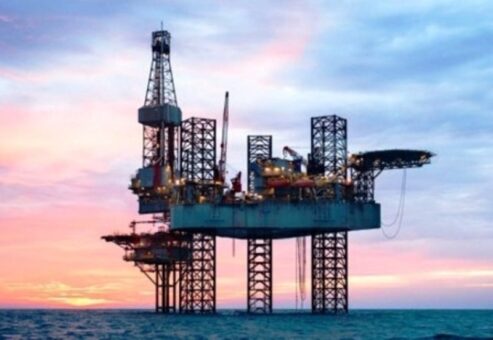
    KARACHI: Pakistan has started receiving crude oil on deferred payment from Saudi Arabia. In this regard two ships carrying 116,276 metric ton crude oil arrived at Karachi port on Saturday.

    Sources said that ships namely M T Quetta and MT Lahore reached Karachi port carrying the Saudi crude oil.

    MT Lahore is carrying 58,158 metric ton of crude oil and MT Quetta is carrying remaining 58,118 metric ton of crude oil.

    Saudi Arabia has pledged to provide $275 million worth crude oil monthly on deferred payment.

    The supply of crude oil on deferred payment would remain continue for next three months. In total the oil rich country would provide crude oil amounting $9.9 billion during next three years.

    The agreement for providing crude oil on deferred payment was signed during the visit of Saudi Arabia’s Crown Prince Mohammad bin Salman to Pakistan in February 2019.

  • Weekly Review: Imran-Trump meeting to send positive signals to investors

    Weekly Review: Imran-Trump meeting to send positive signals to investors

    KARACHI: The scheduled visit of Prime Minister Imran Khan to meet US President Donald Trump next week will send positive signals to investors of share market.

    Analysts at Arif Habib Limited said that the PM is expected to meet President Trump next week for a reset in bilateral ties which is likely to play a pivotal role in rejuvenating sentiments of investors.

    Moreover, arrest during the outgoing week of a leader of a proscribed organization has sent a positive signal to the international fraternity about Pakistan’s seriousness to address global pressure to dismantle terror networks and this should have a positive bearing on the FATF review in October.

    Selling pressure in the local bourse intensified further this week. As per expectations the SBP raised the policy rate by 100 bps, settling at 13.25 percent. However the MPS radiated various positive signals that lent weight to the deduction that this may be the final rate hike by the SBP.

    Moreover, monetary easing is a realistic possibility in the near future as inflationary pressure in the economy is expected to drastically recede during 2HFY20. In other news, political noise returned following arrest of another ex-PM in an alleged LNG scam. The KSE100 index closed at 32,459 points, declining 1,214 points WoW.

    Sector-wise negative contributions were led by i) Oil & Gas Exploration Companies (227 points), ii) Fertilizer (174 points), iii) Commercial Banks (155 points), iv) Power Generation & Distribution (109 points), and v) Textile Composite (82 points). Scrip-wise negative contributions came from PPL (120 points), HUBC (69 points), ENGRO (58 points), OGDC (54 points) and POL (49 points).

    Foreign buying was witnessed this week clocking-in at USD 6.44mn compared to a net buy of USD 5.91 million last week. Buying was witnessed in Cement (USD 3.7 million) and Banks (USD 3.2 million).

    On the domestic front, major selling was reported by Mutual Funds (USD 19.3 million), however individuals remained net buyers of USD 9.9 million. Average Volumes settled at 106 million shares (up by 107 percent WoW) while average value traded clocked-in at USD 23 million (up by 83 percent WoW).

    Other major news: i) Fertilizer prices increased, ii) Agreement with IMF: Government to further increase power tariff by Rs 3.5 per unit, iii) C/A deficit narrows 32pc to $13.5bln in FY19, iv) Interest rate hiked to 13.25pc, highest in eight years, and v) Fitch says IMF bailout deal to weigh on Pakistan’s growth.

  • Textile exports decline by 15pc in June on budgetary measures

    Textile exports decline by 15pc in June on budgetary measures

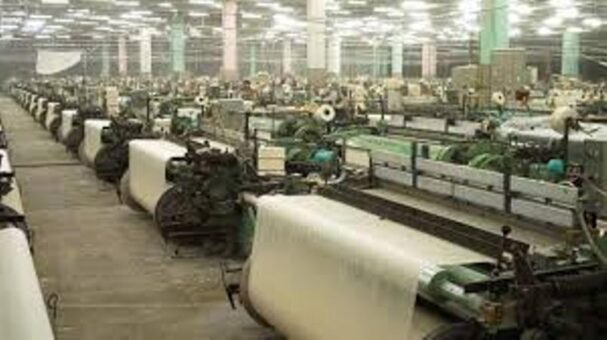
    KARACHI: Pakistan’s textile exports fell by 15 percent in June 2019 to $1.01 billion as compared with $1.19 billion in the same month of the last year, according to export data released by Pakistan Bureau of Statistics (PBS) on Friday.

    The exports of June 2019 has also exhibited 14.55 percent decline when compared with $1.18 billion in May 2019.

    Analysts said that uncertainty in exchange rate and budgetary measures have negatively impacted the exports in the month of June 2019.

    They said that the currency fluctuated massively during past two months, which increased the cost of imported raw material. Further budgetary measures including elimination of sales tax zero-rating for five export sectors also caused in export decline.

    The overall exports of textile products fell by 1.42 percent to $13.33 billion during fiscal year 2018/2019 as compared with $13.52 billion in the preceding fiscal year.

    The experts said that despite several incentives given by the government to this particular sector the exports were remained stagnant. They said that the government in terms of incentives had granted rebate and credit on duty and taxes.

    The exports of knitwear and readymade garments have supported the overall textile exports. The export of knitwear grew by 7 percent to $2.89 billion during fiscal year 2018/2019 as compared with $2.711 billion in the preceding fiscal year.

    Similarly, the export of readymade garments exhibited growth of three percent to $2.65 billion in the fiscal year under review as compared with $2.577 billion in the fiscal year 2017/2018.

    The export of raw cotton and cotton year witnessed decline of 65 percent and 18 percent during the comparative fiscal years.

    However, export of bead wear was remained flat at $2.262 billion in fiscal year 2018/2019 as compared with $2.261 billion in the preceding fiscal year.

    The State Bank of Pakistan (SBP) in its third quarterly report on Pakistan Economy said that the stagnation in overall textile exports stemmed from a slowdown in export growth (in value terms) of readymade garments and knitwear items, and Year on Year (YoY) declines in cotton fabric and yarn exports.

    Except for yarn, export values of all these major products suffered from a drop in unit prices, as quantum exports grew appreciably. The drop in dollar-based unit prices was mainly owed to exchange rate adjustments, as exports rose significantly in Pak Rupee terms, the SBP said.

    In rupee term the textile exports registered 22 percent growth during 2018/2019 as compared with preceding fiscal year.

    Related Posts:

    Textile exporters oppose proposed plan for abolishing zero-rating, FTR

    Monitoring of Withholding Tax: FBR launches mega operation against textile, sugar companies for tax evasion

  • No compromise on documentation of economy: FBR chairman

    No compromise on documentation of economy: FBR chairman

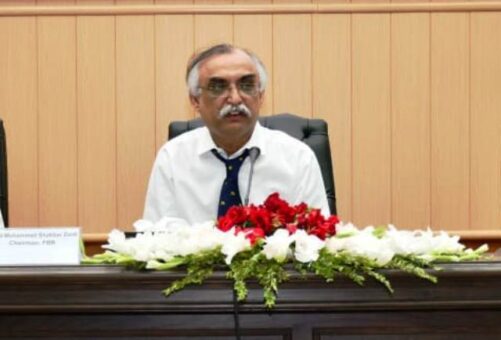
    ISLAMABAD: Shabbar Zaidi, Chairman, Federal Board of Revenue (FBR) on Friday said that the government will not compromise documentation of economy by surrendering condition of CNIC on purchases.

    He said that the condition of CNIC had been enforced on purchases above Rs50,000.

    Speaking at a seminar organized by Sustainable Development Policy Initiative (SDPI) on Wednesday, he said that priority of the government was to enhance the tax net and expend tax base to documenting the country’s economy. And taxation is the only way to forward for equitable distribution of wealth, as we cannot have stabilized and equitable society unless we have a fare taxation system, he added.

    The FBR chairman said that due to presumptive tax regime, we actually dissociated the taxation from the economy, where taxing the real income was out of question.

    The incumbent government and the International Monitory Fund (IMF) are on the same page, as there was no disagreement by the government on the measures proposed by the IMF, especially the taxation measure, he said.

    The chairman said that the government would not bow down against the pressure, protests and lame excuses of the businesses and industries.

    Over the decades the policies of the successive governments make Pakistan a trading state rather a sami-manufacturing state, where the country is importing everything from mineral water to foods items and never worked-out on import substitution.

    While raising the concerns over the open transit trade agreement with Afghanistan, he said the agreement was being exploited and abused by the smugglers which negatively impacted the local industry.

    Pakistan needed to review this agreement and should take stringent measures to control illicit trade on Pak-Afghan border, he said.

    There are around 100 thousand companies registered with the government of Pakistan, where only 60 thousands file their returns, which shows the level of tax compliance.

    He said the measures taken in the current federal budget would fundamentally change the course of history of Pakistan.

    The government was taking steps to redress the institutional corruption through automation of the taxation system, the Chairman FBR said.

    He said that it is his responsibility to improve the tax base under the leadership of Prime Minister Imran Khan.

    Hawala and Hundi have inflicted a huge loss on the country’s economy,” he said and added measures were being taken to include the middle class in the tax net.
  • Stock market recovers 149 points on improved investors sentiments

    Stock market recovers 149 points on improved investors sentiments

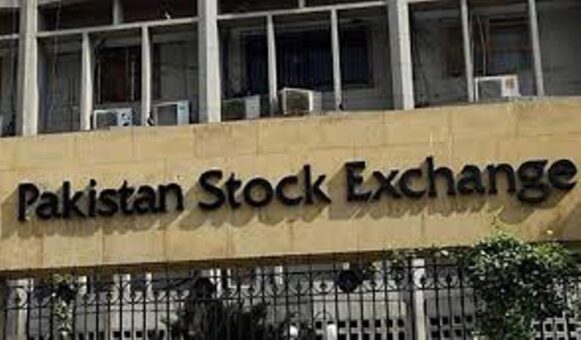
    KARACHI: The stock market recovered 149 points on Friday amid buying on improved investors sentiments.

    The benchmark KSE-100 index closed at 32,459 points as against 32,310 points, showing an increase of 149 points.

    Analysts at Arif Habib Limited said that the index oscillated around 650 during the session with +240 points and -408 points.

    First session ended 240 points down and 49 million shares traded, whereas second session saw recovery in the index resulting in +240 points (unadjusted). News of State Enterprise / Market opportunity Fund by State Enterprises helped improve investor sentiment in the second session.

    Buying activity took place in index heavy weights such as OGDC, PPL, PSO, LUCK, where PSO ended at upper circuit.

    Cement Sector led the volumes chart with 27 million shares, contributed by MLCF (14.4million) and DGKC (4.5 million), and followed by Technology (14 million) and Power (12million). TRG ranked second in terms of traded volume with 12 million shares.

    Sectors contributing to the performance include E&P (+66 points), Fertilizer (+48 points), O&GMCs (+43 points), Cement (+26 points), Chemical (+9 points).

    Volumes increase by further from 87 million shares to 121 million shares (+39 percent DoD). Average traded value however, increased by 15.9 percent DoD to reach US 27.2 million as against US$ 23.5 million.

    Stocks that contributed significantly to the volumes include MLCF, TRG, KE, PAEL, and BOP, which formed 43 percent of total volumes.

    Stocks that contributed positively include ENGRO (+39 points), OGDC (+33 points), PPL (+31 points), LUCK (+24 points) and FFC (+23 points). Stocks that contributed negatively include UBL (-32 points), HUBC (-21 points), NESTLE (-17 points), DAWH (-10 points) and BAHL (-8 points).