Day: October 5, 2019

  • SBP governor emphasizes on rapid digitization of payments; cash payments major hurdle in documentation of economy

    SBP governor emphasizes on rapid digitization of payments; cash payments major hurdle in documentation of economy

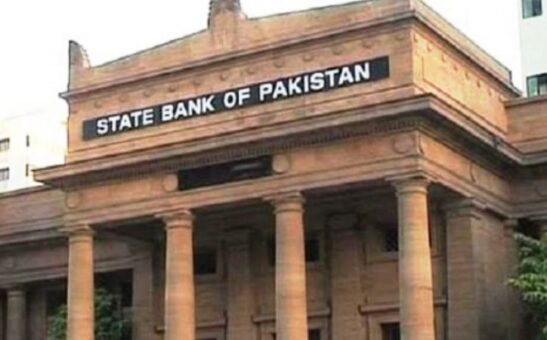
    KARACHI: Dr. Reza Baqir, Governor, State Bank of Pakistan (SBP) has said that cash payments are major hindrance in documentation of economy and stressed the need for rapid digitization of payment system.

    The SBP governor was addressing on Saturday at a workshop titled ‘Digital Payments Reforms’ organized by the central bank in collaboration with the World Bank at its headquarters in Karachi.

    Dr. Reza Baqir, highlighted the issues that have been longstanding and needed attention of all the stakeholders.

    The governor emphasized the need for rapid digitization of payments in order to realize the full benefits for the economy as cash is still the preferred mode of payments for our routine and day to day activities.

    He noted that the heavy reliance on cash and the limited use of digital channels reduces economic efficiency, hinders financial and economic development and impedes the goal of documenting the economy.

    To address these issues, he emphasized the importance of building a modern and robust payment system in the country that enables the provision of cost effective and easily available digital financial services to the general public. This, he stated is a key strategic objective of SBP.

    Governor Baqir shared SBP’s plans for leading an aggressive adoption and implementation of the National Payment Systems Strategy in the country.

    He emphasized that interoperability is key to achieving faster digitization goals. Governor also informed the participants that a new faster payment gateway will be launched next year to facilitate instant transfer of funds.

    He identified government payments and receipts and merchant payments to be the key elements in accelerating digitization of payments in the country.

    He also noted the need for reducing the high cost, especially the interchange fee in the payments industry and emphasized to all stakeholders to work collaboratively for increasing digital access points in the country.

    The objective of the workshop was to share the draft National Payment Systems Strategy and solicit the input of key stakeholders involved in its implementation.

    The workshop was attended by senior officials from PTA, NADRA, SECP, FBR, the PM office’s Strategic Reforms and Implementation Unit, Banks, Telcos, Electronic Money Institution (EMIs), PSO/PSPs and Fintechs.

    Governor SBP, Dr. Reza Baqir led the workshop, while Chairman PTA, Major General (Retired) Amir Azeem Bajwa, and Country Director World Bank, Illango Patchamuthu were also present at the occasion.

    Stakeholders who attended the meeting shared valuable suggestions for increasing the pace of digitization of payment system. The discussion led to the identification of a number of next steps for the group.

    At the conclusion of the meeting, Governor Baqir thanked the participants for their concrete and specific suggestions which would help improve the development and implementation of the National Payment Systems Strategy.


  • FBR explains salary tax to be chargeable for Tax Year 2020

    FBR explains salary tax to be chargeable for Tax Year 2020

    KARACHI: Federal Board of Revenue (FBR) has explained the treatment of salary tax to be applicable during Tax Year 2020.

    The FBR issued Income Tax Ordinance, 2001 updated till June 30, 2019 and explained the taxability on salary received by an employee.

    Under Section 12 of the Income Tax Ordinance, 2001 the salary chargeable to tax as:

    Section 12: Salary

    Sub-Section (1): Any salary received by an employee in a tax year, other than salary that is exempt from tax under this Ordinance, shall be chargeable to tax in that year under the head “Salary”.

    Sub-Section (2): Salary means any amount received by an employee from any employment, whether of a revenue or capital nature, including —

    (a) any pay, wages or other remuneration provided to an employee, including leave pay, payment in lieu of leave, overtime payment, bonus, commission, fees, gratuity or work condition supplements (such as for unpleasant or dangerous working conditions);

    (b) any perquisite, whether convertible to money or not;

    (c) the amount of any allowance provided by an employer to an employee including a cost of living, subsistence, rent, utilities, education, entertainment or travel allowance, but shall not include any allowance solely expended in the performance of the employee’s duties of employment;

    (d) the amount of any expenditure incurred by an employee that is paid or reimbursed by the employer, other than expenditure incurred on behalf of the employer in the performance of the employee’s duties of employment;

    (e) the amount of any profits in lieu of, or in addition to, salary or wages, including any amount received —

    (i) as consideration for a person’s agreement to enter into an employment relationship;

    (ii) as consideration for an employee’s agreement to any conditions of employment or any changes to the employee’s conditions of employment;

    (iii) on termination of employment, whether paid voluntarily or under an agreement, including any compensation for redundancy or loss of employment and golden handshake payments;

    (iv) from a provident or other fund, to the extent to which the amount is not a repayment of contributions made by the employee to the fund in respect of which the employee was not entitled to a deduction; and

    (v) as consideration for an employee’s agreement to a restrictive covenant in respect of any past, present or prospective employment;

    (f) any pension or annuity, or any supplement to a pension or annuity; and

    (g) any amount chargeable to tax as “Salary” under section 14.

    Sub-Section (3): Where an employer agrees to pay the tax chargeable on an employee’s salary, the amount of the employee’s income chargeable under the head “Salary” shall be grossed up by the amount of tax payable by the employer.

    Sub-Section (4): No deduction shall be allowed for any expenditure incurred by an employee in deriving amounts chargeable to tax under the head “Salary”.

    Sub-Section (5): For the purposes of this Ordinance, an amount or perquisite shall be treated as received by an employee from any employment regardless of whether the amount or perquisite is paid or provided —

    (a) by the employee’s employer, an associate of the employer, or by a third party under an arrangement with the employer or an associate of the employer;

    (b) by a past employer or a prospective employer; or

    (c) to the employee or to an associate of the employee or to a third party under an agreement with the employee or an associate of the employee.

    Sub-Section (6): An employee who has received an amount referred to in sub-clause (iii) of clause (e) of sub-section (2) in a tax year may, by notice in writing to the Commissioner, elect for the amount to be taxed at the rate computed in accordance with the following formula, namely: —

    A/B%

    where —

    A is the total tax paid or payable by the employee on the employee’s total taxable income for the three preceding tax years; and

    B is the employee’s total taxable income for the three preceding tax years.

    Sub-Section (7): Where —

    (a) any amount chargeable under the head “Salary” is paid to an employee in arrears; and

    (b) as a result the employee is chargeable at higher rates of tax than would have been applicable if the amount had been paid to the employee in the tax year in which the services were rendered, the employee may, by notice in writing to the Commissioner, elect for the amount to be taxed at the rates of tax that would have been applicable if the salary had been paid to the employee in the tax year in which the services were rendered.

    Sub –Section (8) An election under sub-section (6) or (7) shall be made by the due date for furnishing the employee’s return of income or employer certificate, as the case may be, for the tax year in which the amount was received or by such later date as the Commissioner may allow.

  • Weekly Review: market to stay positive

    Weekly Review: market to stay positive

    KARACHI: The stock market likely to stay positive during next week but there are chances of profit taking, analysts said.

    Analysts at Arif Habib Limited said that the market to remain positive in the coming week. However profit-taking cannot be ruled out.

    Major developments next week include PM Khan’s visit to China aimed at reviving CPEC Projects and removing impediments.

    The KSE-100 index is currently trading at a PER of 5.8x (2020) compared to Asia Pac regional average of 13.0x and while offering DY of ~9.4 percent versus ~2.5 percent offered by the region.

    KSE-100 commenced on a positive note this week amid 1QFY19 tax collection being reported at 90 percent of the IMF target. Investors’ expectations seemed to reflect optimism with regards to the first quarter IMF targets being met.

    Moreover news of increase in cement prices in the Northern Region as per PBS was the major driver for the Cement sector throughout the week.

    Later in the week a meeting of business community with the Army Chief and PM Khan improved the sentiment further due to anticipation of remedial measures to address outstanding economic issues.

    Despite decline in international crude oil prices the Oil & Gas Exploration scrips resisted pressure. The overall positivity in the investment climate was complimented by jubilant volumes. The KSE-100 index gained 962 points (up by 3.00 percent) WoW, closing at 33,033 points.

    Sector-wise positive contributions came from i) Commercial Banks (231 points), ii) Cements (189 points), iii) Power Generation & Distribution (96 points), iv) Oil & Gas Marketing (93 points), and v) Fertilizer (68 points). Scrip-wise positive contributions were led by HBL (103 points), HUBC (52 points), ENGRO (51 points), DGKC (50 points) and NBP (50 points).

    Foreign selling continued this week clocking-in at USD 4.7 million compared to a net sell of USD 8.8 million last week. Selling was witnessed in Commercial Banks (USD 4.6 million) and Food and Personal Care (USD 1.7 million).

    On the domestic front, major buying was reported by Other Organizations (USD 4.9 million) and individuals (USD 4.4 million). Average Volumes settled at 223 million shares (up by 106 percent WoW) while average value traded clocked-in at USD 40 million (up by 58 percent WoW).

  • Ban on trade with India not to apply shipment of documents

    Ban on trade with India not to apply shipment of documents

    ISLAMABAD: The ministry of commerce has said that ban on trade with India will not apply on the shipment of documents related to personal or ministries.

    The ministry issued a clarification in this regard through an office memorandum dated October 03, 2019, stated that the bilateral trade with India was suspended through SROs 927 and 928 issued on August 09, 2019.

    “However, it is clarified that the suspension of trade with India will not apply to the shipment of documents e.g. personal and business documents, documents of government ministries, diplomatic mission, banks and greeting cards, etc.”

  • FBR notifies major reshuffle in Pakistan Customs Service; 35 officers transferred

    FBR notifies major reshuffle in Pakistan Customs Service; 35 officers transferred

    ISLAMABAD: Federal Board of Revenue (FBR) on Friday in a major reshuffle transferred and posted 35 officers of Pakistan Customs Service (PCS) from BS-17 to BS-21 with immediate effect and until further orders.

    (more…)