Day: October 10, 2019

  • Ufone, SCO sign bilateral roaming service agreement

    Ufone, SCO sign bilateral roaming service agreement

    ISLAMABAD: Special Communications Organization (SCO), the largest Integrated Telecom Service Provider in Azad Jammu & Kashmir (AJ&K) and Gilgit-Baltistan (GB) and Ufone have signed a Bilateral Roaming Services Agreement at PTCL headquarters, Islamabad.

    The ceremony was attended by Major General Amir Azeem Bajwa (Retired) HI (M), Chairman PTA; Major General Ali Farhan HI (M), Director General SCO; Rashid Khan, President & CEO, PTCL & Ufone and senior officials from both sides.

    With this agreement, Ufone has become the only mobile operator to offer Data service in addition to Voice and SMS services to SCO subscribers in Pakistan and SCO will also offer Roaming Voice & SMS services in AJ&K and GB to Ufone subscribers.

    It is pertinent to note that Ufone and SCO are already in an agreement since 2008, under which, SCO subscribers have been enjoying Voice and SMS Roaming services in Pakistan.

    This development is also seen as stimulating economic activity, as enhanced communication capability improves efficiency and productivity, resulting in cost savings and spurs growth of business.

    “SCO can now proudly claim that it has the most advanced network, providing state-of-the-art mobile services to its valued customers,” said Major General Ali Farhan HI (M), DG SCO.

    “Ufone is a highly innovative company in the field of telecommunications in Pakistan and I am sure that the biggest beneficiaries of this alliance will be the citizens living in Pakistan, AJ&K and GB,” he added.

    “Our strategic alliance is a win-win situation for both partners and even more importantly, for the customers,” said Mr Rashid Khan, President and CEO PTCL & Ufone.

    “This alliance will make sure that resource sharing benefits both organizations and offers superior products and services to the public, improving their quality of life,” he further added.

  • FBR makes mandatory for big retail chains to share real-time sales data from December 01

    FBR makes mandatory for big retail chains to share real-time sales data from December 01

    ISLAMABAD: The big retail chains in the country will share their sales data with the Federal Board of Revenue (FBR) on real-time basis from December 01, 2019.

    In order to implement the decision the FBR issued SRO 1203(I)/2019 on Thursday to make amendments in Sales Tax Rules, 2006.

    The revenue body notified mandatory integration of sales by Tier-I retailers.

    As per notified rules, the FBR said that commencing from December 01, 2019, all Tier-1 retailers shall integrate their retail outlets with FBR’s computerized system for real-time reporting of sale.

    According to the Sales Tax Act, 1990, the Tier-1 retailers have been defined as:

    (a) a retailer operating as a unit of a national or international chain of stores;

    (b) a retailer operating in an air-conditioned shopping mall, plaza or centre, excluding kiosks;

    (c) a retailer whose cumulative electricity bill during the immediately preceding twelve consecutive months exceeds Rs600,000;

    (d) a wholesaler-cum-retailer, engaged in bulk import and supply of consumer goods on wholesale basis to the retailers as well as on retail basis to the general body of the consumers”; and

    (e) a retailer, whose shop measures one thousand square feet in area or more.

    The FBR said that the sales of finished fabric and locally manufactured finished articles of textile and textile made-ups and leather and artificial leathers would be entitled to reduced sales tax of 14 percent if sales made through integrated outlets.

    The FBR, however, warned that the integrated suppliers who were found to have tampered with the system would not be entitled to claim input adjustment and also not be eligible for reduced sales tax rate.

    Further, the FBR would initiate legal proceedings against such activities besides imposing penalty and recovery of tax.

    The FBR also amended the rules regarding sales made through social media portals, and said that such sales would have same treatment of sales tax in case reported through point of sale in real-time manner.

  • Financial institutions report 219 suspicious transactions since AML/CFT regulatory framework launch: SECP

    Financial institutions report 219 suspicious transactions since AML/CFT regulatory framework launch: SECP

    ISLAMABAD: The Securities and Exchange Commission of Pakistan (SECP) has said around 219 Suspicious Transactions Reports (STRs) have been generated by financial institutions since launch of its Anti-Money Laundering (AML)/Counter Financing Terrorism (CFT) regulatory framework.

    The SECP in a statement on Thursday said that its risk based approach for effective implementation of AML/CFT regulatory framework ensued significant improvement in filing of Suspicious Transactions Reports (STR) with FMU.

    To align itself with FATF’s standards (40 recommendations), SECP developed a single set of regulations namely SECP AML/CFT Regulations in June 2018.

    SECP also developed a comprehensive guideline to help regulated persons in creating an effective AML/CFT risk assessment and compliance framework.

    Since the promulgation of consolidated AML/CFT regulations, the financial institutions have generated a total of 219 STRs, as compared to only 13 in the last eight years.

    The SECP conducted 167 inspections focusing on AML/CFT compliance in the cases of 72 Securities Brokers, 27 NBFCs, 13 Insurance Companies and 55 High Risk NPOs.

    Significant penalties have been imposed for non-compliances with the said Regulations.

    Financial Institutions have undertaken remedial measures to ensure effective compliance with the said Regulations. Automated screening software has been deployed by many Financial Institutions to screen the proscribed persons.

    The regulated entities now also have access to GoAML system of the FMU for online filing of STR.

    The SECP successfully made transition from one-size fits all to a risk based approach to implement a consolidated AML/CFT regulatory framework in its regulated financial sector comprising of stock and commodity brokers, NBFCs, Modarabas and the Insurers/Takaful operators.

    Further to effectively identify assess and understand the ML/TF risks that Pakistan faces, a National ML/ TF Risk Assessment was undertaken in 2019 to assess ML/TF vulnerabilities that are inherent within the financial sector including banking, NBFC, brokers and insurance.

    NRA aimed to put in place actions and control measures to mitigate those risks. FMU led the task in collaboration with stakeholders including ministries, law enforcement agencies, SBP and SECP.

    The risk assessment and understanding enabled SECP and the regulated entities to implement the much needed control mechanism to check potential abuse by money launderers and terrorist financiers.

    Subsequent to NRA, SECP embarked on a comprehensive awareness raising program to develop the risk understanding and AML Obligations of the regulated sectors and shared the NRA 2019 with its regulated sectors.

    SECP’s continuous efforts have resulted in improvement in compliance level of the regulated entities and effective control measures are now implemented to combat money laundering and terrorist financing.

    The SECP has also revamped its overall risk based supervisory mechanism and works closely with national stakeholder’s inter-alia FMU, SBP etc. for mutual peer review and evaluation of SECP’s regulated financial sector.

    Eversince the Commission has adopted a risk-based approach to supervision and monitoring in the area of AML/CFT, it has completed sector risk assessment and enhanced risk based supervisory activities encompassing all high-risk entities and is spreading the scope of supervision to next tier moderate risk entities.

    Remedial actions and dissuasive sanctions on non-compliance are now part of it’s enforcement regime.

    Recently, the Asia-Pacific Group of Money Laundering (APG) has adopted Pakistan’s Mutual Evaluation Report (MER) in its 22nd Annual Meeting held in Canberra, Australia from 18-23 August 2019, which has now been uploaded on APG’s website as per procedure.

    It is pertinent to mention that Pakistan’s Mutual Evaluation Report (MER) provides a summary of the AML/CFT measures in place in Pakistan as of October 2018.

    A large component of the above reforms were implemented after October 2018 and are not reflected in the MER published now by APG.

  • Pakistan’s foreign exchange reserves at $14.993 billion

    Pakistan’s foreign exchange reserves at $14.993 billion

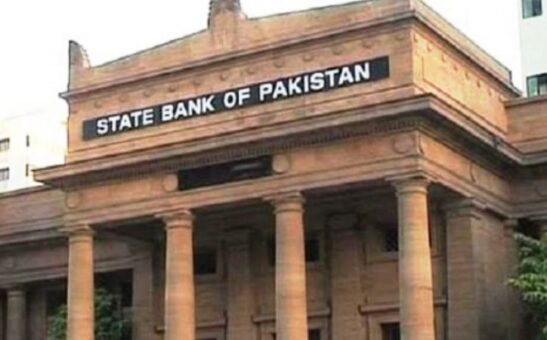
    KARACHI: The total liquid foreign exchange reserves of Pakistan declined nominally by $11 million to $14.993 billion by week ended October 04, 2019 as compared with $15.003 billion a week ago, State Bank of Pakistan (SBP) said on Thursday.

    The reserves held by SBP increased by $16 million to $7.757 billion by week ended October 04, 2019 as compared with $7.771 billion a week ago.

    The foreign exchange reserves held by commercial banks declined by 27 million to $7.235 billion as compared with $7.262 billion a week ago.

  • Stock market gains over 500 points on improved trading activities

    Stock market gains over 500 points on improved trading activities

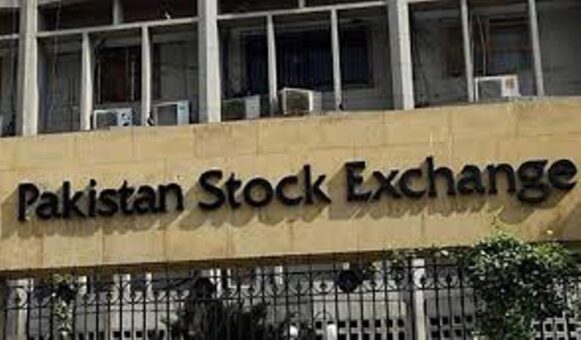
    KARACHI: The stock market gained over 500 points on Thursday on across the board trading activity witnessed in the market.

    The benchmark KSE-100 index of Pakistan Stock Exchange (PSX) closed at 34,028 points as against 33,524 points showing an increase of 504 points.
    Analysts at Arif Habib Limited said that the market rebounded today with a jump of 500 points that took the index above 34,000 level, last seen in early July 2019.

    Activity was observed across the board, but mainly contributed by Banking and Cement sectors. Expectation of further increase in Cement price / bag gave way to optimism in Cements, while improvement in fixed income portfolio for the Banks also engaged Investors.

    Volumes improved over the day to 261 million shares and were mainly contributed by Chemical sector, which performed consecutively to reach a turnover of 49.4 million shares, followed by Cement (30.3 million) and Banks (23.9 million). Among scrips, LOTCHEM realized volume of 26.5 million shares, followed by PIBTL (17.2 million) and KEL (16.4 million).

    Sectors contributing to the performance include Banks (+115 points), E&P (+74 points), Cement (+58 points), Power (+40 points) and Tobacco (+31 points).

    Volumes increased from 237.7 million shares to 261.1 million shares (+10 percent DoD). Average traded value also increased by 32 percent to reach US$ 54 million as against U$ 40.9 million.

    Stocks that contributed significantly to the volumes include LOTCHEM, PIBTL, KEL, UNITY and EPCL, which formed 33 percent of total volumes.

    Stocks that contributed positively include LUCK (+41 points), UBL (+32 points), HBL (+31 points), PAKT (+31 points) and HUBC (+30 points). Stocks that contributed negatively include BAFL (-13 points), EFERT (-7 points), JLICL (-5 points), PPL (-3 points), and IGIHL (-2 points).

  • Overseas Pakistanis remit $5.478 billion in July – September

    Overseas Pakistanis remit $5.478 billion in July – September

    KARACHI: The overseas workers have sent $5.478 billion during first quarter (July – September) of current fiscal year, which is 1.43 percent down when compared with $5.557 billion in the corresponding period of the last fiscal year, according to data released by State Bank of Pakistan (SBP) on Thursday.

    However, inflows of workers’ remittances witnessed 17.59 percent growth to $1.747 billion in the month of September 2019 when compared with $1.486 billion in the same month of the last year.

    Saudi Arab was the major destination from where Pakistanis sent remittances to homeland. The inflows of remittances from Saudi Arabia were $1.269 billion during first quarter of current fiscal year as compared with $1.263 billion in the same quarter of the last fiscal year, showing growth of 0.49 percent.

    The country received $911 million as workers’ remittances from the US during first quarter of the current fiscal year as compared with $862.76 million in the corresponding quarter of the last fiscal year, showing 5.67 percent growth.

    The third major destination for workers’ remittances was the UK from where the country received $814.37 million during July –September 2019 as compared with $810 million in the same period of the last fiscal year.

    The combined inflows from United Arab Emirates (UAE) were $1.139 billion during first quarter of current fiscal year as compared with $1.227 billion in the same quarter of the last fiscal year, registering 7.19 percent decline.

    The inflows from other GCC countries were at $519.43 million during July – September 2019 as compared with $526.96 million in the same period of the last fiscal year, showing 1.43 percent decline.

  • Rupee gains 14 paisas on improved sentiments

    Rupee gains 14 paisas on improved sentiments

    KARACHI: The rupee gained 14 paisas against dollar on Thursday owing to improved economic sentiments.

    The rupee ended Rs156.18 to the dollar from previous day’s closing of Rs156.32 in interbank foreign exchange market.

    Currency dealers said that the successful visit of the prime minister to China helped confidence building in the market. Besides, inflows of export receipts also helped the local currency to appreciate.

    The foreign currency market initiated in the range of Rs156.21 and Rs156.24. The market recorded day high of Rs156.28 and low Rs156.17.

    The exchange rate in open market also witnessed appreciation in rupee value. The buying and selling of dollar was recorded at Rs155.90/Rs156.40 from previous day’s closing of Rs156.00/Rs156.50 in cash ready market.

  • Pakistan’s oil, gas reserves witness increase

    Pakistan’s oil, gas reserves witness increase

    KARACHI: Pakistan’s oil and gas reserves have witnessed increase by 7 percent and 1.4 percent, respectively, according to analysts at Topline Research.

    The analysts on Thursday said that Pakistan Petroleum Information Services (PPIS) had reported oil and gas reserves for Jun 2019, whereby few major fields of Tal block (operated by MOL Pakistan) have witnessed an upward adjustment in which Pakistan Oil Fields (POL), Pakistan Petroleum Limited (PPL) and Oil and Gas development (OGDC) have working interest of 21 percent, 28 percent and 28 percent respectively.

    Overall oil reserves of the country are up by 7 percent (excluding PEL reserves) to 286 million barrels (10 years) mainly on back of upward adjustment in fields of Tal block and Adhi.

    Maramzai and Mardankhel fields (belongs to Tal Block) have seen increase of 42 percent and 89 percent respectively in their recoverable oil reserves. Increase in reserves have extended fields life by 1-3 years, as per estimates.

    Adhi South reserves are also separately reported, whereby overall Adhi field oil reserves are up 70 percent to 25.9 million barrels. Field life due to incremental reserves is up by around 3 years.

    Gas reserves of the country are up by meagre 1 percent to 21tcf (15 years). Field wise, reserves from Adhi, Marmazai, Mardankhel, Makori East, and Manzalai are increased by 12-132 percent. These incremental reserves will help companies to continue their production for 1-3 years more.

  • Account holders with Rs10 million deposits on FBR’s radar

    Account holders with Rs10 million deposits on FBR’s radar

    KARACHI: Bank account holders making aggregate deposits of Rs10 million in a month are on radar of Federal Board of Revenue (FBR) for the purpose of broadening of tax base and identifying concealed incomes.

    Federal Board of Revenue (FBR) has said that banks are required to provide details of account holders having aggregate deposits of Rs10 million in a month.

    The FBR issued Income Tax Ordinance, 2001 updated till June 30, 2019 incorporating changes brought through Finance Act, 2019.

    Several changes have been introduced through Section 165A related to furnishing of information by banks of cash withdrawals and deposits.

    Section 165A: Furnishing of information by banks

    Sub-Section (1): Notwithstanding anything contained in any law for the time being in force including but not limited to the Banking Companies Ordinance, 1962 (LVII of 1962), the Protection of Economic Reforms Act, 1992 (XII of 1992), the Foreign Exchange Regulation Act, 1947 (VII of 1947) and the regulations made under the State Bank of Pakistan Act, 1956 (XXXIII of 1956), if any, on the subject every banking company shall make arrangements to provide to the Board in the prescribed form and manner,—

    (a) a list of persons containing particulars of cash withdrawals exceeding fifty thousand Rupees in a day and tax deductions thereon 4[ ], aggregating to Rupees one million or more during each preceding calendar month.;

    (b) a list containing particulars of deposits aggregating rupees ten million or more made during the preceding calendar month;

    (c) a list of payments made by any person against bills raised in respect of a credit card issued to that person, aggregating to rupees two hundred thousand or more during the preceding calendar month;

    (d) a list of persons receiving profit on debt exceeding five hundred thousand rupees and tax deductions thereon during preceding financial year.

    Sub-Section (2): Each banking company shall also make arrangements to nominate a senior officer at the head office to coordinate with the Board for provision of any information and documents in addition to those listed in sub-section (1), as may be required by the Board.

    Sub-Section (3): The banking companies and their officers shall not be liable to any civil, criminal or disciplinary proceedings against them for furnishing information required under this Ordinance.

    Sub-Section (5): Subject to section 216, all information received under this section shall be used only for tax purposes and kept confidential.

  • Tax evading manufacturers, commercial importers supporting traders’ protest

    Tax evading manufacturers, commercial importers supporting traders’ protest

    ISLAMABAD: A large segment of tax evaders in manufacturing sector and commercial importers are behind the traders’ protest in order to force tax authorities to withdraw condition of computerized national identity card (CNIC).

    The condition of CNIC has been introduced in order to identify persons in supply chain and plug leakages of revenue from manufacturing stage to end-consumers.

    In recent surveys of the Federal Board of Revenue (FBR) it has been identified that markets are flooded with goods from domestic and import sources and without payment of duty and taxes.

    Sources in FBR said that some manufacturers and importers were supplying unreported goods to such retailers, which sold to end-consumers without payment of duty and taxes.

    The traders do not want to become part of documented economy on the behest of manufacturers or commercial importers in order to shelter the tax evasion.

    In the past several measures were taken by the government to bring retailers into the tax net but all the times such efforts ended in a failure.

    The latest wave of protests by the trade community is another bid to force the FBR to bow down their demand. But this time, the FBR chairman, who is from private sector, is committed to bring traders into the tax net.

    The traders on Wednesday announced to observe a countrywide shutter-down strike on October 28 and 29, following the failure of talks with FBR officials.

    A protest demonstration was held by the traders against the tax reforms introduced by the government.

    The protesting traders attempted to move towards the FBR Headquarters.

    However, the police stopped the protesters at the Serena Chowk, where they observed a sit-in.

    A few enraged protesters attempted to cause damage to the public properties and tried to remove barbwires in the area.

    This prompted the law enforcers to baton-charge the protesters. Meanwhile, the FBR decided to hold talks with the protesters, but they failed to yield any results.

    The leaders of the protesting traders’ community claimed that the FBR is not ready to listen to their demands and added that they will not pay unjust tax.

    They further that the business community will not accept the condition of presentation of a copy of their CNICs for the sale and purchase of goods.

    The traders hoped that the present government led by Pakistan Tehreek-e-Insaf (PTI) would reconsider their demands and will provide them the fix tax scheme.