Day: October 15, 2019

  • Prime minister welcomes $240 million investment by Hutchison Port Holdings

    Prime minister welcomes $240 million investment by Hutchison Port Holdings

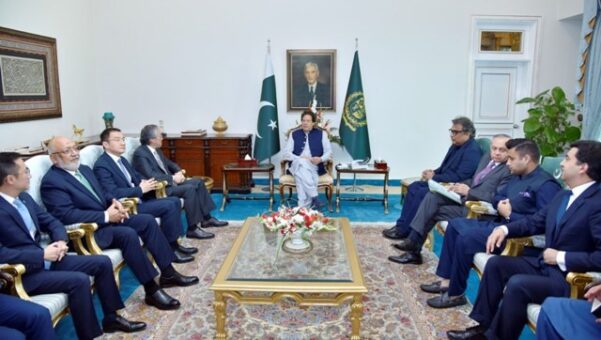
    ISLAMABAD: Prime Minister Imran Khan has welcomed fresh investment of $240 million by Hutchison Port Holdings and commitment of the company to the Pakistan’s economic prosperity.

    The prime minister praised the company at a meeting with a delegation of Hutchison Port Holdings led by their Group Managing Director Mr. Eric Ip called on Prime Minister Imran Khan on Tuesday.

    The Prime Minister reiterated the commitment and focus of the Government to facilitate investment and ease-of-doing-business that would ultimately result in economic growth and employment generation.

    Minister for Maritime Affairs Syed Ali Haider Zaidi, Advisor to PM on Commerce Abdul Razzaq Dawood, Special Assistant to PM Syed Zulfiqar Abbas Bukhari, Ambassador at Large for Foreign Investment Ali Jehangir Siddiqui, Chairman Board of Investment Zubair Haider Gilani and senior officials were present during the meeting.

    The delegation from Hutchison Ports also included Mr. Andy Tsoi, Managing Director Middle East & Africa, Mr. Eric Ng, Business Director Middle East & Africa and the leadership of their Pakistan management team.

    Group Managing Director Mr. Eric Ip apprised the Prime Minister of Hutchison Port Holdings’ fresh investment into Pakistan approximating $240 million that will make available a significant amount of new container terminal capacity at the Karachi Port, and increase Hutchison Ports’ total investment in Pakistan to $1 billion.

    The Prime Minister was informed that this investment will also grow Hutchison employees to 3,000 people. The Prime Minister was also briefed about the development of Hutchison Port Holdings, its parent company CK Hutchison Holdings, and the group’s commitment to play a pivotal role in facilitating the economic growth of Pakistan, as well as supporting the development of Karachi Port into a major hub for trade in Asia.

    Hutchison Port Holdings is one of the world’s largest port companies, with over 30,000 employees, operating 52 ports and terminals in 27 countries spanning Asia, the Middle East, Africa, Europe, the Americas and Australia. The company is headquartered in Hong Kong.
    Ambassador Ali Jehangir Siddiqui stated that as a result of a fairly priced currency, unit volumes of exports were increasing and there was a great need for additional container terminal capacity. As a result, this investment would support our export competitiveness and also result in greater revenue for both the federal exchequer and the Karachi Port Trust


  • FBR takes measures to improve trade facilitation in Balochistan

    FBR takes measures to improve trade facilitation in Balochistan

    KARACHI: Federal Board of Revenue (FBR) has taken measures to improve trade facilitation and curb smuggling in Balochistan. Accordingly a senior BS-21 officer of Pakistan Customs Service(PCS) has been specifically posted as Chief Collector, Balochistan with dedicated Collectorates for Enforcement and Appraisement.

    Model Customs Collectorate (Preventive), Quetta was established to curb the menace of smuggling. Dedicated anti-smuggling units have been set-up with the available manpower and logistics and tasked to man the long and porous Pak Afghan border.

    The FBR has also established Model Customs Collectorate, Appraisement Quetta to facilitate trade and to expedite customs clearances from dry port and customs border stations in Balochistan.

    On directives of Chairman FBR Syed Shabbar Zaidi, adequate staff has been posted in the far flung customs stations of Taftan, Panjgur and Chaman border in order to ensure immediate clearance of goods especially perishable items like dry / fresh fruits and vegetables and to ensure clearances through the WeBOC-Glo automated system.

    Member Customs Operations has instructed all customs formations operating in Balochistan to ensure speedy clearances while at the same time to curb the menace of smuggling and apprehend those involved in these illegal movement of goods.

  • Stock market declines by 103 points

    Stock market declines by 103 points

    KARACHI: The stock market declined by 103 points on Tuesday amid positive vibes of FATF proceedings, which maintained interest of investors, analysts said.

    The benchmark KSE-100 index of Pakistan Stock Exchange closed at 34,084 points as against 34,186 points showing a decline of 103 points.

    Analysts at Arif Habib Limited said that the index lost another 100 points, after an oscillation of +73 points and -257 points, but maintained the 34,000 level.

    Largely, Oil and Gas chain and Auto sector kept the index under pressure, which was due to lower international crude prices.

    Second day of FATF proceedings, on the whole, gave positive vibes that helped investors maintain interest. Brokerage commission, which also proved to be an issue yesterday had a slight impact on the activity.

    Volumes, nonetheless, inched up over the day. Cement sector again led the volumes with 27.5 million shares, followed by Technology (26.7 million) and Chemical (18 million) stocks. Technology sector stocks have lately been in the limelight for some time now, courtesy of WTL. Among scrips, WTL led the table with 18.3 million shares, followed by FCCL (14.3 million) and LOTCHEM (8.7 million).

    Sectors contributing to the performance include E&P (-59 points), Power (-45 points), Fertilizer (-18 points), O&GMCs (-12 points) and Chemical (+7 points).

    Volumes increased from 137.9 million shares to 1562 million shares (+13 percent DoD). Average traded value also increased by 10 percent to reach US$ 33.9 million as against US$ 30.8 million.

    Stocks that contributed significantly to the volumes include WTL, FCCL, LOTCHEM, EPCL and UNITY, which formed 35 percent of total volumes.

    Stocks that contributed positively include HBL (+9 points), FCCL (+9 points), FABL (+8 points), COLG (+6 points) and MCB (+6 points). Stocks that contributed negatively include HUBC (-41 points), POL (-23 points), OGDC (-21 points), SNGP (-14 points), and ENGRO (-11 points).

  • Rupee gains on SBP anti-money laundering framework

    Rupee gains on SBP anti-money laundering framework

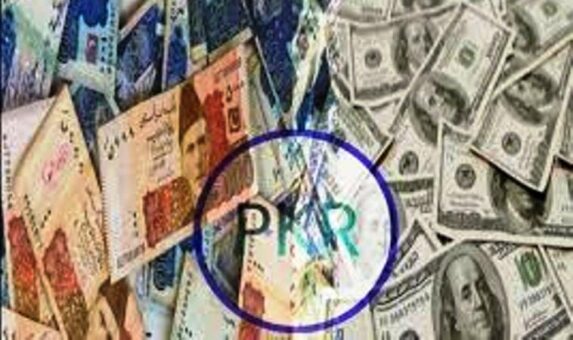
    KARACHI: The Pak Rupee gained two paisas against dollar on Tuesday as State Bank of Pakistan (SBP) issued a framework for banks to take action against trade based money laundering and terror financing.

    The rupee ended Rs156.06 to the dollar from previous day’s closing of Rs156.08 in interbank foreign exchange market.

    The foreign currency market was initiated in the range of Rs156.05 and Rs156.07. The market recorded day high of Rs156.10 and low of Rs156.00 and ended at Rs156.06.

    The exchange rates in open market were remained unchanged. The buying and selling of dollar was recorded at Rs155.70/Rs156.20, the same previous day’s level, in cash ready market.

  • Overseas investors spend Rs5.5bn for CSR activities

    Overseas investors spend Rs5.5bn for CSR activities

    KARACHI: The Overseas Investors Chamber of Commerce and Industry (OICCI) member companies spent Rs 5.5 billion during 2018-2019 and directly benefited 5.8 million people across Pakistan as part of its Corporate Social Responsibility (CSR) activities.

    As per 2018-19 Corporate Social Responsibility (CSR) Report, which highlights the key social and community related activities of foreign investors operating in the country, member companies continued their efforts for community welfare and collective good the employees.

    There has been growing realization among the businesses that fulfilling social responsibility means doing good business.

    Hence, there has been a widespread engagement of the leading corporates in adopting various forms of social activities depending upon the need of the society in their area of operations.

    The landscape of CSR initiatives and activities is improving rapidly as the corporate sector in the country has been widely adopting the CSR and Sustainability practices and making them permanent feature of the businesses.

    The social areas such as education, human capital development, healthcare, nutrition, environment and infrastructure development are the main focus of the businesses to reach out to the underprivileged sections of the population.

    About 200 leading foreign investors as part of OICCI platform are among other members who besides doing good business, are investing over Rs300 billion annually in expanding their footprint, contributing a lion’s share of the tax revenue of the country, are also rated as the trendsetter and among the prominent social developers of Pakistan through their CSR and sustainable initiatives.

    As a result of untiring CSR activities of 82 OICCI members only during 2018-2019, over Rs5.5 billion were invested on CSR and reached out to around 58 million direct beneficiaries throughout Pakistan.

    OICCI members and their employees spent around 1.2 million man-hours and partnered with 160 social and development sector organizations in fulfilling their unique CSR program.

    The geographic distribution of the CSR activities has been 32 percent in Sindh, 27 percent in Punjab, 15 percent in Khyber Pakhtunkhwa, 10 percent in Balochistan, 8 percent in Azad Kashmir, and 4 percent each in FATA and Gilgit-Baltistan.

    In terms of specific social sector, Human Capital Development and Health and Nutrition remained key focus areas. Human Capital Development initiatives attracted the attention of 90 percent of the members helping to meet the growing need for improving the human development in the country.

    Many of the members have funded new school facilities and made contributions towards vocational training programs for skills development of the youth.

    Moreover, 86 percent of the members actively supported health and nutrition related initiatives through donations to reputable hospitals, medical care camps and health awareness campaigns. Infrastructure Development was also one of the growing areas of interest for 65 percent of the members who assisted communities in the vicinity of their respective major operating facilities.

  • SBP issues framework for controlling trade based money laundering, terror financing

    SBP issues framework for controlling trade based money laundering, terror financing

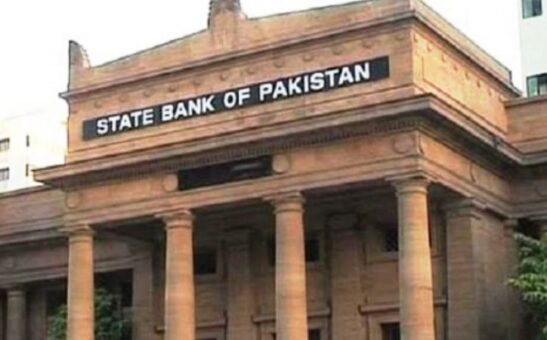
    KARACHI: The State Bank of Pakistan (SBP) on Tuesday issued framework for controlling trade based money laundering and terror financing.

    In order to strengthen trade related Anti Money Laundering/Combating Financing of Terrorism (AML/CFT) regime and restrict possible misuse of banking channel, a comprehensive framework on the subject has been developed and attached herewith.

    Accordingly, Authorized Dealers (ADs) are advised to upgrade their systems and controls and bring policies and procedures in line with the requirements of the framework to ensure meticulous compliance with the provisions thereof with immediate effect except as otherwise provided in the framework

    The provisions of this framework are in addition to and not a replacement of already issued instructions on the subject of ML/FT risks. Therefore, the compliance of the same shall not absolve ADs from their legal and regulatory obligations under prevailing AML/CFT laws/rules and regulations or any other relevant law in force.

    ADs are also advised to educate their clients about their obligation of ensuring (a) correct declaration of particulars on the prescribed forms, (b) utilization of foreign exchange for the exact purpose for which it is acquired by them and (c) repatriation of foreign exchange that represents the full export value of goods.

    In the event, it is found that material information required to be submitted on the prescribed forms has been omitted or suppressed, foreign exchange is misutilized by a client of an AD or export proceeds repatriated by a client does not represent the full export value of goods, SBP shall initiate penal action against such delinquent parties under relevant provisions of the Foreign Exchange Regulation Act, 1947 (FERA).

    Further, the matter shall also be reported to relevant stakeholders for necessary action under the laws being administered by them.

    Failure to comply with the instructions on the subject and the regulatory obligations of AML/CFT may attract action against ADs under the FERA and other relevant laws.

  • Method of accounting for computing income tax

    Method of accounting for computing income tax

    KARACHI: Federal Board of Revenue (FBR) has said that a person’s income chargeable to tax shall be computed in accordance with the method of accounting regularly employed by such person.

    The FBR issued Income Tax Ordinance, 2001 updated till June 30, 2019 incorporating amendments made through Finance Act, 2019. The FBR explained method of accounting in Section 32 of the Ordinance.

    Section 32: Method of accounting

    Sub-Section (1): Subject to this Ordinance, a person’s income chargeable to tax shall be computed in accordance with the method of accounting regularly employed by such person.

    Sub-Section (2): Subject to sub-section (3), a company shall account for income chargeable to tax under the head “Income from Business” on an accrual basis, while other persons may account for such income on a cash or accrual basis.

    Sub-Section (3): The Board may prescribe that any class of persons shall account for income chargeable to tax under the head “Income from Business” on a cash or accrual basis.

    Sub-Section (4): A person may apply, in writing, for a change in the person’s method of accounting and the Commissioner may, by order in writing, approve such an application but only if satisfied that the change is necessary to clearly reflect the person’s income chargeable to tax under the head “Income from Business”.

    Sub-Section (5): If a person’s method of accounting has changed, the person shall make adjustments to items of income, deduction, or credit, or to any other items affected by the change so that no item is omitted and no item is taken into account more than once.

    Section 33: Cash-basis accounting

    A person accounting for income chargeable to tax under the head “Income from Business” on a cash basis shall derive income when it is received and shall incur expenditure when it is paid.

    Section 34: Accrual-basis accounting

    Sub-Section (1): A person accounting for income chargeable to tax under the head “Income from Business” on an accrual basis shall derive income when it is due to the person and shall incur expenditure when it is payable by the person.

    Sub-Section (2): Subject to this Ordinance, an amount shall be due to a person when the person becomes entitled to receive it even if the time for discharge of the entitlement is postponed or the amount is payable by instalments.

    Sub-Section (3): Subject to this Ordinance, an amount shall be payable by a person when all the events that determine liability have occurred and the amount of the liability can be determined with reasonable accuracy.

    Sub-Section (5): Where a person has been allowed a deduction for any expenditure incurred in deriving income chargeable to tax under the head “Income from Business” and the person has not paid the liability or a part of the liability to which the deduction relates within three years of the end of the tax year in which the deduction was allowed, the unpaid amount of the liability shall be chargeable to tax under the head “Income from Business” in the first tax year following the end of the three years.

    Sub-Section (5A): Where a person has been allowed a deduction in respect of a trading liability and such person has derived any benefit in respect of such trading liability, the value of such benefit shall be chargeable to tax under the head “Income from Business” for the tax year in which such benefit is received.

    Sub-Section (6): Where an unpaid liability is chargeable to tax as a result of the application of sub-section (5) and the person subsequently pays the liability or a part of the liability, the person shall be allowed a deduction for the amount paid in the tax year in which the payment is made.