Day: December 16, 2019

  • FBR grants fourth extension to file returns for tax year 2019

    FBR grants fourth extension to file returns for tax year 2019

    ISLAMABAD: Federal Board of Revenue (FBR) on Monday granted fourth extension for filing annual income tax returns for tax year 2019 up to December 31, 2019.

    The FBR issued Income Tax Circular No. 17/2019, to extend the date of filing of income tax returns/statements for tax year 2019.

    The date of filing of total income/statements of final taxation for individuals and associations of persons for the tax year 2019 which were due on September 30, 2019 and extended up to December 16, 2019 has been further extended up to December 31, 2019.

    The FBR further said that the date of filing of total income / statements of final taxation for companies for the tax year 2019, which were due on September 30, 2019 and extended up to December 16, 2019, in respect of those companies who have paid ninety five percent of the admitted tax liability on or before September 30, 2019, extended up to December 31, 2019.

  • Border markets, warehouses to be established to contain smuggling: Member Customs

    Border markets, warehouses to be established to contain smuggling: Member Customs

    KARACHI: Pakistan Customs to set up border markets and border warehouses all border crossing of the country to contain smuggling, a top official of Pakistan Customs said.

    A statement released by Federation of Pakistan Chambers of Commerce and Industry (FPCCI) on Monday quoted Jawwad Agha, Member Customs (Operations) as saying that on the instructions of the Prime Minister Imran Khan is being prepared under which border markets and border warehouse would be established at all border crossing of the country to contain the smuggling.

    Jawwad Agha in response to the FPCCI president suggestion regarding restoration of 20 days period for clearance of imported or exported goods from 15 days said that the period was reduced to 15 days due to avoid port terminal congestion.

    However, in case of default particularly for the LCL he agreed to consider downward revision of heavy penalty which at present Rs. 5000/- per day. Regarding reduction in utilization period from 24 monthsof input acquired for manufacture and export of output goods under DTRE, he informed that the time was reduced to boost the manufacturing and exports of goods and advised the importers to complete the cycle of manufacturing of goods within the stipulated time.

    In response to a suggestion for data exchange between Pakistani and Chinese customs agencies to curb under-invoicing, the Member Customs (Operations), FBR informed that during the Prime Minister’s visit to China the agreement has been signed and would be initiated soon.

    Engr. Daroo Khan Achakzai, FPCCI President in his recommendations said that in order to facilitate the exports, the government should introduce a new scheme for imports-cum-exports of packing material whereby a notified percentage of inputs may be allowed to be imported at zero rate duties against FOB value of exports of Previous year with flexibility to import any product among the notified list in any quantity within the overall entitlement of the exporter.

    Similarly Garment and Home Textile industry be facilitated by allowing duty free import of Accessories up to 10 percent of last year export performance, which should be added automatically in WeBOC of Manufacturer Cum Exporter ID after closing of 30th June every year on the basis of record available in WeBoc.

    Exporter should be allowed to use it in exports without the condition of mentioning these goods in Export goods declaration.

    However, if an Exporter is required to imports accessories/packing material in excess of 10% then he may use (SRO-492), (SRO 327-Export oriented unit) and (SRO 450-Manufacturing Bond). New Exporter may also use SRO 492(I)/2009 dated June 13, 2009 in first year to make their performance.

  • CCP imposes penalty of Rs75 million on flour mills association for anti-competitive activities

    CCP imposes penalty of Rs75 million on flour mills association for anti-competitive activities

    ISLAMABAD: The Competition Commission of Pakistan (CCP) has imposed a penalty of Rs75 million on Pakistan Flour Mills Association (PFMA) for providing a platform to share commercially sensitive information and fixing the quantities of production of wheat flour.

    The commission took the notice on reports suggesting unusual price hike of wheat flour or wheat atta across Pakistan and carried out raids on PFMA premises.

    “The enquiry in the matter concluded that PFMA is providing a platform to its members for settling of prices of wheat flour to avoid any form of competition which is in violation of the laws.”

    After hearing the parties, the CCP’s bench comprising of the Chairperson Ms. Vadiyya Khalil and Members Dr. Muhammad Saleem and Dr. Shahzad Ansar passed the order.

    The commission observed that under Article 38 of the Constitution the State is responsible to ensure the provisions of food and basic necessities at fair prices along with social and economic benefits to its citizens.

    Accordingly, Provincial Food Departments set a maximum cap of the wheat flour price under the Foodstuffs (Control) Act, 1958; as wheat is Pakistan’s dietary staple and used by consumers belonging to all socio-economic groups.

    The wheat flour currently contributes 72 percent of Pakistan’s daily caloric intake with per capita wheat consumption of around 124 kilograms per year, one of the highest in the world.

    The commission observed that having a maximum cap in the essential food item benefits the consumer to bargain for a lower price and prevents retailers from overcharging consumers. This also enables retailers to discount the product in order to increase their sale.

    “PFMA in complete derogation of the aforesaid objective, deliberately fixed the rates of wheat flour by conducting meetings and discussing the prices as well as the quantities to be produced and supplied by flour mills in violation of Section 4 of the Competition Act.”

    The CCP also observed that discussion, deliberation and decision regarding purely business concerns like current and future pricing, production and marketing are anti-competitive and should be avoided at all costs by the association.

  • Stock market makes 13-month high in intra-day trading

    Stock market makes 13-month high in intra-day trading

    KARACHI: The Stock market made a new 13-month high of 41,699 points on Monday with the index increased by 782 points during the session, analysts said.

    The benchmark KSE-100 index of Pakistan Stock Exchange (PSX) closed at 41,645 points as against 40,917 points showing an increase of +728 points.

    The analysts at Arif Habib Limited said that the index closed near day’s high at 41645 points.

    Oil & Gas chain remained in the limelight, particularly OGDC and PPL, which traded near and at upper circuits respectively.

    O&GMCs traded the most today with 86.7 million shares, mainly contributed by HASCOLR shares totaling 53.3 million. This was followed by Banks (44.2 million) and Cement (32.6 million). Among scrips, UNITY and SSGC followed HASCOLR with 31.4 million and 16.1 million shares respectively.

    Sectors contributing to the performance include E&P (+221 points), Banks (+162 points), Cement (+57 points), O&GMCs (+43 points) and Fertilizer (+39 points).

    Volumes increased significantly from 270.8 million shares to 357.8 million shares (+32 percent DoD). Average traded value also increased by 20 percent to reach US$ 90.3 million as against US$ 75.3 million.

    Stocks that contributed significantly to the volumes include HASCOLR1, UNITY, SSGC, FFL and PIBTL, which formed 37 percent of total volumes.

    Stocks that contributed positively include PPL (+97 points), HBL (+79 points), OGDC (+66 points), POL (+41 points) and UBL (+25 points). Stocks that contributed negatively include MCB (-12 points), BAFL (-5 points), EFERT (-5 points), NATF (-4 points), and INDU (-3 points).

  • Rupee ends down by five paisas on import payment demand

    Rupee ends down by five paisas on import payment demand

    KARACHI: The Pak Rupee ended down by five paisas against dollar on Monday owing to higher demand for import and corporate payments, dealers said.

    The rupee ended Rs155.01 to the dollar from last Friday’s close of Rs154.96 in interbank foreign exchange market.

    The currency dealers said that the rupee was under pressure due to higher demand for dollars. The higher demand was mainly attributed to two weekly holidays.

    The foreign currency market was opened in the range of Rs154.95 and Rs155.00. The market recorded day high of Rs155.01 and low of Rs154.98 and closed at Rs155.01.

    The exchange rate in open marked however was remained unchanged. The buying and selling of dollar was recorded at Rs154.40/Rs154.70, the same closing level on last Friday, in cash ready market.

  • SBP clarifies misconceptions on foreign investment in debt securities

    SBP clarifies misconceptions on foreign investment in debt securities

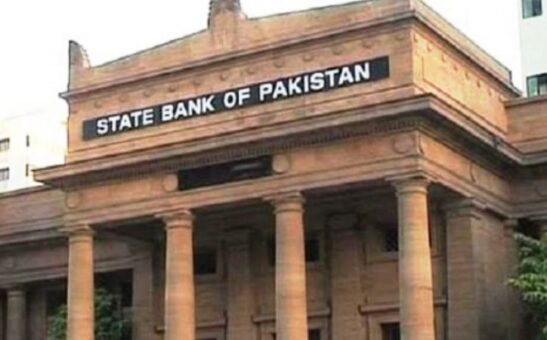
    KARACHI: State Bank of Pakistan (SBP) on Monday said that the risks posed by foreign investment in debt securities at current levels are limited due to various reasons.

    The SBP said that risks posed by such investments are limited at current levels on account of the following reasons.

    “First, the current level of such investments at $1.2 billion accounts for less than 2 percent of the total outstanding marketable government securities and less than 0.5 percent of GDP.

    “Second, this investment accounts for less than one-fifth of the increase in SBP’s net reserve buffers at current levels; the bulk of the increase in the net reserve buffers is accounted for by the continued current account improvement.

    “Third, the tenor of such investments has been increasing with more investments in longer dated instruments as investors’ confidence grows. Finally, the simplification of taxation for investment in government securities that was recently approved by the ECC, will promote greater interest in investments in longer dated maturities.”

    The SBP issued a statement pointing out several misconceptions about the implications of international investors’ investments in the debt markets of Pakistan.

    State Bank of Pakistan would like to clarify as under:

    International investors have been investing in Pakistan’s equity markets for a long time. Such investments are considered portfolio investments, just like investments in debt instruments, and use the same framework of Special Convertible Rupee Account (SCRA). Such investors have been able to move capital in and out of our financial markets without problems for the Pakistan economy.

    Recently, international investors have started investing in debt instruments issued by the government of Pakistan. This is largely a manifestation of their growing confidence in the positive outlook for the economy. As endorsed by international financial institutions, including the IMF, the ADB and the World Bank, and rating agencies, our reform program is beginning to show results.

    One key aspect of this reform program has been the shift to a market based exchange rate system since May 2019 which has addressed previous concerns regarding the sustainability of the exchange rate regime.

    Together with the continued improvement in our balance of payments and reserve buffers, this has raised the comfort level of international investors to invest in local currency denominated financial assets. It should be noted that interest rates have been higher in the past—for example interest rates were around 13.75 percent on average in FY11—but our debt markets did not attract interest from international investors.

    Investment in government securities by international investors provides several benefits to the economy. First, such investment helps to deepen capital markets by increasing the pool of funds available in the local market and diversifies the investor-base.

    Second, such investment helps to allow banks to deploy available funds for lending to the private sector since there is growing competition from international investors for placements in government securities.

    Third, such interest by international investors raises the demand for government securities and accordingly lowers yields and reduces the cost of borrowing for the government. Fourth, the growing role of international investors in the local debt market may serve as a positive feedback mechanism for further improving domestic practices, policies, systems and institutions in line with international best practices.

    There are several emerging market economies that have attracted investments from international investors in much greater amounts on a sustainable basis in their local currency debt markets and have used them as a major stimulus in their macroeconomic development. The SBP continues to monitor developments in the financial sector carefully and stands ready to take action against any risks.


  • Another date extension expected for filing returns tax year 2019

    Another date extension expected for filing returns tax year 2019

    ISLAMABAD: Tax managers and experts are expecting that the Federal Board of Revenue (FBR) likely to further extend the date for filing annual tax returns for tax year 2019.

    Today i.e. December 16, 2019 is the last date for filing returns other than companies for tax year 2019. The FBR on November 29, 2019 granted 16 days extension for filing income tax returns.

    The actual last day for filing income tax returns for tax year 2019 was September 30, 2019. On this date salaried persons, business individuals, Association Persons (AOPs) and corporate entities having special tax year are required to file income tax returns.

    However, due to small number of return filing and delayed issuance of return forms the FBR extended the date from September 30 to October 31. And then it was further extended to November 30, 2019. Now it is December 16, 2019.

    The received income tax returns are still below the expected numbers. As per Pakistan Tax Bar Association (PTBA) around 1.8 million tax returns were filed by December 13, 2019. The PTBA further pointed out that the number of return filers for tax year 2018 was increased to 2.71 million. Therefore, it was almost impossible for 0.9 million people to file their returns in remaining three days.

    The difference of 0.9 million has been calculated on the basis of returns filed last tax year and filed for tax year 2019.

    The actual number of persons required to file the income tax returns is very large. Under the Income Tax Ordinance, 2001, every person who obtains National Tax Number (NTN) is required to file annual return. According to estimates around 4.7 million NTN had been issued by the FBR.

    Further, every taxable income or persons own certain properties or assets defined under the Ordinance are required to file their annual returns.

    In order to facilitate the taxpayers in filing their returns the law accepts CNIC as NTN.

    The tax experts and tax consultants/experts believed that the FBR further extend the date to December 31, 2019. Interestingly, this is also the last date for filing returns by corporate entities whose financial year ends on June 30.

    The PTBA also urged the FBR to extend the last date up to December 31, 2019.

    Some officials in the FBR said that in case the board not extends the date beyond December 16, 2019 then the board will grant general extension any time after January 01, 2020 when small traders will be give time to file their returns.