Year: 2019

  • Trade deficit narrows by 11 percent in eight months

    Trade deficit narrows by 11 percent in eight months

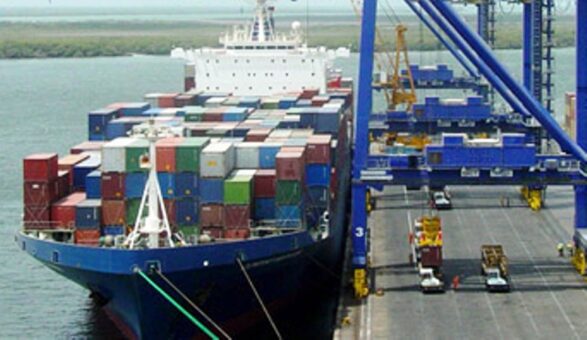
    ISLAMABAD: The trade deficit has narrowed by 11 percent during first eight months of current fiscal year owing decline in import bill, Pakistan Bureau of Statistics (PBS) said on Tuesday.

    The trade deficit shrank to $21.52 billion during July – February 2018/2019 as compared with the deficit of $24.19 billion in the corresponding period of the last fiscal year.

    The import bill of the country was declined by 6.13 percent to $36.63 billion during first eight months of current fiscal year as compared with $39.03 billion in the same period of the last fiscal year.

    However, exports posted growth of 2 percent to $15.11 billion during the period under review as compared with $14.83 billion in the corresponding period of the last fiscal year.

    Experts said that the import bill of the country declined owing to several restrictions imposed by the government including condition of advance payment and regulatory duty on luxury and non-essential items.

    On the other side exports failed to reflect the incentives granted to manufacturing and export sector by the government.

    The trade deficit reduced sharply in February 2019 to $2.29 billion from the deficit of $2.86 billion in February 2018, showing decline of 20.12 percent.

    In the same period imports fell by 12.26 percent to $4.18 billion as compared with $4.76 billion in February 2018.

    The export growth was flat during the month to $1.88 billion as compared with $1.89 billion.


    Related Stories: Pakistan’s import bill declines by 19.14pc in January

  • Rupee ends flat against dollar

    Rupee ends flat against dollar

    KARACHI: The Pak Rupee ended flat against dollar on Tuesday amid higher demand for import and corporate demand.

    The rupee ended Rs138.82 to the dollar from previous day’s close of Rs138.82 in interbank foreign exchange market.

    The interbank foreign exchange market was initiated in the range of Rs138.80 and Rs138.85.

    The market recorded day high of Rs138.90 and low of Rs138.82 and closed at Rs138.82.

    Currency experts said that the scheduled repayment of foreign loans had pressure on the local currency. However, they said that expected inflows of $4.1 billion during next few days would help the local currency to gain values.

    The exchange rates in the open market were also flat.

    The buying and selling of dollar was recorded at Rs138.30/Rs138.80 from previous day’s closing of Rs138.30/Rs138.70 in cash ready market.

    Related Stories
    Rupee falls by 26 paisas against dollar

  • Equity market witnesses lackluster trading activity

    Equity market witnesses lackluster trading activity

    KARACHI: Trading at the equity market was remained lackluster as the taxation measures failed to attract investors.

    The benchmark KSE-100 index closed at 38,896 points as against 38,924 points showing a decline of 28 points.

    The government on the demand of stock market abolished the advance tax on sale and purchase of shares and also allowed loss carry forward for next three years.

    Analysts at Arif Habib Limited said that the market repeated the pattern witnessed in the past couple of sessions, viz an increase in the beginning of session followed by selling till the end.

    The index again traded in a narrow range and oscillated between +106 points and -276 points.

    Traded volumes improved over the day but were still lethargic considering the hey-days.

    The banks again led the volumes table (18.3 million), contributed by BOP (11.5 million), followed by Cement sector which took the cue from anticipated construction activity as indicated by the prime minister.

    Large cap banks and E&P remained on the negative side throughout the session and were the main reasons for slide in index.

    Sectors contributing to the performance include Banks (-92 points), Autos (-12 points), Cement (+28 points), E&P (+24 points), Pharma (+11 points).

    Volumes increased from 68 million shares to 90 million shares (+32 percent DoD). Average traded value also increased by 19 percent to reach US$ 28.3 million as against US$ 23.8 million.

    Stocks that contributed significantly to the volumes include BOP, WTL, DCL, KEL and FCCL, which formed 43 percent of total volumes.

    Stocks that contributed positively include OGDC (+26 points), ABOT (+13 points), PMPK (+11 points), HMB (+9 points), and LUCK (+9 points). Stocks that contributed negatively include MEBL (-32 points), HBL (-27 points), MCB (-20 points), ENGRO (-11 points) and BAFL (-10 points).

    Related Stories
    Equity market sheds 26 points in range bound trading

  • SBP allows exemptions, relaxations for housing finance

    SBP allows exemptions, relaxations for housing finance

    KARACHI: The State Bank of Pakistan (SBP) has allowed certain exemptions and relaxations in prudential regulations for promoting low cost housing finance.

    A circular issued a day earlier, the SBP said that in order to promote low cost housing finance in the country, it has been decided to define the low cost housing as part of SBP’s regulatory framework and allow certain regulatory relaxations for banks/DFIs.

    To qualify under low-cost housing finance, the borrower has to fulfill the following criteria:

    • Maximum value of the housing unit/apartment up to Rs3 million

    • Covered area of the housing unit / apartment up to 850 square feet in urban areas

    • Loan size up to Rs2.7 million

    To further encourage and facilitate the Banks/DFIs to pursue low-cost housing finance, regulatory exemptions/relaxations in the following Prudential Regulations (PRs) for housing finance are being advised:

    i. Regulation HF 4: Loan to Value Ratio (LTV): LTV ratio of upto 90:10 shall be maintained for low cost housing finance.

    ii. Regulation HF 5: Limit on Exposure against Real Estate Sector: Financing extended to low cost housing, shall be exempted from exposure limit of 10 percent on real estate sector.

    iii. Regulation HF-7: Property Assessment: For the purpose of financing low cost housing units, banks/DFIs are allowed to apply the valuation of single unit on all the units of the same society/colony instead of conducting separate valuation for each unit constructed on the same layout and size.

    iv. Regulation HF 9: General Reserve against Housing Finance: Banks/DFIs are exempted from general reserve requirement against the financing extended to low cost housing.

    Banks/DFIs have been directed to ensure circulation of these exemptions/relaxations in the regulations for housing finance among all their offices/branches for meticulous compliance in letter and spirit.

  • Finance Supplementary (2nd Amendment) Act 2019: Directorate set up for tax recovery from undeclared offshore assets

    Finance Supplementary (2nd Amendment) Act 2019: Directorate set up for tax recovery from undeclared offshore assets

    ISLAMABAD: The federal government has set up Directorate General of International Tax Operations for recovery of tax in undeclared off-shore assets and incomes.

    According to Finance Supplementary (Second Amendment) Act, 2019, the directorate has been established under new section 230E of Income Tax Ordinance, 2001.

    The new section is as follow:

    Section 230E: Directorate General of International Tax Operations:

    Sub-Section (1): The Directorate General of International Tax Operations shall consist of a Director General and as many Directors, Additional Directors, Deputy Directors, Assistant Directors and such other officers as the Federal Board of Revenue (FBR) may, by notification in the official Gazette, appoint.

    Sub-Section (2): The Board may, by notification in the official Gazette,-

    (a) specify the functions and jurisdiction of the Director General and its officers; and

    (b) confer the powers of authorities specified in Section 207 upon the Directorate General and its officers.

    Sub-Section (3): The functions and powers of the Directorate General of International Tax Operations shall include but not limited to –

    (a) receive and send information from other jurisdiction under spontaneous, automatic and on demand exchange of information under exchange of information agreements;

    (b) levy and recover tax by passing an assessment order under section 123(1A) in case of undeclared off-shore assets and incomes;

    (c) receive, transmit and exchange country by country reports to the jurisdictions that are parties to international agreements with Pakistan; and

    (d) conduct transfer pricing audit in cases selected for such audit by the Director General of International Tax Operations.

    Sub-Section (4): The FBR may, by notification in the official Gazette, specify the criteria for selection of the taxpayer for transfer pricing audit.

    Explanation: For the removal of doubt, it is clarified that transfer pricing audit refers to the audit for determination of transfer price at arm’s length in transactions between associates and is independent of audit under Section 177 and 214C which is audit of the income tax affairs of the taxpayer.

    Related Stories
    Finance Supplementary (2nd Amendment) Act 2019: motor vehicle purchase restriction on non-filers withdrawn
    Finance Supplementary (2nd Amendment) Act 2019: FBR to issue sales, income tax refund bonds

  • Motor vehicle purchase restriction on non-filers withdrawn

    Motor vehicle purchase restriction on non-filers withdrawn

    ISLAMABAD: The federal government has allowed non-filers of income tax returns to purchase locally manufactured motor vehicles.

    According to Finance Supplementary (Second Amendment) Act, 2019, the government lifted the mandatory condition of return filing for purchase of motor car.

    Further through the Act, non-resident Pakistani citizens holding international passport have also been allowed to registered imported or locally manufactured cars.

    “227C. Restriction on purchase of certain assets

    Notwithstanding anything contained in any law, for the time being in force,—

    (a) any application for booking, registration or purchase of a new locally manufactured motor vehicle or for first registration of an imported vehicle shall not be accepted or processed by any vehicle registering authority of Excise and Taxation Department or a manufacturer of a motor vehicle respectively, unless the person is a filer.; and

    (b) any application or request by a person to any authority responsible for registering, recording or attesting transfer of any immovable property, exceeding five million rupees, for registering or attesting the transfer shall not be accepted or processed by such authority, unless the person is a filer:

    “Provided that the provisions of clause (a) shall not apply in respect of,─

    (i) locally manufactured motor vehicle; or

    (ii) a person holding a Pakistan origin card or a national identity card for overseas Pakistanis or a non-resident Pakistani citizen holding international passport who produces a certificate from a scheduled bank of receipt of foreign exchange remitted from outside Pakistan through normal banking channels during a period of sixty days prior to the date of booking, registration or purchase of motor vehicle:

    Provided further that the provisions of clause (b) shall not apply to,─

    (i) a legal heir acquiring property in inheritance; or

    (ii) a person holding a Pakistan origin card or a national identity card for overseas Pakistanis or a non-resident Pakistani citizen holding international passport who produces a certificate from a scheduled bank for receipt of foreign exchange remitted from outside Pakistan through normal banking channels during a period of sixty days prior to the date of registering, recording or attesting transfer.”

    Related Stories
    Finance Supplementary (2nd Amendment) Act 2019: FBR to issue sales, income tax refund bonds

  • FBR to issue sales, income tax refund bonds

    FBR to issue sales, income tax refund bonds

    ISLAMABAD: Federal Board of Revenue (FBR) will issue sales tax and income tax refund bonds through its subsidiary company ‘FBR Refund Settlement Company (Private) Limited.

    (more…)
  • SBP launches Islamic loan facility for low cost housing

    SBP launches Islamic loan facility for low cost housing

    KARACHI: State Bank of Pakistan (SBP) on Monday launched Sharia compliant loans for low cost housing for special segments.

    In a circular issued by the central bank stated that in order to facilitate availability of long-term affordable funding to some of the selective low income segments, SBP had launched a “Financing Facility for Low Cost Housing for Special Segments” through IH&SMEFD Circular No. 05 of 2019.

    In this regard, SBP is also introducing a Mudarabah based “Islamic Financing Facility for Low Cost Housing for Special Segments” (The Facility) for Islamic Banking Institutions (IBIs) and Islamic DFIs; collectively referred as Participating Islamic Financial Institutions (PIFIs).

    Salient features of the financing facility are as under:

    Participants: All Banks/DFIs

    Loan Amount: Up to Rs. 2.7 million

    Refinance: Up to 100 percent by SBP

    Scope: Widows, Children of martyrs, Special persons, Transgender, and Persons in areas severely affected by terrorism.

    Eligibility of Borrower: First time home owner; Must not have availed housing finance previously; For construction of a new housing unit; Maximum value of the housing unit up to Rs. 3 million; The financing for plot to be purchased for constructing house shall be allowed upto Rs1 million only

    Loan Tenor: Up to 12½ years

    Under this facility, the central bank said that Mudarabah investment of SBP shall be available for up to 100 percent of the amount financed to eligible customers.

    SBP shall make Mudarabah investment in general pool of the PIFI.

    PIFIs may submit their requests for allocation / assignment of limits under this facility to be evaluated by SBP as per its internal criteria. Yearly limits shall be allocated to individual PIFI under the Scheme.

    Applications for sanction of limits for each fiscal year (July-June basis) shall be sent by the interested PIFIs to the Director, Infrastructure, Housing & SME Finance Department, latest by May 15 each year to facilitate sanction of annual limits at the earliest.

    For the current year, the request for sanction of limits may be submitted within 30 days from the date of issuance of this circular.

  • FBR imposes regulatory duty up to Rs18,500 per mobile phone

    FBR imposes regulatory duty up to Rs18,500 per mobile phone

    ISLAMABAD: The Federal Board of Revenue (FBR) has imposed regulatory duty up to Rs18,500 per set on import of mobile phones.

    The FBR issued SRO 327(I)/2019 on Monday to amend the SRO 1265(I)/2018 dated October 16, 2018, and imposed regulatory duty on six different categories of mobile phones imported under HS Code 8519.1219.

    The new rate of regulatory will be as follow:

    01. Mobile phones having Cost and Freight value up to $30 per set: Rs180 per set

    02. Mobile phones having Cost and Freight value above $30 per set but not exceeding $100 per set: Rs1,800 per set

    03. Mobile phones having Cost and Freight value above $100 per set but not exceeding $200 per set: Rs2,700 per set

    04. Mobile phones having Cost and Freight value above $200 per set but not exceeding $350 per set: Rs3,600 per set

    05. Mobile phones having Cost and Freight value above $350 per set but not exceeding $500 per set: Rs10,500 per set

    06. Mobile phones having Cost and Freight value above $500 per set: Rs18,500 per set

    Related Stories
    Finance Supplementary Bill: FBR issues salient features of customs duty regime

  • Car sales drop by 4.5 percent in eight months

    Car sales drop by 4.5 percent in eight months

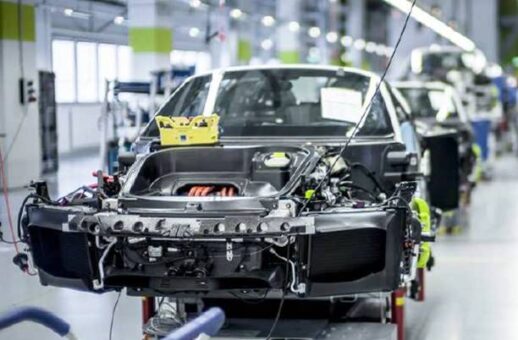
    KARACHI: The sales of locally assembled cars have dropped by 4.5 percent to 162,692 units during July – January 2018/2019 as compared with 170,354 units in the same period of the last fiscal year.

    Analysts said that the decline car sales were due to jump in prices and restriction imposed on non-filers to register new cars.

    However, the government lifted this restriction through amendments made in Finance Supplementary (Second Amendment) Act, 2019.

    Analysts at Topline Research said Pakistan Auto sales are down by 13 percent YoY in February 2019, as against 4.5 percent YoY decrease in January 2019.

    Moreover, sales are down 13 percent MoM which can be attributed to lower number of working days in February compared to January.

    To note, measures in economic reforms package are expected to support declining volumes, however, volumes will still see a downward trend in months to come, in our view, due to slow down in economy as well as significant jump in prices in last 15 months.

    Total sales during 8MFY19 have come in at 163K units, down by 4.5 percent YoY.

    Indus Motors (INDU) reported YoY growth yet again (up 8 percent YoY in Feb 2019) as the strong (albeit thinning) order book continues to support sales. Fortuner sales rose 80 percent YoY, first YoY increase in 8 months, while Corolla continued its growth trend with sales up 23 percent YoY.

    On the other hand Hilux sales fell 72 percent YoY, highest YoY decline in 19 months.

    Pak Suzuki (PSMC) continued to report YoY decline in sales, down by 17 percent YoY in Feb 2019. Sales decline was led by Mehran, Bolan, Swift, Cultus and Ravi variants down by 33 percent YoY, 18 percent YoY, 28 percent YoY, 14 percent YoY and 14 percent YoY, respectively.

    Wagon-Rwas the only PSMC variant to record growth YoY (up 16 percent YoY).

    Honda cars (HCAR) sales fell 27 percent YoY, worst YoY decline since Apr 2012. This coincides with worst YoY decline in sales of city and civic variants, which fell by 24 percent YoY.

    In addition to the economic factors, decline in City and Civic variants can also be attributed to the expected launch of Civic 1.5 Turbo (substitute for Civic 1.8) in coming months.

    Simultaneously BR-V sales fell 45 percent YoY. To, note, BR-V sales have fallen YoY for the 10 consecutive month as the variant introduced in Apr 2017 loses its charm with the consumers.

    Related Stories
    Car sales decline 3.2 percent in July – January