
KARACHI: Sindh Revenue Board (SRB) issued working tariff updated up to December 31, 2019 under which the sales tax on services will be 19.5 percent on telecommunication services. (more…)
Day: January 2, 2020
-

Pakistan’s foreign exchange reserves increase to $18.081 billion
KARACHI: The liquid foreign exchange reserves of the country increased by $486 million to $18.081 by week ended December 27, 2019 as compared with $17.595 billion a week ago, State Bank of Pakistan (SBP) said on Thursday.
The foreign exchange reserves held by the central bank increased by $582 million to $11.489 billion by week ended December 27, 2019 as compared with $10.907 billion a week ago.
The SBP attributed the increase to bilateral and multilateral inflows including proceeds of US$ 452.4 million received from IMF under EFF program.
The foreign exchange reserves held by commercial banks however declined by $95 million to $6.592 billion by week ended December 27, 2019 as compared with $6.687 billion a week ago.
-

Rupee eases on import, corporate demand
KARACHI: The Pak Rupee eased by three paisas on Thursday owing to higher import and corporate payments, dealers said.
The rupee ended Rs154.88 to the dollar from Tuesday’s closing of Rs154.85 in interbank foreign exchange market.
The dealers said that last day the market was remained closed due to bank holiday. Therefore, the demand was higher today for import and corporate payments.
They said that improved economic indicators would help the rupee against the foreign currency in coming days.
The exchange rate in open market also witnessed slight change in rupee value. The buying and selling of dollar was recorded at Rs154.70/Rs155.10 from Tuesday’s closing of Rs154.70/Rs155.00 in cash ready market.
-

Stock market gains 1,081 points on tax incentives
KARACHI: The stock market gained 1,081 points on Thursday owing to positive outcome of tax amendment ordinance promulgated a day earlier.
The benchmark KSE-100 of Pakistan Stock Exchange (PSX) closed at 42,481 points as against 41,400 points showing an increase of 1081 points.
The sentiments of the market was positive on tax incentives granted to foreign investors in domestic debt securities.
Analysts at Arif Habib Limited said that second trading day of 2020 took the index to an even higher number with an increase of 1144 points and closing the session 1081 points.
Reasons that contributed to the performance of index were rumour of downward adjustment in NSS rates by a significant margin and buying activity from Banks and Foreign Fund, in addition to the recent release of a host of high index targets from various brokerage houses.
Buying activity was mainly observed in Banks, E&P and Cement Sectors.
Power sector led the volumes with 58.8 million shares, followed by Banks (58.1 million) and Cement (36.3 million).
Among scrips, KEL traded 46.8 million shares, followed by BOP (27.7 million) and FFL (21.4 million).
Sectors contributing to the performance include Banks (+332 points), E&P (+133 points), Power (+107 points), Cement (+95 points) and Fertilizer (+91 points).
Volumes increased from 330.7 million shares to 412.4 million shares (+24 percent DoD). Average traded value also increased by 111 percent to reach US$ 110.2 million as against US$ 52.1 million.
Stocks that contributed significantly to the volumes include KEL, BOP, FFL, UNITY and PAEL, which formed 33 percent of total volumes.
Stocks that contributed positively include HUBC (+101 points), HBL (+85 points), ENGRO (+83 points), UBL (+73 points) and PPL (+67 points). Stocks that contributed negatively include KTML (-2 points), SHEL (-1 points), GSKCH (-1 points), POL (-1 points), and FHAM (-1 points).
-

Commissioner empowered to cancel business license
ISLAMABAD: The commissioner of Inland Revenue has been empowered to cancel business license of person on violation of tax laws.
An amendment has been made to Section 181D of Income Tax Ordinance, 2001 through Tax Laws (Second Amendment) Ordinance, 2019 to empower commissioner to impose fine and penalty and cancel business license.
Federal Board of Revenue (FBR) in salient features to tax amendment ordinance said that in order to document business activity section 181D of the Ordinance was inserted through the Finance Act, 2019 whereby it was made mandatory for every person engaged in any business, profession or vocation to obtain and display a business license as prescribed by the board.
In order to complement efforts towards implementation of this scheme the Commissioner is being empowered to impose a fine of Rs.20,000/- in the case of a taxpayer deriving income chargeable to tax under the Ordinance and Rs.5,000/- in all other cases.
Moreover, the Commissioner shall also be empowered to cancel a business license after providing an opportunity of being heard if a person fails to notify any change in particulars within 30 days of such change or if a person is convicted of any offence under any Federal Tax Law.
-
Tax amendments to generate great interest in govt securities: SBP
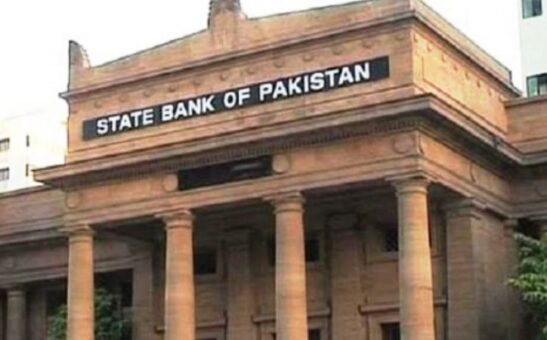
KARACHI: State Bank of Pakistan (SBP) on Thursday said that the tax amendment for foreign investors to generate great interest in government securities.
In a statement the central bank said that the tax amendments will help to deepen the capital market, generate greater interest in the longer-dated government securities, diversify the investor base, and reduce the cost of debt for the government.
Amendments in the Income Tax Ordinance, 2001 have been issued to simplify the tax regime for non-resident companies investing in debt instruments and Government securities.
The SBP said that these amendments aim to deepen our capital markets, support availability of long term rupee financing sources, support competition in the local currency debt market, and diversify the source of funding for the government.
The existing foreign exchange framework allows non-residents to invest in debt instruments and Government securities through Special Convertible Rupee Account (SCRA) maintained with banks in Pakistan.
However, the tax structure for non-residents investing in debt securities was historically complex. Different rates applicable for the withholding tax on profit on debt and capital gains tax, penal transaction charges for non-filers, a complex tax-filing process and uncertainty about tax applicability were the key impediments to foreign investment into the local debt market, particularly in the long-term debt instruments.
In this context, the recent amendment in the tax laws has simplified Pakistan’s tax regime for investment in the local debt market.
Specifically, the above Ordinance has implemented the following changes in Income Tax Ordinance, 2001 to simplify the tax regime for non-resident companies, having no permanent establishment in Pakistan, investing through SCRA in debt instruments and government securities (including Treasury Bills and Pakistan Investment Bonds):
The capital gains tax shall be subject to withholding at the rate of ten percent and shall constitute final discharge of the tax liability;
No deduction of 0.6% banking transaction tax under section 236P on transactions in SCRA;
No advance tax payment under section 147 on capital gains;
Dispensation from the requirement of registration under section 181, filing of return under section 114 and filing of statement of final taxation under section 115 in respect of income solely from capital gains or profit on debt from investment in debt securities;No distinction shall be made in terms of filer or non-filer;
Many non-resident investors currently benefit from tax treaties and already enjoy reduced rates of taxation around 10 percent. The key provision in the ordinance is to simplify the tax structure and process for international investors.
-
Minimum rate reduced to 0.5%
ISLAMABAD: The government has reduced the minimum tax rate to 0.5 percent from 1.5 percent for traders having turnover up to Rs100 million.
Federal Board of Revenue (FBR) issued salient features to explain changes made to Income Tax Ordinance, 2001 through Tax Laws (Second Amendment) Ordinance, 2001.
The FBR said that the standard rate of minimum tax under section 113 of the Income Tax Ordinance, 2001 is being reduced from 1.5 percent to 0.5 percent in the case of traders having turnover up to Rs.100 million for the Tax Year 2020.
However, traders having turnover up to Rs.100 million who have filed their returns for the Tax Year 2018 will be obliged to pay tax equal to or more than the tax paid for the Tax Year 2018 for the Tax Years 2019 and 2020.
Moreover, a trader has been defined as an individual engaged in the buying and selling of goods in the same state including a retailer and a wholesaler, however, distributors have been ousted from the scope of this definition.
Under section 153 of the Ordinance, individuals having turnover of Rs.50 million or above in any of the preceding Tax Years are obliged to act as withholding tax agents whilst making payments for supply of goods, rendering of services or for execution of contracts.
Henceforth traders, being individuals and having turnover up to Rs.100 million shall not be required to act as a withholding agent under section 153 of the Ordinance.
-
Tax Amendment Ordinance: advance income tax on mobile phone import reduced
ISLAMABAD: In a significant move aimed at promoting digital accessibility and e-commerce in Pakistan, the government has reduced the advance tax on the import of mobile phones.
(more…) -
Exemption in import certificates facilitates manufacturers
ISLAMABAD: The government has facilitated manufacturers in obtaining exemption certificates for import of raw material.
The Federal Board of Revenue (FBR) issued salient features to explain amendments to Income Tax Ordinance, 2001 brought through Tax Laws (Second Amendment) Ordinance, 2019.
A major change was introduced under which a manufacturer applies for exemption certificates to the Commissioner Inland Revenue. In case the commissioner unable to approve the request within give timeframe then the exemption certificate would automatically granted.
The FBR explained that in order to facilitate manufacturers, a Commissioner, under the auspices of clause (72B) of Part-IV of the Second Schedule to the Ordinance has the mandate to issue exemption certificate in respect of collection of tax under section 148 of the Ordinance at the import stage in respect of raw materials being imported by industrial undertakings subject to various conditions.
However, no time limit has been prescribed under the law or rules for disposal of such exemption certificate by the Commissioner.
In order to complement efforts being made towards ease of doing business if a Commissioner fails to issue such certificate within the time period prescribed under the Income Tax Rules, 2002 the certificate shall be automatically processed and issued by IRIS and shall be deemed to have been issued by the Commissioner.
However, the Commissioner shall have the mandate to modify or cancel the certificate issued automatically by IRIS on the basis of reasons to be recorded in writing after providing an opportunity of being heard to the taxpayer.
-
Tax Amendment Ordinance: exemption, incentives announced for foreign investment in debt securities
ISLAMABAD: The government has announced a comprehensive package of tax incentive and exemptions to attract foreign investment into debt securities.
The Federal Board of Revenue (FBR) issued salient features on Wednesday to explain amendments to Income Tax Ordinance, 2001 brought through Tax Laws (Second Amendment) Ordinance, 2019.
The FBR said that the existing foreign exchange framework of the country allows non-residents to invest in debt securities and Government securities through Special Convertible Rupee Accounts (SCRA’s) maintained with banks in Pakistan.
There is no restriction on repatriation of funds from SCRA’s which incentivizes investment in the local debt market by non-resident investors.
Several amendments for encouraging investment in the local debt market and simplifying the tax regime for non-resident companies have been introduced which are summarized hereunder:-
(i) Capital gains emanating from the disposal of debt instruments and government securities (including treasury bills and Pakistan Investment Bonds) to non-resident companies (not having a permanent establishment in Pakistan)who have made investments in such debt instruments/securities exclusively through a Special Convertible Rupee Account (SCRA) maintained with a bank in Pakistan shall be subject to withholding tax @ 10 percent by banks/financial institutions which shall constitute final discharge of tax liability.
(ii) Enhanced rate of withholding tax for persons not appearing on the active taxpayers list under the Tenth Schedule to the Ordinance shall not apply to capital gains and profit on debt earned by non-resident companies, not having a permanent establishment in Pakistan, which invest in local debt instruments/securities through SCRA maintained with a bank in Pakistan.
(iii) Special Convertible Rupee Accounts (SCRA) being maintained by non-resident companies having no permanent establishment in Pakistan shall be exempt from collection of advance tax on banking transactions otherwise than through cash under section 236P of the Ordinance.
(iv) A non-resident company having no permanent establishment in Pakistan investing debt instruments and government securities through SCRA shall not be required to pay advance tax under section 147 of the Income Tax Ordinance, 2001 in respect of capital gains arising to it.
(v) Requirement for filing a statement of final taxation under section 115(4) of the Income Tax Ordinance, 2001 and registration under section 181 of the Ordinance shall not apply to a non-resident company having no permanent establishment in Pakistan solely by reason of Capital Gain or Profit on Debt earned from investments indebt securities and Government securities through Special Convertible Rupee Account maintained with a banking company or financial institution in Pakistan.