Day: August 24, 2020

  • Banks fail to meet agri credit disbursement target

    Banks fail to meet agri credit disbursement target

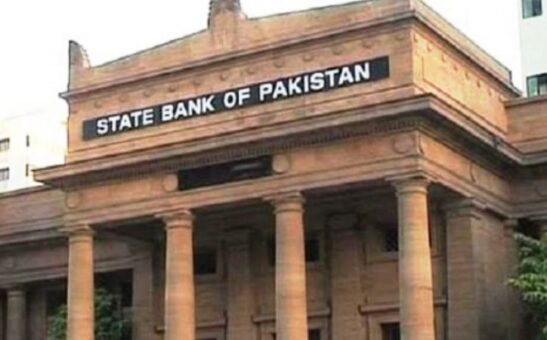
    KARACHI: Banks have missed agriculture credit disbursement target for fiscal year 2019/2020 by Rs135 billion but the credit disbursement was 3.5 percent higher than the preceding fiscal year, State Bank of Pakistan (SBP) said on Monday.

    The central bank in a statement said that the banks disbursed Rs 1,215 billion to agriculture sector during 2019-2020. This is 3.5 percent higher than the amount disbursed in the previous fiscal year but less than the credit target of Rs 1,350 billion which was set by Agricultural Credit Advisory Committee (ACAC) in Peshawar in November 2019.

    Some factors which have constrained the growth of agriculture credit include the impact of COVID-19 pandemic, locust attack and continuing real side issues including water shortage, low production of cotton, sugarcane, low off take of fertilizers and volatility in prices of agri. produce etc.

    The outstanding portfolio of agriculture credit increased to Rs 581 billion at end June, 2020, registering growth of 3.3 percent compared with the last year’s position of Rs 562 billion.

    However, the number of agriculture borrowers declined from 4.01 million at end June 2019 to 3.74 million at end June 2020 due to the COVID-19 lockdown situation in the country.

    The analysis of disbursement reveals that during FY 2019-20, five major commercial banks collectively disbursed agriculture loans of Rs 708.3 billion or 100.5 percent of their annual target of Rs 705 billion, specialized banks disbursed Rs 71.1 billion or 62.9 percent of their annual target of Rs 113 billion and fourteen domestic private banks as a group achieved 88.7 percent by disbursing Rs 225.0 billion against their target of Rs 253.6 billion.

    Further, the five Islamic Banks as a group achieved 76.6 percent of their annual target of Rs 55.0 billion by disbursing Rs 42.1 billion which is 6.1  percent higher than the disbursement made during the corresponding period last year. Similarly, the Islamic windows of commercial banks disbursed Rs 43.5 billion or 79.2 percent against the target of Rs 55.0 billion in FY 2019-20 which is 33  percent higher from the disbursement of Rs 32.7 billion made during last year.

    The agriculture credit of microfinance sector remained relatively sluggish due to COVID-19 lockdown in the 2nd half of FY 2019-20. The Microfinance Banks (MFBs) as a group have achieved 75.7 percent by disbursing agriculture loans of Rs 139.3 billion to small farmers which is 9.5 percent lower than the disbursement of Rs 154 billion during same period last year.

    Likewise, the Microfinance Institutions/Rural Support Programs collectively achieved 73.4 percent of their targets by disbursing Rs 28.9 billion which is 15  percent lower than the disbursement of Rs 34 billion made during the last year to small and marginalized farmers.

    It is important to mention that SBP announced a comprehensive relief package in collaboration with stakeholders for relief of agriculture sector to deal with the adverse implications of the ongoing pandemic on the farming community and agriculture business in the downstream of value chains. These measures which included deferment of principal and restructuring/rescheduling of agriculture loans were initially allowed uptill June 30, 2020 have been extended upto 30 September 2020.

    SBP will continue to monitor the situation and it may introduce more measures to help the sector manage its finances during this temporary phase of disruption.

  • FBR notifies rules making mandatory for banks to share deposit, withdrawal details

    FBR notifies rules making mandatory for banks to share deposit, withdrawal details

    ISLAMABAD: Federal Board of Revenue (FBR) on Monday made it mandatory for banks to provide details of transactions including deposits and withdrawals during a month. Besides, the banks are also required to provide information of transactions made through credit/debit cards and details of persons making profit on debt through banking deposits.

    The FBR issued SRO 773(I)/2020 dated August 24, 2020 to make amendment in Income Tax Rules, 2002. The FBR previously issued draft of these rules through SRO 686(I)/2020 dated August 05, 2020.

    According to the amendments, the banks are required to provide information of persons who have deposited Rs10 million or more during a month.

    The information of person making transactions must include: CNIC/NICOP/Passport Number; Name/Title of Account; Resident/Non-Resident; Address; Telephone Number; Account Opening Date; Account Number (BAN); Business/Professional/Occupation; and Amount Deposited during a month.

    The banks are also required to provide similar information to the tax authority of a person making cash withdrawal exceeding Rs1 million during a month.

    According to the rules, the FBR also made it mandatory for banks to provide details of persons making payment through credit card payment of Rs250,000 or more during a month. The FBR sought similar information of persons making transactions from banks.

    Besides, the banks will furnish information of persons making profit on debt during a year. The banks will provide similar information of persons drawing profit on debt.

  • Stock market gains 181 points in mixed trading activity

    Stock market gains 181 points in mixed trading activity

    KARACHI: The stock market gained 181 points on Monday in mixed trading activity during the day.

    The benchmark KSE-100 index of Pakistan Stock Exchange (PSX) closed at 39,802 points as against 39,622 points showing an increase of 181 points.

    Analysts at Arif Habib Limited said that the market opened on a positive note today and continued the momentum by adding a total of 203 points during the session.

    The index also saw a drop of 148 points from LDCP, but rebounded by the end of session.

    Cement, Pharma, Steel and O&GMC sectors helped post gains on the Index, among which Cement and Pharma stocks reacted to expectations of an increase in underlying product prices.

    Cement dispatches are also anticipated to be high on the back of higher PSDP utilization in Q1-FY21. E&P sector remained under pressure due to News of privatization of OGDC and PPL by GOP, whereas banking sector stocks followed the trend as in past several sessions.

    Technology sector led the volumes with 67 million shares, followed by Cement (61.9 million) and Misc (29.7 million). Among scrips, TRG topped the volumes with 29.8 million shares, followed DCL (23.4 million) and PACE (23.4 million).

    Sectors contributing to the performance include Cement (+73 points), Technology (+47 points), Pharma (+39 points), O&GMCs (+36 points), Inv Banks (+28 points) and E&P (-74 points).

    Volumes declined from 400.5 million shares to 371.3 million shares (-7 percent DoD). Average traded value, on the contrary, increased by 9 percent to reach US$ 88.6 million as against US$ 81.7 million.

    Stocks that contributed significantly to the volumes include TRG, DCL, PACE, WTL and PRL, which formed 31 percent of total volumes.

    Stocks that contributed positively to the index include LUCK (+39 points), TRG (+38 points), DAWH (+27 points), SEARL (+24 points) and NBP (+16 points). Stocks that contributed negatively include OGDC (-27 points), PPL (-21 points), POL (-19 points), FFC (-15 points) and MCB (-10 points).

  • FPCCI praises SBP for timely action to avert coronavirus impact

    FPCCI praises SBP for timely action to avert coronavirus impact

    KARACHI: Federation of Pakistan Chambers of Commerce and Industry (FPCCI) has praised State Bank of Pakistan (SBP) for timely action to minimize adverse impact of coronavirus on trade and industry, a statement said on Monday.

    “However, implementation of such measures is required to reach at the grass root level,” said Khurram Ijaz, Vice President, FPCCI, while chairing webinar on ‘Implications of Covid-19 on the Financial Market/Institutions of Pakistan.’

    He said that outbreak of Coronavirus has not only affected the trade and industry of Pakistan, but drastically declined the performance of the financial market and major economic indicators in the economy.

    During discussing, Arjumand Qazi, Group Head (SME)- Pak Brunei Investment said that SBP has indeed extended maximum support to the trade and industry in term of designing and announcing effective financing schemes since April 2020.

    However, commercial banks and other financial institutions are still reluctant to extend such facilities to rural businesses.

    Khurram Shehzad renowned financial expert appreciated SBP’s measure to decrease the interest rate from 13 percent to almost 7 percent in last 6 months.

    He said that it is high time that commercial banks, investment companies and other stakeholders of the financial market play their part in the economic and financial survival of the economy.

    Hasan Raza, Head of Project Management in Research Dept. Pakistan Stock Exchange (PSX) said that Pakistan Stock Exchange fell down to 27000 index point in February 2020 at the start of the lockdown, but with the efforts of PSX, the KSE index point has reached upto 40,000 index point in August 2020.

    He further shared information regarding newly launched mutual funds and new Sukuk bonds in 2020.

    While expressing his views, Zubair Haider Sheikh, Head of Cooperate & Investment Banking-Dubai Islamic Bank said that as the country is moving back to normal activities amid ease of lockdown in the economy, the commercial banks must come upfront to expand Temporary Economic Refinance Facility (TERF) as well as long term financing schemes to the masses.

    Ahsan Mahenti, Managing Director, Arif Habib Commodities while appreciating SBP’s initiatives to fight the financial losses bared by the business during lockdown however, there is still need of incentive driven policies to support the corporate sector as well.

    Participants of the webinar included Ali Kamal, Head of Research National Investment Trust (NIT), Imran Khali, Chairman Pak-Maldives Business Councils of FPCCI, Shabbir Mansha, Convener FPCCI Standing Committee on Custom Affairs, Amber Paracha Head of Credit Risk Management of Pak-Brunei Investment, members Trade Bodies and prominent members of FPCCI appreciated the initiative by FPCCI for conducting such informative seminars on various topics economic issues highlighting the problems and solutions which is highly commendable.

  • FBR allows sugar import at reduced rates of income tax, sales tax

    FBR allows sugar import at reduced rates of income tax, sales tax

    ISLAMABAD: Federal Board of Revenue (FBR) on Monday allowed import of sugar at reduced rate of income tax and sales tax for the quantity as approved by the government.

    The FBR issued SRO 770(I)/2020 and SRO 771(I)/2020 to amend Income Tax Ordinance, 2001 and Sales Tax Act, 1990 for allowed reduced rates of advance income tax at 0.25 percent and sales tax at one percent.

    Through SRO 771(I)/2020, the Second Schedule of Income Tax Ordinance, 2001 has been amended.

    In the Schedule, in Part- II, after the omitted clause (9A), the following new clause has been inserted, namely:—

    “(9AA) In respect of import of white crystalline sugar falling under H.S codes 1701.9910 and 1701.9920 from the 25th day of August, 2020 to the 15th day of November, 2020 (both days inclusive), tax under section 148 shall be collected at the rate of 0.25 percent provided that such imports shall not exceed three hundred thousand metric tons in aggregate, as per mode and manner prescribed by Ministry of Commerce during the said period.”

    Earlier, on August 20, 2020, the FBR issued SRO 750(I)/2020 to allow exemption of income tax on sugar import by Trading Corporation of Pakistan.

    It said: “The provisions of Section 148, in pursuance of the Cabinet Division in case No. 541/30/2020 dated August 04, 2020, not apply on import by the Trading Corporation of Pakistan of 300,000 metric tons of white sugar having PCT heading 1701.9910, 1701.9920, specification B.”

    Through S RO 770(I)/2020, it is allowed:

    The imported white crystalline sugar, falling in PCT headings 1701.9910 and 1701.9920, shall be chargeable to sales tax under clause (b) of sub-section (1) of section 3 of the Sales Tax Act, 1990, at the rate of one percent; and

    The exemption shall be applicable to white crystalline sugar to be imported during the period from 25th August, 2020 to 30th November, 2020 (both days inclusive), as per quantity, quality , mode and manner determined by the Ministry of Commerce and Textile, Government of Pakistan; and

    The imported white crystalline sugar falling in PCT headings 1701.9910 and 1701.9920 shall also be exempt from payment of minimum value addition tax as specified in the Twelfth Schedule to the Sales Tax Act, 1990.

    Earlier, the FBR issued SRO 751(I)/2020 dated August 20, 2020 to exempt whole of sales tax on import of 300,000 metric tons of white sugar (PCT 1701.9910, 1701.9920, specification B as per PSQCA standards) by Trading Corporation of Pakistan.

  • Pakistan records current account surplus of 1.9pc to GDP in July

    Pakistan records current account surplus of 1.9pc to GDP in July

    KARACHI: The balance of payment of the country registered current account surplus i.e. 1.9 percent of the GDP during the first month of the current fiscal year, according to statistics released by State Bank of Pakistan (SBP) on Monday.

    The BOP witnessed a current account deficit of 2.8 percent of the GDP in July 2019.

    The statistics revealed that the current account surplus stood at $424 million in July 2020 as compared with current account deficit of $613 million in the same month of the last year.

    The current account surplus may be attributed to record inflows of workers’ remittances in July 2020. In the month under review the workers’ remittances rose to $2.77 billion. This is the highest ever level of remittances in a single month in Pakistan, according to the SBP.

    The exports also exhibited 6.1 percent growth to $2 billion in July 2020 as compared with $1.88 billion in the same month of the last year. On the other hand the import bill of the country declined by 0.7 percent to $3.68 billion in July 2020 as compared with $3.71 in the same month of the last year.

    The trade deficit narrowed by 7.7 percent to $1.68 billion in July 2020 as compared with the deficit of $1.83 billion in the same month of the last year.

  • Rupee ends down by nine paisas on import, corporate payments demand

    Rupee ends down by nine paisas on import, corporate payments demand

    KARACHI: The Pak Rupee ended down by nine paisas against dollar on Monday owing to higher demand for import and corporate payments, dealers said.

    The rupee ended Rs168.38 to the dollar from last Friday’s closing of Rs168.29 in interbank foreign exchange market.

    Currency experts said that the local currency was under pressure due to higher demand for the greenback as market was opened after weekly holidays.

    They hoped that the local currency likely to rebound in coming days due to sufficient supply of the foreign currency in the shape of export receipts and remittances.

    The liquid foreign exchange reserves of the country increased by $137 million to $19.655 billion by week ended August 13, 2020, State Bank of Pakistan (SBP) said.

    The foreign exchange reserves of the country were at $19.518 billion by week ended August 07, 2020.

    The foreign exchange reserves held by the central bank also increased by $139 million to $12.608 billion by week ended August 13, 2020 as compared with $12.469 billion a week ago.

    The SBP attributed the increase in reserves to proceeds of $249.4 million from Asian Infrastructure Investment Bank (AIIB). Meanwhile, during the week, SBP also made government external debt repayments of $151.0 million.

    The foreign exchange reserves held by commercial banks slightly down by $2 million to $7.047 billion by week ended August 13, 2020 as compared with $7.049 billion a week ago.

  • Inflation increases more for persons with lower buying power

    Inflation increases more for persons with lower buying power

    ISLAMABAD: Persons with lower buying power have witnessed sharp increase in inflation for week ended August 20, 2020 as compared with the same week a year ago.

    According to data of Sensitive Price Indicator (SPI) issued by Pakistan Bureau of Statistics (PBS), the inflation increased more for persons having less buying powers and the inflation is lower for those persons have sufficient money to buy essential items.

    The PBS categorized five expenditure groups to assess the price movement of essential items on weekly basis.

    The data shows the trend of inflation amongst the expenditure groups as:

    For expenditure group up to Rs17,732: inflation increased by 11.49 percent by the week ended August 20, 2020 when compared with week ended August 22, 2019.

    For expenditure group between Rs17,733 and Rs22,888: inflation increased by 11.22 percent by the week ended August 20, 2020 when compared with week ended August 22, 2019.

    For expenditure group between Rs22,889 and Rs29,517: inflation increased by 10.05 percent by the week ended August 20, 2020 when compared with week ended August 22, 2019.

    For expenditure group between Rs29,518 and Rs44,175: inflation increased by 9.20 percent by the week ended August 20, 2020 when compared with week ended August 22, 2019.

    For expenditure group above Rs44,175: inflation increased by 6.98 percent by the week ended August 20, 2020 when compared with week ended August 22, 2019.

  • FBR updates withholding tax rates on purchase of domestic, international air tickets

    FBR updates withholding tax rates on purchase of domestic, international air tickets

    The Federal Board of Revenue (FBR) has updated the withholding tax rates on the purchase of domestic and international air tickets for the tax year 2021. According to the FBR, this update follows the incorporation of amendments made to the Income Tax Ordinance, 2001 through the Finance Act, 2020.

    (more…)