ISLAMABAD: In a significant move to enhance the ease of doing business, the Federal Board of Revenue (FBR) has announced that taxpayers with a turnover below Rs100 million are now excluded from the mandatory collection and deduction of withholding tax.
(more…)Day: September 4, 2020
-

Share market plummets by 165 points on profit taking
KARACHI: The stock market fell by 165 points on Friday owing to profit taking on the last trade day of the week and bearish trend in world stocks.
The benchmark KSE-100 index of Pakistan Stock Exchange (PSX) closed at 42,023 points as against 42,188 points showing a decline of 165 points.
Analysts at Arif Habib Limited said that the market traded in a range following the onslaught in international markets that saw stocks markets in developed countries plummeting overnight.
Local investors considered best to book profit rather than carry positions over the weekend.
Selling pressure was observed in Cement, Fertilizer, E&P and Banking sector stocks amongst few winners in Steel and Tech sectors. O&GMCs topped the volumes with 92.7 million shares, followed by Cement (86.7 million) and Banks (82.2 million).
Among scrips, HASCOL led the volumes with 73.1 million shares, followed by FFL (51.6 million) and UNITY (41.3 million).
Sectors contributing to the performance include Banks (-60 points), Power (-59 points), Cement (-32 points), Fertilizer (-20 points) and Textile (-15 points).
Volumes declined from 919.5 million shares to 758.1 million shares (-18 percent DoD). Average traded value also declined by 7 percent to reach US$ 149.4 million as against US$ 160.1 million.
Stocks that contributed significantly to the volumes include HASCOL, FFL, UNITY, BOP and MLCF, which formed 29 percent of total volumes.
Stocks that contributed positively to the index include SYS (+31 points), HASCOL (+20 points), ISL (+12 points), JLICL (+11 points) and PSX (+10 points). Stocks that contributed negatively include HUBC (-53 points), UBL (-26 points), LUCK (-22 points), TRG (-14 points) and ENGRO (-13 points).
-
Trade deficit narrows by 8.32 percent in July – August
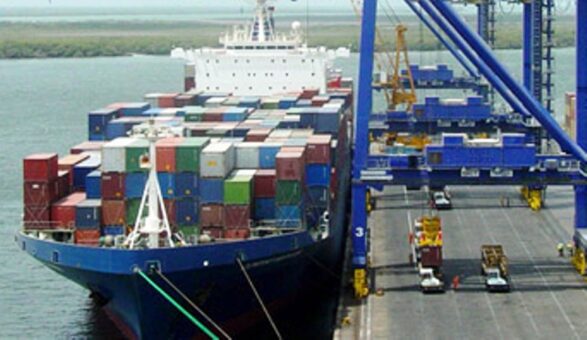
ISLAMABAD: The trade deficit of the country has narrowed by 8.32 percent in the first two months of the current fiscal year owing to decline in import bill during the period under review.
According to the data released by Pakistan Bureau of Statistics (PBS) on Friday, the trade deficit narrowed to $3.38 billion during July – August of 2020 as compared with $3.69 billion in the same period of the last year.
The import bill of the country has declined by 6.28 percent to $6.96 billion during the first two months of the current fiscal year as compared with $7.43 billion in the same months of the last fiscal year.
However, exports have also declined by 4.27 percent to $3.58 billion during the period under review as compared with $3.74 billion in July – August of 2019.
The torrential rains and urban flooding during the last few days of August 2020 has adversely affected the supply chain, which affected the exports of the country.
Due to this reason the exports fell by 21 percent to $1.58 billion in August 2020 when compared with $2 billion in previous month.
In the month under review the imports have also fell by 11 percent to $3.28 billion as against $3.68 billion in July 2020.
Meanwhile, the exports fell by 15 percent to $1.58 billion in August 2020 when compared with $1.85 billion in August 2019. On the other hand the imports fell by 12 percent to $3.28 billion as compared with $3.72 billion in August 2019.
-

Rupee appreciates by 27 paisas on improved inflows
KARACHI: The Pak Rupee appreciated by 27 paisas against dollar on Friday owing to increase in foreign exchange reserves of the country, dealers said.
The rupee ended at Rs165.77 to the dollar from previous day’s closing of Rs166.04 interbank foreign exchange market.
Currency experts said inflows of export receipts and workers remittances helped the local unit to recover the value.
They further said that the increase in foreign exchange reserves of the country also helped the rupee to improve value.
The liquid foreign exchange of the country has increased by $121 million to $19.843 billion by week ended August 28, 2020, according to the State Bank of Pakistan (SBP).
The foreign exchange reserves were at $19.722 billion by week ended August 21.2020.
The official foreign exchange reserves of the SBP increased by $72 million to $12.713 billion by week ended August 28, 2020 as compared with $12.641 billion a week ago.
Similarly, the foreign exchange reserves held by commercial banks also increased by $49 million to $7.13 billion by week ended August 28, 2020 as compared with $7.081 billion a week ago.
-

Persons on Sales Tax ATL allowed sugar import with tax concessions
ISLAMABAD: The ministry of commerce has said that only those importers, who are on the Active Taxpayers List (ATL) of Sales Tax issued by the Federal Board of Revenue (FBR), are eligible to import white sugar on concessional rate of tax.
(more…) -
Exports decline by 19.5 percent as rains, urban flooding disrupt supply chain
ISLAMABAD: The exports have registered 19.5 percent decline in August 2020 owing to torrential rains and significant urban flooding in Karachi.
The exports for the month of August 2020, have recorded a downfall of 19.5 percent, in dollar value terms, as compared to the same period last year.
This was discussed in an internal review meeting at Ministry of Commerce on Thursday, chaired by the Advisor to the Prime Minister on Commerce and Investment, Abdul Razak Dawood.
During the same month, the imports have also dropped by 20 percent, in dollar value terms, as compared to August 2019.
However, the overall trade balance has improved by 20.6 percent in August 2020, as compared to same month last year.
Despite the decline in August, some of the products, like tractors, iron and steel, chemicals and cement have posted a growth of 186 percent, 100 percent, 90 percent and 30 percent respectively, in dollar value terms, as compared to August 2019.
It was told in the meeting that due to heavy rains in the country, there were some delays in obtaining and analyzing the data.
It was further discussed in the meeting that the rains and consequential urban flooding, particularly in Karachi, caused significant problems in the existing infrastructure, disrupting the supply chains and affecting the exports for the month of August.
Power outages, slowdown in business activities, delays in transportation and hampering of port operations are some of the issues faced by the exporters due to unprecedented monsoon rains in the country.
Talking in the meeting, the Advisor hoped that the exports would begin to recover in September as normalcy should return to Karachi.
The advisor noted that although exports have temporarily fallen, the trade balance continues to improve.
“Exporters are encouraged that despite the calamity of rain and flooding, we must pursue ‘Make in Pakistan’ and export led growth,” the advisor said.
“I have every confidence in our exporters that they will make up for the loss in the subsequent months”, he added.
Dawood directed that the Ministry of Commerce must resolve the issues of the exporters on war-footings in these unprecedented times.