Month: November 2020

  • Committee discusses unsold spectrum of next generation mobile services

    Committee discusses unsold spectrum of next generation mobile services

    ISLAMABAD: Dr. Abdul Hafeez Shaikh, Adviser to the Prime Minister on Finance and Revenue on Thursday chaired a meeting of the advisory committee for the release of unsold spectrum of next generation mobile services (NGMS).

    Minister for Science and Technology, Fawad Chaudhry also participated in the meeting.

    The committee was briefed by Chairman PTA and Secretary, Ministry of Information Technology about the latest developments on the sale of available spectrum of next generation mobile services.

    The members of Frequency Allocation Board also shared their input on the subject.

    The committee was briefed that the process for hiring of the consultant for the sale of available spectrum would be completed within 60 days and report will be prepared and submitted before the committee accordingly.

    It is expected that the initial report will be ready by December 2020.

    The process for the sale of spectrum will follow after the hiring of the consultant and tentatively would be completed within this financial year.

    Adviser Finance, as Chairman of the Committee, directed to complete the task of the hiring of the consultant at the earliest.

    He also stated that the whole process of auction must be transparent and an officer may be designated to apprise the public about the progress regarding sale of spectrum on regular basis.

    The whole process would contribute towards strengthening and expanding communications / IT Services across the country, would create more job opportunities, and improve the ease of doing business.

    The next meeting of the Advisory Committee is expected to take place in December 2020.

  • Jazz pays Rs5 billion income tax liability on court order

    Jazz pays Rs5 billion income tax liability on court order

    ISLAMABAD: Pakistan Mobile Communication Limited (PMCL) – the operator of Mobilink / Jazz on Thursday paid an amount of Rs5 billion out of total Rs22 billion as tax demand created by Large Taxpayers Office (LTO) Islamabad.

    The payment has been made as per the directions of Islamabad High Court (IHC) order in Income Tax reference No. 32/2020 dated November 10, 2020.

    Earlier, the IHC allowed PMCL to deposit an amount of Rs5 billion against income tax liability.

    A division bench of the IHC in a hearing on November 10, 2020 granted the application of the petitioner i.e. PMCL to deposit Rs5 billion. The high court also granted interim relief to the petitioner and suspended notices sent to the applicant under Section 140 of the Income Tax Ordinance, till the next date of hearing i.e. December 02, 2020.

    During the proceedings the counsel for the petitioner submitted that the petitioner was willing and ready to pay a sum of Rs5 billion.

    The counsel for the Federal Board of Revenue (FBR) submitted that the sum offered to be deposited by the petitioner was meager as compared to the total liability. The counsel submitted that the applicant is liable to pay a sum of Rs22 billion plus penalty etc.

    The LTO Islamabad last month initiated tax recovery of Rs25 billion from M/s. PMCL by sealing of its business premises.

    The LTO Islamabad took the action against the mobile operator as income tax amount Rs25.39 billion was outstanding against the defaulter.

    “The defaulter is refraining itself deliberately, dishonestly and without lawful excuse to discharge tax liability and thus causing huge loss to the national exchequer,” according to a notice of LTO Islamabad.

    While responding to the report, the PMCL issued the following statement:

    “Jazz is a law-abiding and responsible corporate citizen. Our contribution to Pakistan’s economy over the past 25 years is significant.

    “We have received a notice from FBR this afternoon. Jazz has made tax submissions based on legal interpretations of the tax owed. We will review and take measures under our legal obligations and will collaborate with all concerned institutions for an early resolution of this issue.”

    Related Stories

    FBR initiates Rs25 billion tax recovery from Mobilink

    Mobilink terms FBR recovery action as unfortunate

  • FBR issues TORs for probing complaints against IR, Customs officials

    FBR issues TORs for probing complaints against IR, Customs officials

    ISLAMABAD: Federal Board of Revenue (FBR) on Thursday issued Terms of Reference (TORs) for processing of complaints and launch probe against officials of Inland Revenue and Pakistan Customs.

    (more…)
  • SBP cuts loan write-off history to 10 years

    SBP cuts loan write-off history to 10 years

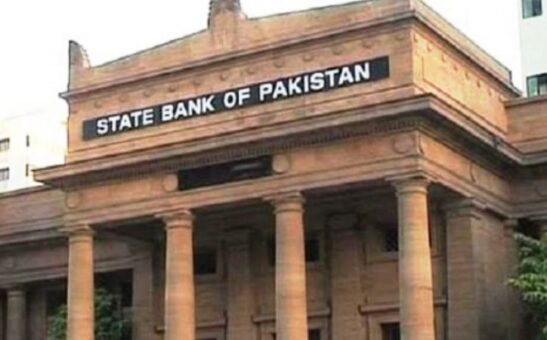
    KARACHI: State Bank of Pakistan (SBP) has allowed to reduce the history of write-off/waived loans and advances for corporate borrowers from 15 years to 10 years.

    A statement issued on Thursday, the central bank said it had decided to reduce the reflection period of written off/waived loans and advances for corporate borrowers in the Electronic Credit Information Bureau (eCIB) of SBP from 15 years to 10 years.

    eCIB is a repository of information about the credit history of borrowers of the banking system and is largely used by banks/Financial Institutions to assess the creditworthiness of borrowers.

    This decision follows a detailed assessment of international practices.

    It has been a general impression that reflecting the negative history/ write-off for a longer period might deprive the borrowers of a fresh start and would exclude borrowers from access to finance for longer periods (following the write-offs/waivers) regardless of the borrowers’ current financial performance and other favorable information.

    It may be noted that various business bodies and Chamber Members frequently also raised such concerns.

    They were of the view that placing a one-time write-off/waiver in eCIB for 15 years is a long period particularly when a business has paid back or settled its transaction with the bank. It creates difficulties for businesses in availing fresh financing for a long time.

    Decreasing the reflection period to 10 years will bring our system in line with the international practice and provide a conducive business environment to boost economic activities besides helping to improve the country ranking in the Ease of Doing Survey conducted by the World Bank periodically.

    Credit Information Bureau/Credit registry (eCIB) is one of the supervisory tools used worldwide to assist the supervisors in off-site supervision and on-site examinations.

    SBP established its Credit Registry i.e. eCIB in 1992 with the objective to complement its role of prudential supervision and assessment of the risk monitoring functions of its regulated FIs.

    Since then, the eCIB of SBP has evolved from manual to modern electronic online credit reporting system fueled by improvements in system and technology.

    The existing eCIB system is not only helping in the expansion of credit but also enabling FIs to move from the traditional subjective approach of granting credit to a more efficient lending process.

  • Country’s forex reserves increase to $19.907 billion

    Country’s forex reserves increase to $19.907 billion

    KARACHI: The liquid foreign exchange reserves of the country increased by $553 million to $19.907 billion by week ended November 06, 2020, State Bank of Pakistan (SBP) said on Thursday.

    The foreign exchange reserves of the country were at $19.354 billion by the week ended October 29, 2020.

    The official reserves of the SBP increased by $558 million for the week ended November 06, 2020 as against $12.183 billion a week ago.

    The SBP attributed the increase to receipt of $500 million as government loan proceeds.

    The foreign exchange reserves of the commercial banks eased to $7.166 billion by week ended November 06, 2020 as compared with $7.171 billion a week ago.

  • SBP blocks payment for subscribing Indian contents

    SBP blocks payment for subscribing Indian contents

    KARACHI: State Bank of Pakistan has banned online payment for subscribing Indian entertainment content. In a circular issued to all banks, the SBP directed to block the payment to Indian content.

    The central bank said that the decision had been taken on the directives of federal cabinet to stop different modes of payments including credit cards for subscribing Indian content in Pakistan including Zee5 video-on-demand service.

    “In this regard, it is advised to ensure meticulous compliance of aforementioned instructions of the government of Pakistan and submit compliance status to PSD, SBP by November 13, 2020,” the central bank said.

  • Stocks plunge by 633 amid rising coronavirus cases

    Stocks plunge by 633 amid rising coronavirus cases

    KARACHI: The stock market witnessed a decline of 633 points on Thursday owing to surge in cases of coronavirus in the country.

    The benchmark KSE-100 index of Pakistan Stock Exchange (PSX) ended at 40,564 points as against previous day’s closing of 41,197 points, showing a decline of 633 points.

    Analysts at KASB Research said that Pakistan Stocks were remained under pressure throughout the day amid a deteriorating coronavirus situation in the country.

    Investors feared that an intensifying pandemic situation and any new restrictions to curb the spread of coronavirus will have a negative impact on the economy.

    However, optimism about a Covid-19 vaccine pushed the market up at the start of the week. But the excitement has been seen fading away in the last 2 sessions as investors and health experts raise questions about when it may become available for widespread use.

    “We expect that the rising coronavirus cases and risk of fresh restrictions by the government will keep the market jittery in the coming days,” the analysts said.

    Analysts at Topline Securities Limited said that after a sideway opening benchmark KSE100 Index slid making an intraday low of 704 points.

    Initial negativity came from both SUI’s as OGRA rip unaccounted Gas UFG losses for both RLNG consumers for both SUI’s resultantly SNGP and SSGC closed 7.5 percent and 5.79 percent lower respectively.

    Further, Banks, E&Ps and Cements were the major laggards in today’s trading session. Volumes remained thin with total volume clocking in at 325 million shares while total traded value for the day stood at Rs. 11.19 billion. UNITY was today’s volume leader with 29.4 million shares traded.

  • Rupee advances by 16 paisas; dollar retreats to Rs158.33

    Rupee advances by 16 paisas; dollar retreats to Rs158.33

    KARACHI: The Pak Rupee made another gain of Rs16 paisas against dollar on Thursday owing to healthy inflows of workers’ remittances during the current fiscal year.

    The rupee ended Rs158.33 to the dollar from previous day’s closing of Rs158.49 in interbank foreign exchange market.

    Currency dealers said that the inflows of workers’ remittances during the current fiscal year helped the rupee to make gain.

    Further, the importers are cautious in purchasing dollars due to the second phase of coronavirus.

    The inflow of workers’ remittances has sharply increased by 26.5 percent to $9.43 billion during first four months (July – October) of current fiscal year 2020/2021. The central bank received $7.45 billion in the same months of the last fiscal year.

    The SBP said that remittances remained above $2 billion for the fifth consecutive month in October 2020.

    Workers’ remittances amounted to $ 2.3 billion during October 2020, increasing by 14.1 percent compared to October 2019.

    A large part of y/y increase in October 2020 was sourced from Saudi Arabia (30 percent), United States (16 percent) and United Kingdom (14.6 percent).

    Improvements in Pakistan’s FX market structure and its dynamics, efforts under the Pakistan Remittances Initiative (PRI) to formalize the flows contributed to the growth in remittances and limited cross-border travelling, the SBP said.

  • Workers’ remittances increase by 26.5pc in July – October

    Workers’ remittances increase by 26.5pc in July – October

    KARACHI: The inflow of workers’ remittances has sharply increased by 26.5 percent to $9.43 billion during first four months (July – October) of current fiscal year 2020/2021, State Bank of Pakistan (SBP) said on Thursday.

    The central bank received $7.45 billion in the same months of the last fiscal year.

    The SBP said that remittances remained above $2 billion for the fifth consecutive month in October 2020.

    Workers’ remittances amounted to $ 2.3 billion during October 2020, increasing by 14.1 percent compared to October 2019.

    A large part of y/y increase in October 2020 was sourced from Saudi Arabia (30 percent), United States (16 percent) and United Kingdom (14.6 percent).

    Improvements in Pakistan’s FX market structure and its dynamics, efforts under the Pakistan Remittances Initiative (PRI) to formalize the flows contributed to the growth in remittances and limited cross-border travelling, the SBP said.

  • Capital Gain Tax: investors require maintaining accounts, records separately

    Capital Gain Tax: investors require maintaining accounts, records separately

    ISLAMABAD: Federal Board of Revenue (FBR) has said that every investor of stock exchange shall maintain accounts and records separately for each of his brokerage accounts regarding payment of capital gain tax (CGT).

    The FBR officials on Thursday said that the record shall be maintained in a way which sufficiently enable for verification of discharge of his obligations under these rules.

    Every investor shall maintain in particular the following accounts and records, namely:-

    (a) fortnightly ledger statements of the investor’s brokerage account or each brokerage account if there are more than one account whether in the investor’s own name or any benami accounts, generated by his broker;

    (b) fortnightly CDC statements of the investor’s CDC sub account or each CDC sub account corresponding to each brokerage account, if there are more than one brokerage account whether held in the investor’s own name or any benami accounts;

    (c) record of security holdings and their value carried in the investor’s brokerage account on 30th June of each year;

    (d) record of cash carried in the investor’s brokerage account as on 30th June of each year;

    (e) record of funds deposited in the investor’s brokerage account; and

    (f) record of funds withdrawn from the investors brokerage account.