Day: December 30, 2020

  • FBR urged immediate measures for speedy customs clearance

    FBR urged immediate measures for speedy customs clearance

    KARACHI: Federal Board of Revenue (FBR) has been asked to take immediate measures for speedy cargo clearance and avoid losses to trade and industry. Karachi Customs Agents Association (KCAA) on Wednesday raised difficulties of the trade and industry due to rising dwell time of cargoes at terminals.

    The association said in a statement expressed concerns over the alarming situation of delays in clearance of cargos of import and exports at all the terminals.

    The terminals are taking extra time for grounding of containers and arranging the cargo for the examination that is causing an increase in the cost of doing business in the shape of heavy container detention charges and port storage/demurrage which are being charged in US Dollar and the same amount is remitting by the terminal operators and shipping companies to their principal offices.

    The KCAA further informed that dwell time was also increasing due to shortage of handling equipment, skilled labor and even terminal tariffs were different.

    The association said that theft, pilferage and damage cases are being reported regularly inside the premises of terminals / off-dock terminals, as there is no proper mechanism to compensate the trade in case of any loss.

    All terminals are licensed to facilitate the trade under terminal rules specified in Licensing Rule, 2001 promulgated through SRO 450(I)/2001 are not being complied in its true spirit, which is causing hardship in the cargo clearance.

    The association also informed the FBR that difficulties faced by the trade were discussed with terminal operators on various occasions but no fruitful results had been achieved.

  • KSE-100 Index grows by 7.3 percent in 2020

    KSE-100 Index grows by 7.3 percent in 2020

    KARACHI: The benchmark KSE-100 index of Pakistan Stock Exchange (PSX) has posted 7.3 percent growth during the year 2020 as one day is still remaining to conclude the year.

    Analysts at Topline Securities on Wednesday said that Pakistan benchmark KSE100 index gained 7.3 percent (USD: 3.6 percent) in 2020 (one trading session left). The return in USD terms during 2020 is better than -1.8 percent of 2019, however lower than the last ten year average of 10 percent.

    “The year 2020 was a story of two halves for Pakistan equities as the first half witnessed a decline of 15.5 percent (USD: -22 percent), while a robust recovery was seen in the second half as the benchmark index recovered by 26.9 percent (USD 33.1 percent). Just like peers, PSX rallied 60.5 percent from its bottom on Mar 25, 2020.”

    Interestingly, despite lower broader market return, few mid cap stocks have posted a billion normal returns (adjusted) namely TRG (up 270 percent), SYS (up 242 percent), PIOC (up 234 percent) and CEPB (up 200 percent).

    Pakistan under performed MSCI Emerging Market and MSCI World indices. However, against MSCI Frontier Market, PSX outperformed as MSCI FM declined by 4 percent.

    During 2020, Pak Equities gain of 7.3 percent was also lower than Gold and PIBs return of 28 percent and 17 percent, respectively.

    Activity at PSX increased significantly, due to a rally in mid-caps led by local investors. Traded volume and value in 2020 was 328 million shares/day and Rs12 billion (US$75 million)/day, respectively.

    The analysts said that KSE-100 may touch 52.5,000 mark in 2021 due to strong corporate earnings growth along with re-rating. Four key triggers to watch out for during 2021 will be (1) COVID-19, (2) IMF, (3) foreigners activity and (4) politics.

    KSE-100 Index under performed its peers and global benchmarks during 2020.

    The benchmark index posted a US Dollar return of 4 percent compared to MSCI Emerging Market return of 12 percent and MSCI Developed and World Market return of 13 percent.

    However, PSX outperformed MSCI Frontier Markets as its value declined by 4 percent.

    The benchmark index also under performed its peer countries with Bangladesh, India, Sri Lanka amongst top markets during 2020 (refer to below).

    Overall traded volume (ready/cash) at PSX averaged at 328 million shares/day (+107 percent YoY) in 2020, highest after 15 years.

    Similarly, traded value also increased to an average of Rs12 billion/day (or US$75 million/day), up 106 percent from 2019 and most after 12 years.

    In the futures market, PSX volumes were also at a 15 year high of 101 million shares/ day. Similarly, traded value in futures is at a 12 year high of Rs4.7 billion/day (or US$29 million/day).

    Most activity, in terms of average volumes, was witnessed in small and mid cap stocks like HASCOL (21 million shares/day), UNITY (20 million shares/day), TRG (16 million shares/day),MLCF (15 million shares/day) and KEL (13 million shares/day).

    In value terms, the most activity was seen in TRG with an average value of Rs746 million/day, LUCK (Rs564 million/day), MLCF (Rs481 million/day), DGKC (Rs474 million/day), and PPL (Rs368 million/day).

    Amongst market participants, share of individuals in total activity increased from 60 percent to 63 percent while foreigners share dropped from10 percent to 7 percent in 2020.

    Settlement Ratio (UIN) during 2020 dropped to an average of 56.6 percent from 60.9 percent in 2019. Leverage to Market capitalization increased to 0.26 percent compared to 0.18 percent in 2019.

    Foreigners continued to remain sellers to the tune of US$570 million, highest in more than a decade. Cumulative selling in the last six years has amounted to US$2.2 billion.

    This non stop selling could be attributed to closure of few frontier market funds, under performance of Emerging and Frontier markets and negligible weight of PSX in MSCI Emerging Market

    Highest foreign selling was witnessed in the Banking sector with a net outflow of US$176 million followed by E&Ps (US$125 million) and Cements (US$107 million).

    Most of the selling in these sectors was absorbed by local insurance companies, and local individuals.

    According to SBP data, widely followed, foreign portfolio investment stands at US$3.0 billion (high of US$8.4 billion on May 26, 2017 and low of US$1.0 billion on Mar 14, 2009). Within this (US$3 billion), our estimates suggest that, around US$0.5 billion-1 billion is strategic holdings of sponsors.

    That said, remaining US$2 billion is 4 percent of market capitalization and 13 percent of free float capitalization.

    The analysts hoped that US$200-300 million net foreign selling during 2021, where the overall outlook of Emerging and Frontier Markets is also improving.

    Gold remained the most value generator asset class for investors for the second consecutive year by posting a return of 29 percent in (PKR Terms). Gold prices increased significantly due to tough economic conditions globally amidst COVID-19 outbreak as its considered a safe haven during times of global turmoil.

    Fixed Income return (10-year PIB) was 17 percent in 2020, higher than equities return of 7.3 percent.

    Real Estate posted a return of 2 percent during the year (2019: 5 percent. The performance of this asset in 1H2020 was poor (-1 percent) just like equities, however it rebounded in 2H2020 by 4 percent after the announcement of the construction package in July 2020.

    USD remained relatively stable (+4 percent) against PKR compared to the previous two years’ average gain of 19 percent. Stability in this asset class is due to higher than expected remittances resulting in a Current Account surplus during 5MFY21 and overall weakness of the US Dollar.

    The KSE-100 Index has outperformed Emerging and Frontier markets over the last 10 years as PSX 10-Year US$ based CAGR is 7 percent, higher than 1 percent of MSCI Emerging Markets and MSCI Frontier Market decline of 1 percent.

    However, performance of PSX has remained in line with MSCI Developed Market and MSCI World indices.

    Amongst different asset classes in Pakistan, PSX has outperformed others by posting the highest return of 14 percent a year during the last 10 years. This was followed by Gold’s return of 10 percent and T-bills’ return of 9 percent.


  • Stock market gains 413 points amid buying activities

    Stock market gains 413 points amid buying activities

    KARACHI: The stock market gained 413 points on Wednesday as buying activities witnessed during the day after positive oil prices in international trade.

    The benchmark KSE-100 index of Pakistan Stock Exchange (PSX) closed at 43,695 points as against previous day’s close of 43,282 points showing an increase of 413 points.

    Analysts at Arif Habib Limited said that the market regained the points lost yesterday in the aftermath of selling from financial institutions.

    Buying activity was cautious in the beginning and gained momentum as the day progressed especially in the absence of active selling.

    International crude oil prices traded positive but in a narrow band that offered no incentive for the seller to book profit at this stage.

    Buying activity was witnessed in Textile, Banks and O&GMCs in anticipation of change / announcement of government policies. Among scrips, PRL led the table with 55.2 million shares, followed by TRG (31.2 million) and UNITY (18.5 million).

    Sectors contributing to the performance include Technology (+92 points), Banks (+50 points), Textile (+44 points), E&P (+32 points), Food (+28 points).

    Volumes declined from 501.4 million shares to 455.8 million shares (-9 percent DoD). Average traded value increased by 8 percent to reach US$ 141.4 million as against US$ 130.8 million.

    Stocks that contributed significantly to the volumes include PRL, TRG, UNITY, HASCOL and KEL, which formed 30 percent of total volumes.

    Stocks that contributed positively to the index include TRG (+63 points), SYS (+30 points), UBL (+29 points), POL (+25 points) and KTML (+18 points). Stocks that contributed negatively include BAHL (-27 points), FCCL (-5 points), KEL (-4 points), MARI (-3 points) and SHEL (-2 points).

  • Rupee makes 11 paisas gain on improved inflows

    Rupee makes 11 paisas gain on improved inflows

    KARACHI: The Pakistani rupee gained strength against the US dollar on Wednesday, appreciating by 11 paisas in the interbank foreign exchange market. This upward movement was largely attributed to improved inflows from workers’ remittances and export receipts, which provided much-needed support to the local currency.

    (more…)
  • Bank holiday declared on January 01

    Bank holiday declared on January 01

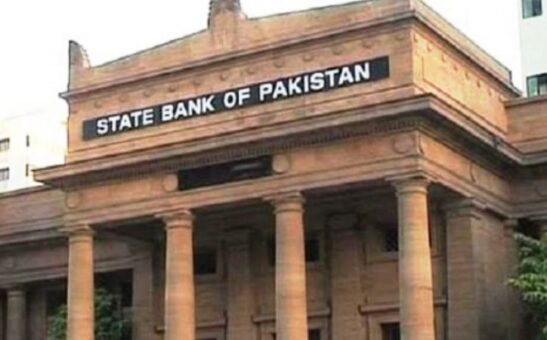
    KARACHI: The State Bank of Pakistan (SBP) on Wednesday declared bank holiday on January 01, 2021 on account of financial close of banking companies.

    In a circular issued to presidents and chief executives of all banks, development financial institutions and microfinance banks, the SBP informed that the central bank will remain closed for public dealing on Wednesday, January 1, 2020, which will be observed as ‘Bank Holiday’.

    All banks / DFIs / MFBs shall, therefore, remain closed for public dealing on the above date. However, all employees of banks / DFIs / MFBs will attend the office as usual, the SBP said.

  • FBR extends date for updating taxpayers’ profile up to March 31

    FBR extends date for updating taxpayers’ profile up to March 31

    ISLAMABAD: Federal Board of Revenue (FBR) on Wednesday extended the last date for updating taxpayers profile up to March 31, 2021.

    The FBR granted the date extension for ninety days from the existing last date of December 31, 2020.

    The tax body issued Circular No. 08 pf 2020 IR/Operations to extend the last date.

    Through Finance Act, 2020 a new section 114A was inserted to Income Tax Ordinance, 2001 for making it mandatory for taxpayers to update their profile.

    Following is the text of Section 114A:

    Section 114A: Taxpayer’s profile.

    (1) Subject to this Ordinance, the following persons shall furnish a profile, namely:-

    (a) every person applying for registration under section 181;

    (b) every person deriving income chargeable to tax under the head, “Income from business”;

    (c) every person whose income is subject to final taxation;

    (d) any non-profit organization as defined in clause (36) of section 2;

    (e) any trust or welfare institution; or

    (f) any other person prescribed by the Board.

    (2) A taxpayer’s profile-

    (a) shall be in the prescribed form and shall be accompanied by such annexures, statements or documents as may be prescribed;

    (b) shall fully state, in the specified form and manner, the relevant particulars of –

    (i) bank accounts;

    (ii) utility connections;

    (iii) business premises including all manufacturing, storage or retail outlets operated or leased by the taxpayer;

    (iv) types of businesses; and

    (v) such other information as may be prescribed;

    (c) shall be signed by the person being an individual, or the person’s representative where section 172 applies; and

    (d) shall be filed electronically on the web prescribed by the Board.

    (3) A taxpayer’s profile shall be furnished,-

    (a) on or before the 31st day of December, 2020 in case of a person registered under section 181 before the 30th day of September, 2020; and

    (b) within ninety days registration in case of a person not registered under section 181 before the 30th day of September, 2020.

    (4) A taxpayer’s profile shall be updated within ninety days of change in any of the relevant particulars of information as mentioned in clause (b) of sub-section (2).

  • Retailers share CNICs of consumers with FBR

    Retailers share CNICs of consumers with FBR

    ISLAMABAD: Retailers registered with Federal Board of Revenue (FBR) have started obtaining detail of Computerized National Identity Card (CNIC) of consumers, who buy goods above Rs100,000, tax officials said.

    The sources on Tuesday said that retailers having sales tax registration number (STRN) were providing details of ordinary consumers on sale of goods above Rs100,000 through their monthly sales tax return.

    The threshold amount was increased from Rs50,000 to Rs100,000 through Finance Act, 2020.

    The sources said that through Finance Act, 2019 an important amendment was inserted to Sales Tax Act, 1990 under which it was made mandatory for registered retailers to collect information of ordinance consumers.

    The FBR explains ordinary consumer as a person who is buying the goods for his own consumption and not for the purpose of re-sale or processing.

    The retailers are required to collection information of retailers including name, address and CNIC etc.

    This condition of CNIC or NTN was to apply from August 01, 2019. However, business community had demanded to extend the application of the condition of NTN besides it was also demanded to increase the threshold for requirement of CNIC.

    The FBR explained the implementation of the CNIC through Circular No. 01 of 2019 dated July 26, 2019 that Section 23 of the Sales Tax Act, 1990, relating to issuance of invoices and particulars to be specified therein, has been amended to provide that in case of supplies to un-registered persons, their NIC or NTN number shall be specified in invoice.

    The caveats, provided therein, are as under: NIC or NTN shall not be required in case of supplies made by a retailer where the transaction value inclusive of sales tax amount does not exceed rupees fifty thousand and the sale is being made to an ordinary consumer buying goods for his own consumption and not for the purpose of resale or processing;

    If it is subsequently proved that NIC provided by the purchaser was not correct, liability of tax or penalty shall not arise against the seller, in case of sale made in good faith.

    The FBR through Sales Tax Circular No. 02 of 2019 issued clarification in this regard stating that it had been observed in many cases, suppliers of goods and services are charging sales tax on invoices/receipts without identifying their sales tax registration number (STRN) on the invoice/receipts issued to the customers. At times, National Tax Number (NTN) is indicated on invoices, to exhibit that the suppliers is registered.

    Customers are suggested to ask for invoices/receipts having sales tax number on the invoice/receipts on purchase of goods and services. Sales tax can only be recovered from the customer if the supplier is registered for sales tax purpose, and reflects the STRN on the invoice/receipt issued to the customer.

    “In other cases, the supplier is not entitled to recover sales tax from the customers. Customers should beware of the same.”

    Explaining the purpose of the clarification, the FBR said that may suppliers were charging sales tax from customers without getting them registered under the sales tax regime.

    This practice is against the law and is liable to penal action. This practice leads to increase in prices and undue enrichment of sellers without any deposit of tax with the government. Customers are suggested to seek invoice/receipts from suppliers with STRN on the invoices/receipts issued, if sales tax is charged on their purchases.

    The FBR further clarified that buyer is not required to provide his NIC in case of purchases from a person not registered for sales tax.