Day: July 5, 2021

  • Income tax exemption granted to international buying houses

    Income tax exemption granted to international buying houses

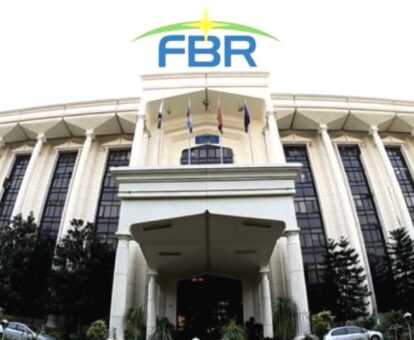
    ISLAMABAD: Federal Board of Revenue (FBR) has said that international buying house act as facilitator for exports from Pakistan to their principals abroad.

    “In order to reduce disputes the amount remitted in foreign exchange to meet the expense of these buying houses by their principals has been exempted from tax,” the FBR said while explaining the major changes to Income Tax Ordinance, 2001 through Finance Act, 2021.

    Moreover, the salary of non-resident foreign experts employed/ engaged by international buying houses has been exempted from tax if such experts perform duties for these international buying houses. These exemptions have been incorporated in clause (149) of Part I of the Second Schedule to the Ordinance.

    According to amended clause 149:

    Any sum—

    (i) remitted to Pakistan through banking channels in foreign currency received by an international buying house from its non-resident principal to meet its expenses in Pakistan; and

    (ii) chargeable under the head “Salary” received by a person who, not being a citizen or resident of Pakistan, is engaged as an expert by an international buying house.

    Explanation.—For the purpose of this clause international buying house means persons acting as buying offices, buyers’ agents, or representatives of international buyers for facilitating exports from Pakistan and are registered as liaison offices with Board of Investment or companies registered with SECP. Provided that such buying houses act as cost centers with the sole purpose to bring export orders to Pakistan on behalf of their principals and do not enter into any local business transactions in Pakistan and their expenses are remitted to Pakistan.

  • Withholding tax exemption allowed on purchase of used motor vehicles

    Withholding tax exemption allowed on purchase of used motor vehicles

    ISLAMABAD: Federal Board of Revenue (FBR) has said that exemption from withholding tax has been granted on purchase of used motor vehicles from general public.

    The FBR while explaining major changes made to Income Tax Ordinance, 2001 through Finance Act, 2021 said that used vehicle market is working in an undocumented environment.

    In order to promote documentation and corporatization of this sector has been granted exemption from withholding tax on the purchase of used vehicle from general public and reduced minimum turnover tax from 1.5 per cent to 0.25 per cent .

    “Necessary changes have been made in clause (45B) of Part IV of Second schedule,” the FBR said.

  • IT exports, services granted 100% income tax credit

    IT exports, services granted 100% income tax credit

    ISLAMABAD: The government has granted 100 percent tax credit to persons engaged in exports and services of Information Technology (IT), sources in Federal Board of Revenue (FBR) said on Monday.

    Through Finance Act, 2021 incomes of persons engaged in IT exports and services have be allowed a tax credit equal to one hundred per cent of the tax payable under any provisions of Income Tax Ordinance 2001, including minimum, alternate corporate tax and final taxes for the period, to the extent, upon fulfillment of conditions and subject to limitations detailed as under:—

    — a startup as defined in clause (62A) of section 2 for the tax year in which the startup is certified by the Pakistan Software Export Board and the next following two tax years; and

    — Income from exports of computer software or IT services or IT enabled services as defined in clause (30AD) and (30AE) of section 2 upto the period ending on the 30th day of June, 2025:

    Provided that eighty percent of the export proceeds is brought into Pakistan in foreign exchange remitted from outside Pakistan through normal banking channels.

    The tax credit under shall be available subject to fulfillment of the following conditions, where applicable, namely:—

    (a) return has been filed ;

    (b) withholding tax statements for the relevant tax year have been filed in respect of those provisions of the Ordinance, where the person is a withholding agent; and

    (c) sales tax returns for the tax periods corresponding to relevant tax year have been filed if the person is required to file Sales Tax Return under any of the Federal or Provincial sales tax laws.

  • Procedure issued for taxation of cooperative housing societies

    Procedure issued for taxation of cooperative housing societies

    ISLAMABAD: Federal Board of Revenue (FBR) on Monday issued a circular to streamline the taxation on cooperative housing societies.

    In the Circular No. 03 of Income Tax (Operations), the FBR said that taxation of Cooperative Housing Societies (CHS) registered under the Cooperative Societies Act, 1925, has historically faced challenges – majorly on three counts.

    One, real estate development projects, per se, take a lot longer time to complete than normal projects thereby creating difficulties in the recognition of revenues and expenses.

    Two, most CHSs have been claiming exemption from tax under “Doctrine of Mutuality” implying none could earn income or profit by transacting with himself.

    Three, the diverse treatment meted out to CHSs across Formations has led to conflicting case laws further complicating the scenario.

    These challenges have cumulatively resulted in below par revenue outcomes for the exchequer, and increased compliance costs for CHSs with legal actions being stuck in appellate courts for decades.

    Thus, it is imperative that taxation of CHSs is standardized by forging a uniform view on its various aspects – tax status, taxability, accounting, mutuality, a fair formula of taxation – for across-the-board implementation as outlined below: –

    I. Tax Status: Under section 23 of the Cooperative Housing Societies Act, 1925 (as may be adapted by Provinces), a CHS upon registration becomes “a body corporate by the name under which it is registered, with perpetual succession and a common seal, and with power to hold property, to enter into contracts, to institute, and defend suits and other legal proceedings.” Section 80(2)(e) of the Income Tax Ordinance, 2001 (I.T.O. 2001), likewise classifies a CHS as a “company” for taxation purposes. Thus, there is no doubt or dispute that a CHS is to be treated a company for action under the I.T.O. 2001.

    II. Business Model Peculiarities: Although the fact that the persons in control of a CHS’s strategic decision making, financial affairs, and day-to-day management can rotationally change via elections amongst its own members after a legally defined period, yet its management perpetually stays with its members, which, essentially makes it operate on commercial considerations like any other real estate venture run on profit motives. There is little doubt that all incomes accruing to a CHS on any count are taxable – including “advances from customers” or consideration received against sale or booking of plots and other pieces of land. However, most CHSs do not recognize their receipts from members against sale or booking of plots as revenues in trading account, and instead, directly transfer them to balance sheet and offset them against “cost of land” or “development expenditure.” Likewise, P&L account items i.e. incomes arising from heads like “membership fee,” “transfer fee,” “surcharge & fines” etc. are offset against “management expenses.” The result of these accounting tricks is that CHSs as a sector end up contributing no or negligible revenues to the exchequer.

    III. Method of Accounting: Section 32(2) of the I.T.O. 2001, mandates a CHS due to its being “company,” to “account for income chargeable to tax under the head ‘Income from Business’ on an accrual basis.” This matter has settled in the case law titled Pakistan Cycle Industries Society Ltd vs LTO, Lahore and reported as 2016 PTD15 ATIR. Accordingly, all Formations are duty-bound to ensure that not only that all CHSs file their tax returns proper but also that the tax returns are duly enclosed by audited accounts on accrual basis.

    IV. Taxability & Doctrine of Mutuality: The income of CHSs was chargeable to tax u/s 22 of the Income Tax Ordinance, 1979 (hereinafter “the I.T.O. 1979”). Subsequently, Clause (103), and (103A) were inserted in Part I, 2nd Schedule to the I.T.O. 1979 in 1990, essentially to exempt its “income, profits, and gains as is derived by it as a result of its dealings with its members involving sale of goods for the personal use of its such members…” It was apparently in pursuance to these changes that CHSs started to claim exemption from tax under the so-called Doctrine of Mutuality at a mass scale. Astonishingly, this practice of seeking exemption by CHSs on account of mutuality continued even in the wake of deletion of Clause (103A) in 1992, and Clause (103) in 1993. The promulgation of the Income Tax Ordinance, 2001 (hereinafter “the I.T.O. 2001”) whereby the income of a CHS was undoubtedly chargeable to tax u/s 18(1)(b), did not change the situation on the ground.

    Superior courts have also upheld that Doctrine of Mutuality does not apply to CHSs in any manner. In the case of Lawyers Cooperative Housing Society reported as ITA 800-810/IB/2004, it was unequivocally held that “there being a third entity in terms of registered cooperative society which is a juridical person, the concept of Doctrine of Mutuality not does not apply.” Likewise, in the case of Pakistan Petroleum Exploration & Production Co. vs DCIT, Islamabad reported as ITA No. 860/IB/2000, ATIR held that “Doctrine of Mutuality is not admissible in Pakistan for the reasons…that no superior court has ever approved the same.” High Court of Sindh in a recent judgement reported as 2021 PTD 558 – SHC, has systematically set pre-requisites for the Doctrine of Mutuality to kick in, namely, that the: –

    (i) Entity should be an AOP and not a company;

    (ii) Members’ interests in Common Fund are non-transferable;

    (iii) Purpose is not to earn profit;

    (iv) Entity’s members have a common cause and purpose;

    (v) Members own and control Common Fund at all times;

    (vi) Members make contribution to Common Fund; &

    (vii) Contributors to the Fund are entitled to participate in the surplus.

    Although, it could be taken as a foregone conclusion that even on a cursory look any CHS would fail on SHC’s yardstick, yet in order to make CHS’s taxability unequivocally clear, an Explanation has been added to Section 18(1)(b) of the I.T.O. 2001 vide Finance Act, 2021, which reads:

    “For removal of doubt it is clarified that income derived by cooperative societies from the sale of goods, immovable property or provision of services to its members is and has always been chargeable to tax under the provisions of this Ordinance.”

    V. Methods of Taxation

    In view of the inherent hurdles in the way of enforcing tax laws on the real estate sector, in particular, and CHSs, in general, attempts have been made to devise methods to extract, if not actual due, at least, reasonable revenues from them. In this connection, Circular No. 02 of 1975 was issued prescribing computation of real estate sector projects on provisional basis of actual receipts and accounts. At completion, however, total profits of the projects were to be re-computed and re-assessed in the relevant years. This method was validated in Creek Marina case reported as ITA No.205/KB/2009 ATIR at 15% GP rate. Likewise, section 36 of the I.T.O. 2001 prescribes percentage of completion method vis-à-vis long term contracts whereby income chargeable to tax during the year is to be worked out on the basis of costs incurred. This method has also been upheld in Twin City Housing (Pvt.) Ltd reported as PTD 1918 ATIR, which is widely relied upon to frame assessments. However, adoption of different methods have led to different problems.

    VI. Alternative Taxation Methods

    Accordingly, in order to ensure proper execution of tax laws and to extend hassle-free tax services to CHSs and abate the pangs of prolonged and protracted audit proceedings, two alternative methods or options are being devised with both having direct or indirect judicial or parliamentary validation.

    A CHS may avail one of the two following methods for amicable settlement of its case: –

    (i) Hybrid GP-NP Rate Method

    Under the hybrid method, a GP rate of 15% would be applied to total Trading Account receipts (or advances) booked against sale of plots during the year or at a future date implying that 85% of the Trading Account expenses stand allowed. (Most times, this item would have to be taken from the Balance Sheet as it is directly posted there.) The resultant GP amount would be taken to P&L account and added to P&L account receipt heads by allowing P&L expenses – subject to the condition that P&L expenses would not exceed the P&L incomes and receipts.

     (ii) Fixed Tax Rate Method

    In 2020, Government of Pakistan launched Naya Pakistan Housing Scheme. The Scheme carried fixed (lower) tax rates for taxation u/s100D of I.T.O. 2001, as an incentive so that more and more peoplecould benefit from it. The city-wise tax rates for Developers asstipulated in the law for purposes of section 100D of the I.T.O. 2001are as under: –

    Karachi, Lahore & Islamabad: Rs.150 per Sq.Yd

    Hydrabad, Sukkur, Multan, Quetta Faisalabad, Rawalpindi, Gujranwala, Sahiwal, Peshawar, Abbottabad, Mardan: Rs.130 per Sq.Yd

    Unspecified Urban Areas: Rs.100 per Sq.Yd

    In case a CHS expresses its preference for taxation under Fixed Tax Rate Method, the prescribed tax rates would apply only to the land purchased during the year. However, in order to ensure maximum disposal without any problems for CHSs, the method could be applied for assessment of all tax years pending or reopened at a future date.

    The FBR asked tax departments to look into and finalize CHS cases for all pending and reopened tax years in the light of this Circular so that decent revenues could be ensured for the state, and rent-seeking and compliance costs could be cut for taxpayers, in the process sparing their management to single mindedly focus resolution of housing problems for the people.

    All earlier Circulars and instructions issued on the matter stand rescinded.

  • SBP reintroduces incentive scheme for banks for promoting inflow of home remittances

    SBP reintroduces incentive scheme for banks for promoting inflow of home remittances

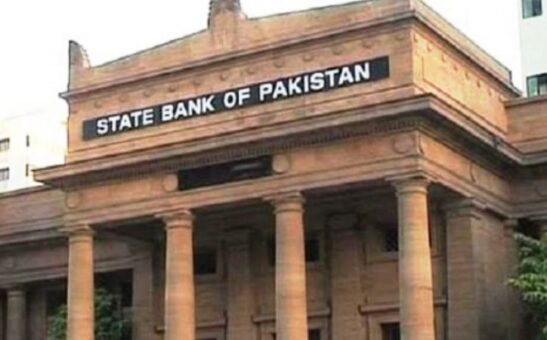
    KARACHI: State Bank of Pakistan (SBP) on Monday reintroduced incentive scheme for banks to attract home remittances through formal channels.

    The SBP said that in order to further encourage promotion of home remittances through formal channels, the government of Pakistan has approved reintroduction of subject scheme with effective from July 01, 2021 to June 30, 2022 to cover home remittance performance for FY2021-22 compared to that of FY2020-21 as given below:

    1. Home remittances exceeding 5 per cent growth in FY22 (July 01, 2021 to June 30, 2022) compared with the levels achieved in FY21 (July 1, 2020 to June 30, 2021): the incentive shall be Rs 0.50 per each incremental USD mobilized over 5 per cent growth.

    2. Home remittances exceeding 10 per cent growth in FY22 (July 01, 2021 to June 30, 2022) compared with the levels achieved in FY21 (July 1, 2020 to June 30, 2021): As per (1) above, plus, Rs0.75 per each incremental USD mobilized over 10 per cent growt.

    3. Home remittances exceeding 15 per cent growth in FY22 (July 01, 2021 to June 30, 2022) compared with the levels achieved in FY21 (July 1, 2020 to June 30, 2021): As per (b) above, plus, Rs1 per each incremental USD mobilized over 15 per cent growth.

  • Stock market sheds 257 points in lackluster activity

    Stock market sheds 257 points in lackluster activity

    KARACHI: The stock market fell by 257 points on Monday in lackluster trading activities duty the day. The benchmark KSE-100 index of Pakistan Stock Exchange (PSX) closed at 47,429 points as against last Friday’s closing of 47,686 points, showing a decline of 257 points.

    Analysts at Arif Habib Limited said that post closure of financial year end, the market begin receding, resulting in a loss of 311 points during the session and closed -257 points.

    Lack of obvious near term trigger caused the lackluster activity in the market whereby investors are concerned about beginning of earnings season, due to start end August.

    Selling pressure was evident across the board, with focus on Cement, Steel, Technology, Refinery and E&P sectors. OGDC became exception to the selling, and saw active trading with range bound price uptick. SNGP posted its results with a dividend payout that attracted investors to build position and realized price gain. Among scrips, WTL led the table with 55.5 million shares, followed by HASCOL (39.6 million) and KEL (29.4 million).

    Sectors contributing to the performance include Cement (-76 points), Technology (-23 points), E&P (-23 points), Tobacoo (-21 points), Fertilizer (-16 points) and Power (+25 points).

    Volumes declined from 563.8 million shares to 494.5 million shares (-12 per cent DoD). Average traded value also declined by 6 per cent to reach US$ 97.2 million as against US$ 103.2 million.

    Stocks that contributed significantly to the volumes include WTL, HASCOL, KEL, BYCO and TPL, which formed 36 per cent of total volumes.

    Stocks that contributed positively to the index include HUBC (+27 points), SNGP (+12 points), EFERT (+11 points), SCBPL (+10 points) and BAFL (+9 points). Stocks that contributed negatively include LUCK (-39 points), PAKT (-21 points), ENGRO (-17 points), HBL (-17 points) and PPL (-15 points).

  • Foreign investors pay Rs1.4 trillion as annual tax revenue in Pakistan

    Foreign investors pay Rs1.4 trillion as annual tax revenue in Pakistan

    KARACHI: The foreign firms operating in Pakistan have paid around Rs1.4 trillion as duty and taxes during fiscal year 2020/2021, said Overseas Investors Chamber of Commerce and Industry (OICCI) on Monday.

    The OICCI is the chamber of leading over 200 foreign investors in Pakistan belonging to 35 countries. It released the consolidated financial contribution of its members for the year 2020 based on feedback from 170 members, 50 of whom are subsidiaries of Fortune 500 companies.

    The foreign investors have contributed significantly towards the GDP of the country and have maintained the OICCI position as the largest chamber of commerce in terms of economic contribution in the country. This comprehensive survey is being conducted annually since 2009.

    Elaborating on the key features of the OICCI 2020 Economic Contribution survey, Irfan Siddiqui, President OICCI highlighted that “we are proud that in the past twelve months, OICCI members, despite very challenging and uncertain business environment due to COVID-19 impact on the business and life of people globally and in Pakistan, contributed over Rs 1.4 trillion, or approximately Rs five billion each working day, towards the tax revenue of Pakistan, approximately one third of the total tax collection in the country.  Two of the OICCI members paid taxes in excess of Rs 100 billion each “.

    Commenting on the significant contribution of foreign investors in the economy of Pakistan, Irfan Siddiqui added “OICCI members believe in Pakistan and going forward are keen for playing a more prominent role in a growing economy supported by a predictable, transparent and stable policy framework and a business friendly regulatory and operating environment”. 

    OICCI members have in the past nine years invested over US $ 18 Billion, largely in the Energy, Telecom, Chemicals, Food /FMCG and Banking sectors. “With an asset base of US $ 137 Billion,” Secretary General, OICCI, M Abdul Aleem added,” OICCI members’ maintained their position as the leading investors in Pakistan during 2020 with new investments of over US $ 2.4 Billion mainly in the Energy, Telecom and Chemicals sectors.”

    Besides the monetary contribution, OICCI members also play a leading role in the transfer of technology, digital transformation, introducing latest inventions and sharing of best practices in the field of manufacturing operation, supply chain and marketing of internationally renowned brands.

    Moreover, OICCI members, as a group, are the largest contributor towards the social sectors. In the last one-year OICCI members contributed Rs 8 billion to social initiatives, benefiting 62 million people throughout the country, and also contributed an additional Rs 8 billion for the various government and private sector COVID-19 containing activities.

    In conclusion, OICCI Secretary General observed that “Pakistan suffers from negative perception which is largely uncalled for, requiring authorities to work in partnership with serious stakeholders, like OICCI, to ensure the country gets its due share of the significant FDI coming to this region.”

  • KIBOR rates on July 05, 2021

    KIBOR rates on July 05, 2021

    KARACHI: State Bank of Pakistan (SBP) on Monday issued following Karachi Interbank Offered Rates (KIBOR) on July 05, 2021.

    TenorBIDOFFER
    1 – Week6.907.40
    2 – Week6.957.45
    1 – Month7.017.51
    3 – Month7.207.45
    6 – Month7.427.67
    9 – Month7.518.01
    1 – Year7.578.07
  • Meezan Bank Sharia Board approves issuance of Ijara Sukuk

    Meezan Bank Sharia Board approves issuance of Ijara Sukuk

    KARACHI: Meezan Bank’s Shariah Board, In its 51st Shariah Board meeting, approved Shariah structure for issuance of new Government of Pakistan (GoP) Ijarah Sukuks.

    The 51st Shariah Board meeting of Meezan Bank at Dar ul Uloom, Korangi, Karachi. The meeting was chaired by Justice (Retd.) Mufti Muhammad Taqi Usmani – Chairman Shariah Supervisory Board, Meezan Bank and was attended by Dr. Imran Ashraf Usmani – Vice Chairman Shariah Supervisory Board, Mufti Naveed Alam – Resident Shariah Board Member as well as the Bank’s senior management including Ariful Islam – Deputy CEO, Ahmed Ali Siddiqui – Group Head Shariah Compliance and other key officials. Sheikh Esam Mohamed Ishaq – Shariah Supervisory Board Member attended the meeting via video call.

    The Shariah Board reviewed several key issues including transaction structure for the issuance of new GoP Ijarah Sukuk in detail. Justice (Retd.) Mufti Muhammad Taqi Usmani – Chairman Shariah Supervisory Board approved the proposed Sukuk structure and showed his comfort and appreciation for the recent efforts made by the Government of Pakistan in the issuance of Sukuks and promotion of Islamic Banking in the country.

    The Shariah Board also approved the product of Meezan Islamic Charge Card, an innovative product offering the customers convenience and flexibility and upon the use of which customers can avail various benefits and discounts.

  • Rupee depreciates by 31 paisas against dollar

    Rupee depreciates by 31 paisas against dollar

    KARACHI: The Pak Rupee ended down by 31 paisas against the dollar on Monday owing to demand of the foreign currency on the first day of the week.

    The rupee ended at Rs158.18 to the dollar from last Friday’s closing of Rs157.87 in the interbank foreign exchange market.

    Currency experts said that the demand for the foreign currency was high as the market was opened after two weekly holidays.

    They hoped that the local currency would make gain in coming days on back of substantial inflows of remittances and export receipts.