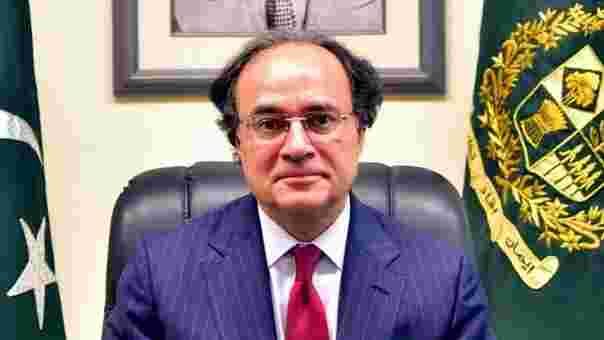
Islamabad, January 29, 2026 — Federal Minister for Finance and Revenue Senator Muhammad Aurangzeb on Wednesday assured the textile industry of the government’s continued engagement to address key challenges confronting the sector, reaffirming its importance to Pakistan’s economy.
The assurance was given during a meeting with a delegation of the All Pakistan Textile Mills Association (APTMA), which was also attended by Federal Minister for Petroleum Ali Pervaiz Malik, according to a press release issued by the Ministry of Finance.
The ministers emphasized that the textile sector remains a cornerstone of Pakistan’s economy due to its substantial contribution to exports, employment generation, and overall industrial activity. They reiterated the government’s commitment to supporting the sustainability of the sector within the broader framework of economic reforms.
Aurangzeb acknowledged the concerns raised by APTMA representatives and said the government is actively reviewing various factors affecting the cost of doing business for export-oriented industries. He noted that energy affordability and reliability continue to be key priorities, and options are being examined in consultation with relevant ministries and stakeholders to enhance efficiency and competitiveness while maintaining fiscal discipline.
The finance minister underlined that energy sector reforms are being pursued in a balanced manner to boost industrial productivity and safeguard the long-term interests of the national economy. He added that immediate operational issues are being addressed on a priority basis, while broader policy matters will be taken forward through established budgetary and institutional reform mechanisms.
Issues related to operational constraints and supply-side challenges in certain industrial zones were also discussed. The ministers assured the delegation of continued coordination with relevant authorities to ensure smooth industrial operations.
The meeting stressed the importance of sustained dialogue between the government and industry, especially amid evolving domestic and global economic conditions. Earlier, the APTMA delegation briefed the ministers on the current state of the textile sector, highlighting mounting pressures from rising input costs, energy tariffs, regulatory compliance, and taxation, which are affecting export competitiveness.
The delegation called for policy consistency, timely resolution of operational issues, and a stable business environment to enable long-term planning, investment, and sustained export growth.
The meeting was attended by senior officials from the Finance and Revenue Division and the Power Division, along with APTMA office-bearers and industry representatives.