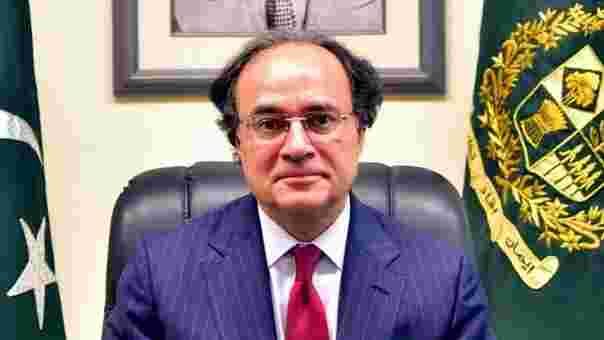
Islamabad — Federal Minister for Finance and Revenue Aurangzeb met the International Monetary Fund (IMF) review mission on Monday, marking the start of the third review under Pakistan’s Extended Fund Facility (EFF) and the second review under the Resilience and Sustainability Facility (RSF).
The IMF delegation was led by Iva Petrova, and the meeting served as the kick-off session for ongoing program reviews, according to a statement issued by the Finance Division.
Macroeconomic Stability and Fiscal Discipline
During the discussions, Minister Aurangzeb highlighted that Pakistan has consolidated macroeconomic stability achieved under IMF-supported programs since the last review. He emphasized that fiscal discipline and stability are outcomes of sustained reforms and reaffirmed the government’s commitment to maintaining these gains.
Structural reforms in taxation and the energy sector remain central to the reform agenda. Comprehensive improvements in tax administration, including human resources, processes, and technology, are underway under direct leadership oversight. Additionally, steps have been taken to fully operationalize the Tax Policy Office, ensuring that future tax policies are guided by economic principles to promote sustainable growth.
Privatization and Public Sector Reforms
Aurangzeb reiterated the government’s commitment to advancing privatization and state-owned enterprise reforms, highlighting key transactions and restructuring initiatives planned for the year. He noted growing investor confidence and renewed domestic interest, reflecting trust in Pakistan’s economic direction.
The minister also outlined progress on right-sizing the federal government, including ministry mergers and closure of certain entities, as part of broader public sector reforms aimed at improving efficiency and governance.
Export-Led Growth and Disaster Response
The finance minister emphasized the government’s export-led growth strategy, supported by trade facilitation measures and tariff rationalization to enhance competitiveness and reduce import reliance. He also briefed the IMF team on Pakistan’s fiscal response to flood-related challenges, noting that strong fiscal buffers enabled timely rescue and relief operations.
Aurangzeb added that macroeconomic stability has strengthened the country’s resilience against external and climate-related shocks, while recent economic indicators point to gradual recovery in growth and key sectors. However, he cautioned that global headwinds, geopolitical developments, and energy market volatility could pose risks.
A high-level committee has been established to monitor evolving economic and external conditions, ensuring coordinated policy responses. The minister stressed that social spending will continue to protect vulnerable populations as part of the stabilization efforts.
IMF Response and Next Steps
Ms. Petrova thanked Aurangzeb for the detailed briefing and shared insights from previous discussions in Karachi. Both sides agreed to continue consultations virtually in the coming days.
The meeting was attended by Jameel Ahmad, finance secretary, Federal Board of Revenue chairman, and other senior officials of the Finance Division.