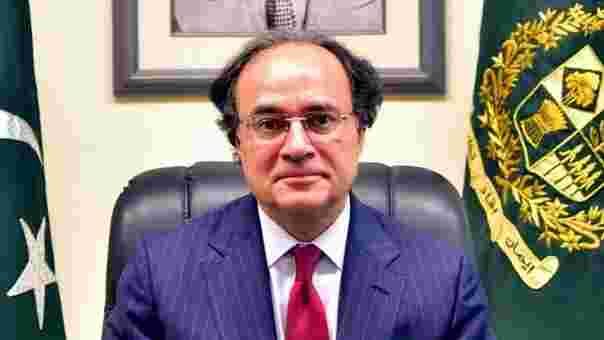
ISLAMABAD, April 9 – Pakistan’s Finance Minister Muhammad Aurangzeb held a virtual meeting with leading business representatives on Thursday to discuss priorities for the federal budget 2026-27, as the government seeks to sustain economic recovery and strengthen growth prospects.
The 90-minute session brought together presidents and senior officials from chambers of commerce across the country, alongside Minister of State for Finance Bilal Azhar Kayani and senior officials from key economic institutions, including the Finance Division, Revenue Division and Tax Policy Office.
Opening the discussion, Aurangzeb emphasized the importance of maintaining structured engagement with the private sector, particularly at a time when Pakistan is navigating shifting regional dynamics and preparing for upcoming discussions with international financial institutions. He said the government aimed to gather direct input from businesses to shape policies that support sustainable economic growth.
The minister noted that the consultation extended beyond taxation measures, focusing on identifying practical avenues to enhance trade, attract investment and improve economic resilience. He said Pakistan had entered the current phase with relatively stable macroeconomic indicators, supported by fiscal discipline and improved external buffers.
Officials highlighted recent progress in fiscal management, fulfillment of external obligations and targeted relief measures for vulnerable segments. Aurangzeb reiterated that strengthening core economic fundamentals and institutional discipline remained central to the government’s recovery strategy, with the private sector playing a critical role.
Business leaders, including representatives from the Federation of Pakistan Chambers of Commerce and Industry, presented a wide range of proposals aimed at improving the investment climate and boosting competitiveness. Discussions focused on easing operational bottlenecks, facilitating exports and aligning regulatory frameworks with regional standards.
Participants also called for measures to improve liquidity in the market, support export-oriented industries and diversify trade destinations. They stressed the need for policy consistency and greater consultation in the budget-making process to encourage long-term investment in infrastructure, manufacturing and emerging sectors.
Several participants highlighted the importance of leveraging Pakistan’s geographic position to enhance regional connectivity and develop its potential as a transshipment and investment hub. They also urged the government to promote innovation, technology adoption and productivity gains to unlock sustainable growth.
Kayani, in his concluding remarks, welcomed the business community’s input and said many proposals aligned with the government’s broader reform agenda. He added that policymakers would prioritize measures that deliver maximum economic impact within existing fiscal constraints while ensuring practicality.
Senior officials from the Tax Policy Office and the Federal Board of Revenue said consultations with stakeholders would continue as authorities finalize budget proposals. They added that feedback from chambers was being carefully reviewed to develop balanced and growth-oriented fiscal measures.
Aurangzeb concluded the meeting by reaffirming the government’s commitment to close coordination with the private sector, saying sustained collaboration would be essential to ensuring economic stability, resilience and long-term growth.