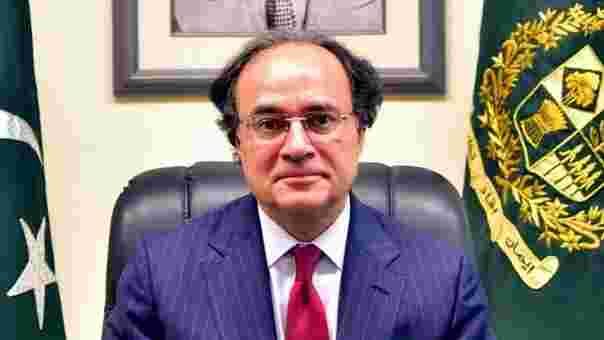
Islamabad, December 8, 2025 – Federal Minister for Finance and Revenue, Senator Muhammad Aurangzeb, on Monday reaffirmed the government’s dedication to strengthening Pakistan’s formal economy and promoting responsible, long-term investment during a high-level meeting with a delegation from Nestlé Pakistan.
Highlighting the government’s ongoing efforts to clamp down on the informal sector, Aurangzeb noted that visible progress has been achieved across multiple industries. The Finance Minister emphasized that improved compliance, transparency, and a robust tax ecosystem are critical pillars for Pakistan’s economic recovery and sustainable growth. A key reform, he said, is the establishment of the Tax Policy Office within the Finance Division, which enables year-round engagement with the private sector, facilitates policy refinement, and ensures effective implementation ahead of future budget cycles.
The Nestlé Pakistan delegation, led by CEO Jason Avancena, along with CFO Maqsood Ahmad Anjum and Head of Corporate Affairs & Sustainability Sheikh Waqar Ahmad, briefed the Finance Minister on the company’s longstanding operations and future expansion plans in Pakistan. The CEO detailed Nestlé’s efforts in localization, technological upgrades, advanced automation, and operational efficiency, noting that its Sheikhupura and Khanewal facilities are now fully automated and connected to global diagnostic systems, placing Pakistan’s operations on par with the company’s leading global facilities.
Nestlé’s ongoing investments include sustainability initiatives, agricultural services transformation, enhanced manufacturing capacity, and the deployment of advanced technologies across its value chain. Solar and biomass energy projects, environmentally improved packaging, digital dashboards, and supply chain automation are helping reduce operational costs and greenhouse gas emissions while strengthening long-term competitiveness.
The delegation also highlighted Nestlé’s localization efforts, which have reduced import volumes by nearly half over the past three years, thereby minimizing foreign-exchange exposure and deepening ties with Pakistan’s agricultural and manufacturing base. Aurangzeb commended these efforts and emphasized the government’s commitment to formalization, tax equity, and support for domestic manufacturing, citing the tobacco sector as a model for replication in other industries.
Discussions also covered export performance, regional trade challenges, and potential logistics partnerships to access Central Asian markets. Nestlé expressed interest in presenting its expanded investments in sustainability, automation, and value-added nutrition at the upcoming World Economic Forum (WEF) Annual Meeting in Davos, with government facilitation for a meeting with the Prime Minister.
The Finance Minister reiterated that Nestlé Pakistan, as one of the country’s most established multinational investors, would continue to collaborate with the Tax Policy Office, ensuring alignment on reforms that support industrial growth, sustainability, and Pakistan’s regional and global market potential.