Author: Mrs. Anjum Shahnawaz

  • SBP’s reserves fall to $10.889 billion

    SBP’s reserves fall to $10.889 billion

    KARACHI: The official reserves of State Bank of Pakistan (SBP) have reduced by $85 million to $10.889 billion by week ended April 17, 2020, the central bank said on Thursday.

    The SBP attributed this decline to government external debt payments of $145 million.

    The SBP said that on April 20, 2020, it received $1.39 billion from International Monetary Fund (IMF) under the Rapid Financing Instrument (RFI) to address the economic impact of the Covid-19 shock.

    These funds will be part of SBP weekly reserves data as of 24-April-2020, to be released on 30-April-2020.

    The total liquid foreign reserves held by the country stood at $17.300 million on April 17, 2020. The reserves held by commercial banks were at Rs6.41 billion.

  • Stock market gains 387 points in mixed trading

    Stock market gains 387 points in mixed trading

    KARACHI: The stock market gained 387 points on Thursday in mixed trading activities during the day.

    The benchmark KSE-100 index of Pakistan Stock Exchange (PSX) closed at 32,850 points as against 32,464 points showing an increase of 387 points.

    Analysts at Arif Habib Limited said that the market traded range bound for most of the session, with Cement, Banks and Engineering (Steel) sectors facing selling pressure, whereas Oil & gas stocks trading green.

    International crude price rebounded overnight for WTI to trade +15 percent from its previous close and helped OGDC, PPL and HASCOL hitting upper circuits.

    Sentiment on banking sector turned negative due to SBP’s direction to the Banks to conserve capital by not declaring dividends.

    Cement sector, on the other hand, saw profit booking amid poor financial results of some Cement players. Cement sector led the volumes with 70.4 million shares, followed by O&GMCs (28.1 million) and Banks (14.7 million).

    Among scrips, MLCF topped the table with 24.5 million shares, followed by HASCOL (21.9 million) and FCCL (12.1 million).

    Sectors contributing to the performance include E&P (+265 points), O&GMCs (+74 points), Fertilizer (+65 points), Power (+55 points), Pharma (+24 points), Cement (-96 points) and Banks (-58 points).

    Volumes declined from 239.8 million shares to 204.3 million shares (-15 percent DoD). Average traded value also declined by 8 percent to reach SU$ 58.8 million as against US$ 64.2 million.

    Stocks that contributed significantly to the volumes include MLCF, HASCOL, FCCL, DGKC and UNITY, which formed 39 percent of total volumes.

    Stocks that contributed positively to the index include OGDC (+92 points), PPL (+84 points), POL (+51 points), ENGRO (+45 points) and MARI (+38 points). Stocks that contributed negatively include LUCK (-32 points), MCB (-29 points), DGKC (-23 points), CHCC (-15 points), and KOHC (-14 points).

  • SBP issue guidelines to dampen COVID-19 effects, facilitates IBIs customers

    SBP issue guidelines to dampen COVID-19 effects, facilitates IBIs customers

    The State Bank of Pakistan (SBP) has issued comprehensive guidelines to help Islamic Banking Institutions (IBIs) mitigate the economic impact of COVID-19 on their customers.

    (more…)
  • Rupee gains 38 paisas against dollar on improved external account

    Rupee gains 38 paisas against dollar on improved external account

    KARACHI: The Pak Rupee further appreciated by 38 paisas against dollar on Thursday owing to improved external account.

    The rupee ended Rs159.98 to the dollar from previous day’s closing of Rs161.36 in interbank foreign exchange market.

    Currency dealers said that that improved foreign direct investment and shrinking current account deficit helped the local currency to make gain.

    The inflow of Foreign Direct Investment (FDI) into Pakistan has witnessed sharp growth of 137 percent during first nine months (July – March) 2019-2020.

    The FDI increased to $2.15 billion during first nine months of current fiscal year as compared with $905 million in the corresponding period of the last fiscal year.

    Current account deficit (CAD) has contracted by 73 percent during first nine months (July – March) 2019/2020 due to significant decline in import bill.

    The current account deficit fell to $2.77 billion during first nine months of current fiscal year as compared with $10.28 billion in the corresponding period of the last fiscal year.

  • SECP highlights difficulties in present tax regime

    SECP highlights difficulties in present tax regime

    ISLAMABAD: Securities and Exchange Commission of Pakistan (SECP) has highlighted difficulties faced by corporate sector due to prevailing tax regime.

    (more…)
  • ECC discusses arrest of PNSC ship by South Africa

    ECC discusses arrest of PNSC ship by South Africa

    ISLAMABAD: South Africa has arrested a ship of Pakistan National Shipping Company (PNSC) for alleged payment default by Pakistan Steel Mills.

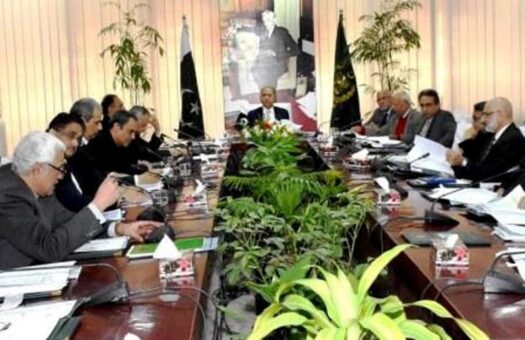
    The issue was discussed at the Economic Coordination Committee (ECC) of the Cabinet on Wednesday which was chaired by Adviser to the Prime Minister on Finance and Revenue Dr Abdul Hafeez Shaikh.

    A statement said that the ECC considered a proposal by the Ministry of Maritime Affairs regarding arrest of PNSC ships in South Africa on account of alleged claims of M/s Coniston against Pakistan Steel Mills Ltd and asked the Finance Secretary to engage with the PNSC and PSM and seek opinion of the Law Division, if necessary, to resolve the issue having ended up in litigation.

    The ECC approved release of Rs 75 billion from PM’s Relief Package of Rs 200 billion for targeted payments to the low-income groups, especially labourers and daily wagers most severely affected by the lockdown situation in the country.

    Under the decision, disbursement of Rs 12,000/- per selected person would be made using the Ehsaas disbursement mechanisms under a programme called “Mazdoor Ka Ehsaas Programme”.

    For this purpose, a fourth category in addition to already existing three categories in “Ehsaas Kifalat”, would be created and standard filters/checks of Ehsaas Program would be applied for identification of the beneficiaries.

    Earlier, the ECC was told that after the usual filters and checks, up to 6 million low-income people were expected to benefit under the planned 4th category in addition to the 12 million labour population already targeted through category 1-3 of Kifalat.

    “Mazdoor Ka Ehsaas Programme” was aimed at extending much-needed support in the current situation to the low-income labour/daily wagers mostly involved in activities such as loaders, cleaning staff, contract employees, piece rate workers, self-employed street vendors, construction workers, painters, welders, mechanics, carpenters, domestic help, drivers, etc.

    The ECC also asked the Ministry of Industries and Production and the Poverty Alleviation and Social Sector Development Division (PASSD) to jointly work out comprehensive mechanism and modalities to ensure a transparent and efficient disbursement of the support to the deserving people.

    During the meeting, the ECC on two separate proposals approved a technical supplementary grant of Rs 606 million for 19 projects to be implemented by the Government of Balochistan for FY 2019-20 and another technical supplementary grant amounting to Rs 7 million for purchase of spare parts for helicopter maintenance by Frontier Corps Balochistan (North).

    The ECC also approved release as government loan of Rs 1.30 billion in the current financial year and Rs 3.85 billion per annum during the next three years for settlement of the outstanding liabilities of litigants in the case involving Pakistan Steel Mills (PSM).

    On a proposal by the Ministry of Commerce, the ECC approved notification of the Export Policy Order, 2020 and Import Policy Order, 2020 in consolidated form as per the Law Division’s recommendations for the convenience of the business community.

    The ECC also approved a proposal by the Ministry of Overseas Pakistanis and HRD for approval of the budget proposal for the year 2019-20 & revised budget estimate for 2018-19 of EOBI.

    The ECC, on a proposal by the Ministry of Climate Change, approved exemption from the Re-lending Policy of the Government in respect of a USD 188 million World Bank IDA for the Pakistan Hydromet and Ecosystem Restoration Services Project.

    The ECC also accorded principled approval to a proposal by the Ministry of National Health Services for provision of Rs 150 million funds as grant in aid/seed money for Islamabad Healthcare Regulatory Authority, the ECC asked the Secretary Finance and Secretary Health to jointly to work out modalities for the arrangement of funds.

    On a proposal by the Ministry of Industries and Production seeking a supplementary grant of Rs 288 million for payment of salaries to the employees of Pakistan Machine Tool Factory, the ECC asked the Finance Division and the Industries and Production Division to sit together and resolve the issue.

  • SBP allows banks to suspend dividend distribution for two quarters

    SBP allows banks to suspend dividend distribution for two quarters

    KARACHI: State Bank of Pakistan (SBP) has allowed banks to suspend distribution of dividends for two quarters as financial institutions may face loan infection amid COVID-19.

    The central bank in a statement on Wednesday said that the banks/DFIs in Pakistan have much higher capital levels than prescribed globally or minimum levels advised by the SBP.

    Accordingly, SBP sees no immediate signs of systemic capital fragility across the banking industry. “However, banks/DFIs have been advised to suspend the dividend distribution for the next two quarters.”

    The banks/DFIs that have approved dividend declaration for quarter ended March 2020 by 22nd April 2020 have been advised to suspend dividend distribution for June and September quarters 2020.

    “All other banks have been advised to suspend dividend distribution for March and June 2020 quarters.”

    “This important decision has been taken keeping in view uncertainty arising out of COVID 19 pandemic and probability of higher infections in loan portfolios of banks as a result of that,” the SBP said.

    This measure will also enhance loss absorption capacity of the banking system and will enable them to further support the real sector in Pakistan.

    Notably, while releasing prescribed capital buffers and taking other regulatory relief measures, a number of other jurisdictions across the globe have also placed moratorium on dividend distribution and payment of cash bonuses to senior/executive officers and material risk takers.

    The SBP is confident that the suspension of dividend payout will further increase the resilience of banking sector and improve their ability to provide much needed credit support to the real economy.

    SBP will keep on closely monitoring the performance of banks/DFIs under its regulatory domain and take appropriate action as needed to ensure safety and soundness of individual banks/DFIs and the overall banking system.

    The central bank in a statement on Wednesday said that amid the growing concerns of COVID – 19 pandemic, the SBP, thus far, announced a number of regulatory relief measures for the financial sector and real economy.

    These measures are primarily aimed at ensuring the safety and soundness of banking sector while enhancing their lending capacity to support the economic activities in the country.

  • FBR asks taxpayers to provide IBAN for direct refund payment transfer

    FBR asks taxpayers to provide IBAN for direct refund payment transfer

    ISLAMABAD: Federal Board of Revenue (FBR) on Wednesday asked taxpayers to provide IBAN of their bank accounts for receiving refund payment through online system.

    FBR spokesman said that the tax body had devised a centralized system of online payment of Sales Tax, FED and Income Tax refunds directly in the bank account of the taxpayers.

    For this purpose, FBR has requested the taxpayers to update their IRIS profile.

    In the given bank account details area in the system, IBAN detail row is added wherein taxpayers are required to add their complete Bank’s IBAN number of same Bank Account whose details are already available in IRIS profile to receive Sales Tax, FED and Income Tax refund cheques.

    FBR has advised the taxpayers to do the needful as soon as possible to avail electronic transfer facility.

    Likewise, FBR has also required from the exporters to update their WEBOC profile and provide IBAN of the same Bank Account whose details are already available in WEBOC profile of the exporters to receive Custom Duty Drawback.

    FBR has required the information to be provided as soon as possible to avail electronic transfer facility for Customs Duty Drawback payments.

  • APTMA demands sales tax zero rating revival

    APTMA demands sales tax zero rating revival

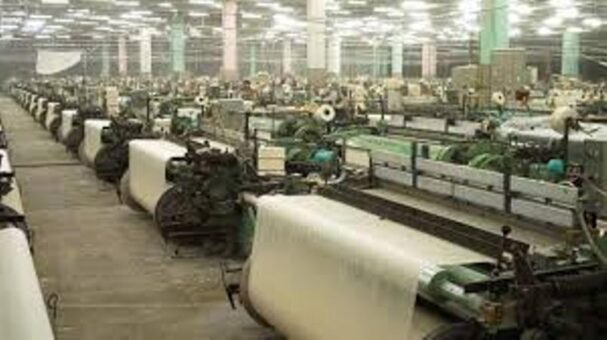
    KARACHI: All Pakistan Textile Mills Association (APTMA) on Wednesday demanded restoration of sales tax zero rating as authorities failed to fulfill commitments of repayment of refund under new online refund system.

    In a letter sent to Abdul Razzaq Dawood, Advisor for Commerce, Textile, Industry & Production and Investment, the association informed that since domestic sales constituted 50 percent of textile output, zero rating led to sales tax evasion to the tune of $12 billion sales.

    At the time, APTMA had proved that this was a false assertion and this fact has now been admitted by FBR. This FBR has now stated on record that the domestic sales of the textile sector only account for 20 percent of the overall value of textile production of the country.

    The APTMA said that the misplaced withdrawal of zero rating, the entire textile industry has suffered immensely and the levy of sales tax in its present form and design has led to almost Rs20 billion (5-6 months total impact Rs100 billion) liquidity moving from the industry to FBR.

    It is further informed that prior to July 2019, the industry had become competitive and profitable and if the zero rating scheme would have continued these funds would have been spent on new projects, upgradation and expansion of the industrial base and resulted in increased exports for the country. The economic cost of the withdrawal of zero rating has been colossal.

    The amount of sales tax being paid by the industry is even more that the annual profits of most companies. Many companies have had to borrow from banks to finance this unjustified levy resulting in an increase in their cost of production.

    “Thus, negating the government claims to move on a policy of reducing the cost of doing business in Pakistan.”

    At the time of withdrawal of SRO 1125, the government had assured the industry that it would review the situation in 6-8 months’ time. More than nine months have now passed, and it is evident that the Sales Tax system is not contributing significantly to the FBR kitty.

    On the other hand, the entire government, FBR and the entire industry is constantly holding meetings and wasting precious time and money on resolving the issue of refunds.

    Sales Tax refunds are not forthcoming as per the promised and unequivocally stated claims that payments would be made would be paid within 72 hours of filing of H forms.

    This has not happened and the sales tax claims even after filing of H forms have remained unpaid for months on end.

    In fact, the flow of quantum of refunds was very tightly regulated by the Ministry of Finance/FBR and processing of payments limited to the quantum/value predetermined by the Ministry of Finance.

    The Sales Tax returns/H forms were routinely deferred or rejected by FBR on artificial limits established by them which had no basis in reality of the industry.

    In other words, nothing had changed from previous years in terms of refund processing.

    The situation post-Covid19 has changed drastically for the industry, as export orders have been cancelled, payments due against LCs delayed, and fresh orders not forthcoming.

    This is because of a complete collapse of markets and demand for textiles in Europe and USA. Circumstances are not expected to return to normalcy for quite some time.

    It is not possible to expect the value chain to keep on paying Sales Tax with little chance of obtaining their refunds in a timely and agreed manner from FBR.

    This delay results in affecting the entire supply chain as the exporters delay payments to their suppliers who in turn are forced to delay down the line.

    This has resulted in severe cash flow problems in part owing to the banks reluctance to finance these payments.

    Under these circumstances, the association demanded the immediate restoration of SRO 1125 i.e zero rating for the textile supply chain. “Should government still wish to collect sales tax on domestic sales, from a market that is already in dire straits, then it should collect the Sales Tax at the Point of Sale.”

    In the foreseeable future the continuation of the Sales Tax regime applicable to an industry with 80 percent exports is counterproductive and will make recovery of exports to any significant level post-COVID very difficult and even make it impossible.