Author: Mrs. Anjum Shahnawaz

  • KCCI demands policy rate at 4 percent

    KCCI demands policy rate at 4 percent

    KARACHI: Karachi Chamber of Commerce and Industry (KCCI) on Wednesday demanded the central bank to reduce policy rate to 4 percent instead easing in bits and pieces.

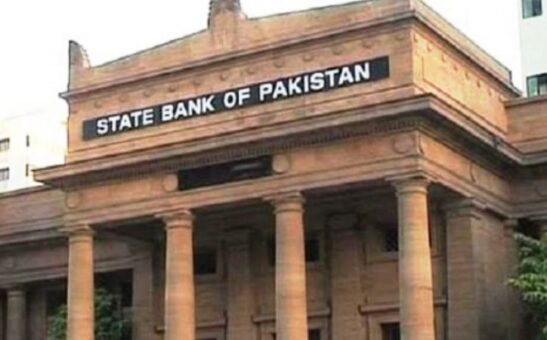
    KCCI President Agha Shahab Ahmed Khan in a statement urged the State Bank of Pakistan (SBP) to bring down the policy rate from 9.0 percent to 4.0 percent in view of the extra-ordinary circumstances and a global scale economic crisis, which is certain to have a long term negative impact on Pakistan’s economy.

    In a letter sent to Governor SBP Dr. Reza Baqir, President KCCI stressed that reduction in policy rate in bits and pieces is not enough to provide the much needed stimulus to the economy hence, it is necessary to significantly reduce the interest rate in a single step, to help the businesses sail through the unprecedented crisis.

    He was of the opinion that there is now ample justification for reduction in policy rate because the inflation rate has declined sharply due to a steep fall in prices of crude oil, commodities and raw materials, while the demand has also been suppressed.

    President KCCI appreciated the measures taken by SBP to support the industry and exporters to meet the challenges and financial crunch faced by them due to prolonged lockdowns to prevent the spread of Covid-19 coronavirus.

    While acknowledging the interest rates of 4 percent and 5 percent for filers and non-filers respectively in the package, he suggested that in view of the special circumstances, the rate of interest should be zero to support the economy and sustain the industries at least for the next one year.

    He however stressed that there is a dire need to announce a Rescue Package for Micro level Enterprises and SMEs which contribute around 40 percent to GDP.

    He pointed out that unfortunately, no relief has so far been announced for Micro enterprises and SMEs, which are under much greater financial stress then the large scale businesses and their survival is at stake.

  • Stock market gains 41 points amid negative sentiments

    Stock market gains 41 points amid negative sentiments

    KARACHI: The share market gained 41 points on Wednesday despite negative sentiments prevailed during the day.

    The benchmark KSE-100 index of Pakistan Stock Exchange (PSX) closed at 32,464 points as against 32,423 points showing an increase of 41 points.

    Analysts at Arif Habib Limited said that tumbling international crude prices, especially that of Brent (traded below US$ 16/bbl briefly), caused the damage to investor sentiment today.

    Pre-open session saw oil & gas (E&P and OMC) stocks with heavy volumes on offer. Market opened on a negative note and saw a loss of 529 points during the session.

    For the most part, the benchmark index traded in the red zone, with sporadic recoveries due to banking sector stocks.

    Cement sector continued rallying on the back of expectation of an increase in cement price / bag in the coming days in the Northern region, which would improve the bottomlines of listed Cement companies, in addition to the impact of significantly lower coal prices (hovering around US$ 50/ton).

    Financial results of HBL, MCB, ABL brought back some activity, wherein HBL saw selling activity (despite announcement of Dividend), whereas MCB realized some price gains.

    Cement sector topped the charts with 95.9 million shares, followed by Technology (22.1 million) and O&GMCs (21.4 million). Among scrips, MLCF saw volumes of 47.7 million, followed by HASCOL (17.4 million) and DGKC (13.8 million).

    Sectors contributing to the performance include Cement (+74 points), Banks (+44 points), E&P (-54 points), Inv Banks (-33 points) and Power (-23 points).

    Volumes declined from 338.7 million shares to 239.8 million shares (-29 percent DoD). Average traded value also declined by 32 percent to reach US$ 64.2 million as against US$ 93.8 million the other day.

    Stocks that contributed significantly to the volumes include MLCF, HASCOL, DGKC, FCCL and HUMNL, which formed 41 percent of total volumes.

    Stocks that contributed positively to the index include MCB (+40 points), LUCK (+27 points), BAHL (+16 points), FFC (+14 points) and KAPCO (+13 points).

    Stocks that contributed negatively include HBL (-44 points), DAWH (-36 points), HUBC (-34 points), PPL (-29 points), and ENGRO (-22 points).

  • SBP receives $1.39 billion from IMF under Rapid Financing Instrument

    SBP receives $1.39 billion from IMF under Rapid Financing Instrument

    KARACHI: State Bank of Pakistan (SBP) on Wednesday said that it has received $1.39 billion from International Monetary Fund (IMF) under Rapid Financing Instrument program to fight against COVID-19.

    The Executive Board of the IMF last week approved the disbursement of $1.386 billion under the Rapid Financing Instrument to address the economic impact of the Covid-19 shock.

    With the near-term outlook deteriorating sharply, the authorities have swiftly put in place measures to contain the impact of the shock and support economic activity. Crucially, health spending has been increased and social support strengthened, it added.

    As the impact of the COVID-19 shock subsides, the authorities’ renewed commitment to implement the policies in the existing EFF will help support the recovery and strengthen resilience.

    The Executive Board of the International Monetary Fund (IMF) approved a purchase of Pakistan under the Rapid Financing Instrument (RFI) equivalent to SDR 1,015.5 million (US$ 1.386 billion, 50 percent of quota) to meet the urgent balance of payment needs stemming from the outbreak of the COVID-19 pandemic.

    While uncertainty remains high, the near-term economic impact of COVID-19 is expected to be significant, giving rise to large fiscal and external financing needs. The IMF support will help to provide a backstop against the decline in international reserves and provide financing to the budget for targeted and temporary spending increases aimed at containing the pandemic and mitigating its economic impact.

    The IMF remains closely engaged with the Pakistani authorities and as the impact of the COVID-19 shock subsides will resume discussions as part of the current EFF.

    Following the Executive Board discussion, Geoffrey Okamoto, First Deputy Managing Director and Acting Chair, made the following statement:

    “The outbreak of Covid-19 is having a significant impact on the Pakistani economy. The domestic containment measures, coupled with the global downturn, are severely affecting growth and straining external financing. This has created an urgent balance of payments need.

    “In this context of heightened uncertainty, IMF emergency financing under the Rapid Financing Instrument provides strong support to the authorities’ emergency policy response, preserving fiscal space for essential health spending, shoring up confidence, and catalyzing additional donor support.

    “In response to the crisis, the government of Pakistan has taken swift action to halt the community spread of the virus and introduced an economic stimulus package aimed at accommodating the spending needed to tackle the health emergency and supporting economic activity. Crucially, the authorities are increasing public health spending and strengthening social safety net programs to provide immediate relief to the most vulnerable. Similarly, the State Bank of Pakistan has adopted a timely set of measures, including a lowering of the policy rate and new refinancing facilities, to support liquidity and credit conditions and safeguard financial stability. In this context, the authorities’ policies should be targeted and temporary.

    “As the crisis abates, the authorities’ renewed commitment to the reforms in the existing Extended Fund Facility—in particular those related to fiscal consolidation strategy, energy sector, governance, and remaining AML/CFT deficiencies—will be crucial to entrench resilience, boost Pakistan’s growth potential, and deliver broad based benefits for all Pakistanis.

    “Expeditious donor support is needed to close the remaining balance of payments gap and ease the adjustment burden.”

  • Rupee makes gain on lower international oil prices

    Rupee makes gain on lower international oil prices

    KARACHI: The Pak Rupee ended with gain of 77 paisas against dollar on Wednesday owing to fall in international oil prices.

    The rupee closed at Rs160.36 to the dollar from previous day’s closing of Rs161.13 in interbank foreign exchange market.

    Currency experts said that positive sentiments prevailed in the market owing to significant decline in international oil prices which would help reduction in Pakistan’s oil import bill.

    They said that Pakistan is net importer of international crude oil and finished petroleum products.

    Besides they said that the rupee continued gain against dollar as the State Bank of Pakistan (SBP) last week cut policy rate by 200 basis points to nine percent.

    The central bank reduced the policy rate third time in last one month considering significant adverse effect of coronavirus on the economy,

    Meanwhile last week the Executive Board of the International Monetary Fund (IMF) a day earlier approved the disbursement of $1.386 billion under the Rapid Financing Instrument to address the economic impact of the Covid-19 shock.

    The currency dealers said that the rupee may witness further appreciation in coming days due to falling international oil prices and reduction in non-oil imports.

  • SBP further reduces interest rate on loan obtained for wages, salaries

    SBP further reduces interest rate on loan obtained for wages, salaries

    KARACHI: The State Bank of Pakistan (SBP) on Wednesday further reduced interest rate for loan obtained for wages and salaries under business incentive scheme.

    SBP has enhanced the incentive to business which are active tax payers by reducing the mark up rate for them to 3 percent that was set as 4 percent earlier.

    Now the SBP will provide refinance to banks at zero percent. This also increases the gap between the rates charged to active tax payer and the non-tax payers businesses, as the latter can be charged an end user markup rate of up to 5 percent, SBP said.

    On April 10, 2020 the State Bank of Pakistan announced an incentive scheme— entitled Refinance Scheme for Payment of Wages and Salaries to the Workers and Employees of Business Concerns—that enables the provision of concessional credit for payroll finance to businesses that commit to not lay off workers for the next three months.

    SBP has introduced further incentives under this scheme to support employment and avoid layoffs in the country.

    These additional incentives include relaxations in collateral requirements, further reduction in end-user rate, reimbursement of wages, special accounts for employees to receive wages, borrowing from banks other than maintaining payrolls, simplification of application form for SMEs and bank’s exposure limits.

    These additional incentives are effective as of today.

    The central bank said that based on feedback from stakeholders, SMEs including vendors and distributors were particularly facing the problem of providing security/collateral.

    To address this issue, SBP has now allowed banks for providing financing against corporate guarantees of companies in value / supply chain relationship with the borrowers. Moreover, banks have also been encouraged to provide loans without any collateral i.e. taking clean exposure of up to Rs 5 million.

    To facilitate employees for receiving wages under the scheme directly, banks have been allowed to open their accounts on the information and documents provided by the employers along with an undertaking stating that these persons are bonafide employees/workers.

    Banks will ensure verification of the employees using NADRA Verisys before activation of such accounts. These accounts, however, could be used solely for salary disbursement and withdrawal purposes only.

    Businesses have also been given flexibility to avail loan under SBPs refinance scheme for wages from any bank and they will not be limited to avail loans from the bank that manages their payroll. Further, businesses will also be able to get reimbursement of salaries pertaining to the month of April 2020 that have been disbursed through own sources, provided they have applied for financing under the scheme before disbursement and the same is subsequently approved by the banks. SMEs can apply for the financing on a simplified loan application form prescribed by SBP for this scheme.

    To facilitate the banks further for lending under the scheme, Banks’ exposure under the scheme has been exempted from the per-party or the per-group exposure limits. It will enable them to lend to borrowers that have exhausted their exposure limits.

    All these benefits will also be available to businesses availing financing under the scheme from Islamic Banking Institutions.

  • Rupee strengthens to Rs160 against dollar in early day trade

    Rupee strengthens to Rs160 against dollar in early day trade

    KARACHI: The Pak Rupee has continued appreciation against dollar and strengthen by Rs1.13 in early trade on Wednesday.

    The dollar is being traded at Rs160.00 in early trade from previous day’s closing of Rs161.13 in interbank foreign exchange market.

    Currency experts said that positive sentiments prevailed in the market owing to significant decline in international oil prices which would help reduction in Pakistan’s oil import bill.

    They said that Pakistan is net importer of international crude oil and finished petroleum products.

    Brent crude is being trade at $16.89 per barrel after declining by around 13 percent.

    Besides they said that the rupee continued gain against dollar as the State Bank of Pakistan (SBP) last week cut policy rate by 200 basis points to nine percent.

    The central bank reduced the policy rate third time in last one month considering significant adverse effect of coronavirus on the economy,

    Meanwhile last week the Executive Board of the International Monetary Fund (IMF) a day earlier approved the disbursement of $1.386 billion under the Rapid Financing Instrument to address the economic impact of the Covid-19 shock.

    The currency dealers said that the rupee may witness further appreciation in coming days due to falling international oil prices and reduction in non-oil imports.

  • FDI inflow registers sharp growth of 137pc in July-March

    FDI inflow registers sharp growth of 137pc in July-March

    KARACHI: The inflow of Foreign Direct Investment (FDI) into Pakistan has witnessed sharp growth of 137 percent during first nine months (July – March) 2019-2020, State Bank of Pakistan (SBP) said on Tuesday.

    The FDI increased to $2.15 billion during first nine months of current fiscal year as compared with $905 million in the corresponding period of the last fiscal year.

    The inflows under this head increased to $2.69 billion during the period under review as compared with $2.14 billion in the corresponding period of the last fiscal year, showing 25.6 percent growth. The outflows, however, fell by 56 percent to $548 million during first nine months of current fiscal year as compared with $1.24 billion in the same period of the last fiscal year.

    Portfolio investment in equity market increased by 75 percent as outflow reduced to $103.6 million during July –March 2019/2020 as compared with outflow of $409 million in the corresponding period of the last fiscal year.

    Therefore, the foreign private investment increased by 312 percent to $2.044 billion in first nine months of current fiscal year as compared with $495.6 million in the same period of the last fiscal year.

  • SECP relaxes regulatory requirement for AMCs

    SECP relaxes regulatory requirement for AMCs

    In a bid to mitigate the economic fallout of the ongoing COVID-19 pandemic, the Securities and Exchange Commission of Pakistan (SECP) has announced a series of relaxations in regulatory requirements for asset management companies (AMCs).

    (more…)
  • CAA allows six charter flights on US embassy request

    CAA allows six charter flights on US embassy request

    KARACHI: The ministry of foreign affairs has allowed six private charter flights by the US Embassy to airlift passengers in the wake of coronavirus outbreak.

    According to an approval letter issued by the Pakistan Civil Aviation Authority (CAA) stated that the request of US Embassy had been approved by the competent authority to operate six special flights i.e. Sofia-Islamabad-Sofia through Omni Air incoming on April 21, 2020, Sharjah-Islamabad-Frankfurt through Atlas Air on April 22, 2020, Sofia-Islamabad-Sofia and Sofia-Karachi-Sofia through Omni Air on April 23, 2020 on April 25, 2020.

    The CAA said that the permission is subject to the condition that no disembarkation of flight crew shall be permitted from the aircraft upon arrival at both Islamabad International Airport, Islamabad and Jinnah International Airport, Karachi.

    The permission is also subject to full compliance with revised operational standard operating procedures issued through letter dated April 18, 2020 related to international passenger/charter flights.

  • New fixed tax regime for builders and developers

    New fixed tax regime for builders and developers

    KARACHI: The government has launched the incentive package for construction industry and introduced a fixed tax regime for builders and developers.

    The Federal Board of Revenue (FBR) issued Tax Laws (Amendment) Ordinance, 2020, which was promulgated through presidential order to amend Income Tax Ordinance, 2001 in order to provide tax incentives.

    According to commentary on the new ordinance issued by PWC A F Ferguson Chartered Accountants a new provision section 100D has been introduced in the Income Tax Ordinance, 2001, prescribing a scheduler based fixed tax regime for Builders and Developers on the basis of project area in respect of their income from sale of building or sale of plots, for tax year 2020 and onwards.

    Necessary rules to that effect have been enacted by way of insertion of Eleventh Schedule to the Ordinance.

    Similar to other scheduler based taxation provisions, all other provisions of the Ordinance (including recovery of tax not paid and matters connected therewith) not specifically covered under section 100D and Eleventh Schedule will remain applicable on Builders and Developers.

    A similar fixed tax regime for builders and developers whereby tax was payable on the basis of area was also introduced though Finance Act, 2016 by way of sections 7C and 7D of the Ordinance, which was subsequently restricted through Finance Act, 2017 to only such Projects, which were initiated and approved during tax year 2017.

    As such, builders and developers not covered by sections 7C and 7D were required to pay tax on net income basis.

    The provisions of section 100D read with Eleventh Schedule to the Ordinance are applicable to all Builders and Developers, who opts for such taxation and are registered with the Federal Board of Revenue (FBR) on a Project-by-Project basis (hereinafter referred to as ‘eligible project/project’ as the context so requires).

    For the eligible projects, the builder or developer will pay tax on the income from the sale of buildings or sale of plots, as the case may be, in respect of:

    (a) a new project to be completed by September 30, 2022; or

    (b) an incomplete existing project to be completed by September 30, 2022.

    However, income, profits and gains earned up to tax year 2019 from incomplete existing projects will remain subject to the provisions of the Ordinance before the commencement of the Amendment Ordinance.

    Any income of the builder or developer other than income subject to special tax regime of the Eleventh Schedule shall be subject to tax as per normal provisions of the Ordinance.

    Computation of income and annual tax payable thereon at the fixed rates under the regime is to be made on a Project-by-Project basis as Final Tax.

    Such income, being subject to final tax regime, shall not be chargeable to tax under any head of income in computing the taxable income.

    No deduction for any expenditure, deductible allowance or set-off of any loss will be allowed. Tax credits are also not allowed against tax payable except for tax collected from the builder or developer under section 236K of the Ordinance after the commencement of the Amendment Ordinance on purchase of immovable property utilized in eligible projects. No refund of any taxes suffered is allowed.