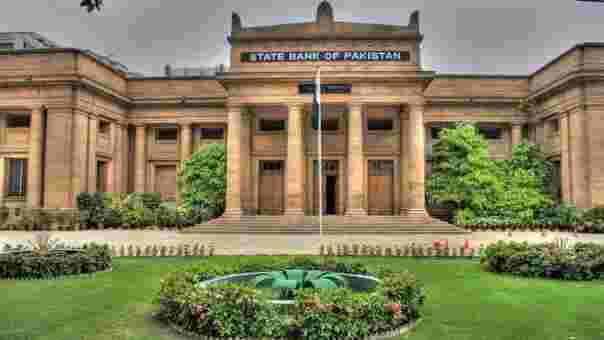
Karachi, April 30, 2025 – The State Bank of Pakistan (SBP) has revealed that increased taxation on property transactions has significantly impacted housing finance, dampening the demand for home-building loans despite a reduction in borrowing costs.
(more…)Author: Shahnawaz Akhter
-
FBR sets cement sales tax value based on SPI data
Islamabad, April 29, 2025 – In a major policy development, the Federal Board of Revenue (FBR) has officially announced a new method for determining the value of cement for the purpose of sales tax calculation, aligning it with the Sensitive Price Indicator (SPI) data issued by the Pakistan Bureau of Statistics (PBS).
(more…) -
PSX gains 808 points as market rebounds from early sell-off
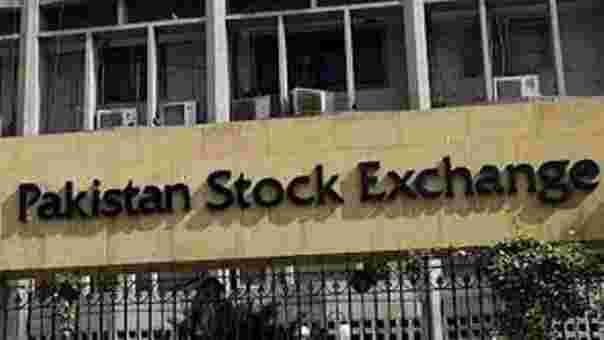
Karachi, April 29, 2025 – The Pakistan Stock Exchange (PSX) staged a powerful recovery on Tuesday, ending the session with a gain of 808 points, closing at 114,872 points, up 0.71%.
(more…) -

FBR engages industry experts, third-party auditors to train officers
Islamabad, April 29, 2025 – In a significant move under its transformation initiative, the Federal Board of Revenue (FBR) has rolled out a comprehensive plan to enhance the capacity of its audit workforce. As part of this strategy, the FBR has officially released job descriptions for third-party auditors and industry experts who will serve as mentors and trainers for FBR officers.
(more…) -
OICCI recommends phased super tax exit for growth
The Overseas Investors Chamber of Commerce and Industry (OICCI) has once again emphasized the need for a more stable and growth-oriented tax framework to attract foreign and local investment. As part of its budget recommendations, the OICCI has strongly urged the government to initiate a phased elimination of the super tax, proposing its complete removal over a span of three years.
(more…) -
PSX calls for rationalization of CGT rates to remove tax distortions
KARACHI, April 29, 2025 — The Pakistan Stock Exchange (PSX) has recommended the removal of the flat 12.5% Capital Gains Tax (CGT) rate on the disposal of listed securities acquired between July 1, 2013 and June 30, 2022.
(more…) -
SBP advocates reducing tax burden on salaried individuals
KARACHI, April 29, 2025 — The State Bank of Pakistan (SBP) has strongly recommended that the government prioritize policies aimed at broadening the tax base and reducing the tax burden on salaried individuals and other documented sectors of the economy.
(more…) -

Pakistan imports 368-kg gold, spending jumps 67% in 9MFY25
Islamabad, April 28, 2025 – Pakistan’s gold imports have witnessed a substantial increase during the first nine months (July–March) of the fiscal year 2024-25.
(more…) -
Refining tax policy essential to reducing cash circulation: SBP
Karachi, April 28, 2025 — The State Bank of Pakistan (SBP) has emphasized the urgent need to refine tax policy to avoid unintended consequences that fuel higher cash circulation (CiC) in the economy.
(more…) -
Govt saves Rs30 billion through MTBs buyback auctions: SBP
Karachi, April 28, 2025 – The State Bank of Pakistan (SBP) has reported that the federal government managed to save approximately Rs30 billion through successful buyback auctions of Market Treasury Bills (MTBs) during the first half of the fiscal year 2025.
In its half-yearly economic report, the SBP highlighted that the strategic use of buyback auctions allowed the government to lower its debt servicing costs significantly. “The estimates suggest the government saved a total of around Rs30 billion in debt servicing with these operations,” the SBP stated.
Understanding the Buyback Auctions
Buyback auctions involve the government repurchasing its own debt instruments, such as MTBs, from the secondary market before their maturity. The primary goals are to smooth the debt redemption profile, reduce refinancing risks, and potentially save on interest expenses if market conditions are favorable. While buyback mechanisms are common in developed economies, they are less frequently employed in developing countries due to liquidity constraints.
The motivation behind Pakistan’s decision to hold buyback auctions was fueled by improved fiscal liquidity, largely following a substantial profit transfer from the SBP in September 2024. This liquidity allowed the government to repurchase older MTBs issued at higher interest rates while simultaneously raising longer-term debt at lower rates amid a falling interest rate environment.
Details of the Recent Buyback Auctions
The government repurchased four issues of MTBs, maturing in December 2024, amounting to approximately Rs3.6 trillion at average yields exceeding 20%. These operations not only lowered immediate debt costs but also significantly mitigated rollover risk.
The buybacks were executed through special auctions, where specific securities and target amounts were announced for competitive bidding. Due to declining interest rates, the auctions were oversubscribed, and the government successfully bought back a total of Rs1.026 trillion—split between Rs566 billion in 6-month MTBs and Rs460 billion in 12-month MTBs.
However, acceptance rates varied: around 73% of targets were met for the 6-month tenor, while only 34% were accepted for the 12-month tenor. This discrepancy reflected higher pricing expectations from market participants in subsequent auctions.
Overall, the SBP noted that the buyback auctions accounted for 27% of the maturing MTBs, thereby easing the government’s future borrowing needs. Nevertheless, the SBP cautioned that frequent buybacks, if not carefully managed, could distort market signals, fuel inflationary expectations, and increase long-term borrowing costs. Effective communication of buyback objectives is crucial to avoid these risks.