Author: Faisal Shahnawaz

  • Fiscal deficit contracts at 3.8pc in first nine months

    Fiscal deficit contracts at 3.8pc in first nine months

    ISLAMABAD: The fiscal deficit has contracted at 3.8 percent during first nine months of current fiscal year. The budget deficit was 5 percent in the same moths of the last fiscal year.

    Analysts at Topline Securities said that importantly, the primary balance during the period clocked in at 0.4 percent of GDP or Rs194 billion (last year was -1.2 percent of GDP or -Rs463 billion), close to the initial target of 0.6 percent set by the IMF.

    IMF is likely to review these targets going forward because of the implications of COVID-19 outbreak, the analysts said.

    In the 3QFY20, the fiscal deficit came in at 1.6 percent of GDP compared to 2QFY20’s fiscal deficit of 1.6 percent of GDP and 1QFY20’s fiscal deficit of 0.7 percent of GDP.

    All the four provinces recorded a budgetary surplus during the first nine months of current fiscal year, while only Punjab recorded a budgetary deficit in 3QFY20.

    During the 9MFY20, Total Revenues increased by 31 percent YoY, where the improvement was led by 14 percent YoY higher Tax Revenues (Mar-2020 revenues partially affected by COVID-19) and 160 percent YoY higher Non-Tax Revenues.

    Looking into further breakup of revenues, government collected 15 percent YoY higher Direct taxes, 18 percent YoY higher Sales Tax and 40 percent YoY higher Petroleum Levy during 9MFY20. In 3QFY20, the same were down by 16 percent QoQ, 16 percent QoQ and 17 percent QoQ, respectively.

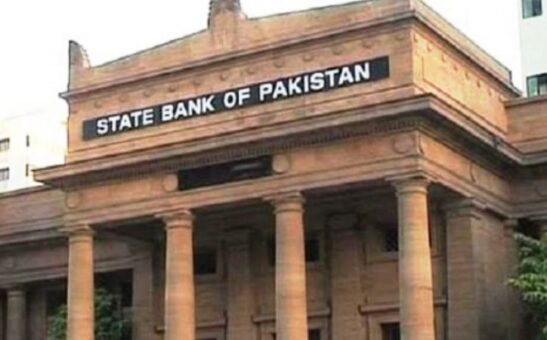
    The government hugely benefitted from 360 percent YoY higher profits from State Bank of Pakistan (SBP) in 9MFY20 (down 13 percent QoQ in 3QFY20), which is around 1.4 percent of GDP.

    On the expenditures front, Total Expenditure increased by 16 percent YoY. Current Expenditures increased by 17 percent YoY, where Mark-up Payments were up 29 percent YoY and Defense Expenditures were up 4 percent YoY. Excluding these items, government’s own expenses increased by 14 percent YoY during 9MFY20.

    The decline in interest rates helped the government reduce the interest bill by 16 percent QoQ during 3QFY20.

    The Development Expenditure remained steady, where growth of 14 percent YoY was witnessed in 9MFY20. In 3QFY20, the same declined by 6 percent QoQ.

    In the wake of COVID-19, government’s expenses on Social Protection during the 3QFY20 clocked in at Rs13.9bn (vs. Rs701mn in 2QFY20 and Rs547mn in 1QFY20).

    Pakistan’s fiscal deficit to clock in at 9.0 percent of GDP in FY20 due to implications of COVID-19 on both revenues and expenditures, the analysts estimated.
  • Rupee falls by 41 paisas against dollar

    Rupee falls by 41 paisas against dollar

    KARACHI: The Pak Rupee depreciated by 41 paisas against dollar on Wednesday owing to hope of escalation in demand.

    The rupee ended Rs160.06 to the dollar from previous day’s closing of Rs159.65 in interbank foreign exchange market.

    Currency experts said that positive sentiments were prevailed in the markets on reports of ease in lockdown.

    They said that the announcement of allowing import of petroleum products also deteriorated the rupee value.

    However, the trade deficit shrank by 25.68 percent to $19.49 billion during July – April 2019/2020 as compared with the deficit of $26.23 billion in the same period of the last fiscal year.

    The exports in first ten months (July – April) 2019/2020 also fell by four percent to $18.41 billion as compared with $19.16 billion in the corresponding period of the last fiscal year.

    On the other hand the import bill fell by 16.5 billion to $39.9 billion in the first ten months of current fiscal year as compared with $45.4 billion in the corresponding period of the last fiscal year.

  • SBP introduces credit risk sharing mechanism to support employment

    SBP introduces credit risk sharing mechanism to support employment

    KARACHI: Ministry of Finance and State Bank of Pakistan (SBP) introduce risk-sharing mechanism to support bank lending to SMEs and small businesses to avail SBP’s Refinance Facility to Support Employment.

    Taking cognizance of the SMEs finding difficulties in arranging adequate collateral and banks’ risk averseness in taking exposures for such lending under the SBPs Refinance Scheme to Support Employment and Prevent Layoff of Workers, Ministry of Finance has stepped forward to shoulder risk sharing with banks. Accordingly, the Federal Government has allocated Rs30 billion under a credit risk sharing facility for the banks spread over four years to share the burden of losses due to any bad loans in future. Under thisrisk sharing arrangement, Federal Government will bear 40% first loss on principal portion of disbursed loan portfolio of the banks.

    This facility will incentivize banks to extend loans to collateral deficient SMEs and small corporates with sales turnover of upto Rs2 billion to avail financing under SBP refinance scheme.

    Under the SBP’s Refinance Scheme to Support Employment and Prevent Layoff of Workers due to the impact of COVID-19, businesses that commit to not lay off workers in the next three months can avail credit through banks for the three months of wages and salaries expenses at a concessional mark-up rate.

    The risk-sharing mechanism being introduced today, that is expected to increase the banks’ incentive to lend to SMEs and small corporate under this scheme, was developed on the basis of feedback received from relevant stakeholders and in collaboration between MOF and SBP.

    Ministry of Finance’s swift approval of the subsidy to provide risk coverage to banks has made it possible for the SBP to launch this credit risk sharing facility for which relevant circular has been issued today.

    SBP will continue to monitor the implementation of the scheme.

    With a view to incentivize banks/DFIs for financing to SMEs and small corporates under above mentioned schemes, Government of Pakistan has approved budgetary allocation for ‘Risk Sharing Facility for State Bank of Pakistan (SBP) Refinance Scheme to Support Employment and Prevent Layoff of Workers’.

    Accordingly, the risk sharing facility is being provided with immediate effect, with following key features.

    S.NoParticularsKey features
    1EligibilityThe financing extended to businesses with maximum sales turnover of Rs 2 billion, under SBP refinance scheme to support employment and prevent layoff of workers is eligible for Risk Sharing Facility by the GOP.
    2Risk CoverageGoP will bear 40% first loss on disbursed portfolio (principal portion only) for eligible borrowers. Note: In case of non-repayments, after being classified as ‘Loss’ (as per the classification criteria laid down under respective SBP Prudential Regulations, credit loss subsidy claim will be paid by the GOP).
    3Security RequirementsSecurity arrangements will be as per executing agency’s own credit policy after taking into account the factor of this risk sharing facility. Hence, banks are encouraged to facilitate collateral deficient borrowers. In any case, banks will not be asking for additional collaterals over and above 60% of the principal amount and markup thereon.
    4Executing AgencyBanks and DFI assigned limits under SBP scheme will be eligible Executing Agencies (EAs).
    5Additional MeasuresEAs shall develop and implement robust mechanism to ensure that the loans are utilized for intended purpose only.
    6AdministrationDevelopment Finance Support Department (DFSD), SBP BSC will manage operational aspects of the risk sharing facility. DFSD will submit data under the risk sharing facility on quarterly basis to the Finance Division.

    7Subsidy PaymentEAs shall submit credit loss subsidy claims to DFSD on quarterly basis within 15 working days after the end of each quarter. DFSD after scrutiny of the claims shall submit the same to Finance Division, GOP. FD will release payment against submitted claims within 15 working days. Upon receipt of subsidy from GOP, SBP BSC Karachi will credit the account of EAs with the subsidy amount.

    The banks/DFIs are advised to ensure immediate implementation of ‘Risk Sharing Facility for SBP Refinance Scheme to support employment and prevent layoff of workers’ and facilitate the eligible businesses to avail financing under this facility.

  • FBR allows duty drawback on supplementary food items

    FBR allows duty drawback on supplementary food items

    ISLAMABAD: Federal Board of Revenue (FBR) has allowed duty drawback on import of ready to use supplementary food, which included palm oil and skimmed milk.

    The FBR on Tuesday issued SRO 341(I)/2020 to allow 5.33 percent freight on board (fob) to the extent of customs duty. The duty drawback is available from April 27, 2020.

    The facility has been allowed to items falling under HS Code 2106.9090, which included:

    01. RBD Palm Olien

    02. RBD Canola Oil

    03. Skimmed Milk Powder

    04. Emulsifier

    05. Vitamin and Mineral Premix

    06. Anti Oxidant

    07. Whey Powder

    08. Peanuts

  • Domestic oil sales plunge by 35 percent in April

    Domestic oil sales plunge by 35 percent in April

    KARACHI: The domestic sales of petroleum products have plunged by 35 percent to 1.07 million tons in April 2020 as compared with 1.65 million tons in the same month of the last year.

    However, the sales in April 2020 increased by three percent when compared with 1.03 million tons in March 2020.

    Analysts at Arif Habib Limited attributed the increase in sales of petroleum products to: 1) Surge in sales of HSD on account of higher demand from agriculture sector given beginning of wheat harvesting season, and 2) Closure of Iran border resulting in lower availability of illegally dumped fuel.

    Pertinently, sales of FO, MS and HSD witnessed a steep decline of 75 percent, 36 percent and 16 percent YoY to 0.07 million tons, 0.44 million tons and 0.55 million tons, respectively.

    As per market sources, oil consumption witnessed a rising trend since the government opted for a ‘smart lockdown’ and issued Standard Operating Procedures (SOP) for construction and export oriented industries.

    However, if lockdown is extended (deadline is May 09, 2020) then this will be negative for May 2020 sales.

    On a monthly basis, MS sales dropped by 21 percent MoM while HSD and FO volumes grew by 41 percent and 2 percent MoM respectively.

    The analysts expect demand for furnace oil to increase in upcoming months due to higher demand of power in summer season coupled with historic low prices (FO touched USD 77/M.T on 22nd April’20) which may improve merit order of furnace oil based power plants.

    During first ten months of current fiscal year, total White and Black Oil sales clocked-in at 13.35 million tons, depicting a decline of 13 percent YoY due to dip in sales volumes of MS, HSD and FO by 3 percent, 15 percent and 31 percent YoY, respectively.

    Motor Gasoline sales witnessed a meager decline of 3 percent YoY to 5.99 million tons due to the Coronavirus. However, massive reduction in price will increase demand as customers will prefer petrol over Compressed Natural Gas (CNG). High Speed Diesel (HSD) sales shrunk by 15 percent YoY to 5.15 million tons led by i) Sharp slowdown in Agriculture sector, ii) Negative growth of 3.03 percent YoY in the manufacturing sector of LSM, and iii) Availability of smuggled HSD from Iran, which is cheaper in contrast to official imported product.

    Meanwhile, FO is being replaced by other sources namely Coal, Hydel and RLNG, resulting in a decline of 31 percent YoY to 1.68 million tons compared to 2.44 million tons in SPLY.

  • PQGTL signs agreement with Gabitt

    PQGTL signs agreement with Gabitt

    KARACHI:  Pak-Qatar General Takaful Limited (PQGTL) has signed an agreement with Gabitt, a ride hailing service.

    The ceremony, which was held recently, was attended by Nasir Ali Syed, CEO Pak-Qatar General Takaful Limited and Farhan Ahmed, CEO L1 Solution Private Limited along with other senior officials from both the companies.

    Through this strategic alliance, the users and driving partners of Gabitt will have an opportunity to avail various coverage solutions specifically designed and developed by Pak-Qatar General Takaful.

    While speaking on the occasion, Nasir Ali Syed said: “This agreement with Gabitt will surely bring a positive change in the life of the driving partners as they are more prone to risks when they are out on the roads.

    “Offering complementary Takaful Coverage will give them the much needed comfort and peace of mind that will eventually translate into a better performance, required social security and enhanced loyalty.

    “Moreover, the optional coverage solutions, available to them online, will allow driving partners and users of Gabitt to avail coverage needs efficiently without any hassle.”

    Farhan Ahmed on the occasion said, “We realize how important our driving partners are to us and we consider them as our family members.

    “Therefore, their protection and comfort has been our top priority.

    “I hope this collaboration will be beneficial for both Pak-Qatar Takaful and Gabitt which will further lead to a long-term business relationship.”

  • Export tariffs, tax slabs may not change in budget: Razak Dawood

    Export tariffs, tax slabs may not change in budget: Razak Dawood

    ISLAMABAD: The government is likely to maintain the current export tariffs and tax slabs in the forthcoming budget, according to Abdul Razak Dawood, Advisor to the Prime Minister on Commerce and Investment.

    (more…)
  • Stock market gains 76 points amid profit taking

    Stock market gains 76 points amid profit taking

    KARACHI: The stock market gained 76 points on Tuesday amid profit taking during the day.

    The benchmark KSE-100 of Pakistan Stock Exchange (PSX) closed at 33,993 points as against 33,917 points showing an increase of 76 points.

    Analysts at Arif Habib Limited said that courtesy of crudes’ performance in the international market, KSE-100 posted decent gains during the session, realizing +469 points and closing the session +76 points.

    E&P and OMCs remained in the limelight but also saw profit booking near yesterday’s levels and caused OGDC and PPL to settle low.

    Cement and Fertilizer sectors saw further weakness, whereas Banks also contributed to downside in Index. Cement sector topped the chart with 58.4 million shares, followed by O&GMCs (38.7 million) and Technology (26.9 million). Among scrips, HASCOL realized trading volumes of 33.8 million shares, followed by UNITY (25.4 million) and FCCL (17.8 million).

    Sectors contributing to the performance include E&P (+83 points), O&GMCs (+49 points), Food (+13 points), Cement (-39 points), Banks (-23 points).

    Volumes increased from 216.5 million shares to 261 million shares (+21 percent DoD). Average traded value declined by 1 percent to reach US$ 57.6 million as against US$ 58.4 million.

    Stocks that contributed significantly to the volumes include HASCOL, UNITY, FCCL, MLCF and PAEL, which formed 41 percent of total volumes.

    Stocks that contributed positively to the index include PPL (+34 points), ENGRO (+34 points), OGDC (+27 points), PSO (+23 points) and POL (+18 points). Stocks that contributed negatively include HBL (-33 points), FFC (-29 points), COLG (-19 points), EFERT (-10 points), and KTML (-10 points).

  • Rupee appreciates by 26 paisas against dollar

    Rupee appreciates by 26 paisas against dollar

    KARACHI: The Pak Rupee gained another 26 paisas against dollar on Tuesday owing to better economic indicators amid coronavirus pandemic.

    The rupee ended Rs159.65 to the dollar from previous day’s closing of Rs159.91 in interbank foreign exchange market.

    The local currency gained 56 paisas during past two days.

    Currency experts said that the rupee appreciated due to inflows of IMF funds and decline in international oil prices.

    They said that local currency would gain in coming trading days due to fall in international oil prices and improved external accounts.

    They said that that improved foreign direct investment and shrinking current account deficit helped the local currency to make gain.

    The inflow of Foreign Direct Investment (FDI) into Pakistan has witnessed sharp growth of 137 percent during first nine months (July – March) 2019-2020.

    The FDI increased to $2.15 billion during first nine months of current fiscal year as compared with $905 million in the corresponding period of the last fiscal year.

    Current account deficit (CAD) has contracted by 73 percent during first nine months (July – March) 2019/2020 due to significant decline in import bill.

    The current account deficit fell to $2.77 billion during first nine months of current fiscal year as compared with $10.28 billion in the corresponding period of the last fiscal year.

  • FPCCI suggests measures to broaden tax base, improving tax to GDP ratio

    FPCCI suggests measures to broaden tax base, improving tax to GDP ratio

    KARACHI: Federation of Pakistan Chambers of Commerce and Industry (FPCCI) has suggested measures to broaden tax base and improving tax to GDP ratio.

    (more…)