Author: Faisal Shahnawaz

  • Rise in rate by 20pc benefits 388,684 pensioners

    Rise in rate by 20pc benefits 388,684 pensioners

    KARACHI: The recent increase of 20 percent is benefiting about 388,684 pensioners of Employees Old-Age Benefit Institution (EOBI), said a statement on Monday.

    The present government has honored its commitment of EOBI pension. Therefore, EOB Pension rate is now increased by 20 percent effective from September, 2018.

    The total increase of Rs5 billion is shared by EOBI and the government which has paid its share of Rs2.4 billion to EOBI.
    A total of 388,684 pensioners are benefited from this increase. The minimum pension now stands at Rs6,500/- whereas maximum pension is now Rs13,416 per month.

    In order to keep the institution financially viable and to sustain the increase in EOBI pension rates the EOBI has requested to Employers Community to fulfill their legal and moral obligations for the coverage of their employees to pay EOBI contribution under current minimum wage of Rs.15,000/- i.e. an employer share of Rs.750/- per employee per month and an employee share of Rs.150/- per month.

    The higher wages would result in higher Pension for registered employees.

    As part of its responsibility in ease of Doing Business sprint-IV, EOBI with the co-operation of Board of Investment (BoI), Statement Bank of Pakistan and SECP has taken the initiative of On-line payment facility for its Contributors. Regd. Employers can generate payment vouchers and pay EOB Contribution by using internet banking from their offices without visiting bank branches.

    For the facilitation of EOBI pensioners, EOBI has introduced Pension payments through ATMs since October 2016, Pensioners can draw their Pensions from any ATM without incurring “switch fee”. To ensure genuine payments, Pensioners are required to provide bi-annual proof of life through biometric verification.

    EOBI is a pioneer Institution of the country which provides Pension through ATM Card.

  • Customs collects Rs444 billion, surpasses July – February target

    Customs collects Rs444 billion, surpasses July – February target

    ISLAMABAD: Pakistan Customs has surpassed its target by collecting Rs 444 billion in first eight months of the current financial year i.e. July-February 2018-19, Federal Board of Revenue (FBR) said on Monday.

    Target for collection of customs duty for first eight months was Rs 436 billion, 21 percent higher than the target for the same period of the previous financial year.

    In addition, an amount of Rs 518 billion Sales tax has been collected at import stage against collection of Rs 521 billion in the previous financial year.

    The decline in collection of Sales Tax mainly owes to decrease in quantity and value of petroleum products.

    Moreover, Customs Wing has collected Rs 152 billion Withholding Tax which is 6 percent higher than previous year collection.

    Also Federal Excise Duty (FED) collection at import stage during first eight months of the current financial year has registered significant growth of 23 percent at Rs 9.1 billion in the current financial year as compared to Rs 7.4 billion in the previous financial year.

  • Prime Minister invites suggestions on new tax amnesty scheme: KCCI

    Prime Minister invites suggestions on new tax amnesty scheme: KCCI

    KARACHI: Prime Minister Imran Khan has asked business community to give their suggestions for a new tax amnesty scheme, said Junaid Makda, President, Karachi Chamber of Commerce and Industry (KCCI) on Monday.

    Makda said that the prime minister recently met representatives of chambers and associations of the country, including KCCI, to take feedback on the economy.

    At the meeting the challenges to business community was discussed, Makda said.

    The meeting was also attended by federal ministers and advisers.

    The prime minister discussed about improving GDP growth. The prime minister also expressed reservations over failure of past amnesty schemes, Makda said.

    The prime minister invited suggestions for new amnesty scheme, Makda said, adding that the KCCI suggested amnesty for local taxpayers.

    KCCI president said that the business community informed the prime minister that due to difficult tax environment most people preferred out of tax net.

    Makda suggested that litigation against taxpayers should be withdrawn. Those taxpayers paying more should be given priority, he added.

    KCCI president said that division of filers and non-filers created immense problems. Besides, zero rated and non-zero rated also created difficulties at industrial level, he added.

    He also demanded that notices to beneficiaries of past amnesty schemes from NAB and FIA should be stopped.

  • Equity market gains 211 pts as Pak-India tension eases

    Equity market gains 211 pts as Pak-India tension eases

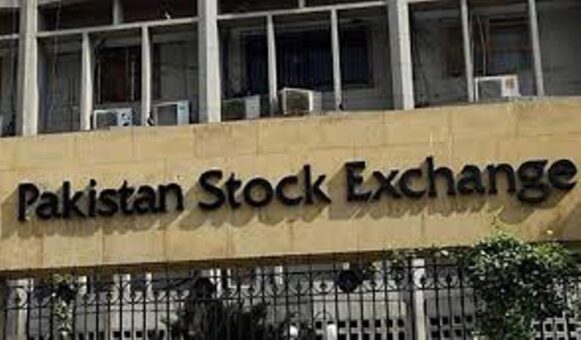
    KARACHI: The equity market ended with gain of 211 points as tension eases between Pakistan and India.

    The benchmark KSE-100 index of Pakistan Stock Exchange (PSX) closed at 39,750 points as against 39,539 points showing an increase of 211 points.

    Analysts at Arif Habib Limited said that the market seems to have taken the path to complete recovery.

    The concerns of India-Pakistan confrontation are apparently put to rest by the investors, and participation in stock market is also picking pace.

    Today’s highlight was BOP’s financial result announcement that declared dividend in addition to high EPS, in comparison with corresponding figures.

    Total traded volume in BOP was 90.8 million (54 percent of total market volume), while the scrip hit upper circuit.

    Overall, the banking sector garnered 102 million shares, followed by Technology and Engineering (Steel) Sectors.

    Post BOP’s result announcement, investors took positive bets in other scrips, such as SSGC, SNGP, NETSOL etc.

    Sectors contributing to the performance include Banks (+118 points), Fertilizer (+58 points), O&GMCs (+44 points), Power (+26 points), Insurance (+19 points), E&P (-25 points).

    Volumes increased from 137 million shares to 168 million shares (+23 percent DoD). However, average traded value declined by 21 percent to reach US$ 42 million as against US$ 53 million.

    Stocks that contributed significantly to the volumes include BOP, TRG, PAEL, PIBTL and ISL, which formed 62 percent of total volumes.

    Stocks that contributed positively include HBL (+54 points), UBL (+28 points), BOP (+24 points), PSO (+21 points), and EFERT (+18 points). Stocks that contributed negatively include PPL (-26 points), MCB (-18 points), SEARL (-14 points), HMB (-7 points) and MARI (-7 points).

  • Rupee ends down by 15 paisas against dollar

    Rupee ends down by 15 paisas against dollar

    KARACHI: The Pak Rupee ended down by 15 paisas against dollar on Monday owing to demand for import and corporate payments.

    The foreign currency market ended at Rs138.68 to the dollar as compared with last Friday’s closing of Rs138.53.

    The interbank foreign exchange market was initiated in the range of Rs138.70 and Rs138.85. The market recorded day high of Rs138.95 and low of Rs138.65 and closed at Rs138.68.

    Currency experts said that the market opened after two weekly holidays and the demand was higher for import and corporate payments.

    The local currency however gained in the open market.

    Buying and selling of dollar was recorded at Rs138.50/Rs139.00 from last Saturday’s closing of Rs138.70/Rs139.20 in cash ready market.

  • PSO receives Rs60 billion from power companies

    PSO receives Rs60 billion from power companies

    KARACHI: Pakistan State Oil (PSO) has said it received Rs60 billion as partial settlement of receivable from power sector companies.

    In a notice to Pakistan Stock Exchange (PSX) on Monday, the state run oil marketing company said that it had received an aggregate amount of Rs60 billion as partial settlement of receivables related to certain power sector companies on March 01, 2019 after close of normal business hours.

    Consequently, PSO’s principal receivables balance from these power sector companies has reduced accordingly. The amount received by the company has been used for partial repayment of its bank borrowing, the company said.

  • Philip Morris decides closing factory in Kotri

    Philip Morris decides closing factory in Kotri

    KARACHI: Philip Morris (Pakistan) Limited, an American multinational cigarette and tobacco manufacturing company, has decided to close down its factory located in Kotri.

    In a notice to Pakistan Stock Exchange (PSX) on Monday, the company said that as part of a strategic review to optimize process efficiencies and operational effectiveness and to best position the company for a strong and viable future growth, management of Philip Morris (Pakistan) Limited has decided to reorganize its operational footprints by closing its factory in Kotri located on Plot No. E-15, S I T E Kotri, Pakistan.

    The company said it will file an application for closure of the factory and retrenchment of permanent workers employed by PMPKL with the provincial labor department.

  • Dollar increases by 12 paisas in early trade

    Dollar increases by 12 paisas in early trade

    KARACHI: The Pak Rupee has lost 12 paisas against the US dollar in early trade on Monday owing to demand for import and corporate payments.

    The dollar is being traded at Rs138.65 in foreign currency market.

    The exchange rate was ended at Rs138.53 to the dollar in interbank foreign exchange market.

    Currency experts said that market was opened after two weekly holidays, which increased dollar demand for import and corporate payments.

  • Income Tax Ordinance 2001: default surcharge at 12 percent on failure to pay tax

    Income Tax Ordinance 2001: default surcharge at 12 percent on failure to pay tax

    KARACHI: A person fails to pay taxes by due date shall be liable to pay default surcharge at 12 percent per annum.

    The Federal Board of Revenue (FBR) recently issued updated Income Tax Ordinance, 2001 explaining the default surcharge on failure to pay tax by due date.

    Section 205: Default surcharge

    Sub-Section (1): A person who fails to pay –

    (a) any tax, excluding the advance tax under section 147 and default surcharge under this section;

    (b) any penalty; or

    (c) any amount referred to in section 140 or 141, on or before the due date for payment shall be liable for default surcharge at a rate equal to “12” per cent per annum on the tax, penalty or other amount unpaid computed for the period commencing on the date on which the tax, penalty or other amount was due and ending on the date on which it was paid:

    Provided that if the person opts to pay the tax due on the basis of an order under section 129 on or before the due date given in the notice under sub-section (2) of section 137 issued in consequence of the said order, and does not file an appeal under section 131, he shall not be liable to pay default surcharge for the period beginning from the due date of payment in consequence of an order appealed against to the date of payment in consequence of notice under sub-section (2) of section 137.

    Sub-Section (1A): A person who fails to pay advance tax under section 147 shall be liable for default surcharge at a rate equal to “12” per cent per annum on the amount of tax unpaid computed for the period commencing on the date on which it was due and ending on the date on which it was paid or date on which the return of income for the relevant tax year was due, whichever is earlier.

    Sub-Section (1B): Where, in respect of any tax year, any taxpayer fails to pay tax under sub-section (4A), or (6) of section 147 or the tax so paid is less than ninety percent of the tax chargeable for the relevant tax year, he shall be liable to pay default surcharge]at the rate of 12 per cent per annum on the amount of tax so chargeable or the amount by which the tax paid by him falls short of the ninety percent, as the case may be; and such default surcharge shall be calculated from the first day of April in that year to the date on which assessment is made or the thirtieth day of June of the financial year next following, whichever is the earlier:

    “Provided that in the case of person having a special tax year, the default surcharge shall be calculated on and from the first day of the fourth quarter of the special tax year till the date on which assessment is made or the last day of special tax year, whichever is earlier.”;

    Sub-Section (2): Any default surcharge paid by a person under sub-section (1) shall be refunded to the extent that the tax, penalty or other amount to which it relates is held not to be payable.

    Sub-Section (3): A person who fails to collect tax, as required under Division II of Part V of this Chapter or Chapter XII or deduct tax as required under Division III of Part V of this Chapter or Chapter XII or fails to pay an amount of tax collected or deducted as required under section 160 on or before the due date for payment shall be liable for default surcharge at a rate equal to “12” percent per annum on the amount unpaid computed for the period commencing on the date the amount was required to be collected or deducted and ending on the date on which it was paid to the Commissioner:

    Provided that if the person opts to pay the tax due on the basis of an order under section 129 on or before the due date given in the notice under sub-section (2) of section 137 issued in consequence of the said order and does not file an appeal under section 131, he shall not be liable to pay default surcharge for the period beginning from the date of order under section 161 to the date of payment.

    Sub-Section (4): Omitted

    Sub-Section (5): The Commissioner shall make an assessment of any default surcharge imposed under this Part in accordance with the provisions of Part II of this Chapter as if the default surcharge were tax.

    Sub-Section (6): The provisions of Parts III and IV apply to an assessment of default surcharge as if it were an assessment of tax.

    Section 205A: Reduction in default surcharge, consequential to reduction in tax or penalty.— Where, in consequence of any order made under this Ordinance, the amount of tax or penalty in respect of which default surcharge is chargeable under section 205 is reduced, the default surcharge, if any, levied under the aforesaid section shall be reduced accordingly.

  • SFA seals many breakfast eateries in Karachi

    SFA seals many breakfast eateries in Karachi

    KARACHI: Sindh Food Authority (SFA)has sealed many breakfast eateries in different districts of Karachi on Sunday.
    Director Operations, Sindh Food Authority Abrar and Deputy Director Imtiaz Abro along with his team inspected various big eateries.

    Names are as under:

    1) Master broast
    2) Baithak peshawari
    3) Dera
    4) Handi Inn
    5) New Dil pasand

    The team found extreme unhygienic and poor condition of production and storage area. Besides high contamination of dairy products also found in products including meat, salads, pees, sweets, vegetables.

    It is detected that temperature controlling devices were not installed and sanitary conditions were not satisfactory.
    Further following issues were also found:

    — No tracebility records were shown
    — No pests management records were shown
    — No medical certificates of food handlers
    — open kitchen
    — MSG(banned by supreme court) was found
    — unknown food colours/essence were found
    — Mislabelling

    The authority imposed fine of Rs400,000 in total and sealed eateries temporary, including Master Broast, Dera and Baithak.

    In district east, inspection was done at following breakfast eateries in Bahadurabad:
    1) Tooso 2) Nashta point 3) Abbas hotel 4) Akram lassi
    In Gulshan e Iqbal
    1) Continental sweets & bakers 2) Asia pakwan

    The issues were found at these eateries, included:
    — Extremely poor hygiene.
    — Sop’s were not followed.
    — Cross contamination in food.
    — Rancid oil.
    — no medical certificates of food handlers
    — incomplete traceability records

    The authorities imposed fine of Rs210,000
    The Sindh Food Authority has take action in District Central:

    Inspection done at following breakfast eateries
    1) Nasir Sweets, Dhamtal, United king, Dilpasand, Kamran Sweets, Madina Sweets, Chai Session and Mazaidar Pakwan Center.
    The issues were found as:
    — Extremely poor hygiene.
    — SOP’s were not followed.
    — Cross contamination in food.
    — no medical certificates

    Imposed fine of Rs40,000 in total and sealed Madina Sweets.

    Total fine imposed in different districts of Karachi is Rs650,000. The authority has give 7 days of time period is given to these eateries for improvement and chalaan payment.