Category: Money & Banking

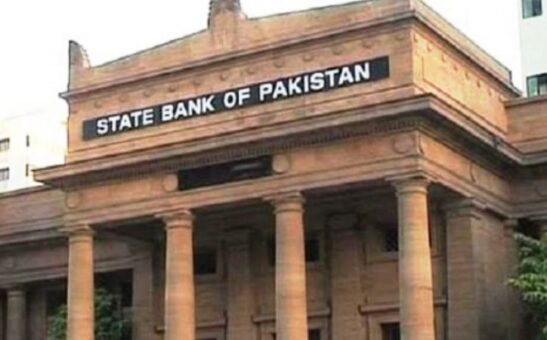
Money and banking drive economic activity by facilitating transactions, savings, and investments. Banks manage financial resources, offer credit, and regulate money supply, ensuring stability and growth in Pakistan’s financial sector.

  • Rupee gains 36 paisas against dollar on improved inflows

    Rupee gains 36 paisas against dollar on improved inflows

    KARACHI: The Pak Rupee gained 36 paisas against dollar on Friday owing to improved inflows of export receipts and remittances.

    The rupee ended Rs167.26 to the dollar from previous day’s closing of Rs167.62 in interbank foreign exchange market.

    Currency experts said that sufficient foreign currency was available in the market to meet import payment demand.

    The workers’ remittances rose by a significant 50.7 percent during June 2020 to reach monthly record high $2.46 billion compared with $1.63 billion in June 2019.

    Similarly, on a cumulative basis, workers’ remittances increased to a historic high level of $23.12 billion during FY20, witnessing a growth of 6.4 percent over $21.74 billion during FY19.

    According to Pakistan Bureau of Statistics (PBS) the import bill of the country fell by 18.6 percent to $44.57 billion as compared with $54.76 billion in the preceding fiscal year.

    This helped the country to curtail the trade deficit for the year. The trade deficit of the country shrank by 27 percent to $23.18 billion during fiscal year 2019/2020 as compared with the deficit of $31.8 billion in the preceding fiscal year.

  • HBL announces 287 percent surge in half year profit

    HBL announces 287 percent surge in half year profit

    KARACHI: Habib Bank Limited (HBL) on Friday declared massive increase of 287 percent in half-year profit tax for the period ended June 30, 2020.

    The bank, one of the largest bank in Pakistan, declared Rs15.188 billion profit after tax for the period January 01 to June 30, 2020 as compared with Rs3.927 billion in the same period of the last fiscal year.

    The bank also declared earning per share of Rs10.32 for the period under review as compared with EPS Rs2.53 declared in the same period of the last year.

    The net mark-up income/interest income of the bank surged by 32 percent to Rs63.075 billion during first half for the period ended June 30, 2020. The bank declared Rs47.7 net interest income in the same period of the last year.

    The bank also paid income tax amounting Rs10.64 billion during January – June 2020 as compared with Rs5.96 billion in the corresponding period of the last fiscal year.

    The HBL declared Rs11.08 billion net profit for the quarter April – June 2020 as compared with Rs749 million declared in the same quarter of the last year.

    Net interest income of the bank increased to massive Rs10.86 billion during the quarter under review as compared with Rs1.3 billion in the corresponding period of the last year.

  • Complaints against banks double in four years: SBP

    Complaints against banks double in four years: SBP

    KARACHI: The State Bank of Pakistan (SBP) on Thursday said that complaints against banks have doubled in four years owing to effective dispute resolution and awareness of consumers.

    The SBP said that the complaints against banks during past four years have increased from 774,656 in 2016 to 1,549,837 in 2019.

    State Bank of Pakistan (SBP) has conducted a four year (2016-2019) review of complaints against Banks/MFBs/DFIs. The objective of the review was to gain insights on effectiveness of complaint management at banks.

    The salient features of the review are being published to emphasize SBP’s narrative that responsible complaint handling is the core element of Fair Treatment of Consumer (FTC).

    This review is conducted in addition to various regulatory measures to enhance consumer grievance handling in the industry including the issuance of detailed guidelines on complaint management at banks and self-assessment framework.

    It is pertinent to mention here that responsible banking conduct and FTC is one of the key regulatory agendas of the State Bank of Pakistan (SBP).

     SBP recognizes that effective and efficient consumer grievance handling mechanisms are crucial elements of FTC regime, therefore, it considers consumer complaints as an opportunity to improve banking services and increase customer satisfaction.

    This increase can be attributed to improved visibility and access of dispute resolution mechanism coupled with enhanced consumer awareness. Further, this is also due to the fact that number and value of banking transactions have increased substantially.

    For instance, the volume and value of ATM/debit card transactions have increased by 101 percent and 110 percent respectively over the reporting period.

    The number of deposit accounts per ATM and per branch shows increase of 62 percent and 81 percent respectively. Similarly, during 2016 to 2019, volume and value of E-banking transactions have substantially increased by 112 percent and 152 percent respectively on account of 71 percent increase in E-banking users.

    Moreover, credit card related transactions increased from 18 to 39 million showing an increase of 118 percent over a span of 4 years. Accordingly, the increase in complaints over the same period can be witnessed as concentrated in ATM/Debit Card, Account maintenance, E- Banking and Credit Cards.

    In terms of addressing the complaints, the resolution rate over the period 2016-2019 remained above 97 percent at each year’s end.

    The average time taken for resolution of complaints remained within regulatory turn around times. However, delays were observed in sending acknowledgments, interim and final responses.

    It may be mentioned here that banks being the first forum of redressal, have been handling 97 percent and above of the total complaints of the industry while less than 3 percent of complaints were escalated at higher levels including State Bank of Pakistan, Banking Mohtasib, and Pakistan Citizen Portal established by the Prime Minister Delivery Unit.

    In order to boost performance of complaint handling at banks and promote competition, SBP plans to further enhance the related disclosures which may include publishing of bank-wise complaint handling performance indicators in the near future by SBP.

    Currently, banks themselves are required to give disclosure about the complaint management in their annual audited account for public information.

  • Rupee ends firmer against dollar

    Rupee ends firmer against dollar

    KARACHI: The Pak Rupee ended firmer against dollar on Thursday as sufficient inflows of the foreign currency were available to meet import payment demand.

    The rupee ended Rs167.62 to the dollar from previous day’s closing f Rs167.63 in interbank foreign exchange market.

    Currency experts said that after ease in lockdown which resulted in improved economic activities the demand for foreign currency was increased especially for the import payment.

    They however said that the inflows in terms of remittances and export receipts helped the rupee to maintain levels.

    The workers’ remittances rose by a significant 50.7 percent during June 2020 to reach monthly record high $2.46 billion compared with $1.63 billion in June 2019.

    Similarly, on a cumulative basis, workers’ remittances increased to a historic high level of $23.12 billion during FY20, witnessing a growth of 6.4 percent over $21.74 billion during FY19.

    According to Pakistan Bureau of Statistics (PBS) the import bill of the country fell by 18.6 percent to $44.57 billion as compared with $54.76 billion in the preceding fiscal year.

    This helped the country to curtail the trade deficit for the year. The trade deficit of the country shrank by 27 percent to $23.18 billion during fiscal year 2019/2020 as compared with the deficit of $31.8 billion in the preceding fiscal year.

  • SBP enhances financing limit to Rs2 billion for renewable energy schemes

    SBP enhances financing limit to Rs2 billion for renewable energy schemes

    KARACHI: The State Bank of Pakistan (SBP) has increased cumulative financing limit to Rs2 billion and also enhanced project size to 5MW.

    According to a statement issued on Wednesday, the central bank said it had enhanced the scope of its Refinance Scheme for Renewable Energy by allowing financing under category III of the scheme to solar and wind based energy sale companies.

    In light of the feedback received from stakeholders, the size of the project established by vendor/ supplier/ energy sale company has been enhanced from 1 MW to 5 MW. Accordingly, the cumulative financing limit has also been increased from Rs.1 billion to Rs.2 billion.

    SBP Financing Scheme for Renewable Energy was announced in June 2016with an aim to help addressing the challenges of energy shortages and climate change in the country.

    The scheme comprised of two categories: Category 1 allowed financing for setting up of renewable energy power projects with capacity ranging from 1 MW to 50 MW for own use or selling of electricity to the national grid or combination of both.

    Category II allowed financing to domestic, agriculture, commercial and industrial borrowers for installation of renewable energy based projects/ solutions of up-to 1 MW to generate electricity for own use or selling to the grid/distribution company under net metering.

    Later, in July 2019, SBP introduced a new Category III for facilitating financing to vendors/suppliers for installation of wind and solar systems/solutions of upto 1 MW. SBP also launched a Shariah complaint version of the scheme in August 2019.

    Since the introduction of the scheme, total outstanding financing under the Scheme has reached to Rs.15.6 billion for 217 projects having potential of adding 292 MW of energy supply.

    This revision in the scheme is expected to not only attract fresh local and foreign investment in the sector but also facilitate production of clean energy in the country, helping in managing climate change.

  • Rupee gains 27 paisas against dollar on improved inflows

    Rupee gains 27 paisas against dollar on improved inflows

    KARACHI: The Pak Rupee gained 27 paisas against dollar on Wednesday owing to improved inflows of export receipts and remittances.

    The rupee ended Rs167.63 to the dollar from previous day’s closing of Rs167.90 in interbank foreign exchange market.

    Currency experts said that improved inflows of export receipts and remittances helped the rupee to gain the value.

    The workers’ remittances rose by a significant 50.7 percent during June 2020 to reach monthly record high $2.46 billion compared with $1.63 billion in June 2019.

    Similarly, on a cumulative basis, workers’ remittances increased to a historic high level of $23.12 billion during FY20, witnessing a growth of 6.4 percent over $21.74 billion during FY19.

    According to Pakistan Bureau of Statistics (PBS) the import bill of the country fell by 18.6 percent to $44.57 billion as compared with $54.76 billion in the preceding fiscal year.

    This helped the country to curtail the trade deficit for the year. The trade deficit of the country shrank by 27 percent to $23.18 billion during fiscal year 2019/2020 as compared with the deficit of $31.8 billion in the preceding fiscal year.

  • Rupee recovers 40 paisas against dollar on shrinking CAD

    Rupee recovers 40 paisas against dollar on shrinking CAD

    KARACHI: The Pak Rupee recovered 40 paisas against dollar on Tuesday owing to significant reduction in current account deficit (CAD) and lower demand for import payments.

    The rupee ended Rs167.90 to the dollar from previous day’s closing of Rs168.30 in interbank foreign exchange market.

    Currency experts said that sharp contraction in annual current account deficit reported by State Bank of Pakistan (SBP) helped the rupee to recover.

    Further the lower import payment demand also helped the rupee to appreciate value.

    On the other hand workers’ remittances rose by a significant 50.7 percent during June 2020 to reach monthly record high $2.46 billion compared with $1.63 billion in June 2019.

    Similarly, on a cumulative basis, workers’ remittances increased to a historic high level of $23.12 billion during FY20, witnessing a growth of 6.4 percent over $21.74 billion during FY19.

    According to Pakistan Bureau of Statistics (PBS) the import bill of the country fell by 18.6 percent to $44.57 billion as compared with $54.76 billion in the preceding fiscal year.

    This helped the country to curtail the trade deficit for the year. The trade deficit of the country shrank by 27 percent to $23.18 billion during fiscal year 2019/2020 as compared with the deficit of $31.8 billion in the preceding fiscal year.

  • Rupee weakens by 97 paisas on import payment demand

    Rupee weakens by 97 paisas on import payment demand

    KARACHI: The Pak Rupee weakened by 97 paisas to the dollar on Monday owing to higher demand for import and corporate payments.

    The rupee ended Rs168.30 to the dollar from last Friday’s closing of 167.33 in interbank foreign exchange market.

    Currency experts said that the due to first working day of the week the demand for greenback was remained higher. They said that the due to global economic slowdown owing to coronavirus the inflows of worker remittances and exports receipts were also reduced.

    They, however, believed that the local currency may rebound in coming days owing to sufficient inflows.

    State Bank of Pakistan (SBP) has said that the workers’ remittances rose by a significant 50.7 percent during June 2020 to reach monthly record high $2.46 billion compared with $1.63 billion in June 2019.

    Similarly, on a cumulative basis, workers’ remittances increased to a historic high level of $23.12 billion during FY20, witnessing a growth of 6.4 percent over $21.74 billion during FY19.

    According to Pakistan Bureau of Statistics (PBS) the import bill of the country fell by 18.6 percent to $44.57 billion as compared with $54.76 billion in the preceding fiscal year.

    This helped the country to curtail the trade deficit for the year. The trade deficit of the country shrank by 27 percent to $23.18 billion during fiscal year 2019/2020 as compared with the deficit of $31.8 billion in the preceding fiscal year.

  • Rupee depreciates by 33 paisas on growing demand for imports

    Rupee depreciates by 33 paisas on growing demand for imports

    KARACHI: The Pak Rupee depreciated by another 33 paisas against dollar on Friday owing to rising demand of the foreign currency for import payments.

    The rupee ended Rs167.33 to the dollar from previous day’s closing of Rs167.00 in interbank foreign exchange market.

    Currency experts said that due to economic normalcy return after ease in lockdown the domestic demand for imported goods had increased.

    They further said that due to weekly holidays ahead also escalated the demand for the foreign currency.

    The local unit fell by around 70 paisas during the outgoing week.

    The experts believed that the rupee would rebound in coming days owing to sufficient inflows.

    State Bank of Pakistan (SBP) has said that the workers’ remittances rose by a significant 50.7 percent during June 2020 to reach monthly record high $2.46 billion compared with $1.63 billion in June 2019.

    Similarly, on a cumulative basis, workers’ remittances increased to a historic high level of $23.12 billion during FY20, witnessing a growth of 6.4 percent over $21.74 billion during FY19.

    According to Pakistan Bureau of Statistics (PBS) the import bill of the country fell by 18.6 percent to $44.57 billion as compared with $54.76 billion in the preceding fiscal year.

    This helped the country to curtail the trade deficit for the year. The trade deficit of the country shrank by 27 percent to $23.18 billion during fiscal year 2019/2020 as compared with the deficit of $31.8 billion in the preceding fiscal year.

  • Rupee weakens by 33 paisas on import payment demand

    Rupee weakens by 33 paisas on import payment demand

    KARACHI: The Pak Rupee weakened by 33 paisas against dollar on Thursday owing to rising demand of the foreign currency for import payments.

    The rupee ended Rs167 to the dollar from previous day’s closing of Rs166.67 in interbank foreign exchange market.

    Currency experts said that due to economic normalcy return after ease in lockdown the domestic demand for imported goods had increased.

    The experts believed that the rupee would rebound in coming days owing to sufficient inflows.

    State Bank of Pakistan (SBP) has said that the workers’ remittances rose by a significant 50.7 percent during June 2020 to reach monthly record high $2.46 billion compared with $1.63 billion in June 2019.

    Similarly, on a cumulative basis, workers’ remittances increased to a historic high level of $23.12 billion during FY20, witnessing a growth of 6.4 percent over $21.74 billion during FY19.

    According to Pakistan Bureau of Statistics (PBS) the import bill of the country fell by 18.6 percent to $44.57 billion as compared with $54.76 billion in the preceding fiscal year.

    This helped the country to curtail the trade deficit for the year. The trade deficit of the country shrank by 27 percent to $23.18 billion during fiscal year 2019/2020 as compared with the deficit of $31.8 billion in the preceding fiscal year.