Category: Money & Banking

Money and banking drive economic activity by facilitating transactions, savings, and investments. Banks manage financial resources, offer credit, and regulate money supply, ensuring stability and growth in Pakistan’s financial sector.

  • Bank holiday announced on July 01

    Bank holiday announced on July 01

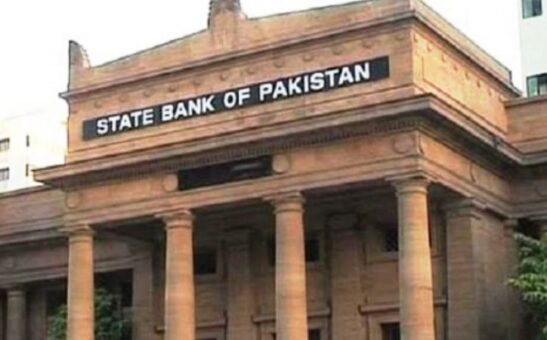
    KARACHI: The State Bank of Pakistan (SBP) will remain closed for public dealing on Wednesday, July 1, 2020, which will be observed as ‘Bank Holiday’ enabling the bank to close its accounts, the central bank said in a statement on Monday.

    All employees of the Bank will attend to their official assignments (in-office or work-from-home, as designated under the current COVID-19 situation) on Bank Holiday treating it as a normal working day (except for public dealing), it added.

  • SBP enhances credit card limits under consumer financing

    SBP enhances credit card limits under consumer financing

    KARACHI: State Bank of Pakistan (SBP) on Monday enhanced credit card limit by amending regulations related to consumer financing.

    The SBP said that It had decided to revise the regulatory limits prescribed in the Para 1 and 2 of the Regulation R-8 of Prudential Regulations for Consumer Financing as under:-

    REGULATION R-8

    MAXIMUM CLEAN LIMIT FOR CREDIT CARD AND PERSONAL LOAN / FINANCING FROM ALL BANKs/DFIs

    EXISTING LIMITSREVISED LIMITS
    Total Clean Limits
    Credit Cards + Personal Loans – Rs2 million
    Total Clean and Secured Limits
    Credit Cards + Personal Loans – Rs5 million
    Total Clean Limits
    Credit Cards + Personal Loans – Rs3 million
    Total Clean and Secured Limits
    Credit Card + Personal Loans – Rs7 million
    Prime Customer
    Total Clean Limits
    Credit Card + Personal Loans – Rs5 million
    [subject to condition that clean limit assigned to a prime customer, on account of, personal loans limit will not exceed Rs2 million]
    Prime Customer
    Total Clean Limits
    Credit Cards + Personal Loans – Rs7 million
    [subject to condition that clean limit assigned to a prime customer, on account of, personal loans limit will not exceed Rs4 million]

    The SBP said that the Banks/DFIs may assign clean and secured limits to a single customer up to aforesaid amounts, in aggregate, from all Banks/DFIs.

    All other instructions on the subject shall, however, remain unchanged. The Banks/DFIs are advised to follow the regulations in letter and spirit. Any deviation or non-compliance of the same shall attract punitive action under the relevant provisions of the Banking Companies Ordinance, 1962.

  • Dollar strengthens to Rs168.19

    Dollar strengthens to Rs168.19

    KARACHI: The Pak Rupee ended down by 52 paisas against dollar on Monday owing to higher import and corporate payment demand, dealers said.

    The rupee ended at Rs168.19 to the dollar from last Friday’s closing of Rs167.67 in interbank foreign exchange market.

    The currency dealers said that the rupee was remained under pressure due to demand from importers and corporate buyers. They said that due to ending of the fiscal year most of multinational and foreign companies send profits to their parent companies.

    They further said that the ease in lockdown the business activities had started to get momentum and escalated the demand for imported goods.

    The currency dealers further said that the repayment of foreign debts had also weakened the rupee value.

    It is pertinent to mention that the SBP received around $1.7 billion last week from international financial institutions. However, the inflows also failed to give support to the local currency.

  • Rupee weakens by 31 paisas on import payment demand

    Rupee weakens by 31 paisas on import payment demand

    KARACHI: The Pak Rupee weakened by 31 paisas against dollar on Friday owing to higher demand for import and corporate payment as fiscal year ending next week.

    The rupee ended Rs167.67 to the dollar from previous day’s closing of Rs167.36 in interbank foreign exchange market.

    Currency dealers said that the local unit was under pressure due to demand related to fiscal year end especially corporate payment. They said the rupee was also under pressure due to last trading day of the week and buyers were purchasing dollars in advance for future payments.

    It is pertinent to mention that the SBP received around $1.7 billion this week from internaitonal financial insitutions. However, the inflows also failed to give support to the local currency.

  • SBP slashes policy rate by 100 basis points to 7 percent

    SBP slashes policy rate by 100 basis points to 7 percent

    KARACHI: The State Bank of Pakistan (SBP) on Thursday announced to further cut policy rate by 100 basis points to 7 percent in order to support domestic economic activities.

    A statement issued by the SBP stated that at its meeting on June 25, 2020, the Monetary Policy Committee (MPC) decided to reduce the policy rate by 100 basis points to 7 percent. This decision reflected the MPC’s view that the inflation outlook has improved further, while the domestic economic slowdown continues and downside risks to growth have increased.

    Against this backdrop of receding demand-side inflation risks, the priority of monetary policy has appropriately shifted toward supporting growth and employment during these challenging times.

    Consistent with its mandate, the MPC re-asserted its commitment to supporting households and businesses through the Covid-19 crisis and minimizing damage to the economy. In this context, the MPC felt that from a risk management point of view, a prompt response to downside risks to growth was called for given the improved inflation outlook. In addition, the MPC noted that with approximately Rs. 3.3 trillion worth of loans due to be repriced by early July 2020, this was an opportune moment to take action from a monetary policy transmission perspective.

    In this way, the benefits of interest rate reductions would be passed on in a timely manner to households and businesses.

    The MPC noted that the Covid-19 pandemic is spreading in many emerging markets, including Pakistan, and there are fears of a second wave in several other countries.

    The MPC observed that risks to the global outlook are heavily skewed to the downside and the path of recovery remains uncertain.

    The MPC also noted that in its update of the World Economic Outlook (WEO) released yesterday, the IMF downgraded its 2020 global growth forecast further to -4.9 percent, 1.9 percentage points lower than in April, and projected a more gradual recovery than previously anticipated.

    Domestically, the moderation of underlying inflation has continued. Notwithstanding a seasonal uptick in food prices associated with the Eid holiday, headline inflation declined further to 8.2 percent in May on the back of the recent cut in diesel and petrol prices. In addition, month-on-month inflation rates continue to be low.

    Recent SPI data also suggests continued moderation in overall price pressures in June, despite price increases in some food items, notably wheat.

    The FY2020/21 budget is also expected to be neutral for inflation as the freeze on government salaries, absence of new taxes, and lower production cost from reduced import duties should offset the decline in subsidies in some sectors. While supply shocks could create some volatility in inflation, the MPC felt that these are likely to be transitory given weak domestic demand, such that monetary policy should generally look past them.

    Given the absence of demand-side pressures, average inflation could fall below the previously announced range of 7-9 percent for next fiscal year.

    With the current reduction of the policy rate to 7 percent, the MPC felt that real rates on a forward-looking basis (defined as the policy rate less expected inflation) would be kept close to zero, which is appropriate under the current circumstances.

    On the real side, the decline in LSM deepened to 41.9 percent (y/y) in April, when lockdowns were still in place. In May, high-frequency indicators of activity such as cement dispatches, automobile sales, food and textile exports, and POL sales also continued to contract, although mostly at a lower rate than in the previous two months. Looking ahead, the economy is expected to recover gradually in FY21, supported by easing lockdowns, supportive macroeconomic policies and a pick-up in global growth. However, risks are skewed to the downside and the recovery will depend critically on the evolution of the pandemic both in Pakistan and abroad.

    On the external front, the current account swung into surplus in May on the back of a reduction in the trade deficit and a pick-up in remittances compared to the previous month. Meanwhile, portfolio outflows slowed considerably compared to the previous two months and FDI has been resilient, nearly doubling to $2.4 billion so far in FY20 compared to the same period last year. SBP reserves declined to US$ 9.96 billion as of 19th June 2020 largely due to debt repayments.

    However, since then, SBP has received fresh disbursements from multilateral agencies including around $725 million from World Bank and $500 million from ADB, and another $500 million is expected shortly from the Asian Infrastructure Investment Bank (AIIB).

    During this period of external volatility, the MPC observed that the flexible exchange rate has played its valuable shock absorber role, helping cushion the economy from the tightening of financial conditions associated with capital outflows from emerging markets and deteriorating global sentiment.

    The MPC noted that the depreciation in the rupee has been lower than in many other emerging markets, reflecting the increased reserve buffers accumulated over the last year. The outlook for the external sector remains stable. Recent data confirms the view that the current account deficit should remain bounded through the Covid-19 crisis due to lower oil prices. In addition, projected official and private inflows are expected to keep the external position fully funded.

    Today’s decision brings the cumulative reduction in the policy rate since mid-March to 625 basis points, commensurate with the decline in inflation during this period.

    The MPC noted that the take-up of several other SBP initiatives has risen significantly in recent weeks, notably concessional refinancing facilities to protect employment and support the health sector as well as regulatory measures to provide debt servicing relief.

    Together, this strong and data-driven monetary policy response should support growth and employment, while keeping inflation expectations anchored and maintaining financial stability.

  • Rupee ends flat against dollar

    Rupee ends flat against dollar

    KARACHI: The Pak Rupee ended flat against dollar on Thursday after making recovery during intraday trading.

    The rupee ended Rs167.36 to the dollar, same previous day’s level, in interbank foreign exchange market.

    Currency experts said that the local unit made recovery against dollar in early trade however demand for import and corporate payment forced the rupee to end flat.

    A day earlier the State Bank of Pakistan (SBP) received $1 billion from Asian Development Bank (ADB) and World Bank.

    Further, the current account deficit narrowed by 75 percent during the first eleven months of the current fiscal year.

  • Rupee strengthens by 29 paisas on inflows

    Rupee strengthens by 29 paisas on inflows

    KARACHI: The Pak Rupee gained 29 paisas against dollar on Wednesday owing to inflows from international financial institutions and shrinking current account deficit.

    The rupee ended Rs167.36 to the dollar from previous day’s closing of Rs166.65 in interbank foreign exchange market.

    Currency experts said that the rupee recovered 29 paisas after a fall of Rs1.06 a day earlier against the dollar.

    They said that the rupee was strengthened after the SBP received $1 billion from the World Bank and Asian Development Bank.

    Further, the data of Balance of Payment (BOP) showed 74 percent decline in current account deficit during first eleven months of current fiscal year.

    The foreign exchange reserves of the country have increased by $70 million to $16.775 billion by week ended June 12, 2020.

    The foreign exchange reserves were at $16.705 billion by week ended on June 05, 2020.

    The foreign exchange reserves held by the central bank increased by $11 million to $10.107 billion by week ended June 12, 2020 as compared with $10.096 billion a week ago.

  • Rupee plummets by Rs1.06 on dollar demand for import payments

    Rupee plummets by Rs1.06 on dollar demand for import payments

    KARACHI: The Pak Rupee fell Rs1.06 against dollar on Tuesday owing to higher import and corporate demand.

    The rupee ended Rs167.65 to the dollar from previous day’s closing of Rs166.59 in interbank foreign exchange market.

    Currency experts said that the rupee was under pressure due to high demand for corporate and import payments. They said that due to fiscal year closing the corporate sector repatriate their profits to their parent companies abroad.

    They said that the scheduled repayment of foreign loans also put pressure on foreign exchange reserves.

    However, the reserves slightly increased last week.

    The foreign exchange reserves of the country have increased by $70 million to $16.775 billion by week ended June 12, 2020.

    The foreign exchange reserves were at $16.705 billion by week ended on June 05, 2020.

    The foreign exchange reserves held by the central bank increased by $11 million to $10.107 billion by week ended June 12, 2020 as compared with $10.096 billion a week ago.

  • Rupee gains five paisas against dollar

    Rupee gains five paisas against dollar

    KARACHI: The rupee gained by five paisas against dollar on Monday after some improvement in foreign exchange reserves was seen in the latest data.

    The rupee ended Rs166.59 to the dollar from last Friday’s closing of Rs166.64 in interbank foreign exchange market.

    The foreign exchange reserves of the country have increased by $70 million to $16.775 billion by week ended June 12, 2020.

    The foreign exchange reserves were at $16.705 billion by week ended on June 05, 2020.

    The foreign exchange reserves held by the central bank increased by $11 million to $10.107 billion by week ended June 12, 2020 as compared with $10.096 billion a week ago.

    Currency experts said that the local currency was under pressure during the last week owing to repayment of external debt.

  • Banks directed to observe extended working hours on June 30 to facilitate tax payment

    Banks directed to observe extended working hours on June 30 to facilitate tax payment

    The State Bank of Pakistan (SBP) has instructed commercial banks to observe extended working hours on June 30, 2020. This decision aims to facilitate the timely payment of duties and taxes as the fiscal year concludes.

    (more…)