Category: Money & Banking

Money and banking drive economic activity by facilitating transactions, savings, and investments. Banks manage financial resources, offer credit, and regulate money supply, ensuring stability and growth in Pakistan’s financial sector.

  • Rupee eases by 32 paisas against dollar on payment demand

    Rupee eases by 32 paisas against dollar on payment demand

    KARACHI: The Pak Rupee eased by 32 paisas against dollar on Wednesday owing to rising demand for import and corporate payments ahead of Eid holidays.

    The rupee ended Rs166.78 to the dollar from previous day’s closing of Rs166.46 in interbank foreign exchange market.

    Currency experts said that the dollar demand was increased due to scheduled holidays for Eid-ul-Adha.

    The government has announced holidays from July 31, 2020 to August 02, 2020 on occasion of Eid-ul-Adha.

    The currency experts however said that the inflows of export receipts and remittances besides the transfers of funds from foreign lending agencies would help the rupee value in coming days.

    The State Bank of Pakistan (SBP) on Tuesday received $505.5 million from the World Bank.

    The workers’ remittances rose by a significant 50.7 percent during June 2020 to reach monthly record high $2.46 billion compared with $1.63 billion in June 2019.

    Similarly, on a cumulative basis, workers’ remittances increased to a historic high level of $23.12 billion during FY20, witnessing a growth of 6.4 percent over $21.74 billion during FY19.

    According to Pakistan Bureau of Statistics (PBS) the import bill of the country fell by 18.6 percent to $44.57 billion as compared with $54.76 billion in the preceding fiscal year.

    This helped the country to curtail the trade deficit for the year. The trade deficit of the country shrank by 27 percent to $23.18 billion during fiscal year 2019/2020 as compared with the deficit of $31.8 billion in the preceding fiscal year.

  • Rupee gains 41 paisas on World Bank inflows

    Rupee gains 41 paisas on World Bank inflows

    The Pakistani rupee strengthened by 41 paisas against the US dollar in the interbank market on Friday, buoyed by significant inflows from the World Bank. The rupee closed at 286.35 per dollar, compared to the previous day’s closing rate of 286.76.

    (more…)
  • Banks approve financing of Rs126bn for employees’ wages of 2,068 businesses

    Banks approve financing of Rs126bn for employees’ wages of 2,068 businesses

    KARACHI: Banks have approved around Rs126 billion under soft loan scheme to 2,068 businesses in meeting financing requirement for salaries and wages in the wake of difficulties faced due to coronavirus pandemic, State Bank of Pakistan (SBP) said on Monday.

    The SBP said that Under the Scheme, on overall basis, up till July 1, 2020, financing of Rs125.9 billion has been approved by banks for 2068 businesses covering wages and salaries of over 1.2 million employees.

    Soon after the introduction of the Scheme, a large number of applications to avail financing were received by banks but their approvals remained slow.

    However, with the continuous efforts of SBP, banks streamlined their processes and pace of loan approvals increased.

    At the end of April 2020, only 18 percent of loan applications were approved. This has increased to 76 percent by July 10, 2020.

    Similarly, the amount of loans approved against the requested amount also improved. The acceptance ratio for amount of financing increased from 26 percent at the end of April 2020 to 82 percent on July 10, 2020.

    Consequently, the number of employees benefitting from the scheme in terms of acceptance ratio has also increased from 26 percent to 85 percent during the same period.

    To counter the negative impact of Covid-19 on the economy, the central bank introduced the refinance scheme to support employment and prevent layoff of workers, commonly known as SBP RozgarScheme, in April 2020.

    The scheme provides concessional financing to businesses for wages and salary expenses, provided they commit to not lay off their employees for the period of the loan.

    The Scheme was later complemented by a Risk Sharing Facility (RSF) of the Government of Pakistan (GoP) for SMEs and Small Corporates with turnover of up to Rs2 billion.

    Under this facility, the federal government bears up to 60 percent first loss on the principal amount portion of disbursed portfolio for SME borrowers whereas 40 percent risk coverage is available for small corporates.

    The objective of this facility is to incentivize banks to extend loans to SMEs and Small Corporates, to whom they may not cater to for risk considerations.

    The scheme was available till end June 2020 earlier, however, SBP decided to extend the validity of this scheme by another three months to end September, 2020.

    Out of the total approved amount, Rs31 billion were for 1449 SMEs and Small Corporates under the RSF as of July 10, 2020 providing benefit to 280,437 employees.

    Relative to the initial situation related to Rozgar scheme, in terms of processing and approving the requests for financing, banks performed better in catering the requests under RSF and improved further over time.

    The acceptance ratio, both in terms of number of applications and amount increased from 35 percent and 37 percent respectively on May 15, 2020 to 72 percent and 71 percent on July 10, 2020.

    Following similar trends, the total number of employees benefitting from the acceptance of financing requests increased from 36 percent to 75 percent during the same period.

    The performance of banks, however, in terms of processing the number of applications and financing approved is limited to few banks.

    Among the Top Performing Five Banks, for both, JS Bank Limited, Habib Bank Limited (HBL), Bank Al-Habib Limited, Bank Alfalah Limited and Askari Bank Limited have contributed the highest in terms of both approving the number of applications and amount since the beginning of this scheme (RSF) till July 10, 2020.

    These top performing five banks provided Rs18.1 billion or 58 percent of the overall approved financing amount eligible for RSF under SBP Rozgar Scheme up till July 10, 2020.

    Their share declined from 61 percent earlier on June 12, 2020 showing that other banks have improved their performance. Their individual performance is also reflected from the fact that the cumulative approved financing by these banks ranged from Rs2.2 to Rs4.6 billion.

  • Bank holidays announced for Eid-ul-Adha

    Bank holidays announced for Eid-ul-Adha

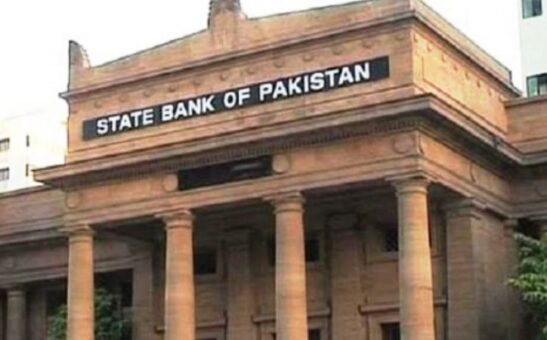
    KARACHI: State Bank of Pakistan (SBP) on Monday said that the central bank will remain closed from July 31, 2020 to August 02, 2020 (Friday to Sunday) on occasion of Eid-ul-Adha.

    The commercial banks shall also observe the same holidays announced by the SBP on the occasion of Eid-ul-Adha.

  • Rupee gains 39 paisas on improved inflows

    Rupee gains 39 paisas on improved inflows

    KARACHI: The Pak Rupee gained 39 paisas against dollar on Monday owing to sufficient inflows of workers remittances and export receipts.

    The rupee ended Rs166.87 to the dollar from last Friday’s closing of Rs167.26 in interbank foreign exchange market.

    Currency experts said that the inflows of workers remittances and export receipts were more than the demand for import payments.

    The workers’ remittances rose by a significant 50.7 percent during June 2020 to reach monthly record high $2.46 billion compared with $1.63 billion in June 2019.

    Similarly, on a cumulative basis, workers’ remittances increased to a historic high level of $23.12 billion during FY20, witnessing a growth of 6.4 percent over $21.74 billion during FY19.

    According to Pakistan Bureau of Statistics (PBS) the import bill of the country fell by 18.6 percent to $44.57 billion as compared with $54.76 billion in the preceding fiscal year.

    This helped the country to curtail the trade deficit for the year. The trade deficit of the country shrank by 27 percent to $23.18 billion during fiscal year 2019/2020 as compared with the deficit of $31.8 billion in the preceding fiscal year.

  • SBP allows business to avail loan scheme for early payment of salary, wages

    SBP allows business to avail loan scheme for early payment of salary, wages

    KARACHI: State Bank of Pakistan (SBP) has allowed businesses to avail loan scheme for early payment of salary and wages in the wake of Eid-ul-Azha.

    The SBP also relaxed condition for obtaining loans from more than one bank for the payment of salary and wages.

    The central bank in a notification issued on Friday said that in order to facilitate businesses facing problems in availing financing under the above schemes from one bank due to their credit limits or for any other reason, it has been decided to allow them to avail financing from more than one bank.

    However, a business cannot avail financing for a specific month from more than one bank.

    Further, businesses may avail financing under above schemes for early payment of wages/salaries for the month of July, 2020 before Eid-ul-Azha.

    Businesses may also avail reimbursement of wages/salaries of July, 2020 in case they make early disbursements from their own resources to their workers/employees due to Eid-ul-Azha.

    The central bank in April 2020 introduced loan scheme at reduced rate for businesses to ensure no layoff of employment and payment of salary and wages in the wake of spread of coronavirus.

  • SBP not to hold regular monetary policy committee meeting

    SBP not to hold regular monetary policy committee meeting

    KARACHI: State Bank of Pakistan (SBP) on Friday decided not to hold regular meeting of monetary policy committee meeting scheduled for July 2020.

    Given the number of MPC meetings that have taken place in recent months, and actions taken in those meetings, the MPC does not consider it necessary to hold the regular meeting of July 2020.

    The next regular meeting of the MPC will now be held in September 2020, the SBP said.

    The MPC continues to observe economic conditions and stands ready to take whatever further actions may become necessary in response to any adverse impact on the economy because of the pandemic or any other factor.

  • Rupee gains 36 paisas against dollar on improved inflows

    Rupee gains 36 paisas against dollar on improved inflows

    KARACHI: The Pak Rupee gained 36 paisas against dollar on Friday owing to improved inflows of export receipts and remittances.

    The rupee ended Rs167.26 to the dollar from previous day’s closing of Rs167.62 in interbank foreign exchange market.

    Currency experts said that sufficient foreign currency was available in the market to meet import payment demand.

    The workers’ remittances rose by a significant 50.7 percent during June 2020 to reach monthly record high $2.46 billion compared with $1.63 billion in June 2019.

    Similarly, on a cumulative basis, workers’ remittances increased to a historic high level of $23.12 billion during FY20, witnessing a growth of 6.4 percent over $21.74 billion during FY19.

    According to Pakistan Bureau of Statistics (PBS) the import bill of the country fell by 18.6 percent to $44.57 billion as compared with $54.76 billion in the preceding fiscal year.

    This helped the country to curtail the trade deficit for the year. The trade deficit of the country shrank by 27 percent to $23.18 billion during fiscal year 2019/2020 as compared with the deficit of $31.8 billion in the preceding fiscal year.

  • HBL announces 287 percent surge in half year profit

    HBL announces 287 percent surge in half year profit

    KARACHI: Habib Bank Limited (HBL) on Friday declared massive increase of 287 percent in half-year profit tax for the period ended June 30, 2020.

    The bank, one of the largest bank in Pakistan, declared Rs15.188 billion profit after tax for the period January 01 to June 30, 2020 as compared with Rs3.927 billion in the same period of the last fiscal year.

    The bank also declared earning per share of Rs10.32 for the period under review as compared with EPS Rs2.53 declared in the same period of the last year.

    The net mark-up income/interest income of the bank surged by 32 percent to Rs63.075 billion during first half for the period ended June 30, 2020. The bank declared Rs47.7 net interest income in the same period of the last year.

    The bank also paid income tax amounting Rs10.64 billion during January – June 2020 as compared with Rs5.96 billion in the corresponding period of the last fiscal year.

    The HBL declared Rs11.08 billion net profit for the quarter April – June 2020 as compared with Rs749 million declared in the same quarter of the last year.

    Net interest income of the bank increased to massive Rs10.86 billion during the quarter under review as compared with Rs1.3 billion in the corresponding period of the last year.

  • Complaints against banks double in four years: SBP

    Complaints against banks double in four years: SBP

    KARACHI: The State Bank of Pakistan (SBP) on Thursday said that complaints against banks have doubled in four years owing to effective dispute resolution and awareness of consumers.

    The SBP said that the complaints against banks during past four years have increased from 774,656 in 2016 to 1,549,837 in 2019.

    State Bank of Pakistan (SBP) has conducted a four year (2016-2019) review of complaints against Banks/MFBs/DFIs. The objective of the review was to gain insights on effectiveness of complaint management at banks.

    The salient features of the review are being published to emphasize SBP’s narrative that responsible complaint handling is the core element of Fair Treatment of Consumer (FTC).

    This review is conducted in addition to various regulatory measures to enhance consumer grievance handling in the industry including the issuance of detailed guidelines on complaint management at banks and self-assessment framework.

    It is pertinent to mention here that responsible banking conduct and FTC is one of the key regulatory agendas of the State Bank of Pakistan (SBP).

     SBP recognizes that effective and efficient consumer grievance handling mechanisms are crucial elements of FTC regime, therefore, it considers consumer complaints as an opportunity to improve banking services and increase customer satisfaction.

    This increase can be attributed to improved visibility and access of dispute resolution mechanism coupled with enhanced consumer awareness. Further, this is also due to the fact that number and value of banking transactions have increased substantially.

    For instance, the volume and value of ATM/debit card transactions have increased by 101 percent and 110 percent respectively over the reporting period.

    The number of deposit accounts per ATM and per branch shows increase of 62 percent and 81 percent respectively. Similarly, during 2016 to 2019, volume and value of E-banking transactions have substantially increased by 112 percent and 152 percent respectively on account of 71 percent increase in E-banking users.

    Moreover, credit card related transactions increased from 18 to 39 million showing an increase of 118 percent over a span of 4 years. Accordingly, the increase in complaints over the same period can be witnessed as concentrated in ATM/Debit Card, Account maintenance, E- Banking and Credit Cards.

    In terms of addressing the complaints, the resolution rate over the period 2016-2019 remained above 97 percent at each year’s end.

    The average time taken for resolution of complaints remained within regulatory turn around times. However, delays were observed in sending acknowledgments, interim and final responses.

    It may be mentioned here that banks being the first forum of redressal, have been handling 97 percent and above of the total complaints of the industry while less than 3 percent of complaints were escalated at higher levels including State Bank of Pakistan, Banking Mohtasib, and Pakistan Citizen Portal established by the Prime Minister Delivery Unit.

    In order to boost performance of complaint handling at banks and promote competition, SBP plans to further enhance the related disclosures which may include publishing of bank-wise complaint handling performance indicators in the near future by SBP.

    Currently, banks themselves are required to give disclosure about the complaint management in their annual audited account for public information.