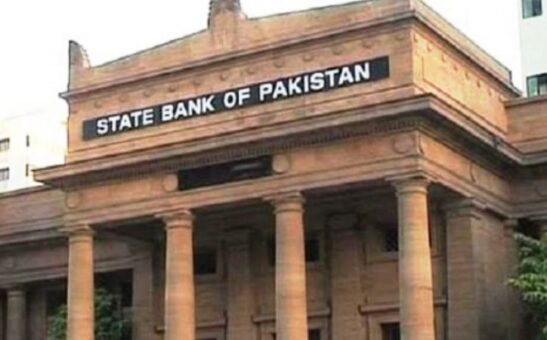
KARACHI: The State Bank of Pakistan (SBP) on Friday decided to further reduce the policy rate by 100 basis points to 8 percent as inflation outlook has improved further in light of the recent cut in domestic fuel prices.
A statement said that at its meeting on May 15, 2020, the Monetary Policy Committee (MPC) decided to reduce the policy rate by 100 basis points to 8 percent.
This decision reflected the MPC’s view that the inflation outlook has improved further in light of the recent cut in domestic fuel prices.
As a result, inflation could fall closer to the lower end of the previously announced ranges of 11-12 percent this fiscal year and 7-9 percent next fiscal year.
The MPC highlighted that the coronavirus pandemic has created unique challenges for monetary policy due to its non-economic origin and the temporary disruption of economic activity required to combat it.
While easier monetary policy can neither affect the rate of infection transmission nor prevent the near-term fall in economic activity due to lockdowns, it can provide liquidity support to households and businesses to help them through the ensuing temporary phase of economic disruption.
In particular, the successive policy rate cuts and sizeable cheap loans provided through the SBP’s enhanced refinancing facilities have helped maintain credit flows, bolster the cash flow of borrowers, and support asset prices.
This has contained the tightening of financial conditions that would otherwise have amplified the initial necessary contraction in activity.
The MPC noted the swift and forceful monetary easing of 525 basis point in the two months since the beginning of the crisis and SBP’s measures to extend principal repayments, provide payroll financing, and other measures to support liquidity.
Together with the government’s proactive fiscal stimulus―including targeted support packages for low-income households, SMEs, and construction―as well as assistance from the international community, these actions should provide ample cushion to growth and employment, while also maintaining financial stability.
This coordinated and broad-based policy response has provided relief and stability and should provide support for recovery as the pandemic subsides.
In reaching its decision, the MPC considered key trends and prospects in the real, external and fiscal sectors, and the resulting outlook for monetary conditions and inflation.
Key developments since the last MPC meeting
The MPC noted three key developments since the last MPC meeting on 16th April, 2020. First, the government has significantly reduced petrol and diesel prices by 30-40 percent in response to the continued fall in global oil prices, which has improved the outlook for inflation.
Second, most countries, including Pakistan, have begun easing lockdowns, which should help provide support to economic activity.
Nevertheless, as elsewhere, the situation remains highly uncertain. A possible rise in infections could prompt fresh lockdowns, and the recovery could prove more sluggish than is currently being anticipated.
Third, due to timely policy actions and international assistance, the initial volatility observed in domestic financial and foreign exchange markets has somewhat subsided in recent weeks, although global financial conditions remain considerably tighter than before the coronavirus outbreak.
Recent supportive developments have helped to restore the SBP’s foreign reserves position to close to pre-coronavirus levels of over US$ 12 billion.
Economic data has been consistent with the expected sudden and sharp drop in activity. LSM witnessed a steep decline of 23 percent (y/y) in March, due to the withdrawal from economic and social activity aimed at slowing the spread of the virus. High-frequency indicators of demand such as credit card spending, cement dispatches, credit off-take and POL sales also suggest a marked contraction in domestic economic activity in both March and April. At the same time, after showing signs of recovery earlier in the year, both consumer and business sentiment have fallen sharply.
More recently, the government has initiated a phased lifting of restrictions for different economic sectors conditional on the future course of the pandemic. If this easing proceeds smoothly, activity should pick up in coming months. The MPC noted that, in light of preliminary evidence from China and other countries that eased lockdowns earlier than others, activity in service sectors and consumption, which form a large part of the domestic economy, could remain subdued for longer.
The current account deficit has continued to narrow, even though both exports and imports have fallen sharply since the coronavirus outbreak. Exports declined by 10.8 percent (y/y) in March. Imports, after indicating some recovery on in recent months, contracted by 19.3 percent (y/y). The April figures from the Pakistan Bureau of Statistics reveal an even steeper decline in both exports (54 percent) and imports (32 percent). While remittances have so far remained resilient, there are potential downside risks given the economic difficulties across the world, especially in oil exporting countries.
Despite challenging global conditions, the outlook for external sector broadly remains stable. The current account deficit should remain bounded and the recent fall in portfolio inflows will be offset by official flows committed by the international community, such that Pakistan’s external position remains fully funded. Together, these developments, buttressed by the flexible exchange rate regime, should continue to support a steady build up in the SBP’s foreign exchange reserve buffers.
Like the external sector, the fiscal sector was also on track of much-needed consolidation before the coronavirus outbreak. The primary balance recorded a surplus of 0.4 percent of GDP in Jul-Mar FY20 against a deficit of 1.2 percent in the same period of FY19, the first 9-month surplus since FY16. However, the substantial fall in economic activity since March has significantly affected tax revenues. After rising by 17.5 percent (y/y) during Jul-Feb FY20, tax revenues declined sharply by 15 percent (y/y) in both March and April. Moreover, given the needed increase in spending to support healthcare, businesses, households and more vulnerable segments of society, the fiscal deficit is expected to widen substantially in Q4.
The MPC noted the significant reduction in headline inflation since January on the back of sharply decelerating food and energy prices, as well as easing core inflation. Looking ahead, this waning price momentum is expected to be complemented by the recent 30-40 percent cut in domestic petrol and diesel prices, creating room for today’s additional rate cut. Today’s decision has brought the cumulative reduction in the policy rate to 525 basis points, which was enabled by the fact that both the fall in inflation in Pakistan since January and the expected further decline next year are the highest among comparable emerging markets.
The inflation outlook is subject to two-sided risks. Inflation could fall further than expected if economic activity fails to pick up as expected next fiscal year. On the other hand, there are some upside risks from potential food-price shocks associated with adverse agricultural conditions. Price pressures could also emerge if the economy gains greater momentum in the second half of FY21.
Overall, the MPC felt that with today’s rate cut and based on available information, the monetary policy stance should support the economy over the coming months, while ensuring price and financial stability. In line with its previous communications, the MPC has remained data-driven and forward-looking in its interest rate decisions and stands ready to take appropriate actions as the need may arise.