Category: Money & Banking

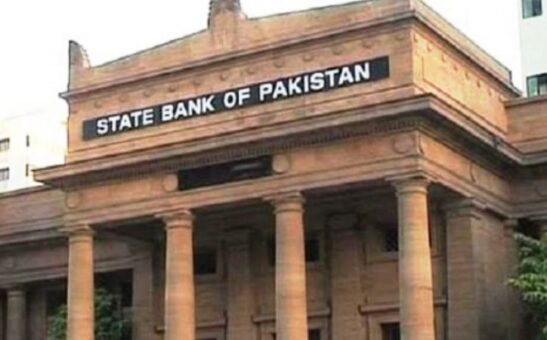
Money and banking drive economic activity by facilitating transactions, savings, and investments. Banks manage financial resources, offer credit, and regulate money supply, ensuring stability and growth in Pakistan’s financial sector.

  • Rupee closes with 11 paisas gain

    Rupee closes with 11 paisas gain

    KARACHI: The Pak Rupee appreciated by 11 paisas against dollar on Monday owing to improved economic indicators.

    The rupee ended Rs154.92 to the dollar from last Friday’s closing of Rs155.03 in interbank foreign exchange market.

    Currency dealers said that the improved foreign exchange reserves and narrowing current account deficit improved the rupee value.

    The foreign currency market was opened in the range of Rs154.85 and Rs154.90. The market recorded day high of Rs155.00 and low of Rs154.90 and closed at Rs154.92.

    The exchange rate in open market witnessed slight change in rupee value. The buying and selling of dollar was recorded at Rs154.70/Rs155.00 from last Friday’s closing of Rs154.60/Rs155.00 in cash ready market.

  • Rupee gains 13 paisas in early trade

    Rupee gains 13 paisas in early trade

    KARACHI: The Pak Rupee made significant recovery on Monday morning and gain 13 paisas against dollar owing to improved economic indicators.

    (more…)
  • Bank holiday announced on January 01

    Bank holiday announced on January 01

    KARACHI: The State Bank of Pakistan (SBP) on Friday declared bank holiday on January 01, 2020 on account of financial close of banking companies.

    In a circular issued to presidents and chief executives of all banks, development financial institutions and microfinance banks, the SBP informed that the central bank will remain closed for public dealing on Wednesday, January 1, 2020, which will be observed as ‘Bank Holiday’.

    All banks / DFIs / MFBs shall, therefore, remain closed for public dealing on the above date. However, all employees of banks / DFIs / MFBs will attend the office as usual, the SBP said.

  • Rupee gains four paisas amid demand for import, corporate payments

    Rupee gains four paisas amid demand for import, corporate payments

    KARACHI: The Pak Rupee gained four paisas against dollar on Friday amid higher demand of greenback for import and corporate payments.

    The rupee ended Rs155.03 to the dollar from previous day’s closing of Rs155.07 in interbank foreign exchange market.

    Currency dealers said that the rupee was under pressure during the day due to upcoming weekly holidays. Besides, the financial year ending for many corporate entities also escalated the demand for the greenback.

    The dealers said the inflows of export receipts and remittances helped the rupee to appreciate during later in the day.

    The exchange rate in open market also witnessed appreciation in rupee value. The buying and selling of dollar was recorded at Rs154.60/Rs155 from previous day’s closing of Rs154.70/Rs155.10 in cash ready market.

  • Banks to observe extended working hours on Dec 31 to facilitate taxpayers

    Banks to observe extended working hours on Dec 31 to facilitate taxpayers

    KARACHI: State Bank of Pakistan (SBP) on Friday announced that banks will observed extended working hours to facilitate taxpayers in payment of duty and taxes on December 31, 2019.

    In order to facilitate the collection of government receipts / duties / taxes, it has been decided that authorized branches of National Bank of Pakistan (NBP) as well as field offices of SBP Banking Services Corporation (SBP-BSC) will observe extended banking hours up to 9:00 PM on December 31, 2019 (Tuesday).

    Accordingly, NBP branches will settle their transactions with respective SBP-BSC field offices on the same day i.e. December 31, 2019 for which purpose a special clearing has been arranged at 7:00 P.M. by the NIFT.

    All banks are, therefore, advised to keep their concerned branches open on December 31, 2019 (Tuesday) till such time that is necessary to facilitate the special clearing for Government transactions, the SBP said.

  • Rupee falls by 17 paisas on import, corporate demand

    Rupee falls by 17 paisas on import, corporate demand

    KARACHI: The Pak Rupee depreciated by 17 paisas against dollar on Thursday owing to higher demand for import and corporate payments, dealers said.

    The rupee ended Rs155.07 to the dollar from December 24, 2019 closing of Rs154.90 in interbank foreign exchange market.

    The dealers said that the rupee was remained under pressure during the day due to higher demand for the greenback. They said that due to holiday on account of Qaid-e-Azam Day and Christmas the market witnessed higher demand for dollar on Thursday.

    The foreign currency market was initiated in the range of Rs154.85 and Rs154.90. The market recorded day high of Rs155.08 and low of Rs154.87 and closed at Rs155.07.

    The exchange rate in open market also witnessed depreciation in rupee value. The buying and selling of the dollar was recorded at Rs154.70/Rs155.10 from December 24, 2019 closing of Rs154.60/Rs154.90 in cash ready market.

  • SBP extends date for implementing machine authenticated Rs50 banknotes

    SBP extends date for implementing machine authenticated Rs50 banknotes

    KARACHI: State Bank of Pakistan (SBP) has extended the date for banks regarding issuance of machine authenticated Rs50 banknotes.

    In a notification issued on Thursday, the central bank said that considering the difficulties faced by banks in machine processing of lower denomination banknotes under the Currency Management Strategy (CMS), it had been decided to extend the effective date for issuance of machine authenticate Rs50 banknotes until January 4, 2021.

    The banks are however encouraged to gradually adopt machine processing and authentication of Rs50 banknotes.

    Earlier, the banks were required to process lower denomination banknotes under the CMS from January 02, 2020.

    The SBP on August 31, 2017 issued Currency Management System, which is as follow:

    Considering the various aspects of implementation and feedback of the stakeholders, the following changes have been made in the strategy:

    I. Sealed Cassettes based feeding of ATMs:

    The instructions contained at section C (iii) of FD Circular No.03/2015 dated August 26, 2015 regarding use of standardized purpose built cassettes for feeding of ATMs shall stand amended as under:

    a) The requirement of cassette based feeding of ATMs has been made optional for the time being. The banks are however encouraged to plan for gradual movement towards cassette based feeding to comply with our instructions. SBP will continue to monitor the situation on periodic basis for a policy decision.

    b) The banks may alternatively use sealed bags or trays for feeding of ATMs. However the banks shall ensure that sealing and unsealing of bags/trays and replenishment of ATMs is carried out under proper CCTV controlled environment.

    c) The on-site ATMs can be fed by their respective branches provided that the end to end process from cash processing to ATM feeding is covered by CCTV cameras.

    d) Other requirements as advised under section C of FD Circular No.03/2015 dated August 26, 2015 shall remain applicable.

    II. Application of Strategy on lower banknote denominations:

    The instructions contained at section-I of FD Circular No.01/2016 dated January 25, 2016 regarding implementation of phase-II of strategy for all denomination of banknotes w.e.f. 2nd January 2018 shall stand amended as under:

    a) The banks will start disbursing machine authenticated banknotes of Rs 100 w.e.f. 2nd January 2018 and Rs 50 w.e.f. 2nd January 2019 respectively.

    b) The lower banknote denominations of Rs 20 and Rs 10 have been excluded from Currency Management Strategy.

    III. Banknote Packing Instructions (BPI)

    The Banknote Packing Instructions issued vide FD Circular No.02/2017 dated March 10, 2017 shall stand amended as under:

    a) The effective date of instructions contained at section 1.2 and 1.3 of BPI has been extended from 3rd July 2017 to 1st December 2017.

    The banks may deposit the cash processed and packed by other bank(s) with SBP BSC or offer the same in IEC. The earlier requirement that the cash processed and packed by the depositing bank can only be deposited with SBP BSC or offered for exchange in IEC shall stand withdrawn. However, in case of any discrepancy, the bank which has processed and packed the cash shall be responsible.

  • Concentration of banks’ shareholding to few families against good governance practices: SBP governor

    Concentration of banks’ shareholding to few families against good governance practices: SBP governor

    KARACHI: Dr. Reza Baqir, Governor, State Bank of Pakistan (SBP) has said that concentration of banks’ shareholding to a few families and their nominees on the boards is against the good governance practices.

    Dr. Reza Baqir, Governor, State Bank of Pakistan during his inaugural address in a seminar on “Emerging Trends in Good Governance of Banking Sector” in SAARC countries highlighted the importance of efficient and robust governance structure in the banking industry for sustainable economic growth of a country, said a statement issued by the central bank on Tuesday.

    He said that concentration of banks’ shareholding to a few families and their nominees on the Boards is against the good governance practices and may adversely impact the effectiveness of the Board.

    Besides Pakistan, the seminar was attended by delegates from Afghanistan, Bangladesh, Bhutan, Sri Lanka and Nepal.

    While addressing to the participants from SAARC member countries at National Institute of Banking and Finance (NIBAF), Islamabad, Dr. Baqir said that corporate governance is corner stone for the success of any business entity.

    However, for financial institutions, the importance of corporate governance becomes even more critical as banks are highly leveraged entities facing a wide range of risks in their day-to-day operations.

    Therefore, the scope and approach to banks’ corporate governance requires a different and specific regulatory framework not only because of their leveraged business model but also due to diverse ownership and group structure.

    Dr. Baqir emphasized that boards of the banks with more gender diversity or female representatives and diversified experience in the fields of IT, risk management, finance and economics can play a more effective role in achieving the organization’s overall strategic objectives.

    Dr. Baqir further added that independent directors play an important role in banks by exercising their independent judgement and protect the interest of minority shareholders. He also mentioned that corporate governance practices in public sector banks are generally weak and less transparent due to likely political intervention in the affairs of these banks.

    Therefore, there is a need to rationalize the shareholding structure of these banks to minimize the undesirable role of governments in their affairs. Remuneration practices of Board members and compliance of AML/ CFT regime are also significantly important areas where the Boards need to assume enhanced responsibilities to meet the international best practices.

    He also cited few of SBP’s efforts such as Guidelines on Performance Evaluation of Board of Directors, Enterprise Technology Governance & Risk Management Framework, Governance Framework for Banks’ Overseas Operations, Compliance Risk Management and Internal Audit Function Guidelines and Streamlining the existing regulatory requirements on remuneration of Boards and management.

    In his closing remarks, he suggested that Terms of reference (ToRs) of SAARCFINANCE network may be revisited to align the same with emerging challenges being faced by central banks in the region. He further added that expanding business arenas, globalization of financial activities, emergence of new financial products and increased level of competition have not only opened up opportunities but also increased the potential risks from such developments.

    Therefore, such regional forums are very helpful in facilitating knowledge exchange and ongoing collaboration for resolution of region specific issues posing potential risks to the banking sectors in SAARC countries.

    The event was also attended by Dr. Ishrat Husain, Adviser to Prime Minister on Institutional reforms and Austerity and Ms. Tania Adruis, Head of Digital Pakistan Initiative. Both the keynote speakers emphasized upon further strengthening the culture of good corporate governance to achieve the desired strategic objectives.

    The second day of the seminar largely focused on governance practices in the SAARC region wherein foreign delegates and SBP presented their respective country practices in the subject area.

  • Rupee ends flat in lackluster trading

    Rupee ends flat in lackluster trading

    KARACHI: The Pak Rupee ended flat against dollar on Tuesday in lackluster trading activities, dealers said.

    The rupee ended Rs154.90 to the dollar from previous day’s closing of Rs154.91 in interbank foreign exchange market.

    The currency dealers said that importers and corporate buyers were cautious in purchasing dollars.

    They said that reduction in current account deficit on back of falling imports had improved the sentiments in the currency market.

    The exchange rate in open market witnessed appreciation in rupee value. The buying and selling of the dollar was recorded at Rs154.60/Rs154.90 from previous day’s closing of Rs154.70/Rs155.00 in cash ready market.

  • Rupee ends flat amid import, corporate payment demand

    Rupee ends flat amid import, corporate payment demand

    KARACHI: The Pak Rupee ended flat against dollar on Monday despite demand for import and corporate payments, dealers said.

    The rupee closed at Rs154.91 to the dollar from last Friday’s closing of Rs154.90 in interbank foreign exchange market.

    The currency dealers said that the due to first trading day after two weekly holidays the local currency was under pressure. In the first half of trading day the demand for the greenback was high. However, inflows of export receipts and workers’ remittances helped the rupee to stable against the foreign currency.

    The exchange rate in open market witnessed depreciation in rupee value. The buying and selling of the dollar was recorded at Rs154.70/Rs155.00 from last Friday’s closing of Rs154.40/Rs154.70 in cash ready market.