Category: Money & Banking

Money and banking drive economic activity by facilitating transactions, savings, and investments. Banks manage financial resources, offer credit, and regulate money supply, ensuring stability and growth in Pakistan’s financial sector.

  • SBP identifies shortfall in collateral obtained by Silkbank

    SBP identifies shortfall in collateral obtained by Silkbank

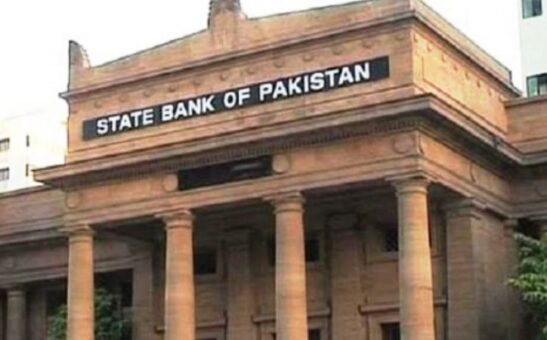
    KARACHI: State Bank of Pakistan (SBP) has identified shoartfall in collateral against financial facilities granted by Silkbank Limited.

    According to information share with Pakistan Stock Exchange (PSX) on Thursday, Silkbank said that the SBP in its latest inspection of the bank, identified a shortfall in collateral against certain financial facilities granted by the bank.

    “In compliance with the SBP requirements, the bank has obtained additional collateral, equivalent to identified shoartfall, details of which have been provided to SBP,” the bank said.

    The central bank has required the bank to assess the value of the additional collateral obtained, the bank added.

    Silkbank informed that in order to fulfill the valuation requirement, SBP had further given the option to delay the quarterly financial statements, as of September 30, 2019, of the bank, till the conclusion of the said valuation process so that the financial statements reflect the full impact of additional collateral obtained.

    “The bank has therefore, sought time from SBP, till December 15, 2019, for the conclusion of the evaluation process and publishing of the quarterly financial statements, as of September 30, 2019, of the bank.”

    The 170th meeting of the Board of Directors being in session on October 30, 2019, for review and approval of third quarterly accounts for the period ended September 30, 2019, has therefore, been concluded accordingly.

  • About 7.65 million bank accounts still require biometric verification for AML/CFT compliance

    About 7.65 million bank accounts still require biometric verification for AML/CFT compliance

    KARACHI: Around 7.65 million bank accounts are still unverified till June 30, 2019. The verification of bank accounts is mandatory through biometric system in order to mitigate risks of money laundering and terror financing.

    (more…)
  • State Bank incurs Rs506 billion exchange loss in 2018/2019

    State Bank incurs Rs506 billion exchange loss in 2018/2019

    KARACHI: The State Bank of Pakistan (SBP) incurred a net exchange loss of Rs506.13 billion during fiscal year 2018/2019 as against exchange loss of Rs72.28 billion during the preceding fiscal year, according to annual financial statement of the central bank released on Wednesday.

    The central bank said that the exchange gains/ (losses) arise on FCY assets and liabilities of the bank.

    Major part of the foreign currency assets of the Bank are USD denominated whereas the foreign currency liability exposure is mainly SDR and USD denominated.

    Accordingly, the movement in the PKR/ SDR and PKR/USD exchange rates directly affects the exchange account.

    The bank incurred a net exchange loss of Rs 506,131 million during FY19 as against exchange loss of Rs 72,280 million during FY18.

    The PKR depreciated against USD by Rs 38.56 and Special Drawing Rights (SDR) by Rs 80.82; accordingly, the net exchange loss increased significantly during the year.

    Due to significant exchange losses, the SBP incurred net loss of Rs 1,043 million (consolidated) in the FY 19 as compared to a profit of Rs175,673 million in the FY 18.

    The decline is primarily attributed to exchange loss of Rs 506,131 million during the current year as compared to exchange loss of Rs 72,280 million in previous year.

    The SBP said that the decrease was, however, partly offset by increase of Rs 254,351 million in the net interest income.

    The lending to the Federal Government remained the major source of SBP’s profit followed by earnings on the Open Market Operation (OMO) injections.

    These major income streams are offset by the increase in interest expense on liquidity mop-up from domestic financial market and increase in interest expense on international deposits.

    The expenses also witnessed a growth of 5 percent during the year. The note printing charges and General administrative and other expenses are the major expense heads that witnessed growth while agency commission paid to agent commercial banks for undertaking government banking business on behalf of the Bank witnessed slight decrease during the year.

    The interest / markup income of the central bank increased by Rs 331,471 million to Rs 646,009 million, registering an increase of over 105 percent.

    The borrowings by the Government from SBP during FY19 remained the major sources of income of the Bank during the year. The discount/interest income earned on lending to the Federal Government increased by 171 percent due to increase in volume of borrowing as well as increase in interest rate.

    The interest earned on lending to commercial banks through OMO injections decreased by 41 percent due to smaller volumes of liquidity injections during the year.

    The income on FCY assets registered 6 percent increase during the year. Although, foreign exchange reserves reduced significantly during the year; however, the return on the reserves increased due to hike in the international interest rates.

    The interest earned on refinance facilities to priority sectors increased to Rs 11,945 million in FY19 from Rs 10,232 million in FY18 primarily due to increase in lending to banks under various refinance schemes.

    The Bank incurred interest/ markup expense on FCY and domestic liabilities. FCY liabilities include deposits of international organizations and central banks, International Monetary Fund and currency swap arrangements.

    The domestic interest/markup bearing liabilities include repurchase transactions and sukuks purchased under Baimuajjal agreement. The interest/ markup expense witnessed a rise of Rs 78,922 million primarily due to increase in expense on repurchase transactions by Rs 46,830 million.

    Further, FCY deposits increased during the year which resulted in additional expense of Rs 23,141 million.

  • Rupee gains five paisas on lower demand for imports

    Rupee gains five paisas on lower demand for imports

    KARACHI: The Pak Rupee gained five paisas against the dollar on Wednesday owing to lackluster demand for import payments, dealers said.

    The rupee ended Rs155.73 to the dollar from previous day’s closing of Rs155.78 in interbank foreign exchange market.

    The dealers said that the importers were cautious for placing demand for dollar against foreign buying owing to falling exchange rates.

    The foreign currency market was initiated in the range between Rs155.79 and Rs155.84. The market recorded day high of Rs155.79 and low of Rs155.73 and closed at Rs155.73.

    The exchange rate in open market also witnessed appreciation in rupee value. The buying and selling of dollar was recorded at Rs155.60/Rs155.90 from previous day’s closing of Rs155.70/Rs156.00 in cash ready market.

  • UBL pays Rs11.59 billion against tax demand

    UBL pays Rs11.59 billion against tax demand

    KARACHI: United Bank Limited (UBL) has paid Rs11.59 billion against tax demand created by Federal Board of Revenue (FBR) for past multiple years.

    According to financial statement submitted to Pakistan Stock Exchange (PSX) on Wednesday, the bank said that the income tax authorities had issued amended assessment orders for the tax years 2003 to 2018, and created additional tax demands (including disallowances of provisions made prior to Seventh Schedule) of Rs.11.591 billion (December 31 2018: Rs.13.119 billion), which had been fully paid as required under the law.

    However, the bank has filed appeals before the various appellate forums against these amendments, the bank said, adding that where the appellate authorities have allowed relief on certain issues, the assessing authorities have filed appeals before higher appellate forums.

    “Where the appellate authorities have not allowed relief the Bank has filed appeals before higher appellate forums. The management of the Bank is confident that the appeals will be decided in favor of the Bank.”

    According to the financial statement, the bank said that the tax returns for Azad Kashmir (AK) and Gilgit Baltistan (GB) Branches have been filed up to the tax year 2018 (financial year 2017) under the provisions of section 120(1) read with section 114 of the Ordinance and in compliance with the terms of the agreement between banks and the Azad Kashmir Council in May 2005.

    The returns filed are considered as deemed assessment orders under the law.

    The bank further said that the tax authorities have also carried out monitoring for Federal Excise Duty, Sales tax and withholding taxes covering period from year ended 2007 to 2017.

    Consequently various addbacks and demands were raised creating a total demand of Rs. 889 million (2018: Rs. 995 million).

    The Bank has filed appeals against all such demands and is confident that these would be decided in the favor of the bank.

    The tax returns for Yemen, Qatar and UAE branches have been filed upto the year ended December 31, 2018 under the provisions of the laws prevailing in the respective countries, and are deemed as assessed unless opened for reassessment.

    The bank has received corrective tax assessment of QAR 1 M (Rs: 42.946 million) from the General tax Authority (GTA) in respect of tax year 2004 with no supporting calculations from GTA.

    Management has requested details for 2004 assessment from GTA, however to date no response has been received. Management is confident that the matters will be decided in favour of the Bank and the possibility of any outcome against it is remote, the UBL said in its financial statement.

  • National Bank declares marginal growth in profit with over 20 percent high earnings in nine months

    National Bank declares marginal growth in profit with over 20 percent high earnings in nine months

    KARACHI: National Bank of Pakistan (NBP) has declared marginal growth in after tax profit of one percent for nine months period ended September 30, 2019. However, income of the bank posted over 20 percent increase for the period.

    According to a statement issued by the bank, after-tax profit for the nine-months period amounted to Rs 16.3 billion being marginally 1.0 percent higher than Rs 16.2 billion earned during the corresponding period of 2018.

    Meeting of the Board of Directors (BoD) of the bank held on October 29, 2019 (Tuesday) at the bank’s Head Office in Karachi in which the BoD approved financial statements of the bank for the nine-months period ended June 30, 2019.

    For the nine-month period, total income of the bank amounted to Rs 79.4 billion which is 20.3 percent higher than Rs 66.0 billion YoY. While net interest income closed at Rs 53.9 billion, non-mark-up / interest income closed at Rs 25.6 billion, up by 23.7 percent and 13.7 percent respectively.

    With an increase of 26.2 percent YoY, the bank’s profit before taxation amounted to Rs 29.2 billion as against Rs 23.1 billion for September 2018.

    The drop in after-tax profit is mainly attributed to higher taxation charge of 44.0 percent as compared to 30.0 percent for the corresponding period last year. Net profit translates into earnings per share of Rs 7.68 as against Rs 7.60 for the corresponding nine-months period of prior year.

    Total assets of the bank amounted to Rs 3,025.4 billion which is 8.1 percent higher than Rs 2,798.6 billion as at December 31, 2018.

    These represent 13.8 percent of the banking industry total assets. The bank’s market share in deposits, advances and investment is around 14 percent, 12 percent, and 15 percent respectively.

    Representing 12.0 percent of the total industry loans, gross advances of the bank amounted to Rs 1,093.4 billion, marginally higher than Rs 1,059.5 billion as at December 31, 2018.

    However, compared to Rs 953.3 billion of September 2018, gross advances stand increased by Rs 140.1 billion or 14.7 percent. As of September 30, 2019 deposits of the bank amounted to Rs 1,938.0 billion, depicting a drop of Rs 73.3 billion or 3.6 percent as against Rs 2,011.4 billion as of December 31, 2018.

    Deposits constitute translate into ~13.5 percent share in total banking industry deposits. Customer deposits that form 87.5 percent of the bank’s total funding pool remained stable during the period and amounted to Rs 1,695.0 billion (2018: Rs 1,674.12 billion).

    Year 2019 is NBP’s 70th year of service to the Nation, and it continues to deliver strong results. Its business strategy is evolving to ensure a focus on inclusive development through reaching and supporting underserved sectors including SME, Microfinance, Agriculture Finance, and finance for Micro-Housing on a priority basis.

    This is in addition to the bank’s dominant role in dealing with public sector enterprises and its employees. Building a digital banking capability and a technology platform will be a central part of this strategy as will the inculcation of a performance driven culture within the institution.

    For achieving the strategic goals of the bank, certain functions at the Head Office level have been re-organized to create synergies and enhance risk controls.

  • Rupee gains eight paisas on better economic projections

    Rupee gains eight paisas on better economic projections

    KARACHI: The Pak Rupee gained eight paisas against dollar on Tuesday owing to better economic projections of the central bank.

    The rupee ended Rs155.78 to the dollar from previous day’s closing of Rs155.85 in interbank foreign exchange market.

    Currency experts said that the rupee gained on the back of projection made by the State Bank of Pakistan (SBP) a day earlier about improved economic conditions were visible due to reforms taken.

    The foreign currency market was initiated in the range of Rs155.80 and Rs155.85. The market recorded day high of Rs155.84 and low of Rs155.77 and closed at Rs155.78.

    The exchange rate in open market also witnessed appreciation in local currency value. The buying and selling of dollar was recorded at Rs155.70/Rs156.00 as compared with previous day’s closing of Rs155.80/Rs156.10 in cash ready market.

  • Consumer financing loses pace on housing, car loan shocks

    Consumer financing loses pace on housing, car loan shocks

    KARACHI: The consumer financing has lost pace in fiscal year 2018/2019 to total loans of Rs57.3 billion as compared with Rs86.5 billion in preceding fiscal year. The major drag came from auto and house financing segments, State Bank of Pakistan (SBP) said in its annual report on Pakistan Economy 2018/2019.

    The SBP issued the report a day earlier, stating that the auto and housing financing suffered due to the government’s ban on non-filers from purchasing/ registering assets such as cars and residential properties (above Rs 5 million), several price hikes of cars, and rising interest rates.

    The anticipation of new product launches and phasing out one popular model also played their part, as some customers may have adopted a wait-and-see approach.

    The SBP data shows that the car financing fell to Rs22.2 billion in fiscal year 2018/2019 as compared with Rs43.3 billion in preceding fiscal year. Similarly, housing loans fell to Rs10.4 billion in 2018/2019 as compared with Rs22.3 billion in the preceding fiscal year.

    The SBP said that since interest rates were on an upward trajectory, the substantial increase in installment amount compelled borrowers to either opt for high equity participation ratio or avoid bank financing altogether.

    Apart from these factors, the popularity of ride hailing services, which itself was an early contributing factor to the rise in auto financing, also seemed to have reached its saturation level, thereby negatively contributing to the growth in advances.

    The SBP said that in terms of outstanding portfolio, Islamic banks were able to keep their share intact at around 46 percent as of June 2019. However, in flow terms, the increase stemmed mainly from conventional banks where medium-sized players dominated.

    Nonetheless, the ban on non-filers on purchasing property (above Rs. 5.0 million) kept this segment suppressed during the year. As per industry sources, the increased price levels also eroded the capacity of many households to afford residential units in close vicinity of urban centers.

    Moreover, as per anecdotal evidence, consistent interest rate hikes during the year significantly raised the installment amount for potential borrowers, many of whom stand disqualified due to the breach of the maximum required debt-burden ratio.

    Compared to other segments, personal loans and consumer durables performed better. The flow of FY19 for consumer durables was historically highest, but price impact mainly explained this phenomenon, as there was more than double-digit inflation in consumer durables during the year.

    The argument also gets support from the fact that while banks received around 20 percent lower applications, the average loan size of accepted applications more than doubled to Rs 2.8 million in FY19 from Rs 1.2 million last year.

  • SBP emphasizes more efforts for taking Pakistan out of FATF grey list

    SBP emphasizes more efforts for taking Pakistan out of FATF grey list

    KARACHI: Dr. Reza Baqir, Governor State Bank of Pakistan (SBP) on Monday emphasized on putting more effort against money laundering and terrorist financing to ensure that Pakistan is out of grey list in the next meeting of FATF.

    While inaugurating the conference on Anti-Money Laundering (AML)/ Combating Financing of Terrorism (CFT) and Trade-Based Money Laundering (TBML), Dr. Reza Baqir, Governor State Bank stated that significant progress has been made between May and September 2019 to meet the action plan items set by Financial Action Task Force (FATF) in different areas to demonstrate effectiveness of AML safety regime of Pakistan.

    There was a major rethink of the approach being taken by the authorities in early to mid 2019. Consequently, a number of steps were taken to significantly strengthen our approach to making progress on these issues.

    He however, stressed for the need of putting more effort to make progress on remaining areas to ensure that Pakistan is out of grey list in the next meeting of FATF.

    He was speaking to the conference conducted by SBP and Asian Development Bank today at SBP, Karachi in a collaborative effort to mitigate the risks of money laundering and financing of terrorism.

    Speaking at the conference, the Governor informed the audience that since the grey-listing, State Bank has arranged many AML/CFT outreach and awareness programs for its regulated entities and stakeholders and that the conference is a useful platform to understand the AML/CFT challenges being faced globally and the best practices followed in mitigating such challenges.

    In the context of implementing AML/CFT requirements, the Governor urged the financial sector to make efficient use of technologies for assessment of risks, controls and ongoing monitoring of financial transactions and enhance capacity by continuous training of their employees.

    Dr. Baqir emphasized that trade based money laundering poses complex and sophisticated challenges and that SBP inspection teams conducted thematic inspections of banks with respect to export and import of specific goods.

    He also referred to State Bank’s framework for managing risks of trade based money laundering and terrorist financing which has been issued to encourage authorized dealers (banks) to effectively manage the trade based money laundering and terrorist financing risks.

    Ms. Xiohang Yang, Country Director ADB, and Mr. Mohsin Ali Nathani, President & CEO HABIBMETRO Bank also spoke on the occasion. Ms. Yang stated that ‘AML/CFT is a critical issue for trade finance, which is why ADB’s Trade Finance Program is playing an increasing role in this space. She stated that ADB has a strong commitment to work with Pakistan’s banking sector and the SBP on this issue.

    Ms. Yang further stated that the FATF has identified enhanced capacity building/training in AML/CFT as an immediate priority requirement and they are pleased to partner with the SBP and thankful to HABIBMETRO Bank for organizing the same.

    Mohsin Ali Nathani, President & CEO HABIBMETRO Bank while addressing the conference added, ‘Enhancement of AML & CFT efforts through increased awareness and strengthened systems, controls and processes is imperative for our country and the banking sector. HABIBMETRO Bank is pleased to organize this conference and bring together relevant stakeholders from the region, regulator and banking sector to re-affirm our collective commitment to mitigating the risks of Money Laundering and Terrorism Financing.’

    During the conference several prominent speakers and panelists discussed the requisites and obligations with regard to AML and CFT, including Terrorism Financing Risk Assessments, Transnational Risks in Trade Based Money Laundering (TBML), risks posed by DNFBPs & NPOs and Ultimate Beneficial Ownership.

    The conference also included a detailed discussion on the impact of Trade Based Money Laundering and the repercussions of the same for the banking sector especially in the context of grey listing.

    The conference was organized by HABIBMETRO Bank and attended by the Deputy Governor State Bank of Pakistan, Country Head Asian Development Bank and international experts in the field of AML/ CFT and trade from the United States, Australia and UAE.

    Participants included CEOs and senior management of Banks, DFIs, Microfinance Banks and Exchange Companies and representatives from the SBP, Financial Monitoring Unit (FMU) and Securities & Exchange Commission of Pakistan (SECP).

  • Rupee gains four paisas amid dollar demand

    Rupee gains four paisas amid dollar demand

    KARACHI: The Pak Rupee gained four paisas against dollar on Monday amid higher demand for import and corporate payments.

    The rupee ended at Rs155.85 to the dollar from last Friday’s closing of Rs155.89 in interbank foreign exchange market.

    Currency experts said that the rupee was under pressure during the day owing to higher demand for the greenback due to past two weekly holidays.

    However, supply from workers’ remittances and export receipts helped the rupee to make gain at the end of the day.

    The exchange rate in open market however witnessed stable rupee value. The buying and selling of dollar was recorded at Rs155.80/156.10, the same last Friday’s closing, in cash ready market.