Category: Money & Banking

Money and banking drive economic activity by facilitating transactions, savings, and investments. Banks manage financial resources, offer credit, and regulate money supply, ensuring stability and growth in Pakistan’s financial sector.

  • SBP issues common red flag indicators for trade based money laundering

    SBP issues common red flag indicators for trade based money laundering

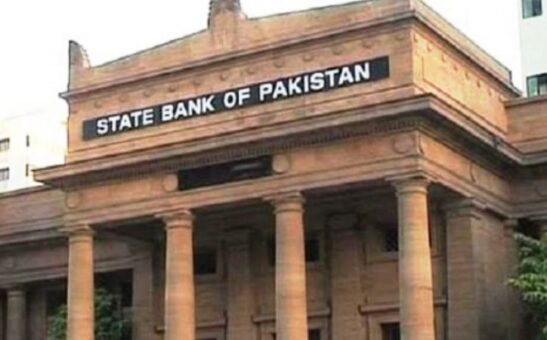
    KARACHI: State Bank of Pakistan (SBP) has issued common red flag indicators for banks to take care in avoiding trade based money laundering and terrorist financing.

    Following are the common Red Flag indicators:

    i. Obvious over or under/over pricing of goods (significant discrepancies appear between the value of the goods reported on the invoice/EIF/MIF, EFE/MFE, Advance Payment Voucher and the known fair market value of the goods).

    ii. The description of goods on the Goods Declaration Form/Transport documents significantly varies from the description declared on EIF/MIF, EFE/MEF or underlying contract.

    iii. Significant variation is found between the description of the goods on the bill of lading and the invoice.

    iv. There are indications that the description of the goods is disguised.

    v. The tenor of the transaction does not commensurate with the nature of the underlying goods – for example perishable goods are traded on terms involving lengthy usance period.

    vi. Documents such as a letter of credit is received through unverified channels such as unauthenticated SWIFT message.

    vii. The type of goods being shipped appears to be inconsistent with the exporter’s or importer’s regular business activities.

    viii. The size of the shipment does not commensurate with the size of the exporter’s or importer’s regular business activities.

    ix. The packaging of goods is inconsistent with the commodity or shipping method.

    x. The goods are transshipped through one or more countries/jurisdictions for no apparent economic or logistical reason.

    xi. The country from which goods are being shipped is designated as “high risk” for money laundering activities.

    xii. The transaction involves the receipt of payments from third parties that have no apparent connection with the transaction.

    xiii. The method of payment apparently does not commensurate with the risk characteristics of the transaction e.g. the remittance of funds in advance payment for a shipment from a new supplier in a high-risk country.

    xiv. The transactions involving consecutive trade discount offered by exporters to the same importer.

    xv. The transaction involves repeatedly amended or frequently extended letters of credit.

    xvi. An exporter receives advance payment(s) but does not make shipment(s) there against.

    xvii. An Importer remits advance payment(s) but does not receive shipment(s) there against.

    xviii. The transaction appears to involve use of front or shell companies for the purpose of hiding the true parties involved.

    xix. The transaction involves import/export of dual use goods.

    xx. The item ordered is incompatible with the technical level of the country to which it is being shipped, such as semiconductor manufacturing equipment being shipped to a country that has no electronics industry.

    xxi. Where important details are missing on commercial invoice(s) or mentioned vaguely.

    xxii. Where some of the shipping documents are provided in photocopies instead of original against the regularity instructions or against normal business scenarios.

    xxiii. Where goods declarations in commercial invoice(s) are not proper, incomplete or otherwise not mentioned at all to conceal the facts.

    xxiv. Receipt of proceeds from non-cooperative countries as per FATF list against the shipment made to a third country.

    xxv. Where export proceeds are received from unrelated/third party with differing nature of business from that of exporter.

  • Banks disburse Rs26.76 billion business loans to youth

    Banks disburse Rs26.76 billion business loans to youth

    KARACHI: Banks have disbursed an amount of Rs26.76 billion under Prime Minister’s Youth Business Loans (PMYBL) till June 30, 2019 as against the amount of Rs25.13 billion disbursed till June 30, 2019.

    The number of borrowers has been increased to 26,679 by end June 2019 as compared with 25,128 borrowers by end June 2018, State Bank of Pakistan (SBP) said on Friday.

    The government, being cognizant of the important role played by youth and small businesses in the economic development, introduced Prime Minister’s Youth Business Loans (PMYBL) Scheme in 2013 with the aim of providing youth the opportunities of financial independence through self-employment.

    Under the Scheme, small businesses are provided loans up to Rs 2,000,000/- at a service charge of 6 percent p.a.

    Total number of applications received by the Executing Agencies (EAs) under PMYBL Scheme as of June 30, 2019 stood at 101,938. Of the total applications received so far under the scheme, 88 percent were from male applicants.

    Moreover, since launch of the scheme, number of sanctioned applications stood at 33,145 as on June 30, 2019, while cumulative disbursements of Rs 26,760 million had been made to 26,679 beneficiaries till June 30, 2019.

    The SBP said that small businesses have potential to revitalize economic activity by creating employment opportunities, reducing poverty and providing economic linkages and services to the corporate sector.

    The growth of small businesses and their access to formal finance is imperative for the development of economy.

    However, despite their strong potential, the small businesses, particularly of young entrepreneurs, have traditionally remained credit constrained due to high risk perception of banks towards them.

    The government introduced Prime Minister’s Youth Business Loans (PMYBL) Scheme in 2013 for providing the opportunities of financial independence to youth through self-employment.

    Under the scheme, unemployed youth are extended loans upto Rs 2,000,000/- at a service charge of 6 percent p.a. for setting up new business or strengthening existing business.

    The rate of return for lending banks is one year KIBOR+500 bps. Difference of banks’ rate and borrowers’ rate is being absorbed by the federal government in the form of subsidy.

    As a further incentive to the banks, GOP also shares 5 percent of credit losses of total outstanding loan portfolio of the banks under the scheme.

    Currently, eighteen banks are participating in the scheme, of which three are public sector banks (NBP, FWBL and Sindh Bank Limited) while the remaining fifteen are private sector banks.

  • Meezan Bank declares net profit of Rs11 billion for nine months

    Meezan Bank declares net profit of Rs11 billion for nine months

    KARACHI: Meezan Bank has declared around Rs11 billion net profit (profit after tax) for the 11-month period ended September 30, 2019. The Board of Directors of Meezan Bank Limited, in its meeting, held October 24, 2019 approved the condensed interim unconsolidated financial statements of the bank and its consolidated financial statements for the nine months period ended September 30, 2019, a statement said on Friday.

    (more…)
  • Rupee ends unchanged in interbank

    Rupee ends unchanged in interbank

    KARACHI: The Pak Rupee ended unchanged against dollar on Friday amid lackluster demand for import and corporate payments.

    The rupee ended Rs155.89 to the dollar, the same previous day’s level, in interbank foreign exchange market.

    The market was initiated in the range of Rs155.88 and Rs155.89. The market recorded day high of Rs155.89 and low of Rs155.86 and closed at Rs155.89.

    Currency experts said that the rupee was remained stable in foreign currency market ahead of weekly holidays.

    The exchange rate in open market was also witnessed stable rupee value. The buying and selling of dollar was recorded at Rs155.80/Rs156.10, the same previous day’s level, in cash ready market.

  • SBP facilitates overseas Pakistanis in biometric verification

    SBP facilitates overseas Pakistanis in biometric verification

    KARACHI: State Bank of Pakistan (SBP) has facilitated overseas Pakistanis in their biometric verification for operating bank accounts.

    In a statement on Thursday, the SBP said that realizing difficulties being faced by overseas Pakistan in operating their bank accounts due to non-biometric verification of their accounts, State Bank of Pakistan has issued detailed instructions on the alternate arrangement to facilitate their biometric verification.

    It may be mentioned here that as per alternate arrangement, overseas Pakistanis may approach their respective banks through email/surface mail and provide identity documents like valid Passport, Visa, CNIC and NICOP (National Identity Card for Overseas Pakistanis) as an alternative arrangement for biometric verification for operating their bank accounts as usual.

    The arrangement has been made in line with State Bank’s continuous monitoring of the progress of the banking industry with respect to biometric verification; and it has been reiterated to banks for extending their fullest cooperation to their overseas customers.

  • Rupee ends unchanged in thin trading

    Rupee ends unchanged in thin trading

    KARACHI – The Pakistani rupee remained stable against the US dollar on Thursday, closing unchanged in a session marked by subdued trading activity in the interbank market.

    (more…)
  • SBP gives deadline to banks for IFRS-9 implementation

    SBP gives deadline to banks for IFRS-9 implementation

    KARACHI: State Bank of Pakistan (SBP) on Wednesday directed banks to implement International Financial Reporting Standard on Financial Instruments i.e. IFRS 9 from January 01, 2021.

    The International Accounting Standards Board (IASB) issued International Financial Reporting Standard on Financial Instruments i.e. IFRS 9 effective from January 1, 2018.

    IFRS 9 has introduced an expected credit loss approach, which bring major changes in the way the financial institutions (FIs) will assess the impairments of financial instruments.

    The banking industry has been representing to the State Bank of Pakistan(SBP) about the difficulties being faced in the implementation of this Standard and has been requesting to defer its implementation till December 31, 2020.

    Keeping in view of the importance of the Standard, the SBP advised the banking industry to carry out a quantitative impact assessment of IFRS 9 on their financials along with the assessment of their readiness of its implementation.

    In view of the impact assessment and stakeholders’ representation, it has been decided that the effective date of IFRS 9 implementation is January 1, 2021 for banks/DFIs/MFBs.

    Meanwhile, they are advised to ensure meticulous compliance of the following instructions:

    (a) Prepare separate pro forma Statement of Financial Position, Profit and Loss Account, Statement of Comprehensive Income and Statement of Changes in Equity based on the requirements of IFRS 9 along with the detailed notes on Advances, Investments, Provisions, Write offs and any other notes which may have material impact. The FIs are required to prepare aforesaid financials for the year-end 2019 and submit the same to BPRD-SBP within the time mentioned in the below table. These financial statements should also comply with the requirements stated in the Annexure-I of the Circular.

    (b) Perform parallel run of IFRS 9 implementation starting from Jan 1, 2020 to test the IFRS 9 outcomes. The FIs shall submit quarterly reports on the status of IFRS 9 implementation to the SBP, after review by the Board Committee responsible for oversight of the IFRS 9 implementation. Such reports should be submitted to the SBP within 14 working days of the Board of Directors (BOD) meeting at which the financial statements are approved.

    (c) Review internal systems and procedures and put in place required governance structures, processes and systems for implementation of the Standard before the effective date of IFRS 9 implementation.

    (d) The BOD of FIs are required to play an active role in the oversight of the implementation process of IFRS 9 either by establishing a separate subcommittee for this purpose or assigning the same to an existing subcommittee. The BOD are required to discuss the progress of IFRS 9 implementation in their periodic meetings. The specific responsibilities of the BOD for the implementation of IFRS 9 are mentioned in Annexure-II of the Circular.

    (e) Form a management level IFRS 9 Project Steering Committee, which will be responsible for managing the implementation process of IFRS 9, as mentioned in Annexure-II of the Circular. The Project Steering Committee should at least include the members from the Risk Management, Finance and IT departments.

    (f) The process of implementing IFRS 9 is required to be completed within the following time period:

    Sr#ParticularsTimeline
    1.Forming of a Board Committee and a Project Steering CommitteeJan 31, 2020
    2.Preparation of IFRS 9 compatible pro forma Financial Statements for year-ended 2019Apr 30, 2020
    3.Parallel Run of IFRS 9Periods beginning Jan 1, 2020
    4.Directors Review Reports for Parallel Run PeriodsWithin 14 working days from BOD meeting
    5.Effective Date of IFRS 9 implementationJan 1, 2021

    All banks/DFIs/MFBs are advised to ensure that the transition to IFRS 9 will be achieved in a planned manner and within the timeline stipulated above. Any violation of these instructions may attract punitive actions under the relevant provisions of the Banking Companies Ordinance 1962.

  • Rupee ends flat in range bound activity

    Rupee ends flat in range bound activity

    KARACHI: The Pak Rupee ended flat against dollar on Wednesday in range bound trading activity.

    The rupee ended Rs155.89 to the dollar from previous day’s closing of Rs155.88 in interbank foreign exchange market.

    The foreign currency market was initiated in the range of Rs155.88 and Rs155.90. The market recorded day high of Rs155.93 and low of Rs155.89 and closed at Rs155.89.

    Currency experts said that flat demand for import and corporate payments helped the rupee to maintain the levels.

    The exchange rate in open market witnessed stable rupee value. The buying and selling of dollar was recorded at Rs155.50/Rs156.00, the same previous day’s level, in cash ready market.

  • Rupee gains three paisas amid demand for import payment

    Rupee gains three paisas amid demand for import payment

    The Pakistani Rupee experienced a modest gain of three paisas against the US Dollar on Tuesday, reflecting demand pressures for import and corporate payments in the local market.

    (more…)
  • Asset quality of banking sector weakens on rising NPLs: SBP

    Asset quality of banking sector weakens on rising NPLs: SBP

    KARACHI: State Bank of Pakistan (SBP) on Monday said that the asset quality of banking sector weakened owing to Rs88.3 billion or 13 percent increase in Non-Performing Loans (NPLs).

    In its Mid-Year Performance Review of the Banking Sector (January – June 2019), the SBP said that the asset quality of the banking sector weakened during first half (January – June) 2019 H1CY19, breaking away from the declining trend in recent past.

    “The infection ratio (NPLs to Total Gross Loans) increased to 8.8 percent by the end of H1CY19 (8.0 percent by end H2CY18).”

    This was mainly due to an increase of Rs88.3 billion (or 13.0 percent) in NPLs during H1CY19.

    As a result, the NPLs stood at Rs768 billion by end June 2019. The fresh rise in domestic NPLs was mostly concentrated in few local private banks as well as in a specialized bank, the SBP said.

    Consequently, the infection ratio for local private banks and specialized banks increased to 7.0 percent (6.2 percent by end of H2CY18) and 43.2 percent (32.9 percent by end of H2CY18).

    With the tightening of macroeconomic conditions in CY18 and later, inflow of fresh NPLs have been on the rise.

    However, in terms of economic sectors, the higher defaults during H1CY19 were restricted to the energy and agribusiness sectors.

    Energy sector contributed 52.8 percent to the total increase in NPLs during H1CY19, while agribusiness contributed 18.6 percent. Most of the NPLs in the energy sector (96.8 percent) pertained to the public sector entities associated with electricity generation and transmission that faced constrained cash flows (due to circular debt/low recoveries).

    In case of Agribusiness, however, an element of seasonality exists in the classified loans as they peak around second quarter of each calendar year but then recede in subsequent quarters.

    Besides this seasonal phenomenon, other factors responsible for the rise in NPLs included late start of sugar crushing season, water shortage and drought conditions affecting crop yields, and delay in sale of the newly harvested kharif crops by farmers hindering their repayment capacity (Rice, Cotton and others) etc.

    Furthermore, 20.8 percent contribution to the growth in NPLs came from banks’ overseas operations, largely related to operations in the Middle East.

    In addition to Pak Rupee depreciation, the economic slowdown in some of these countries could be the reason for the higher NPLs.

    The surge in NPLs was mainly driven by the NPLs of public entities in the energy sector, which do not require provisions.

    Resultantly, the provision coverage ratio (78.4 percent in H1CY19 against 83.8 percent in H2CY18) declined.

    As a result, the net NPLs increased and net NPLs to capital ratio jumped to 11.5 percent as of end H1CY19 against 7.8 percent as of end H2CY18.

    However, it may be kept in perspective that in the aftermath of growing NPLs banks made net provisions to the tune of Rs26.40 billion during H1CY19 compared to Rs36.2 billion during CY18.

    The fund-based liquidity of the banking sector remained comfortable, despite continued moderation in liquidity ratios.

    Liquid assets to total assets ratio moderated to 48.0 percent by end June 2019 (48.7 percent by Dec- 18).

    Similarly, liquid assets to total deposits (excluding customer fixed deposits) also moderated to 81.8 percent in H1CY19 (85.0 percent in Dec-18) mainly due to higher proportionate rise in deposits.

    However, due to improved growth in fixed deposits, liquid assets to short term liabilities ratio improved to 95.6 percent (94.9 percent in Dec-18) percent over the comparable period of last year.

    Islamic Banking Institutions (IBIs) continued to augment the overall profitability of the banking sector as it contributed 26.5 percent to the overall after-tax profits during H1CY19, despite 14.4 percent share in total banking sector assets.

    The earnings ratios, which were on downtrend for last few years, improved during the half year under review Return on Equity after-tax inched up to 11.4 percent in Jun-19 from 10.7 percent in Dec- 18, while ROA improved to 0.84 percent from 0.81 percent The turnaround in profitability indicators, after three consecutive years of downturn, was primarily enabled by rising interest rates over the last year or so.