Category: Money & Banking

Money and banking drive economic activity by facilitating transactions, savings, and investments. Banks manage financial resources, offer credit, and regulate money supply, ensuring stability and growth in Pakistan’s financial sector.

  • Rupee ends firmer against dollar

    Rupee ends firmer against dollar

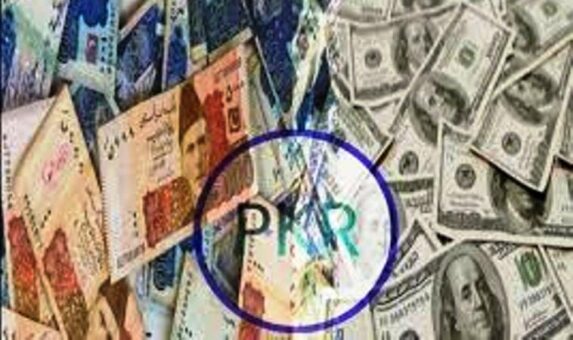
    KARACHI: The Pak Rupee ended firmer against the US dollar on Thursday in a range bound trading activity.

    The rupee ended Rs140.29 to the dollar from previous day’s close of Rs140.28 in interbank foreign exchange market.

    The interbank foreign exchange market was initiated in the range of Rs140.28 and Rs140.30.

    The market recorded day high of Rs140.30 and low of Rs140.29 and closed at Rs140.29.

    The exchange rate remained unchanged in open market.

    The buying and selling of dollar was recorded at Rs140.50/Rs141.00, the same previous day’s level, in cash ready market.

  • Rupee eases in early trade

    Rupee eases in early trade

    KARACHI: The Pak Rupee fell by two paisas against US dollar on Thursday in early day trading.

    The dollar is being traded at Rs140.29 in Interbank Foreign Exchange Market. The foreign currency market last day ended at Rs140.27.

  • Rupee ends flat against dollar

    Rupee ends flat against dollar

    KARACHI: The Pak Rupee ended flat against dollar on Wednesday despite recovery in the intra-day trading.

    The rupee ended Rs140.28 to the dollar from previous day’s closing of Rs140.27 in interbank foreign exchange market.

    The interbank foreign exchange market was initiated in the range of Rs140.10 and Rs140.20.

    The market recorded day high of Rs140.29 and low of Rs140.20 and closed at Rs140.28.

    The exchange rates in open market were remained unchanged.

    The buying and selling of dollar was recorded at Rs140.50/Rs141.00, the same previous days level, in cash ready market.

  • Drug pricing mum on adjustment in foreign currency movement: SBP

    Drug pricing mum on adjustment in foreign currency movement: SBP

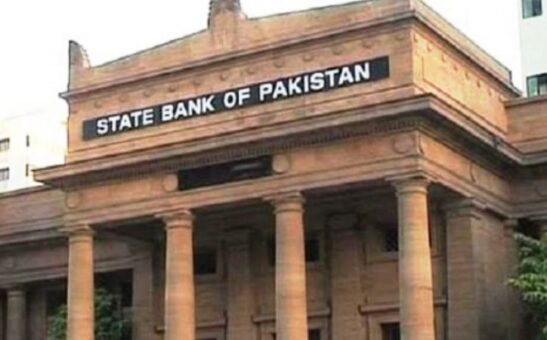
    KARACHI: The present drug policy is silent on adjustment of prices under foreign currency movement, State Bank of Pakistan (SBP) said in its latest report.

    “The latest drug pricing policy does not say anything about the adjustment of prices under foreign currency movements. The policy becomes ineffective in mitigating the external risk, given the origin of imported raw material is mostly different from India and Bangladesh,” the SBP said.

    Drug Regulatory Authority of Pakistan (DRAP) is the implementing body of the Drugs Act of 1976, which was promulgated to ensure availability of medicines at affordable prices.

    DRAP exerts control over all the aspects of drugs market. While the current policy regime has kept prices mostly at par with inflation in the medium term, the pricing policy is the cause of disagreement between the private sector and the regulator.

    The central bank said that pharmaceutical industry has extensive exposure to exchange rate risk. “Depreciation of the PKR has a direct impact on this industry. Its profitability gets squeezed, as producers are not allowed a timely and commensurable increase in the prices of their products,” the SBP added.

    The dependence on imported materials is a critical factor in limiting the growth potential of the industry under lagged adjustment of prices, it added.

    The SBP said that extensive delay in adjustment of prices has made investors, both foreign and domestic, wary of investing in pharmaceutical sector.

    The government fixes the maximum price of medicines based on the respective cost of production of each drug. A generic case involves a lengthy regulatory procedure (typically taking 1-2 years) to determine the prices of medicines.

    The process requires the eventual approval from the federal cabinet.

    Retrospective analysis of prices reveals interesting insights to the patterns of price adjustments, i.e. prolonged periods of low medicinal inflation, followed by periods of significant adjustments. These price corrections have been more frequent in recent times.

    In this regard, DRAP issued a new drug pricing policy in 2018. To overcome the lag issues, domestic price of medicines were linked with average price of the same dosage form and strength of the same brand in India and Bangladesh.

    Moreover, the policy also allowed annual price increments equal to 70 percent of the annual inflation rate with a cap of 7 percent.

    Whilst the latest policy has a more relaxed tone compared to the previous one, it still has some issues. First, it should be noted that compared to Pakistan, India has very different cost dynamics, as it is one of the largest producers and exporters of generic drugs and its raw material.

    On the other hand, Pakistan’s pharma industry is heavily reliant on raw material imports and its industry is inward looking.

    In addition to slow regulatory framework, another critical factor is the lack of government support for the industry, especially in R&D required for obtaining international certification from the US Food and Drug Administration (FDA).

    This certification is a prerequisite for exporting medicines to developed countries where profit margins are higher. On the contrary, India has state of the art research labs.

    It gains significant advantages by fast-tracking its FDA approvals as soon as patents expire. As a result, India’s pharmaceutical industry has not only attained economies of scale but helps in earning foreign exchange as well.

  • Rupee gains 17 paisas in mid-day trade

    Rupee gains 17 paisas in mid-day trade

    KARACHI: The Pak Rupee gained 17 paisas against US dollar in mid-day trade on improved inflows.

    The dollar is being traded at Rs140.10 in interbank foreign exchange market. The foreign currency market ended Rs140.27 in last day trading.

    Currency experts said that due to IMF loan program there would be pressure on the local currency in coming days. However, they said that the narrowing trade deficit and shrinking current account deficit could help the local currency to maintain levels.

  • SBP to announce monetary policy on March 29; experts expect 75bps increase

    SBP to announce monetary policy on March 29; experts expect 75bps increase

    KARACHI: State Bank of Pakistan (SBP) will announce Monetary Policy for the next two months on Friday, March 29, 2019, a statement said on Wednesday.

    In the last monetary policy announcement, the central bank increased the policy rate by 25 basis points to 10.25 percent effective from February 01, 2019.

    The monetary policy committee (MPC) decided to increase the rate on the basis of: (i) the fiscal deficit is yet to show signs of consolidation despite a reduction in PSDP spending; (ii) although a gradual improvement in current account deficit is visible, it remains high; (iii) a marked shift in the pattern of government borrowing from scheduled banks to SBP entails inflationary concerns; and (iv) even as stabilization measures gradually work through the economy, underlying inflationary pressures persist.

    Analysts at Arif Habib Limited said that the SBP to increase policy rate by 75 basis points to 11.00 percent (Discount rate 11.50 percent) in the upcoming monetary policy statement.

    This might be the last rate hike before Pakistan enters the International Monetary Fund (IMF) program whereas inflation will remain moderate after making its peak in the ongoing month.

    The monetary tightening is expected on the back of i) rising inflationary pressure due to recovery in prices of petroleum products and essential food items, ii) mounting Fiscal deficit despite sharp cut in PSDP and rationalization of tariffs and duties, and iii) narrowing real interest rate as it declined to 1.6 percent compared to last four year average of 2.85 percent.

  • Rupee ends with two paisas gain

    Rupee ends with two paisas gain

    KARACHI: The Pak Rupee gained two paisas against dollar on Tuesday amid higher demand for import and corporate payments.

    The rupee ended Rs140.27 to the dollar from previous day’s closing of Rs140.29 in interbank foreign exchange market.

    The interbank foreign exchange market was initiated in the range of Rs140.25 and Rs140.30.

    The market recorded day high of Rs140.30 and low of Rs140.26 and closed at Rs140.27.

    The exchange rate in open market however ended with appreciation of local currency against the dollar.

    The buying and selling of dollar was recorded at Rs140.50/Rs141.00 from previous day’s closing of Rs140.80/Rs141.30 in cash ready market.

  • Rupee slides by five paisas against dollar

    Rupee slides by five paisas against dollar

    KARACHI: The Pak Rupee ended down by 5 paisas against the US dollar on Monday despite reports of inflows from China.

     The rupee ended Rs140.29 to the dollar from last Friday’s close of Rs140.24 in interbank foreign exchange market.

     The interbank foreign exchange market was initiated in the range of Rs140.25 and Rs140.30.

     The market recorded day high of Rs140.30 and low of Rs140.28 and closed at Rs140.29.

     Currency experts said that the rupee was under pressure due to ongoing talks of the government with IMF for new loan program.

     The exchange rate in the open market was remained stable.

     The buying and selling of dollar was recorded at Rs140.80/Rs141.30, the same level of last Friday’s in cash ready market.

  • SBP directs banks to ensure OTC tax collection by March 27

    SBP directs banks to ensure OTC tax collection by March 27

    KARACHI: State Bank of Pakistan (SBP) on Friday directed all commercial banks to ensure receiving payment of duty and taxes through over the counter (OTC) channel.

    The SBP said that the finance department through circular on July 17, 2018 made it mandatory for banks to enable their Over-the-Counter (OTC) Channel for collection of taxes and duties.

    Complaints are pouring in from different quarters, regarding non-entertaining of tax payment requests through banks’ OTC Channel.

    So much so that Federal Board of Revenue (FBR) has formally launched a complaint that PSIDs generated by WeBOC system for payment of customs duty and other taxes especially the levy on Mobile devices are not being entertained, by the bank branches.

    In view of the above, all banks were advised vide email dated 15th March 2019 to improve their customer services in facilitating taxpayers with due courtesy.

    Despite the above-referred instructions, there is no visible improvement, as complaints from different quarters are still landing with us.

    It is therefore advised to share these instructions with all your branches across the country with the advice to ensure meticulous compliance and facilitate the taxpayers in payment of taxes and duties under the I Link’s OTC facility.

    The branches shall also prominently display on their respective Notice Boards that “Taxes and Duties are accepted here under the 1Link’s OTC facility”. Further, banks shall also ensure that the branch staff has adequate understanding of the mechanism for collection of taxes and duties under the said facility.

    The banks shall inform this department within 3 working days of the date of circular i.e. 27th March 2019 that these instructions have been communicated to all their branches for meticulous compliance and that the Notice Boards of branches are prominently displaying the message that “Taxes and Duties are accepted here under the 1Link’s OTC facility”.

  • Rupee falls by 75 paisas against dollar on import demand

    Rupee falls by 75 paisas against dollar on import demand

    KARACHI: The Pak Rupee fell 75 paisas against US dollar on Friday owing to higher demand for import and corporate payments.

    The rupee ended Rs140.24 to the dollar from previous day’s closing of Rs139.49 in interbank foreign exchange market.

    The interbank foreign exchange market was initiated in the range of Rs139.75 and Rs140.00.

    The market recorded day high of Rs140.25 and low of Rs140.00 and closed at Rs140.24.

    Currency experts said that due to upcoming weekly holidays including holiday on account of Pakistan Day increased the demand for the greenback.

    They also said that the latest development related on new IMF loan also put pressure on local unit demand.

    In the open market the rupee fell even more significantly against the greenback.

    The buying and selling of dollar was recorded at Rs140.80/141.30 as compared with previous day’s closing of Rs139.70/140.20 in cash ready market.

    Related Stories
    Rupee depreciates by five paisas against dollar