Category: Finance

Explore finance-related stories with Pakistan Revenue, your source for the latest updates on Pakistan’s economy, financial trends, and market insights. Stay informed with real-time economic developments.

  • Foreign exchange reserves down by $387 million to $14.486 billion

    Foreign exchange reserves down by $387 million to $14.486 billion

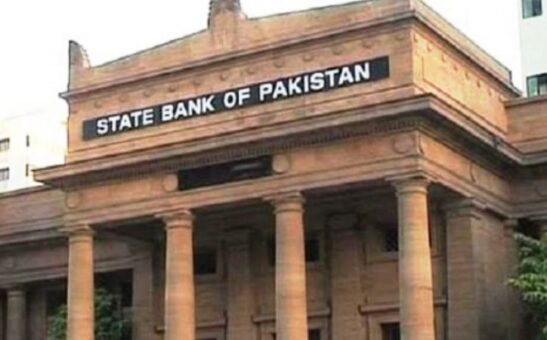
    KARACHI: The liquid foreign exchange reserves of the country have declined by $387 million to $14.486 billion by week ended July 19, 2019 as compared with $15.249 billion a week ago, State Bank of Pakistan (SBP) said on Thursday.

    The reserves held by the central bank fell by$389 million to $7.612 billion by week ended July 19, 2019 as compared with $8.001 billion a week ago. The central bank said that its reserves were reduced due to external debt servicing and other official payments.

    The reserves held by commercial banks were flat at $7.250 billion as compared with $7.248 billion.

    Related Stories

    Foreign exchange reserves increase to $15.249 billion

  • Imran Khan discusses economic reforms with IMF chief

    Imran Khan discusses economic reforms with IMF chief

    WASHINGTON: Prime Minister Imran Khan on Sunday met David Lipton, Acting Managing Director of International Monetary Fund to discuss economic reform program.

    David Lipton, Acting Managing Director of the International Monetary Fund (IMF), issued the following statement today, following his meeting with the Prime Minister of Pakistan, Imran Khan:

    “I was pleased to meet Prime Minister Khan of Pakistan today in Washington, DC. We discussed recent economic developments and the implementation of the authority’s economic reform program supported by the IMF.

    “Their program aims to stabilize the economy, strengthen institutions, and thereby put Pakistan on a path of sustainable and balanced growth.

    “I highlighted the need to mobilize domestic tax revenue now and on into the future to provide reliably for needed social and development spending, while placing debt on a firm downward trend.

    “The IMF, together with other international partners, is working closely with the government of Pakistan to support the implementation of the authorities’ economic reform program.”

  • Textile exports decline by 15pc in June on budgetary measures

    Textile exports decline by 15pc in June on budgetary measures

    KARACHI: Pakistan’s textile exports fell by 15 percent in June 2019 to $1.01 billion as compared with $1.19 billion in the same month of the last year, according to export data released by Pakistan Bureau of Statistics (PBS) on Friday.

    The exports of June 2019 has also exhibited 14.55 percent decline when compared with $1.18 billion in May 2019.

    Analysts said that uncertainty in exchange rate and budgetary measures have negatively impacted the exports in the month of June 2019.

    They said that the currency fluctuated massively during past two months, which increased the cost of imported raw material. Further budgetary measures including elimination of sales tax zero-rating for five export sectors also caused in export decline.

    The overall exports of textile products fell by 1.42 percent to $13.33 billion during fiscal year 2018/2019 as compared with $13.52 billion in the preceding fiscal year.

    The experts said that despite several incentives given by the government to this particular sector the exports were remained stagnant. They said that the government in terms of incentives had granted rebate and credit on duty and taxes.

    The exports of knitwear and readymade garments have supported the overall textile exports. The export of knitwear grew by 7 percent to $2.89 billion during fiscal year 2018/2019 as compared with $2.711 billion in the preceding fiscal year.

    Similarly, the export of readymade garments exhibited growth of three percent to $2.65 billion in the fiscal year under review as compared with $2.577 billion in the fiscal year 2017/2018.

    The export of raw cotton and cotton year witnessed decline of 65 percent and 18 percent during the comparative fiscal years.

    However, export of bead wear was remained flat at $2.262 billion in fiscal year 2018/2019 as compared with $2.261 billion in the preceding fiscal year.

    The State Bank of Pakistan (SBP) in its third quarterly report on Pakistan Economy said that the stagnation in overall textile exports stemmed from a slowdown in export growth (in value terms) of readymade garments and knitwear items, and Year on Year (YoY) declines in cotton fabric and yarn exports.

    Except for yarn, export values of all these major products suffered from a drop in unit prices, as quantum exports grew appreciably. The drop in dollar-based unit prices was mainly owed to exchange rate adjustments, as exports rose significantly in Pak Rupee terms, the SBP said.

    In rupee term the textile exports registered 22 percent growth during 2018/2019 as compared with preceding fiscal year.

    Related Posts:

    Textile exporters oppose proposed plan for abolishing zero-rating, FTR

    Monitoring of Withholding Tax: FBR launches mega operation against textile, sugar companies for tax evasion

  • Foreign exchange reserves increase to $15.249 billion

    Foreign exchange reserves increase to $15.249 billion

    KARACHI: The total liquid foreign exchange reserves of the country increased by $990 million to $15.249 billion by week ended July 12, 2019 as compared with $14.259 billion a week ago, State Bank of Pakistan (SBP) said on Thursday.

    The official reserves of the SBP increased by $918 million to $8 billion during the week under review as compared with $7.083 billion in the preceding week. The central bank said that the official reserves were increased due to inflows of $991.4 million from International Monetary Fund (IMF) as first tranche of $6 billion extended fund facility for Pakistan.

    The reserves held by commercial banks also increased by $73 million to $7.248 billion by week under review as compared with $7.175 billion in the preceding week.

  • Fiscal deficit deteriorates on slowdown in tax collection: SBP

    Fiscal deficit deteriorates on slowdown in tax collection: SBP

    KARACHI: State Bank of Pakistan (SBP) on Monday said that the fiscal deficit was ballooned owing to slowdown in tax revenue collection and fall in non-tax revenue.

    In its third quarterly report on Pakistan Economy, the SBP said that the fiscal deficit deteriorated further, as a steep fall in non-tax revenues and a slowdown in tax revenue led the overall revenue collection to stagnate at last year’s level. On the other hand, expenditure increased sharply during July-March FY19, specifically the current expenditure that more than offset the decline in the development expenditure.

    While Pakistan’s economy moved along the stabilization phase led by demand management policies, vulnerabilities in the external and fiscal sectors persisted during Jul-Mar FY19.

    This implies that the current stabilization agenda needs to be reinforced with deep rooted structural reforms.

    The pace of economic growth slowed down considerably during FY19, mainly in response to policy measures taken to curb the twin deficits.

    These measures affected the performance of the industrial sector and dampened manufacturing activities in the country.

    Meanwhile, water- and weather-related concerns, in tandem with the higher cost of major inputs, took a toll on crop production. The weak showing by the commodity-producing sectors also constrained the output of the services sector.

    According to the report, inflation stubbornly kept an upward trajectory. Despite several rounds of policy rate hike since January 2018, the average CPI inflation during Jul-Mar FY19 exceeded the full year target.

    Although demand-pull pressures lessened in intensity towards the end of FY19, the Non-Food Non-Energy component continued to climb due to second round impact of exchange rate deprecation and increase in energy prices.

    On the external front, the current account deficit (CAD) declined on the back of lower import payments for both goods and services, and a decent growth in workers’ remittances.

    However, given the elevated level of CAD and insufficient foreign investments to fill the financing gap, the country had to resort to bilateral and commercial sources for external financing.
    The report features a special section on power tariffs in Pakistan. The analysis explains the process of power tariff determination in the country and assesses why tariffs have not softened despite the decline in fuel cost. It suggests that capacity payments constitute the bulk of power tariffs in Pakistan, and a sharp increase in these payments in recent years has completely offset gains from declining fuel cost.

    The report also contains another special section on the outlook of food security in Pakistan. The analysis emphasizes the related challenges that the country may face going forward, such as a high population growth and unfavorable water and climatic conditions, unless remedial measures are taken urgently.

  • Foreign direct investment falls by 50 percent in 2018/2019

    Foreign direct investment falls by 50 percent in 2018/2019

    KARACHI: The inflow of foreign direct investment (FDI) to the country has declined by 50 percent to $1.73 billion during fiscal year 2018/2019 as compared with $3.47 billion in the preceding fiscal year, State Bank of Pakistan (SBP) said on Monday.

    The inflows under FDI recorded growth of 24.5 percent to $3.16 billion during last fiscal year as compared with $4.185 billion in the fiscal year 2017/2018. On the other hand the outflows recorded 99 percent increase to $1.422 billion during fiscal year 2018/2019 as compared with $714.2 million in the preceding fiscal year.

    The total foreign private investment into the country fell by 59.10 percent to $1.32 billion in the last fiscal year as compared with $3.23 billion in the preceding fiscal year.

    The inflows of portfolio investment into the capital market were declined by 72.5 percent during the fiscal year under review. The market witnessed outflows of $415.2 million during the last fiscal year as compared with the outflows of $240.7 million in the preceding fiscal year.

    The total foreign investment including foreign public investment fell by 94.2 percent to $330 million in 2018/2019 as compared with $5.68 billion in the preceding fiscal year.

  • Fresh audits of PIA, Pakistan Steel to be conducted for transparency

    Fresh audits of PIA, Pakistan Steel to be conducted for transparency

    KARACHI: The federal government will conduct fresh audit of Pakistan International Airlines (PIA) and Pakistan Steel Mills (PSM) in order to ensure transparency in state-owned enterprises (SOE).

    The audits would be initiated for improving SOE governance, transparency and efficiency.

    The federal government will make public the outcome of the audits by December 2019, which was agreed by Pakistani authorities with the International Monetary Fund (IMF).

    The have approved the privatization of seven companies based on their good privatization prospects. They will follow best practices regarding the process and conditions of privatization to ensure a successful and transparent outcome.

    The government will sort SOEs into companies for sale, liquidation, or retaining under state ownership. This has to be done by end-September 2020.

    Further the government will submit to parliament a new State-Owned Enterprise Law by end-September 2020 aimed at modernizing and clearly defining the role of the State as owner, regulator, and shareholder of SOEs.

    In this context, the recently established holding company to manage SOEs will follow the required governance and transparency principles in line with international best practices.

    The IMF will provide technical assistance to support the development of this law and to review ownership arrangements with a view to designing an effective ownership model.

    Pakistan has assured the IMF of taking measures for improvement of the economy, which included:

    — Commit to not grant further tax amnesties Continuous

    — Issue licenses for the track-and-trace system for excises on cigarettes end-September 2019

    — Adopt measures to strengthen the effectiveness of the AML/CFT framework to support the country’s efforts to exit end-October 2019 the Financial Action Task Force list of jurisdictions with serious deficiencies

    — Submit to parliament, in consultation with IMF staff, amendments to the State Bank of Pakistan Act to address all end-December 2019 recommendations of the new 2019 Safeguards Assessment Report and the 2016 Technical Assistance Report on Central Bank Law Reform.

    — Notify the FY 2020 electricity tariff schedule as determined by the regulator end-September 2019

    — Prepare a comprehensive circular debt reduction plan in collaboration with international partners (para. 19 MEFP) end-September 2019

    — Submit to parliament amendments to the NEPRA Act to (i) ensure full automaticity of the quarterly tariff end-December 2019 adjustments and (ii) eliminate the gap between the regular annual tariff determination and notification by the government

  • Trade deficit narrows by 15.33pc to $31.82 billion in 2018/2019

    Trade deficit narrows by 15.33pc to $31.82 billion in 2018/2019

    ISLAMABAD: The country’s trade deficit has narrowed by 15.33 percent during fiscal year 2018/2019 owing to decline in import bill, according to data released by Pakistan Bureau of Statistics (PBS) on Friday.

    The trade deficit declined to $31.82 billion in last fiscal year as compared with $37.58 billion in the preceding fiscal year.

    The decline in trade deficit can be attributed to 10 percent decline in total import bill. The imports declined to $54.79 billion during fiscal year 2018/2019 as compared with $60.79 billion in the preceding fiscal year.

    However, exports failed to exhibited growth despite several incentives announced by the government in the past.

    The exports fell by one percent to $22.97 billion during the last fiscal year as compared with $23.21 billion in the preceding fiscal year.

    In the month of June 2019 the exports fell sharply by 18.32 percent comparing the previous month. The exports were $1.71 billion in June 2019 as $2.1 billion in the month of May 2019.

    On the other hand imports also fell by 13.45 percent during the month under review. The imports were at $4.36 billion in June 2019 as compared with $5.04 billion in the month of May 2019.

    Analysts said that the decline in both imports and exports were due to budgetary measures announced in the month of June 2019.

    They said that the government had taken very harsh measures to generate revenue for the fiscal year 2019/2020. The elimination of zero-rate of sales tax negatively impacted the exports. On the other hand the rise in import duties and taxes also discouraged the foreign purchases.

    The analysts further said that the fall in rupee value also another major reason for decline in both exports and imports during the month of June 2019.

  • No compromise on documentation; PM refuses to withdraw CNIC condition

    No compromise on documentation; PM refuses to withdraw CNIC condition

    KARACHI: Prime Minister Imran Khan on Wednesday showed firm resolve to document the economy and flatly refused demands of business community to withdraw condition of CNIC on sales above Rs50,000.

    Representatives of Federation of Pakistan Chambers of Commerce and Industry (FPCCI) and Karachi Chamber of Commerce and Industry (KCCI) met the prime minister at the Governor House. The entire prime minister’s team of finance and commerce was also present at the meeting.

    The business community urged the prime minister to withdraw the condition of CNIC at the time of sales, which was introduced through Finance Act, 2019.

    Sources said that the Prime Minister had refused the demand and told the business community that the businesses had to be documented. The prime minister said requirement of CNIC / information on above Rs50,000 sales was quite justified.

    The prime minister said that he wanted to see Pakistan grow on Turkish model. He further said that the government wanted to take along the business community on journey to growth.

    Prime Minister Imran Khan told the business community that he had arrived Karachi to resolve problems of trade and industry. He said that the government wanted to ease in doing business.

    Our priority to eradicate poverty and accelerate economic growth, he added.

    After the meeting business community has expressed disappointment.

    Mirza Ikhtiar Baig, senior FPCCI leader, while talking to media said that the apex body had presented all the problems at the meeting that are hampering the economic growth.

    The prime minister has been informed about protests by small associations. He said that the FPCCI had urged the prime minister to restore zero rated for export sector.

    He said that the interest rate by State Bank was on the rise and it would make difficult for industry to continue the production activities. On the other hand the FBR had also not withdrawn several levies on the export sector.

    The prime minister has been informed that reforms should bring in phases.

    Another meeting was held with export sector in which the prime minister listened to their problems. However, the export sector was also not happy to resolve their issues at the meeting.