Category: Finance

Explore finance-related stories with Pakistan Revenue, your source for the latest updates on Pakistan’s economy, financial trends, and market insights. Stay informed with real-time economic developments.

  • Budget deficit swells to 5 percent in nine months, higher than fiscal year target

    Budget deficit swells to 5 percent in nine months, higher than fiscal year target

    ISLAMABAD: The country’s budget deficit soared to 5 percent in the first nine months of current fiscal year, which is already higher than the full year target of 4.9 percent.

    According to statistics issued by the ministry of finance on Tuesday, the budget deficit for July –April 2018/2019 increased to five percent, which was 4.3 percent in the same period of the last fiscal year.

    According to the ministry the total revenue to the GDP was 9.3 percent during first nine months whereas the expenditure to the GDP swell to 14.3 percent of the GDP during the period under review.

    The statistics showed that the total revenue were at Rs3,583 billion during July – March 2018/2019, out of which tax revenue were at Rs3,162 billion. The collection of tax by the federal government was at Rs2,874 billion and provincial share was Rs287.7 billion.

    Total expenditure during the period was Rs5,506 billion. The current expenditure was at Rs4,798 billion and development expenditure was at Rs684 billion.

  • Pakistan’ FDI declines by 52 percent in 10 months

    Pakistan’ FDI declines by 52 percent in 10 months

    KARACHI: Foreign Direct Investment (FDI) has declined by 52 percent during first 10 months of current fiscal year owing to higher repatriation of profits by corporate sector.

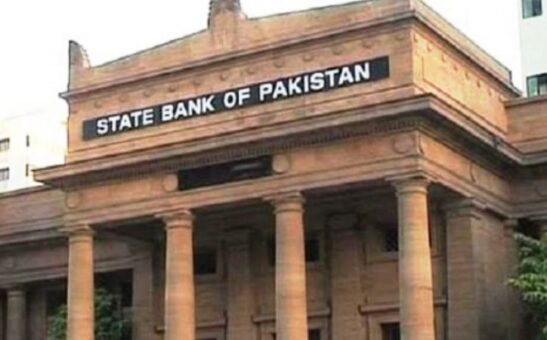
    The total FDI was recorded at $1.376 billion during July –April 2018/2019 as compared with $2.849 billion in the corresponding period of the last year, showing 51.7 percent decline, according to data released by State Bank of Pakistan (SBP) on Tuesday.

    The inflows under FDI registered 22 percent decline to $2.684 billion during first 10 months of current fiscal year as compared with $3.44 billion in the same period of the last fiscal year.

    The outflows on the other hand increased by 121 percent to $1.308 billion during July – April 2018/2019 as compared with $591 million in the same period of the last fiscal year.

    The total foreign private investment registered 64.3 percent decline to $968 million during July-April 2018/2019 as compared with $2.713 billion in the same period of the last fiscal year.

    The portfolio investment posted 200 percent decline during the period under review to outflow of $408 million as compared with the outflow of $136.2 million.

    Foreign public investment witnessed 140.4 percent decline to $2.45 billion during July – April 2018/2019 as compared with outflow of $990.6 in the same period of the last fiscal year.

  • forex reserves decline by $78 million to $15.89 billion

    forex reserves decline by $78 million to $15.89 billion

    The State Bank of Pakistan (SBP) announced on Thursday that the country’s foreign exchange reserves decreased by $78 million, bringing the total to $15.894 billion for the week ending May 10, 2019. This decline is attributed primarily to foreign debt payments.

    (more…)
  • Pakistan approaches IMF on bad economic conditions: Dr. Hafeez Shaikh

    Pakistan approaches IMF on bad economic conditions: Dr. Hafeez Shaikh

    KARACHI: Pakistan has approached the IMF for a new loan program due to bad economic conditions of the country, Advisor to Prime Minister on Finance Dr. Hafeez Shaikh said on Thursday.

    Advisor to PM Dr. Hafeez Shaikh was addressing a press conference at Governor House, Sindh. Governor Sindh Imran Ismail and Chairman Federal Board of Revenue (FBR) Shabbar Zaidi was also at the press conference. A large number of businessmen were also at the event.

    He said that in order to strengthen the economic condition the government had planned sort-, medium- and long term programs.

    The advisor and the FBR chairman briefed about the IMF loan program and amnesty scheme.

    Imran Ismail said that the government wanted to resolve industries problem at their doorstep.

    In this regard Sindh Industrial Liaison Committees were formed to speed up the resolution process.

    On the occasion, FBR chairman said that the latest amnesty scheme was supported by the entire business community.

    He said that amnesty scheme would generate sizeable revenue which would bode well for the country’s economy.

  • Pakistan’s trade deficit narrows by 13pc in 10 months

    Pakistan’s trade deficit narrows by 13pc in 10 months

    KARACHI: Pakistan’s trade deficit has narrowed by 13 percent during first 10 months (July – April) 2018/2019 owing to significant fall in import bill, according to trade data released by Pakistan Bureau of Statistics (PBS) on Wednesday.

    The trade deficit narrowed to $26.3 billion during July – April of current fiscal year as compared with the deficit of $30.17 billion in the same period of the last fiscal year.

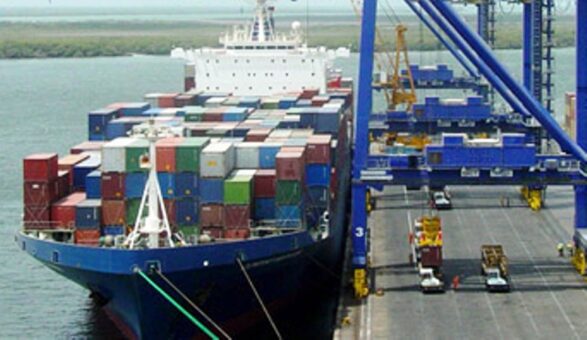
    The major reason behind shrinking trade deficit was reduction in import bill. The import bill was declined to $45.47 billion during first 10 months of current fiscal year when compared with $49.36 billion in the corresponding period of the last fiscal year.

    The exports of the country, however, remained stagnant. The exports were at $19.17 billion during July – April 2018/2019 as compared with $19.19 billion in the same period of the last fiscal year.

    The State Bank of Pakistan (SBP) in its third quarterly report said that most of the deficit reduction during Jul-Mar FY19 was recorded in Q3, when imports dropped quite sharply in response to a deepening decline in purchases of foreign power generation machinery, aircraft and railway locomotives; technical and administrative hiccups in LNG imports (and power generation); and a temporary softening in global oil prices.

    Further support came from regulatory and macro stabilization measures taken earlier, which impacted industrial performance and reduced demand for imported raw materials (such as iron and steel), and also curtailed consumers’ demand for cars (thereby lowering imports of CBUs).

    In percentage terms, the 18.1 percent decline in the overall imports in Q3-FY19 was the largest drop in a quarter in almost 10 years. It was more than sufficient to offset a 3.3 percent contraction in exports in the quarter, and led the trade deficit to drop by a sizable 27.6 percent

  • Federal cabinet approves money whitening scheme

    Federal cabinet approves money whitening scheme

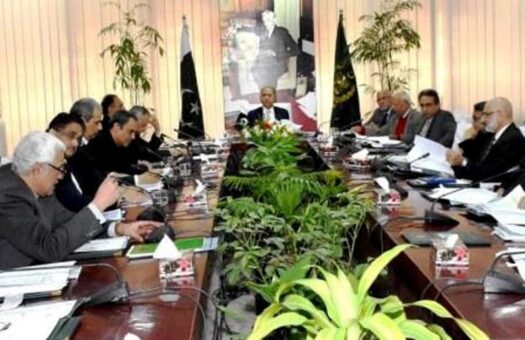
    ISLAMABAD: The federal cabinet on Tuesday approved a scheme to whiten money through declaration of concealed / hidden assets.

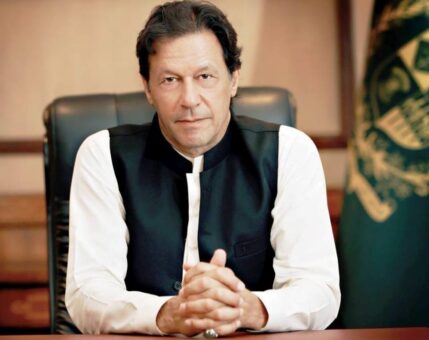
    Prime Minister Imran Khan chaired the meeting of the federal cabinet. The cabinet approved the asset Declaration Scheme, 2019 besides discussing a 17 point agenda.

    Attorney General for Pakistan made a detailed presentation to Cabinet about the progress made in cases pending in the International Courts/Arbitration forums and suggested future course of action.

    The Cabinet was informed that from 2008 to 2018, the government of Pakistan has paid an amount of $100 million in lawyers’ fee in various cases while another $10 million is to be paid this year in lawyers’ fee.

    It was decided that legal advisors will be appointed in the main ministries including Ministry of Power, Petroleum, Communications, etc.

    Besides, measures would be taken to strengthen the office of the Attorney General to enhance its capacity to vet contracts/agreement.

    The cabinet discussed at length the prices of essential items The Secretary Planning inform the Cabinet about the measures being taking to eliminate middle man and providing relief to consumers.

    The Cabinet approved renewal of Regular Public Transport, Charter and Aerial Work Licenses of M/s PIACL.

    The Cabinet approved constitution of Board of Directors of PTDC. The Cabinet ratified Trade Agreement between the Governments of the Islamic Republic of Pakistan and the People’s Democratic of Algeria.

    The cabinet approved Memorandum of Understanding between National School of Public Policy (NSPP) and National Management Institute (NMI), Cairo.

    The Cabinet approved Property Tax Exemption in respect of Benevolent Fund Building, Zero Point Islamabad.

    The Cabinet approved appointment of Director on Board Directors of Deposit Protection Corporation.

    Zafar Mirza, Special Assistant to the Prime Minister on National Health Services briefed the Cabinet about progress made in reduction of Maximum Retail Prices of various drugs resulting in saving of Rs. 09 billion to consumers.

    The Cabinet approved salary package for Members of the Information Commission. The Cabinet approved secondment of Major General Omer Ahmed Bokhari, as DG Pakistan Ranger (Sindh).

    The Cabinet approved appointment of Ms. Tasneem Sultana, District and Session Judge as Judge, Special Court (Control of Narcotics Substances-I), Karachi. Appointment of Judge, Special Court (Control of Narcotics Substances-), Quetta was also approved.

    The cabinet granted exemption of duties/taxes on equipment donated by China. The equipment will be used for anti-narcotics efforts.

    The cabinet approved recruitment Rules of the post of Chairman of Pakistan Academy of Letters, Islamabad. The Cabinet approved policy on provision of Consular Assistance to detained and imprisoned Pakistanis abroad.

  • Secured transactions registry established in SECP

    Secured transactions registry established in SECP

    In a significant development aimed at improving access to credit for small businesses and the agriculture sector, the Securities and Exchange Commission of Pakistan (SECP) has officially established the Secured Transaction Registry (STR). This registry will record charges and security interests created by entities on their movable assets, facilitating easier and more secure access to loans.

    (more…)
  • IMF to provide $6 billion to Pakistan under 39-month Extended Fund Arrangement

    IMF to provide $6 billion to Pakistan under 39-month Extended Fund Arrangement

    KARACHI: International Monetary Fund (IMF) will provide $6 billion under 39-month extended fund facility (EFF) to Pakistan, a statement said on Sunday.

    In response to a request by the Pakistani authorities, an IMF mission led by Ernesto Ramirez Rigo visited Islamabad, Pakistan from April 29 to May 11 to discuss IMF support for the authorities’ economic reform program.

    At the end of the visit, Mr. Ramirez Rigo made the following statement:

    “The Pakistani authorities and the IMF team have reached a staff level agreement on economic policies that could be supported by a 39-month Extended Fund Arrangement (EFF) for about US$6 billion.

    “This agreement is subject to IMF management approval and to approval by the Executive Board, subject to the timely implementation of prior actions and confirmation of international partners’ financial commitments. The program aims to support the authorities’ strategy for stronger and more balanced growth by reducing domestic and external imbalances, improving the business environment, strengthening institutions, increasing transparency, and protecting social spending.”

    The IMF said that Pakistan was facing a challenging economic environment, with lackluster growth, elevated inflation, high indebtedness, and a weak external position.

    “This reflects the legacy of uneven and procyclical economic policies in recent years aiming to boost growth, but at the expense of rising vulnerabilities and lingering structural and institutional weaknesses.

    “The authorities recognize the need to address these challenges, as well as to tackle the large informality in the economy, the low spending in human capital, and poverty. In this regard, the government has already initiated a difficult, but necessary, adjustment to stabilize the economy, including thorough support from the State Bank of Pakistan.

    “These efforts need to be strengthened. Decisive policies and reforms, together with significant external financing are necessary to reduce vulnerabilities faster, increase confidence, and put the economy back on a sustainable growth path, with stronger private sector activity and job creation.”

    The IMF said that the EFF aims to support the authorities’ ambitious macroeconomic and structural reform agenda during the next three years.

    “This includes improving public finances and reducing public debt through tax policy and administrative reforms to strengthen revenue mobilization and ensure a more equal and transparent distribution of the tax burden.

    “At the same time, a comprehensive plan for cost-recovery in the energy sectors and state-owned enterprises will help eliminate or reduce the quasi-fiscal deficit that drains scarce government resources.

    “These efforts will create fiscal space for a substantial increase in social spending to strengthen social protection as well as in infrastructure and human capital development. The modernization of the public finance management framework will increase transparency and spending efficiency. Provinces are committed to contribute to these efforts by better aligning their fiscal objectives with those of the federal government.”

    The IMF further said that the forthcoming budget for FY2019/20 is a first critical step in the authorities’ fiscal strategy.

    “The budget will aim for a primary deficit of 0.6 percent of GDP supported by tax policy revenue mobilization measures to eliminate exemptions, curtail special treatments, and improve tax administration.

    “This will be accompanied by prudent spending growth aimed at preserving essential development spending, scaling up the Benazir Income Support Program and improve targeted subsidies, with the goal of protecting the most vulnerable segments of society.”

    The IMF said that the State Bank of Pakistan will focus on reducing inflation, which disproportionately affects the poor, and safeguarding financial stability.

    “A market-determined exchange rate will help the functioning of the financial sector and contribute to a better resource allocation in the economy. The authorities are committed to strengthening the State Bank of Pakistan’s operational independence and mandate.”

    The IMF said that an ambitious structural reform agenda will supplement economic policies to rekindle economic growth and improve living standards.

    “Priority areas include improving the management of public enterprises, strengthening institutions and governance, continuing anti-money laundering and combating the financing of terrorism efforts, creating a more favorable business environment, and facilitating trade.

    “To improve fiscal management the authorities will engage provincial governments on exploring options to rebalance current arrangements in the context of the forthcoming National Financial Commission.”

  • Overseas Pakistanis send $17.87 billion in 10 months

    Overseas Pakistanis send $17.87 billion in 10 months

    KARACHI: Overseas Pakistanis have sent remittances worth $17.875 billion during first ten months (July – April) 2018/2019, which is 8.45 percent higher when compared with remittances in the same period of the last fiscal year, State Bank of Pakistan (SBP) said on Friday.

    Overseas Pakistani workers remitted $17.875 billion in the first ten months (July to April) of 2018/2019, showing a growth of 8.45 percent compared with $16.481 billion received during the same period in the preceding year.

    During April 2019, the inflow of worker’s remittances amounted to $1,778.90 million, which is 2 percent higher than March 2019 and 6 percent higher than April 2018.

    The country wise details for the month of April 2019 show that inflows from Saudi Arabia, UAE, USA, UK, GCC countries (including Bahrain, Kuwait, Qatar and Oman) and EU countries amounted to $427.82 million, $372.43 million, $269.56 million, $280.02 million, $175.44 million and $48.19 million respectively compared with the inflow of $399.56 million, $362.40 million, $250.91 million, $245.85 million, $167.68 million and $54.75 million respectively in April 2018.

    Remittances received from Malaysia, Norway, Switzerland, Australia, Canada, Japan and other countries during April 2019 amounted to $205.43 million together as against $197.72 million received in April 2018.