Category: Finance

Explore finance-related stories with Pakistan Revenue, your source for the latest updates on Pakistan’s economy, financial trends, and market insights. Stay informed with real-time economic developments.

  • Sindh receives Rs441.8 billion in nine months: finance ministry

    Sindh receives Rs441.8 billion in nine months: finance ministry

    ISLAMABAD: The ministry of finance on Monday said that Sindh has received Rs441.8 billion during the first nine months of current fiscal year.

    While clarifying media reports that the federal government had delayed or reduced transfers of funds to provinces, said that the government of Sindh has received Rs441.8 billion, as federal transfers, during the first three quarters (July – March 2018–19) of the current fiscal year compared to Rs418.1 billion during the corresponding period of the last fiscal year entailing a 5.7 percent increase i.e. Rs23.7 billion higher than the last year.

    Similarly, Punjab and Khyber Pakhtunkhwa have received Rs 866.6 billion and Rs. 290.4 billion, respectively, compared to Rs 801.7 billion and Rs 269.3 billion received during the corresponding period last year that has resulted in 8.1 percent and 7.9 percent increase in their Federal transfers.

    Balochistan also saw a12.8 percent increase in its Federal Transfers by receiving Rs. 180.3 billion compared to Rs. 159.9 billion during the same corresponding period.

    The ministry said that all the provinces have been receiving their share in the Federal Transfers in accordance with the NFC Award.

    The Federal Government makes these transfers, fortnightly, on the same day of reporting of the collections by the collecting agencies (i.e. Federal Board of Revenue and Petroleum Division).

    Any shortfall in revenue collections results in a uniform change in the share of the Federation and the provinces in the Federal Transfers.

  • Pakistan, China agree on duty free access to 313 tariff lines

    Pakistan, China agree on duty free access to 313 tariff lines

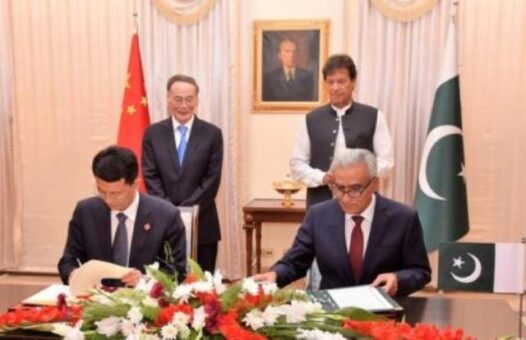
    ISLAMABAD: Pakistan and China have signed second phase of Free Trade Agreement (FTA) under which both the countries have agreed allowing duty free access to 313 tariff lines.

    Prime Minister Imran Khan and Chinese Premier Li Keqiang witnessed the signing ceremony at a meeting on the conclusion of the 2nd Belt and Road Forum (BRF) in Beijing, a statement said on Sunday.

    Officials at the ministry of commerce said that China had agreed to grant Pakistan duty free access same as give to ASEAN countries. They said that Pakistan and China had agreed on giving duty free access to around 75 percent tariff lines.

    The officials said that Pakistan would get duty free access to 313 tariff lines. This relaxation would help Pakistan to improve exports to China by $6.5 billion during next five years.

    They said that Pakistan would able to export duty free goods including textile, leather, agriculture, chemical, engineering, plastic, furniture etc.

    According to the commerce ministry protection to local industry was given priority in signing the free trade agreement. It is also agreed to put 1,700 tariff lines from China on sensitive list.

    The officials said that China imports around $40 billion annually those items from various countries, which Pakistan export to China. The agreement would help 90 percent Pakistani products accessing Chinese markets.

    Abdul Razak Dawood, Adviser to Prime Minister on Commerce, who is also in China, said that around 400 Chinese investors attended Pak-China Business Forum and they had shown interest to enter Pakistani market.

    He said that Pakistan and China had signed free trade agreement. Besides this agreement both the countries also signed 16 Memorandum of Understandings (MoUs) including agriculture, Information Technology, Chemical etc.

    He said that the free trade agreement would attract investors into Pakistan. Further Pakistan will get same benefits under free trade agreement what ASEAN countries are availing.

  • Second phase of Pak-China FTA signed; two premiers witness signing ceremony

    Second phase of Pak-China FTA signed; two premiers witness signing ceremony

    ISLAMABAD: The second phase of Pakistan China Free Trade Agreement (FTA) signed on Sunday, which was witnessed by the premiers of both the countries.

    Prime Minister Imran Khan and Chinese Premier Li Keqiang witnessed the signing ceremony at a meeting on the conclusion of the 2nd Belt and Road Forum (BRF) in Beijing, a statement said.

    The list of MoUs/Agreements signed/exchanged on the occasion is as follows:

    i. Second Phase of China Pakistan Free Trade Agreement

    ii. Declaration for Completion of Preliminary Design of Phase-I for Up-gradation of ML-1 and Establishment of Havelian Dry Port under CPEC

    iii. MoU on Cooperation in the field of Marine Sciences between the China Geological Survey (CGS), Ministry of Natural Resources of China, the Institute of Oceanography, Ministry of Science and Technology.

    iv. MoU between CIDCA and Ministry of Planning, Development and Reform on Implementation of the Projects under JWG of CPEC on Socio-Economic Development.

    v. China-Pakistan Economic and Technical Cooperation Agreement

    vi. Rashakai SEZ Joint Venture and License Agreement between KPEZMDC and CRBC.

    The two prime ministers were accompanied by ministers and senior officials.

    Both leaders reaffirmed the time-tested and strong friendship between Pakistan and China and exchanged views on the myriad facets of bilateral engagement.

    The prime minister extended felicitations to the Chinese leadership on the successful holding of the 2nd Belt and Road Forum (BRF).

    Noting the depth and breadth of the Belt and Road Initiative (BRI), the Prime Minister said it was of immense significance for the world in terms of connectivity and shared prosperity.

    The two sides exchanged views on bilateral collaboration in the context of CPEC and prospects of further deepening economic linkages.

    Prime Minister Imran Khan underscored the importance of CPEC for Pakistan’s economy and noted with satisfaction its expansion into new areas of development – including industrial development; livelihood projects; social uplift; and agriculture in line with the priorities of government.

    He hoped that Chinese investment in Specialized Economic Zones (SEZs) would expand Pakistan’s industrial base and assist in diversifying its export basket.

    Underlining the steady growth of bilateral cooperation since the Prime Minister’s last visit to China in November 2018, Premier Li Keqiang expressed satisfaction at the positive momentum of CPEC projects.

    He hoped that the conclusion of the Second Phase of China-Pakistan Free Trade Agreement (FTA), would give further boost to trade and economic relations between the two countries.

    The two sides agreed to further deepen the political, security, economic, education, science & technology, cultural, and people-to-people relations.

    It was agreed to maintain the existing momentum of high level exchanges between the two countries.

    The two leaders also exchanged views on regional issues including peace efforts in Afghanistan and peace and stability in South Asia.

    They also agreed to closely coordinate in their endeavors.

  • Inflation increases by 17.15pc for higher income group

    Inflation increases by 17.15pc for higher income group

    KARACHI: The prices of essential items has increased by 17.15 percent for higher income group above Rs35,000, according to weekly Sensitive Price Indicator (SPI) issued by Pakistan Bureau of Statistics (PBS).

    The PBS said that the inflation of the income group above Rs35,000 was increased by 17.15 percent by week ended April 25, 2019 as compared with same week a year ago.

    The PBS computes the weekly SPI with base 2007-08=100 covering 17 urban centres and 53 essential items for all income groups/quintiles and combined.

    The PBS calculates SPI for income groups included Rs8,000; between Rs8,001 – Rs12,000; Rs12,001-Rs18,000; Rs18,001-Rs35,000; and above Rs35,000. The average inflation for all income group increased by 12.91 percent by week ended April 25, 2018 as compared with corresponding week last year. However, the average inflation increased by 0.37 percent over the previous week ended Aril 18, 2019.

    During the week under review as compared with previous week, around 20 items registered increase in their prices. Some of these items are included: tomatoes, onions, potatoes, egg hen, bananas, pulse moong, sugar, pulse mash, garlic, pulse gram, tea prepared, mutton etc.

    However, 10 items registered decline in their prices during the week, which included: chicken farm, LPG cylinder 11-kg, wheat, wheat flour, firewood, red chillie, cooking oil, vegetable ghee etc.

    Average prices of 22 items remained unchanged during the week under review.

    According to PBS the SPI was increasing for the last four consecutive weeks. The SPI is major component for headline inflation i.e. Consumer Price Index (CPI). The movement of SPI sets the monthly CPI.

  • Imran Khan discusses IMF program with Christine Lagarde

    Imran Khan discusses IMF program with Christine Lagarde

    ISLAMABAD: Prime Minister lmran Khan met Ms. Christine Lagarde, Managing Director of International Monetary fund (IMF) on the sidelines of the belt and Road Forum, a statement received here on Friday from Beijing, China.

    The prime minister was assisted by Foreign Minister Makhdoom Shah Mahmood Qureshi, Adviser on Finance Dr. Abdul Hafeez Shaikh and Adviser on Commerce Abdul Razzaq Dawood.

    The meeting reviewed the relationship between Pakistan and the IMF.

    The prime minister identified the areas of reform and initiatives being undertaken by the government to stabilize the economy, control inflation and achieve fiscal balance.

    The two leaders agreed on the importance of the Fund programme and to work towards an agreement for which an IMF delegation is coming to Islamabad.

    The two sides also agreed on the need for a social safety net for the vulnerable groups of the society.

  • IMF team to visit Pakistan April 29

    IMF team to visit Pakistan April 29

    ISLAMABAD: A team of International Monetary Fund (IMF) will visit Pakistan starting April 29, 2019 to continue technical discussions for IMF supported program, spokesman of ministry of finance said on Friday.

    Dr. Khaqan Najeeb, Adviser and Spokesman, Ministry of Finance said that extensive preparation for data and macro economic framework finalization and structural reforms were going on.

    The finance ministry held in-depth discussions with all key stakeholders including State Bank of Pakistan, Power and Gas Division, Privatization Commission, Federal Board of Revenue and Benazir Income Support Program among others, he said.

  • Prime Minister, World Bank CEO discuss economic, fiscal situation

    Prime Minister, World Bank CEO discuss economic, fiscal situation

    ISLAMABAD: Prime Minister Imran Khan on Friday met Ms. Kristalina Georgieva, Chief Executive Officer (CEO) of the World Bank discussed economic and fiscal situation on the sidelines of the second Belt and Road Forum (BRF), says a press release received here from Beijing, China.

    The prime minister was accompanied by the foreign minister and adviser on finance and adviser on commerce.

    The prime minister informed CEO, World Bank of the recent steps taken by the government for improving the economic and fiscal situation in the country.

    He appreciated the role played by the World Bank in regional connectivity, poverty alleviation, financial management, provisional projects, DASU and other infrastructure projects and ease of doing business.

    The prime minister also informed the CEO about the socio-economic uplift measures taken up by the government and creation of “Ehsaas” social welfare programme.

    The CEO of the World Bank pledged to further strengthen cooperation with Pakistan in the areas of disbursements programme lending and guarantees provision for raising external funds.

  • Country’s foreign exchange reserves declines by $202 million

    Country’s foreign exchange reserves declines by $202 million

    Pakistan’s liquid foreign exchange reserves experienced a significant decline, falling by $202 million to $15.994 billion by the week ending April 19, 2019, compared to $16.196 billion just a week prior, according to a statement released by the State Bank of Pakistan (SBP) on Thursday.

    (more…)
  • Korea extends $500 million concessional loan to Pakistan

    Korea extends $500 million concessional loan to Pakistan

    ISLAMABAD: Pakistan and Korea signed a framework arrangement amounting to $500 million on Wednesday. The ceremony was witnessed by Dr. Abdul Hafeez Shaikh, Adviser to the Prime Minister on Finance, Revenue and Economic Affairs.

    Secretary, Economic Affairs Division, Noor Ahmed and Ambassador of the Republic of Korea, Kwak Sung-Kyu, signed the Framework Arrangement on behalf of their respective governments.

    Under the signed Framework Arrangement (2018-20), Republic of Korea will provide long term concessional financing up to $500 million for execution of various development projects in Health, Information Technology, Communication, Agriculture, and Energy etc.

    Earlier, the Ambassador called on the Adviser and discussed matters pertaining to enhancement of bilateral cooperation between the two countries.

    The Adviser informed the envoy that Pakistan attached significant importance to its ties with the Republic of Korea which had so many layers of cooperation with Pakistan in both public and private sectors.

    The Adviser appreciated the role and cooperation extended by the Republic of Korea for development projects in Pakistan.

    He said that the economic relations between the two countries would be further strengthened with the passage of time and Framework Arrangement will enable Pakistan to seek financing from Korean Exim Bank for development of various Infrastructure Projects in Pakistan.

    The Ambassador of the Republic of Korea hoped that this Framework Arrangement would be instrumental in backing up the economic policies and initiatives being pursued by the new Pakistani government.

    He said that the Arrangement would go a long way in further strengthening bilateral cooperation.

    He also said that Korea would extend all possible cooperation for economic development of Pakistan, which would be greatly conducive to promoting bilateral relations in the years ahead.

  • Pakistan, Iran agree to boost monetary, financial, commercial activities

    Pakistan, Iran agree to boost monetary, financial, commercial activities

    ISLAMABAD: Pakistan and Iran have agreed to enhance economic cooperation through boosting monetary, financial and commercial activities to their full potential by utilizing all available options.

    The joint statement issued on Monday after the meeting of Pakistan Prime Minister Imran Khan and President of Iran Dr. Hassan Rouhani, the both sides considering the increase in volume of trade between the two countries in 2018, the President of Iran and Prime Minister of Pakistan instructed relevant institutions and Ministries to devise all required mechanisms for boosting monetary, financial and commercial activities to their full potential by utilizing all available options.

    The two sides also decided to hold the 21st round of the Joint Economic Commission (JEC)in the second half of 2019 in Pakistan to deliberate further on these issues.

    Prime Minister Imran Khan paid a high-level visit to the Islamic Republic of Iran from 21-22 April 2019, on the invitation Dr. Hassan Rouhani, the President of the Islamic Republic of Iran.

    There has been regular exchange of leadership level visits between the two sides in recent years.

    While emphasizing historical, cultural, religious and civilizational ties between the two neighboring and Muslim countries, and highlighting the commitment of the senior officials of the two countries to expand relations in all areas of mutual interest, the two sides reiterated the importance of deepening and reinforcing bilateral ties based on principles of national interest, territorial integrity and mutual respect for national sovereignty.

    They called for swift implementation of bilateral agreements as a step towards realizing this important goal. Both sides highlighted that common borders should be the borders of peace and friendship, and acknowledged the necessity of forging regular cooperation and exchange of views between political, military and security officials of the two countries to combat threats such as terrorism, smuggling of narcotics, human trafficking, hostage-taking, money-laundering and abduction. It was also agreed that the 10th Round of the Special Security Committee of the two Ministries of Interior will be held in Islamabad in June 2019 to discuss these matters in detail.

    It was also agreed that the next meeting of the Joint Consular Commission would be held on 2nd half of 2019 to review the progress made so far and chart the way forward in further facilitating the movement of people from both sides.

    Pakistan side welcomed the initiation of the process for release of a number of Pakistani prisoners by the Government of Iran, and for making arrangements for their expeditious repatriation to Pakistan.

    President of the Islamic Republic of Iran and Prime Minister of the Islamic Republic of Pakistan agreed that enhancing and cementing cooperation between Iran’s Sistan-Balochistan Province and Pakistan’s Balochistan Province including opening of new border crossings and border markets would contribute towards improvement of the economic situation of local residents, and further constitutes a step towards resolving border challenges and insecurities.

    Both sides agreed to hold the 2nd Round of High Border Commission in Islamabad in May 2019 to review the current status of preparations and further measures required for the earliest opening of new crossing points at Gabd-Reemdan and Mand-Pishin, besides opening of new border markets.

    Both sides highlighted the necessity of extending cooperation in energy sector including export of electricity from Iran to Pakistan.

    Pakistani side extended its appreciation to the Government of the Islamic Republic of Iran for continuing electricity exports to Pakistan’s Balochistan Province. Reaffirming the importance of strong and historic socio-cultural and linguistic affinities between the two countries and their peoples.

    Both sides reaffirmed the need to further strengthen these bonds through promotion of academic, cultural and tourism activities, particularly by encouraging more frequent exchange of visits of intellectuals, folk artists, cultural troupes and by enhancing tourism to the historic religious sites in both countries.

    Prime Minister Imran Khan reaffirmed the support and solidarity of the government and people of Pakistan with the people of Iran over loss of precious human lives and material damages due to recent severe floods in Iran.

    Prime Minister of Pakistan expressed the conviction that the people of Iran would handle this natural calamity with their characteristic resilience. Iranian side expressed its gratitude to Pakistan for sending humanitarian assistance to the flood affected people in Iran. Both sides welcomed the signing of a declaration for cooperation in health sector aimed at bilateral technical assistance and experience sharing with tangible outputs.

    Both sides discussed and exchanged views on major regional and international issues, and asserted that peace, tranquility and sustainable development are prerequisite for enhancing relations, integrity and synergy among the West Asian countries.

    Both sides reaffirmed their commitment to the UN Charter and international law, in particular the principles of sovereign equality of states, political independence and non-interference in the internal affairs of States.

    The two sides reiterated the need for all States to adhere to the rule of law including at the international level. In this context, they expressed serious concerns over unilateral application of measures by any country that are inconsistent with the provisions of international law and the principles of UN Charter.

    The President of Iran and Prime Minister of Pakistan, referring to the necessity of establishing a safe, stable and independent Afghanistan for the sake of regional peace and stability, acknowledged the necessity of holding Afghan-led and Afghan-owned peace dialogue while calling upon regional countries and the international community to work collectively to end conflict and restore complete peace in the country.

    Both sides also agreed to join efforts for achieving a broader regional consensus in this regard. While condemning terrorism in all its forms and manifestations, both sides acknowledged the great achievements of the two countries in combating terrorism and emphasized that efforts to develop regional and international cooperation in preventing and countering terrorism should be redoubled and the root-causes of all types of terrorism in the region identified and addressed.

    Considering the importance of developing connectivity and transit corridors in order to accelerate and facilitate bilateral and regional cooperation and trade, both sides welcomed the implementation of bilateral and multilateral agreements including the Belt and Road Initiative (BRI) and China-Pakistan Economic Corridor (CPEC), as well as agreements on establishing the North–South and East–West corridors in Iran.

    The President of Iran and Prime Minister of Pakistan welcomed all dimensions of cooperation of the two countries with other states, particularly the six-party Speakers’ Conference in Tehran with the purpose of consolidating cooperation among the regional states.

    Both sides highlighted the need to resolve the issue of Jammu & Kashmir through dialogue and peaceful means based on the will of the people of that region and in line with the resolutions of the United Nations Security Council.

    The President of Iran and Prime Minister of Pakistan emphasized that the right of the people of Palestine to establish an independent and sovereign Palestinian state should be respected as the key demand of the Muslim states.

    Both sides also agreed to reinforce endeavors through regional and international arrangements and mechanisms to help Palestinians establish an independent state.

    Both sides stressed on swift and complete implementation of the Joint Comprehensive Plan of Action (JCPOA) by other states considering the full compliance of the Islamic Republic of Iran to its provisions.

    The Prime Minister of Pakistan expressed his appreciation to the President of the Islamic Republic of Iran for the warm and generous hospitality extended to the Pakistani delegation, and officially invited Dr. Hassan Rouhani to visit Pakistan at the earliest convenience.

    President of Iran accepted the gracious invitation. Dates for the visit will be worked out through diplomatic channels.