Category: Finance

Explore finance-related stories with Pakistan Revenue, your source for the latest updates on Pakistan’s economy, financial trends, and market insights. Stay informed with real-time economic developments.

  • Senior citizens allowed investment in national savings on expired CNICs

    Senior citizens allowed investment in national savings on expired CNICs

    KARACHI: The Central Directorate of National Savings (CDNS) has issued directives to its zonal offices, instructing them to follow the policy outlined by the central bank to facilitate older citizens aged 65 years and above in making investments using expired Computerized National Identity Cards (CNICs).

    (more…)
  • ECC may approve sovereign guarantee for Utility Stores Corporation

    ECC may approve sovereign guarantee for Utility Stores Corporation

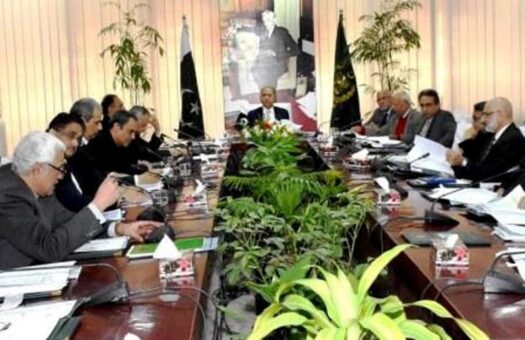
    ISLAMABAD: The Economic Coordination Committee of the Cabinet (ECC) may grant formal approval for sovereign guarantee for Utility Stores Corporation (USC) in its meeting scheduled for April 17, 2019.

    According to agenda of the ECC meeting scheduled for Wednesday, the ministry of industries and production had proposed for the sovereign guarantee for the public sector store chain in order to overcome its financial crisis.

    The USC is providing consumer items at low priced and subsidized rates to masses. The government has also approved an amount of Rs2 billion for Ramazan package to be provided to masses through the USC.

    In other agenda items, the ECC may approve an amount of Rs700 million in favour of National Commission for Human Development under the ministry of federal education and professional training.

    A supplementary grant of Rs337.02 million likely to be approved in respect of Gilgit-Baltistan Council for Financial Year 2018/2019.

    Provision of supplementary grant of Rs1.33 billion to department of immigration and passport likely to be approved.

    Further, on the recommendation of petroleum ministry, the ECC likely to approve utilization of Railways services by PSO for transportation of petroleum products.

  • IMF mission to visit Pakistan by end of April

    IMF mission to visit Pakistan by end of April

    KARACHI: An IMF mission will visit Pakistan by the end of April to continue discussions for new loan program, a statement said on Monday.

    It said that the Pakistani authorities and IMF staff held constructive discussions during the IMF/World Bank Spring Meetings in Washington DC towards an IMF-supported program.

    At the request of the authorities, an IMF mission will be going to Pakistan before the end of April to continue the discussions.

  • Sensitive price inflation grows by 12.02 percent

    Sensitive price inflation grows by 12.02 percent

    KARACHI: The prices of essential items have registered 12.02 percent growth by week ended April 11, 2019 as compared with corresponding week last year, according to data released by Pakistan Bureau of Statistics (PBS) on Monday.

    The Sensitive Price Indicator (SPI) based inflation has shown the increase with the average inflation for all income groups.

    The weekly data revealed that the inflation grew by 16.31 percent for income group above Rs35,000. While the SPI based inflation grew by 12.89 percent for the income group range between Rs18,001 – Rs35,000.

    Meanwhile, the inflation increased by 8.9 percent, 9.07 percent and 8.97 percent for income group up to Rs8,000, Rs8,001-Rs12.000 and Rs12,001 – Rs18,000, respectively.

    The PBS calculates the weekly SPI with base 2007-08=100 covering 17 urban centres and 53 essential items for all income groups/quintiles and combined has been computed.

  • AGP asked to conduct special audit of DRAP

    AGP asked to conduct special audit of DRAP

    ISLAMABAD: Auditor General of Pakistan (AGP) has been asked to conduct special audit of Drug Regulatory Authority of Pakistan (DRAP) for past five fiscal years.

    On the directives of Aamer Mehmood Kiani, Federal Minister for National Health Services, the health ministry had written a letter to AGP and requested to conduct the special audit of DRAP for the fiscal years 2012-2013 to 2017-2018, a statement said on Saturday.

    According to letter DRAP was established through DRAP Act promulgated on November 13, 2012.

    The Authority is mandated to regulate Allopathic, Homoeopathic, Unani and Herbal drugs, medical devices, medicated cosmetics etc.

    In view of its role that has a direct impact on the health and wellbeing of the people, the authority remains a subject of public scrutiny.

    DRAP receives continued media attention alleging irregularities and malpractices regarding diverse areas being dealt by the authority as per its mandate.

    It goes without saying that transparency and efficiency in functioning of the organization is of critical importance to meet the targets and ensure sustained availability of quality medicines to the masses.

    In view of the foregoing, to further instill public confidence in the authority, it is requested to conduct a Special Audit of DRAP for the period 2012-2013 to-date of the Pricing Mechanism to ascertain whether prices of drugs are determined justly, in accordance with the laid down policy and as per law.

  • CPEC to open new vistas of opportunities for entire region: Imran Khan

    CPEC to open new vistas of opportunities for entire region: Imran Khan

    ISLAMABAD: Prime Minister Imran Khan on Thursday said that China-Pakistan Economic Corridor (CPEC) project will open new vistas of opportunities for the entire region.

    The prime minister said that the government accords top priority to the CPEC project.

    He said: “The project will not only help in translating all weather Pak-China relations into mutually beneficial economic equation but will also open new vistas of opportunities for the entire region.”

    The prime minister was meeting with representatives of 15 leading Chinese companies working on various CPEC and other projects in Pakistan.

    The Chinese delegation included representatives from Power China, Three Gorges Corporation, CMEC Neelum Jhelum Power Plant Project, Cr-Norinco Orange Line Project, Huawei, Zong, Port Qasim Power Plant, China Gezhouba Corporation, China State Construction, China Harbour, Matiari-Lahore Transmission Line Project, Haier and other companies.

    Chinese Ambassador to Pakistan Yao Jing accompanies the delegation. Omar Ayub Khan, Minister for Power, Makhdoom Khusro Bakhtiar, Minister for Planning, Haroon Sharif, Chairman BOI, Nadeem Babar, Chairman Energy Task Force and other senior officials were also present.

    Talking to the Chinese delegation, the prime minister said that the government will provide all possible facilitation to the Chinese companies in undertaking profitable business ventures and taking advantage of business friendly policies of the present government.

    Chinese Ambassador while conveying greetings from Chinese President and Premier, said that Chinese leadership is looking forward to the visit of Prime Minister to China.

    He thanked the prime minister on behalf of Chinese leadership and business community for his personal interest in facilitating Chinese businessmen and addressing their issues.

    He assured the prime minister that Chinese companies will continue to partner with the government in socio-economic development of Pakistan.

  • forex reserves deplete by $169m to $17.228bn

    forex reserves deplete by $169m to $17.228bn

    Karachi – The foreign exchange reserves of Pakistan experienced a decline of $169 million, reaching $17.228 billion for the week ended April 5, 2019, according to the State Bank of Pakistan (SBP).

    (more…)
  • Trade deficit contracts by 13.02 percent to $23.67 billion in nine months

    Trade deficit contracts by 13.02 percent to $23.67 billion in nine months

    ISLAMABAD: Pakistan’s trade deficit has contracted by 13.02 percent during first nine months (July – March) 2018/2019 due to significant decline in import bill in the same period, according to trade data released by Pakistan Bureau of Statistics (PBS) on Wednesday.

    The trade deficit shrank to $23.67 billion during first nine months of current fiscal year as compared with the deficit of $27.21 billion in the corresponding period of the last fiscal year.

    The import bill during the first nine months was declined by 8 percent to $40.75 billion as compared with $44.28 billion in the same period of the last fiscal year.

    Experts said that the imposition of regulatory duty on luxury and non-essential items during the last budget and followed in the supplementary budget helped in curtailing import growth.

    However, growth in exports was remained flat. The exports were at $17.08 billion during the period under review as compared with $17.06 billion in the same period of the last fiscal year.

    The import bill sharply declined by 21 percent in the month of March 2019 to $4.15 billion as compared with $5.25 billion in the same month of the last fiscal year.

    On the other hand the exports also fell by 11.13 percent in the month under review. The exports exhibited decline of 11.13 percent decline to $1.98 billion in March 2019 as compared with $2.28 billion in the same month of last year.

    The reduction in import bill in March 2019 resulted in narrowed trade deficit for the month. The trade deficit was contracted by 28.07 percent to $2.17 billion in March 2019 as compared with $3.02 billion in March 2018.

  • Remittances increase to $16.1 billion in July – March

    Remittances increase to $16.1 billion in July – March

    KARACHI: Overseas Pakistani workers have remitted $16.1 billion during first nine months (July – March) 2018/2019 as compared with $14.8 billion in the same period of the last fiscal year, showing 8.74 percent growth.

    State Bank of Pakistan (SBP) on Wednesday said that during March 2019, the inflow of worker’s remittances amounted to US $1745.80 million, which is 10.73 percent higher than February 2019 and 3.20 percent lower than March 2018.

    The country wise details for the month of March 2019 show that inflows from Saudi Arabia, UAE, USA, UK, GCC countries (including Bahrain, Kuwait, Qatar and Oman) and EU countries amounted to US $405.87 million, US $378.14 million, US $271.11 million, US $281.26 million, US $167.80 million and US $44.20 million respectively compared with the inflow of US $427.62 million, US $424.89 million, US $247.17 million, US $258.96 million, US $183.79 million and US $58.91 million respectively in March 2018.

    Remittances received from Malaysia, Norway, Switzerland, Australia, Canada, Japan and other countries during March 2019 amounted to US $197.41 million together as against US $202.26 million received in March 2018.

  • Higher duties create anti-export bias: World Bank highlights constraints to Pakistan’s exporters

    Higher duties create anti-export bias: World Bank highlights constraints to Pakistan’s exporters

    KARACHI: World Bank has identified three main constraints that are directly affecting Pakistan exporters. These are the anti-export bias of its trade policy, the inadequate export promotion infrastructure, and an ambiguous regulatory framework around FDI.

    The World Bank said that many factors affect competitiveness in Pakistan.

    These include, among others, high costs of doing business, electricity availability at affordable costs, or access to finance.

    The World Bank pointed out constraints that high duties on imports create an anti-export bias, considerably reducing the ability of Pakistan’s firms to integrate into global markets.

    The structure of Pakistan’s taxes on imports displays two features that prevent firms from leveraging regional and Global Value Chains (GVCs) to sell Pakistan’s goods and services to the world, to increase productivity, and to create more and better jobs.

    “First, Pakistan’s import duties are high – with a marked escalation: the average difference between tariffs on final goods and raw materials was 10.4 percentage points in 2016, and between intermediate goods and for raw material it was of 2.2 percentage points.”

    The World Bank said that this creates an incentive for firms to focus on the local market, in which they enjoy higher profit margins due to the tariffs on the final goods, rather than innovating and venturing into competitive global markets.

    “In fact, the policy response to the increasing trade deficit has been to increase import duties, which further increases the anti-export bias,” the World Bank added.

    Second, duty suspension schemes for exporters that source intermediates from abroad work imperfectly. “It takes 60 days to get the scheme approved – double the time stipulated by law and clearing customs under the scheme takes between 5 to 10 days.”

    In addition, the complexity of securing the scheme approval is such that only 3 percent of textile and apparel exporters use it, it continued.

    Duty rebate schemes, instead, are more widely used – about 50 percent of textiles and apparel exporters use them, although more than half of the firms claim a waiting time of 250 days and more to receive the rebate.

    The second most important issue discussed by the World Bank, stating that export promotion infrastructure is not aligned with international good practices.

    Evidence collected through private sector consultations in Punjab, Sindh, Islamabad and Khyber Pakhtunkhwa also revealed that exporters lack support in terms of provision of export intelligence, which in other countries has effectively reduced the information frictions that new and small exporters face and that substantially increase their trade costs.

    This has been validated by a recent assessment of the main export promotion agency in Pakistan, the Trade Development Authority (TDAP), conducted by the International Trade Center (ITC).

    “ITC assesses the performance of TDAP at ‘below average’ in its latest benchmarking exercise of 2017, pointing to several challenges, including lack of support to value chain development, lack of client datasets, and client management systems, as well as lack of monitoring and evaluation frameworks for its interventions.”

    Indeed, the existing support focuses on participation in trade fairs for well-established export sectors (textiles and apparel), rather than focusing on connecting new or potential exporters with global buyers, that tend to have been more impactful, according to international evidence. “Inadequate export promotion interventions underlie the little diversification of Pakistan’s export bundle as well as the low entry rates into exporting observed in the data.”

    The World Bank said that the policy regime towards foreign direct investment increases the risks perceived by foreign firms.

    With global trade being structured around Global Value Chains, a country’s success in boosting exports is inextricably linked with its ability in attracting FDI. “Pakistan’s record in FDI inflows is lackluster, with inflows averaging 1.5 percent of GDP between 2005 and 2017, compared to 6.1 percent of GDP in Vietnam over the same period.”

    Part of the difficulties lie with the perception of security challenges in Pakistan, which discourages FDI inflows into the economy – indeed, an important challenge has been attracting clients or senior management from abroad to visit premises of multinationals in Pakistan.

    However, policies have not helped either.

    The investment regulatory framework shows inconsistencies between the Investment Law of 1976, which is relatively protectionist, and the Investment Policy of 2013, which is relatively more market friendly, although without the rank of a ‘law’.

    These inconsistencies create uncertainty among foreign investors, reducing their incentives to incur substantial largely irreversible investments, and further constraining the realization of export potentials in Pakistan, the World Bank said.

    The last fiscal year showed a record-high trade deficit in Pakistan, at USD 31.1 billion, contributing to a current account deficit of 6.1 percent of GDP.

    The observed trade deficit resulted from the combination of consumption-led growth, that fueled demand for imports, and mounting constraints to export competitiveness.

    Between 2005 and 2018, Pakistan’s merchandise exports rose from USD 16 billion to USD 23 billion, an increase of only 47 percent compared to an increase of 286 percent in Bangladesh, 563 percent in Vietnam or 193 percent in India.

    “Its exports have been concentrated in a few products with little sophistication like textiles, apparel and rice.

    “Its exporting firms remain small, when compared to those in peer countries, and there is little entry into and exit out of export activities.”