Category: Finance

Explore finance-related stories with Pakistan Revenue, your source for the latest updates on Pakistan’s economy, financial trends, and market insights. Stay informed with real-time economic developments.
  • Pakistan Records 30% Contraction in Trade Deficit in 8MFY24

    Pakistan Records 30% Contraction in Trade Deficit in 8MFY24

    Islamabad, March 1, 2024 – Pakistan has achieved a remarkable 30% contraction in its trade deficit during the first eight months (July – February) of the fiscal year 2023-24, according to data released by the Pakistan Bureau of Statistics (PBS) on Friday.

    (more…)
  • Pakistan’s Headline Inflation Hits 20-Month Low in February 2024

    Pakistan’s Headline Inflation Hits 20-Month Low in February 2024

    Karachi, March 1, 2024 – Pakistan’s headline inflation has reached a 20-month low in February 2024, according to analysts at Arif Habib Limited.

    (more…)
  • Pakistan Records $59 Million Drop in Weekly Forex Reserves

    Pakistan Records $59 Million Drop in Weekly Forex Reserves

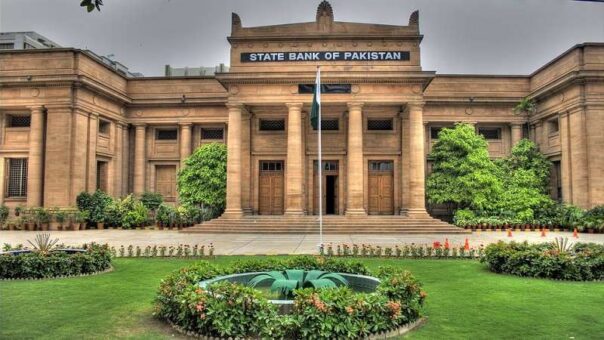
    Karachi, February 29, 2024 – The State Bank of Pakistan (SBP) reported a significant drop of $59 million in the country’s weekly foreign exchange reserves on Thursday.

    (more…)
  • Pakistan’s GDP Growth Turns Positive after Two Straight Negatives

    Pakistan’s GDP Growth Turns Positive after Two Straight Negatives

    Islamabad, February 29, 2024 – Pakistan’s Gross Domestic Product (GDP) has bounced back into positive territory, registering a growth of 2.1% in the first quarter of the fiscal year 2023-24, according to a report released by the Ministry of Finance on Thursday.

    (more…)
  • Govt’s Bank Borrowing Exceeds Rs 4 Trillion by Mid-February

    Govt’s Bank Borrowing Exceeds Rs 4 Trillion by Mid-February

    Karachi, February 28, 2024 – Alarming figures released by the State Bank of Pakistan (SBP) reveal that the government’s bank borrowing has surged beyond Rs 4 trillion by mid-February of the current fiscal year.

    (more…)
  • Weekly Inflation Rise Hits Pakistan Amidst Petroleum Price Hike

    Weekly Inflation Rise Hits Pakistan Amidst Petroleum Price Hike

    Islamabad, February 23, 2024 – Pakistan is grappling with a notable increase in weekly inflation, attributed to the recent surge in petroleum prices.

    (more…)
  • Pakistan Aims to Elevate Trade with Saudi Arabia to $20 Billion

    Pakistan Aims to Elevate Trade with Saudi Arabia to $20 Billion

    Islamabad, February 22, 2024 – In an ambitious move, Pakistan is setting its sights on boosting bilateral trade with Saudi Arabia to $20 billion in the coming years, according to statements made by Caretaker Federal Minister for Commerce and Industry, Gohar Ejaz, in Riyadh on Thursday.

    (more…)
  • Pakistan’s Weekly Forex Reserves Decline by $51 Million

    Pakistan’s Weekly Forex Reserves Decline by $51 Million

    Karachi, February 22, 2024 – Pakistan’s foreign exchange reserves experienced a weekly dip of $51 million, according to the State Bank of Pakistan (SBP) announcement on Thursday.

    (more…)
  • Pakistan Key Economic Indicators – February 20, 2024

    Pakistan Key Economic Indicators – February 20, 2024

    Karachi, February 20, 2024 – The Research Team of Topline Securities released the latest Key Economic Indicators for Pakistan on Tuesday, shedding light on various aspects of the country’s economic landscape.

    (more…)
  • Political Turmoil Threatens Pakistan’s Bid for IMF Financing: Fitch

    Political Turmoil Threatens Pakistan’s Bid for IMF Financing: Fitch

    Islamabad, February 19, 2024 – Fitch Ratings has raised concerns about Pakistan’s external position, stating that the recent closely contested elections and ensuing political uncertainty may hinder the country’s efforts to secure a crucial financing agreement with the International Monetary Fund (IMF).

    The existing Stand-By Arrangement (SBA), set to expire in March 2024, needs to be succeeded, and any delay or failure in negotiations could elevate external liquidity stress and increase the risk of default, the rating agency warns.

    Despite recent improvements in Pakistan’s external position, with the State Bank of Pakistan reporting net foreign reserves of $8 billion as of February 9, 2024, up from $2.9 billion on February 3, 2023, Fitch Ratings emphasizes that this is still relatively low compared to projected external funding needs. The agency estimates that Pakistan met less than half of its $18 billion funding plan in the first two quarters of the fiscal year ending June 2024, excluding routine debt rollovers.

    Securing financing from both multilateral and bilateral partners is deemed urgent for the next government, likely to be a coalition of the Pakistan Muslim League-Nawaz party and Pakistan People’s Party, despite strong performances by candidates associated with Imran Khan’s Pakistan Tehreek-e-Insaf (PTI) party in the election. Negotiating a successor deal to the SBA and adhering to its policy commitments will be crucial for attracting external financing, influencing the economic trajectory in the longer term.

    The road to finalizing a new IMF deal is expected to be challenging, with Fitch Ratings anticipating tougher conditions for any successor arrangement. The entrenched vested interests in Pakistan may resist these conditions, but the acute economic challenges and limited alternatives are believed to drive the negotiation process forward. While any government is expected to engage with the IMF relatively quickly, political instability could still pose risks by delaying assistance from other partners or hindering reform implementation.

    Fitch Ratings points out that Pakistan’s history with completing IMF programs has been less than stellar, with fewer than half of the 24 programs disbursing more than 75% of the available funding. However, there has been notable progress under the current SBA, and the agency suggests a stronger consensus within Pakistan on the need for reform, potentially facilitating the implementation of a successor arrangement.

    The agency also cautions that policy risks may rise again if external liquidity pressures ease due to initial reform successes or external factors such as a significant drop in oil prices. Pakistan’s external finances are expected to remain structurally weak until the development of a private sector capable of generating more export income, attracting foreign direct investment, or reducing import dependence.

    As political uncertainties persist and the government grapples with the challenging task of securing a new IMF deal, all eyes will be on Pakistan’s economic policies and the ability of its leadership to navigate these turbulent waters.