Category: Finance

Explore finance-related stories with Pakistan Revenue, your source for the latest updates on Pakistan’s economy, financial trends, and market insights. Stay informed with real-time economic developments.
  • ECC approves raising petroleum levy to Rs50 per liter on RON 95

    ECC approves raising petroleum levy to Rs50 per liter on RON 95

    ISLAMABAD: The Economic Coordination Committee (ECC) of the cabinet on Friday approved increasing petroleum levy to Rs50 per liter on RON 95.

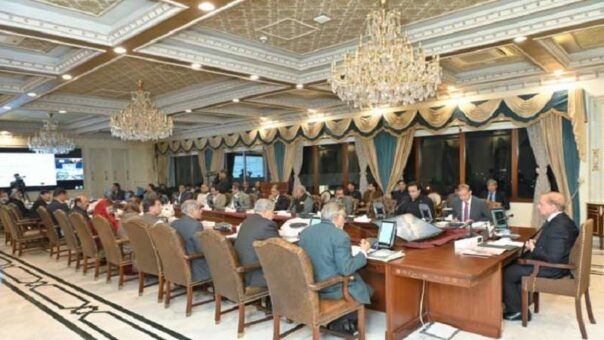
    Federal Minister for Finance and Revenue Senator Mohammad Ishaq Dar presided over the meeting of the ECC at Finance Division.

    READ MORE: Petroleum sales decrease by 22% in four months of 2022-2023

    Federal Board of Revenue (FBR) presented a summary on increase in rate of Sales Tax on HOBC. It was conveyed that the rates of Sales Tax on POL products were reduced to zero from February 01, 2022, that put pressure on FBR’s efforts to achieve its revenue targets.

    Therefore, the ECC after deliberation allowed to increase petroleum levy from Rs 30 up to Rs. 50/Liter on RON 95 and above with effect from November 16, 2022, which is a luxury good being consumed by wealthy consumers in expensive vehicles.

    READ MORE: K-Electric posts huge losses despite 144% jump in tariff adjustment revenue

    Federal Minister of Planning, Development and Special Initiatives Ahsan Iqbal, Federal Minister for Power Khurram Dastgir Khan, Shahid Khaqan Abbasi MNA/ex-PM, Minister of State for Finance and Revenue Dr. Aisha Ghous Pasha, Minister of State for Petroleum Musadik Masood Malik, SAPM on Finance Tariq Bajwa, SAPM on Revenue Tariq Pasha, Federal Secretaries, Chairman FBR and other senior officers attended the meeting.

    READ MORE: OGDCL announces huge oil discovery at Attock

    Ministry of energy (Petroleum Division) submitted a summary on High Speed Diesel/ Gas oil premium and informed that due to difference of premium on import of HSD for importing OMCs and PSO, there is an unsustainable position for importing OMCs and smooth supply of HSD in the country. In order to ensure sustained supply/import security, the ECC after detailed discussion allowed premium on HSD subject to maximum capping at US$ 15/BBL for importing OMCs other than PSO for the months of November and December, 2022.

    The ECC also approved Technical Supplementary Grants of Rs. 5 billion for conduct of 7th population census.

    READ MORE: Electricity withholding tax not applicable on ATL domestic consumers

  • Pakistan budget deficit widens by 43% in first quarter of 2022-2023

    Pakistan budget deficit widens by 43% in first quarter of 2022-2023

    ISLAMABAD: Pakistan budget deficit has widened by 43 per cent in the first quarter (July – September) of current fiscal year 2022-2023, according to official data released by the ministry of finance on Friday.

    The budget deficit of the country was 1 per cent of the GDP during the first quarter of the current fiscal year as compared with the deficit of 0.7 per cent in the corresponding quarter of the preceding fiscal year.

    READ MORE: Pakistan FX reserves rise to $14.69 billion after ADB transfer

    According to data the total revenue increased to Rs2.02 trillion during the quarter under review as compared with Rs1.81 trillion in the same quarter of the last year.

    The tax revenue rose to Rs1.78 trillion during July – September of the current fiscal year as compared with Rs1.53 trillion in the same period of the last year.

    READ MORE: Pakistan’s import restrictions help narrowing trade deficit by 27%

    Non-tax revenue however fell to Rs235 billion during the first quarter of the current fiscal year when compared with Rs276 billion in the same period of the last fiscal year.

    During the period under review expenditures of the country rose significantly to Rs2.83 trillion as compared with Rs2.25 trillion in the corresponding period of the last fiscal year.

    Out of total expenditures, the current expenditures grew sharply to Rs2.54 trillion during first quarter of the current fiscal year as compared with Rs1.97 trillion in the same quarter of the last fiscal year. The mark-up payment during the quarter under review also surged to Rs954 billion when compared with Rs623 billion in the corresponding quarter of the last year.

    READ MORE: Threshold of letter of credit payment increased to $100,000

    Defence spending increased to Rs313 billion during the first quarter of the current fiscal year as compared with Rs262 billion in the same period of the last fiscal year.

    The present government spent an amount of Rs220 billion on development projects during the quarter under review, which fell from Rs265 billion in the corresponding quarter of the last year.

    READ MORE: Headline inflation surges by 26.6% in October 2022

    Overall budget deficit recorded at Rs809 billion during the first quarter of fiscal year 2022-2023 when compared with the deficit of Rs438 billion in the same quarter of the last fiscal year.

    The size of GDP has been recorded at Rs78.197 trillion in July – September of the current fiscal year as compared with Rs66.95 trillion in the same period of the last fiscal year.

  • Pakistan FX reserves rise to $14.69 billion after ADB transfer

    Pakistan FX reserves rise to $14.69 billion after ADB transfer

    KARACHI: Pakistan foreign exchange reserves have increased by $1.527 billion to $14.69 billion by week ended October 28, 2022 after transfer of funds from Asian Development Bank (ADB).

    The country’s foreign exchange reserves increased to $14.689 billion by week ended October 28, 2022 as compared with $13.162 billion a week ago i.e. October 21, 2022, State Bank of Pakistan (SBP) said on Thursday.

    READ MORE: SBP’s weekly forex reserves dip by $157 million to $7.44 billion

    The ADB released the fund amounting $1.5 billion to Pakistan on October 26, 2022.

    The country’s foreign exchange reserves hit all-time high of $27.228 billion on August 27, 2021. Since then the foreign exchange reserves have declined by $12.539 billion.

    The official foreign exchange reserves of the State Bank also increased by $1.473 billion to $8.913 billion by week ended October 28, 2022 when compared with $7.44 billion a week ago.

    READ MORE: Pakistan’s weekly forex reserves increase nominally

    The foreign exchange reserves held by the central bank witnessed a record high at $20.146 billion by week ended August 27, 2021. Since then the official reserves of the SBP dropped by $11.233 billion.

    READ MORE: Pakistan’s forex reserves continue to fall; deplete to $13.25 billion

    Previously, the central bank received $1.16 billion from the International Monetary Fund (IMF) under Extended Fund Facility (EFF) program, which increased the official reserves to $8.8 billion. But scheduled repayment gradually depleted the official reserves of the central bank.

    READ MORE: Pakistan’s forex reserves decline to $13.59 billion

    The foreign exchange held by commercial banks witnessed an increase of $44 million to $5.766 billion by week ended October 28, 2022 as against $5.722 billion a week ago.

  • Pakistan’s import restrictions help narrowing trade deficit by 27%

    Pakistan’s import restrictions help narrowing trade deficit by 27%

    ISLAMABAD: Import restrictions imposed by Pakistan resulted in massive 27 per cent contractions in trade deficit during first four months (July – October) 2022/2023, according to official data released on Wednesday.

    The trade deficit narrowed to $11.47 billion during first four months of the current fiscal year as compared with the deficit of $15.62 billion in the corresponding months of the last fiscal year, Pakistan Bureau of Statistics (PBS) said.

    READ MORE: Pakistan import bill falls by 12.72% in 1QFY23

    The trade deficit contraction is largely sharp decrease in import bill of the country during the period under review. Import payment of the country were at $21.02 billion during July – October 2022/2023 as compared with $25.08 billion in the same period of the last fiscal year.

    The fall in import bill may be attributed to restrictions imposed by the government regarding opening of letter of credit. Recently, Finance Minister Ishaq Dar had announced to increase the threshold payment for LCs from $50,000 to $100,000. Industry sources said that due to scarcity of dollars in the market, most of the banks were not opening LCs for import payments.

    READ MORE: Pakistan trade deficit narrows by 17% in 2MFY23

    Exports of the country, however, grew with a small margin during the period. The exports recorded increase to $9.55 billion during first four months of the current fiscal year as compared with $9.46 billion in the same months of the last fiscal year.

    The trade deficit recorded a contraction of 42 per cent in the month of October 2022 when compared with same month of the last year. The trade deficit fell to $2.26 billion in October 2022 when compared with the deficit of $3.9 billion in the same month of the last year.

    READ MORE: Pakistan’s trade deficit narrows by 18% in July 2022

    The import bill plummeted by 27 per cent to $4.63 billion in the month of October 2022 when compared with $6.37 billion in the same month of the last year.

    On the other hand, exports also fell by 3.77 per cent to $2.37 billion in the month under review as compared with $2.46 billion in the corresponding month of the last year.

    READ MORE: Pakistan’s import bill records over $80 bn in 2021/2022

  • Headline inflation surges by 26.6% in October 2022

    Headline inflation surges by 26.6% in October 2022

    ISLAMABAD: The headline inflation based on Consumer Price Index (CPI) registered an increase of 26.6 per cent in the month of October 2022, according to data released by Pakistan Bureau of Statistics (PBS) on Tuesday.

    The details showed that CPI inflation general increased to 26.6 per cent on a year-on-year basis in October 2022 as compared to an increase of 23.2 per cent in the previous month and 9.2 per cent in October 2021. On a month-on-month basis, it increased to 4.7 per cent in October 2022 as compared to a decrease of 1.2 per cent in the previous month and an increase of 1.9 per cent in October 2021.

    READ MORE: Pakistan’s headline inflation rises 23.2% in September 2022

    CPI inflation Urban, increased to 24.6 per cent on year-on-year basis in October 2022 as compared to an increase of 21.2 per cent in the previous month and 9.6 per cent in October 2021. On month-on-month basis, it increased to 4.5 per cent in October 2022 as compared to a decrease of 2.1 per cent in the previous month and an increase of 1.7 per cent in October 2021.

    CPI inflation Rural, increased to 29.5 per cent on year-on-year basis in October 2022 as compared to an increase of 26.1 per cent in the previous month and 8.7 per cent in October 2021. On month-on-month basis, it increased to 5.0 per cent in October 2022 as compared to an increase of 0.2 per cent in the previous month and an increase of 2.2 per cent in October 2021.

    READ MORE: Pakistan’s headline inflation hits 47-year high in August 2022

    Sensitive Price Indicator (SPI) inflation on YoY increased to 24.0 per cent in October 2022 as compared to an increase of 28.6 per cent a month earlier and an increase of 15.3 per cent in October 2021. On MoM basis, it decreased by 1.5 per cent in October 2022 as compared to a decrease of 1.4 per cent a month earlier and an increase of 2.1 per cent in October 2021.

    READ MORE: Pakistan inflation hits 14-year high at 25% in July

    Wholesale Price Index (WPI) inflation on YoY basis increased to 32.6 per cent in October 2022 as compared to an increase of 38.9 per cent a month earlier and an increase of 21.2 per cent in October 2021. On MoM basis, it decreased by 0.5 per cent in October 2022 as compared to an increase of 1.4 per cent a month earlier and an increase of 4.2 per cent in corresponding month i.e. October 2021.

    READ MORE: Pakistan inflation crosses 33% on high petroleum prices

  • Threshold of letter of credit payment increased to $100,000

    Threshold of letter of credit payment increased to $100,000

    ISLAMABAD: The government has increased payment threshold of letter of credits from present $50,000 to $100,000, Finance Minister Ishaq Dar said on Monday.

    Briefing media here on Monday, Minister for Finance Senator Ishaq Dar announced the government’s decision to increase the threshold of letters of credits (LCs) payments from $50,000 to $100,000.

    With respect to pending cases of LCs, Ishaq Dar said that last month there were about 8,000 pending payments of LCs, out of which 4,400 cases of up to $50,000 had already been cleared while now after the government’s decision of increasing the threshold up to $100,000, 1,365 more cases would be cleared.

    “I met with the Governor Sate Bank of Pakistan (SBP) in Karachi on Sunday, and with the consent of SBP, the government has approved increase of the threshold up to $100,000”, he added.

    He said the decision would be implemented from November 1, 2022.

    The government has also decided to keep the prices of petroleum products unchanged for first half of November 2022 besides extending the last date for filing of tax returns.

    “The government has decided to keep the prices of Petrol, High Speed Diesel, Light Diesel, and Kerosene Oil unchanged for for next 15 days”, Ishaq Dar said.

    Further the minister said that today [October 31] was the last date for filing income tax returns, however on the request of representations of tax bar association and the business community, the government has decided to extend the date for one month up to November 30.

  • Pakistan flood rehabilitation poses challenge to fiscal consolidation

    Pakistan flood rehabilitation poses challenge to fiscal consolidation

    ISLAMABAD: Catastrophic flood in Pakistan has required rehabilitation and massive expenditures which will pose significant challenge for fiscal consolidation, the ministry of finance said on Sunday.

    In the monthly Economic Update and Outlook October 2022 released by the ministry of finance said that on the other hand, growth prospects have weakened, along with contained economic activities and low demand will impact on resource mobilization. Thus, current fiscal year is moving with challenges, seeking balance policy mix for stabilization.

    READ MORE: ECC approves grant for salary disbursement to PSM employees

    In the long run, sound fundamentals and a healthy growing economy, a significant raise is required in gross fixed capital formation instead on consumption. This will increase the National Income significantly. Further, there is need to enhance the productive capacity and productivity in each sector to substitute imports by domestic production and provide more supply capacity to the foreign markets, the report added.

    The trade balance of Pakistan is expected to improve in the coming months on account of import contraction due to a deceleration in domestic economic activities and aggregate demand.

    READ MORE: Headline inflation likely to increase 22.7% in October 2022

    “Overall economic outlook shows an optimistic picture of the economic performance in the coming months. The Consumer Price Index (CPI) inflation is declining, rupee has gained stability, current account balance is on improving trend. These development indicate that economic activity will remain positive and persistent in coming months”, the report added.

    It said for the future path of inflation, the exchange rate is of utmost importance. Moderating inflation also contributes to exchange rate stability, which in the benign case may generate a virtuous inflation-exchange rate cycle. Further, the exchange rate stability requires sound economic fundamentals.

    Besides inflation, also a manageable current account deficit and guaranteed financing of this deficit by healthy financial inflows are required. When markets get convinced about these prospects, speculative bubbles in the exchange market would be highly unlikely.

    In the baseline short to medium run, helped by sound domestic fiscal and monetary policies, the current account deficit is expected to reduce. A major risk factor, though, relates to the necessary imports to absorb the devastating consequences of the floods. However, downward revision of Pakistan’s main trading partners’ outlook may have a downside risk for exports in coming months.

    READ MORE: SBP’s weekly forex reserves dip by $157 million to $7.44 billion

    The report added that the provisional net tax collection in September FY2023 stood at Rs 684.8 billion against Rs 534.0 billion in the same month of last year, posting a growth of 28.2 per cent. Thus, the first quarter of the current fiscal year ended up with a growth of 17 per cent with a net tax collection of Rs 1633.9 billion against Rs 1396.4 billion in the comparable period of last year.

    Similarly, the target for the first quarter has also been surpassed by Rs. 24.4 billion.

    The fiscal deficit during July-August FY2023 has been recorded at 0.9 per cent of GDP (Rs.672 billion) against the deficit of 0.7 per cent of GDP (Rs.462 billion) in the same period of last year. While the primary balance posted a deficit of Rs.90 billion (-0.1 per cent of GDP) in July-August FY2023 against the deficit of Rs 37 billion (-0.1 per cent of GDP) in the comparable period of last year.

    The Current Account posted a deficit of $ 2.2 billion for July-September of current fiscal year as against a deficit of $ 3.5 billion last year, mainly due to increase in exports and contraction in imports.

    Pakistan’s total liquid foreign exchange reserves increased to $ 14.6 billion on October 26, 2022, with the SBP’s reserves now stood at $ 8.9 billion. Commercial banks’ reserves remained at $ 5.7 billion.

    READ MORE: SBP receives $1.5 billion from Asian Development Bank

    According to FCA, the production of Sugarcane decreased by 7.9 percent to 81.6 million tonnes from 88.7 million tonnes of last year’s production, the report said adding that rice production declined by 40.6 percent to 5.5 million tonnes over last year’s production of 9.3 million tonnes.

    Maize production decreased by 3.0 percent to 9.2 million tonnes compared to 9.5 million tonnes last year. The cotton production declined by 24.6 percent to 6.3 million bales from 8.3 million bales last year. The wheat production target for upcoming Rabi 2022-23 is fixed to the tune of 28.370 million tonnes from an area of 9.3 million acres.

    With respect to inflation, the report said it can be expected that YoY CPI inflation in the month of October will maintain its declining tendency observed in September. It is expected that CPI inflation will remain in the range of 21-22.5 per cent.

  • Headline inflation likely to increase 22.7% in October 2022

    Headline inflation likely to increase 22.7% in October 2022

    KARACHI: Headline inflation based on Consumer Price Index (CPI) likely to increase by 22.7 per cent Year on Year (YoY) in October 2022.

    Analysts at Arif Habib Limited expect that October 2022  inflation to settle at 22.7 per cent YoY compared to 9.91 per cent in October 2021 and 23.18 per cent in September 2022, respectively.

    READ MORE: Pakistan’s headline inflation rises 23.2% in September 2022

    With this, average inflation for first four months of the fiscal year 2022-2023 clocks-in at 24.5 per cent compared to 8.73 per cent in the same months of the previous fiscal year.

    The YoY uptick in CPI will likely be led by Food (33.3 per cent YoY), Transport (50.1 per cent YoY), Housing (1.2 per cent YoY), Restaurants & Hotels (30.6 per cent YoY), Household Equipment (25.9 per cent YoY), Recreation & Culture (24.8 per cent YoY), Clothing & Footwear (17.9 per cent YoY) and Miscellaneous (24.7 per cent YoY).

    On a Month on Month (MoM) basis, CPI reading is expected to increase 1.5 per cent. This month we expect MoM inflation to remain under pressure mainly on the back of surge in prices of Food items.

    READ MORE: Pakistan’s headline inflation hits 47-year high in August 2022

    The Food Index is expected to post an increase of 3.3 per cent MoM in October 2022.

    As per Sensitive Price Index (SPI) data published by the Pakistan Bureau of Statistics (PBS), increase in average prices of wheat, onions, tomatoes and tea will keep the inflation in-check.

    On the contrary, the transportation index is likely to post a decline of 3.9 per cent MoM on account of cut in domestic petroleum product prices.

    Moreover, Housing index is expected to post marginal increase of 0.2 per cent MoM, despite quarterly house rent adjustment, mainly due to decline in LPG prices.

    READ MORE: Pakistan’s sensitive price inflation surges by 45%

    Headline inflation remains elevated while core inflation continues its upward trajectory. However, with high base-effect kicking-in, headline numbers are expected to come down.

    On the monetary policy front, the State Bank of Pakistan (SBP) in its latest monetary policy meeting held on Oct 10th, 2022 kept the benchmark policy rate unchanged at 15 per cent.

    As per the SBP, this current stance was taken in lieu of a continued deceleration in economic activity as well as a decline detected in headline inflation since the last meeting.

    Moreover, the MPC was of the view that the existing rate prudently strikes a balance between maintaining growth post floods and managing inflation.

    READ MORE: Pakistan’s sensitive price inflation surges by 37.67%

  • ECC approves grant for salary disbursement to PSM employees

    ECC approves grant for salary disbursement to PSM employees

    ISLAMABAD: Economic Coordination Committee (ECC) of the Cabinet on Thursday approved a grant for disbursement of Rs1.38 billion of projected salary to employees of Pakistan Steel Mills (PSM).

    The ECC considered and approved a summary of Ministry of Industries & Production (MoIP) and allowed the payment of projected net salary of Rs1.378 billion for the Financial Year 2022-2023 to be disbursed every month to Pakistan Steel Mills (PSM) employees through a technical supplementary grant.

    READ MORE: ECC approves clearance of banned items landed till August 18, 2022

    This decision will ensure the disbursement of monthly salaries to the employees.

    This was approved in ECC of Cabinet meeting Chaired by Federal Minister for Finance and Revenue Senator Mohammad Ishaq Dar.

    Federal Minister for National Food Security and Research Chaudhary Tariq Bashir Cheema, Federal Minister for Commerce Syed Naveed Qamar, Federal Minister for Power Khurram Dastgir Khan, Federal Minister for Industries and Production Makhdoom Syed Murtaza Mehmood, Shahid Khaqan Abbasi MNA/ex-PM, Minister of State for Petroleum Musadik Masood Malik, SAPM on Finance Tariq Bajwa, Coordinator to PM on Commerce and Industry Rana Ihsan Afzal, Federal Secretaries and senior officers attended the meeting.

    READ MORE: USC to disburse ration bags worth Rs540 million to flood victims

    Ministry of Commerce presented a summary on amendment in Import Policy Order 2022 to allow import of the Holy Quran subject to NOC from the relevant Federal or the Provincial Authority.

    The summary was presented in the light of the directions of the honourable Lahore High court and Baluchistan High court directing the Federal and Provincial authorities to ensure only error-free printing, publishing, recording and import of copies of the Holy Quran. The proposed amendment of import of the Holy Quean was subject to NOC. The ECC after discussion approved the proposal.

    The ECC also approved another summary of Ministry of Commerce seeking amendment in the earlier decision of the ECC dated 25-07-2022 on Regionally Competitive Energy Rates for Export Oriented Sectors during FY 2022-23 and allowed amendment that “the electricity tariff will be effective from 1st August, 2022, whereas RLNG tariff will be effective from 1st July, 2022.”

    READ MORE: Pakistan State Oil gets Rs30 billion to avoid default

    The ECC considered a summary of Petroleum Division and allowed to grant a Development and Production Lease (D&PL) for (15) fifteen years w.e.f 15-01-2022 over Kandhkot Mining Lease area on existing Gas Price and subject to the condition that M/s PPL will pay all the financial obligations in accordance with Petroleum Policy 2012.

    Kandhkot discovery was made by PPL in 1959. The Government granted the mining lease over Kandhkot Gas field for a period of 30 years in 1962 which was renewed for further thirty years in 1992.

    Petroleum Division submitted another summary on revival of revoked petroleum exploration licenses. It was informed that (11) eleven exploration licenses were revoked due to non performance of work commitment and non-payment of financial obligations by various exploration & production companies.

    In all the eleven blocks, status quo order was passed by the respective Civil Courts, Islamabad and Sindh High Courts. It is pertinent to mention that the litigant companies have approached the government and shown keen interest in exploration of the blocks awarded. In order to resolve this longstanding issue of litigation, which has resulted in halting of exploration and production activities in some of the respective blocks of the country, Petroleum Division has developed a framework for revival of revoked licenses through out of court settlement.

    The ECC after detail discussion approved the proposed framework.

    READ MORE: Pakistan decides to lift ban on imported goods

    The ECC approved another summary of Petroleum Division for change of effective control from M/s Eni ULX Limited, M/s Eni UK Limited and M/s Eni Oil Holdings B.V, in respect of its subsidiary companies i-e M/s ENI Pakistan Limited , ENI

    Pakistan (AEP) Limited and ENI Pakistan (M) Limited , respectively to M/s Prime International Oil & Gas Company Limited (PIOGCL) subject to condition that PIOGCL shall be liable to the Government for all the minimum work commitments and financial obligations and Government’s revenue s will not be adversely affected after this change of effective control.

    Ministry of National Health Services, Regulations and Coordination presented a summary on proposal for increase in Maximum Retail Price (MRPs) of Paracetamol products. The ECC approved following agreed price of Paracetamol products.

    DescriptionProduct Current Price (Rs.)Demand Price (Rs.)Agreed Price (Rs.)
    Plain 500mg1.872.672.35
    Extra 500mg2.193.322.75
    Liquid104.8117.6117.6

    The ECC also approved Technical Supplementary Grants of Rs. 30,888.5 million in favour of Defence Division and Rs. 1000 Million for Ministry of Housing and Works.

  • SBP’s weekly forex reserves dip by $157 million to $7.44 billion

    SBP’s weekly forex reserves dip by $157 million to $7.44 billion

    KARACHI: The official weekly foreign exchange reserves of the State Bank of Pakistan (SBP) fell by $157 million to $7.44 billion by week ended October 21, 2022, the central bank said on Thursday.

    The official foreign exchange reserves of the SBP were at $7.597 billion a week ago i.e. October 14, 2022.

    READ MORE: Pakistan’s weekly forex reserves increase nominally

    The central bank attributed the decline to external debt repayments.

    SBP however said it h ad received $1.5 billion from Asian Development Bank (ADB) in value on October 26, 2022 as disbursement of loan for the Government of Pakistan. These proceeds will be reflected in SBP reserves for the week ending October 28, 2022.

    READ MORE: Pakistan’s forex reserves continue to fall; deplete to $13.25 billion

    The foreign exchange reserves held by the central bank witnessed a record high at $20.146 billion by week ended August 27, 2021. Since then the official reserves of the SBP dropped by $12.706 billion.

    Previously, the central bank received $1.16 billion from the International Monetary Fund (IMF) under Extended Fund Facility (EFF) program, which increased the official reserves to $8.8 billion. But scheduled repayment gradually depleted the official reserves of the central bank.

    READ MORE: Pakistan’s forex reserves decline to $13.59 billion

    The total foreign exchange reserves of the country fell by $89 million to $13.162 billion by week ended October 21, 2022 as compared with $13.251 billion a week ago.

    The country’s foreign exchange reserves hit all-time high of $27.228 billion on August 27, 2021. Since then the foreign exchange reserves have declined by $14.066 billion.

    The foreign exchange held by commercial banks witnessed an increase of $68 million to $5.722 billion by week ended October 21, 2022 as against $5.654 billion a week ago.

    READ MORE: State Bank’s forex reserves shrink to $8 billion