Category: Finance

Explore finance-related stories with Pakistan Revenue, your source for the latest updates on Pakistan’s economy, financial trends, and market insights. Stay informed with real-time economic developments.

  • Donald Blome visits Karachi to support US-Pakistan trade ties

    Donald Blome visits Karachi to support US-Pakistan trade ties

    KARACHI: The U.S. Ambassador Donald Blome visited Karachi on Saturday to support the US-Pakistan trade ties and further strengthen the economic partnership and bilateral trade.

    During the visit, U.S. Ambassador met with the Federal Minister for Maritime Affairs, the Chief Ministers of Balochistan and Sindh, the Administrator of Karachi, the Commander of Pakistan Navy Pakistan Fleet (COMPAK), government officials, financial and business leaders, trade and energy executives, and other business and commercial representatives.

    Donald Blome said that, “I am glad to be back in Karachi, a financial and commercial hub with tremendous energy.”

    He added that, “this year marks the 75th anniversary of U.S.-Pakistan bilateral relations and I look forward to strengthening U.S.-Pakistan partnerships in trade, investment, clean energy, health, security, education, and other mutually beneficial priority areas.”

    READ MORE: US calls for strengthening bilateral trade with Pakistan

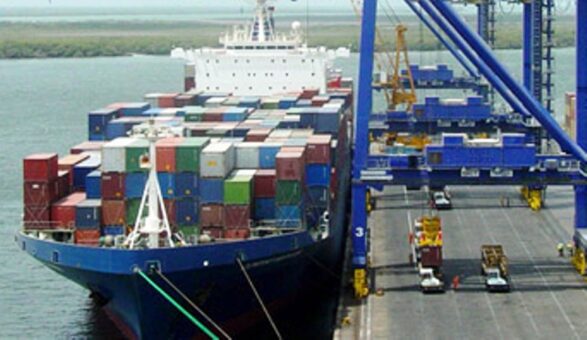
    Ambassador Blome visited Port Qasim and met with Federal Minister for Maritime Affairs Faisal Subzwari.  The Ambassador expressed interest in how the United States can work with Pakistan to develop more linkages with U.S. port and maritime institutions.

    In the Ambassador’s meetings with Balochistan Chief Minister Abdul Quddus Bizenjo and Sindh Chief Minister Murad Ali Shah, he discussed political, economic, and security matters, as well as the ongoing relief efforts to address the tragic impact of the recent floods in both provinces.

    In his meeting with Sindh Chief Minister Shah, Ambassador Blome announced the United States is providing a new $1 million grant to build the resilience of agricultural communities in Sindh Province, and support Pakistan’s disaster management authorities in Sindh, Khyber Pakhtunkhwa, and Gilgit-Baltistan provinces, to better respond to future disasters.

    Ambassador Blome and Karachi Administrator Murtaza Wahab discussed the impact of flooding and other challenges in the city, as well as opportunities for growth including in the information technology sector.

    READ MORE: US Treasury sanctions virtual currency mixer Tornado Cash

    During the Ambassador’s meeting with COMPAK Vice Admiral Ovais Bilgrami, he further discussed relief efforts in flood-stricken areas and affirmed the importance of the U.S.-Pakistan military relationship and the desire to strengthen and expand our ongoing security cooperation.

    Ambassador Blome met with CEO of Cargill Pakistan Imran Nasrullah. The Ambassador also toured Excelerate’s floating storage and regasification unit at Port Qasim to emphasize our mutual interest in seeing Engro and Excelerate’s LNG joint venture succeed in Pakistan.

    He met other U.S and Pakistani business leaders to show his commitment to promoting U.S. business and investment in Pakistan through a wide range of effective services, products, and programs.

    The U.S. government is dedicated to expanding the ties between the Pakistani and American people to promote a more stable, secure, and prosperous future for both our nations.  Bilateral trade reached nearly $9 billion in 2021.

    READ MORE: Toyota Motors suspends production at Tsutsumi plant

    The United States is Pakistan’s largest single country export market and one of the largest sources of foreign investment, with U.S. direct investment growing by 50 percent in the past year.

    U.S. companies and their local affiliates are among Pakistan’s largest employers, with roughly 80 U.S. companies directly employing more than 125,000 Pakistanis, and more than one million Pakistanis employed indirectly. In 2021, U.S. firms invested up to $5.7 million in corporate social responsibility initiatives in Pakistan.

    One of the highlights of Ambassador Blome’s time in Karachi was a visit to the Lincoln Corner Karachi at Liaquat Memorial Library where he inaugurated the StartUp Lab! along with Minister of Sindh for Education, Culture, Tourism, Antiquities and Archives, Syed Sardar Ali Shah.

    “The StartUp Lab! is unique and a one-of-a-kind space in Pakistan where aspiring entrepreneurs with an idea for a startup business can turn ideas into reality using the latest technology and equipment for free,” noted Ambassador Blome.

    READ MORE: Xiaomi further improves rank to 266 in Fortune Global 500 list

    Ambassador Blome said, “The people-to-people ties between the United States and Pakistan are among our greatest strengths.  We are proud to partner with the Culture Department of Sindh to ensure young Pakistanis are prepared to face 21st century challenges.”

    The Lincoln Corner Karachi is one of 18 in the U.S. Mission to Pakistan’s network of American Spaces nationwide that offer free educational and cultural programs, as well as technology and information resources, to young Pakistani leaders.

    Ambassador Blome also visited Frere Hall in Karachi to appreciate its architecture and murals.  There, he was given a tour by representatives of NGO Sindh Exploration and Adventure Society (SEAS), Dr. Asma Ibrahim and Dr. Kaleemullah Lashari.

    SEAS received in 2021 a grant from the U.S. Ambassadors Fund for Cultural Preservation (AFCP) to renovate portions of Frere Hall.  This AFCP project further demonstrates our respect for Pakistan’s rich cultural heritage.

    In celebration of Pakistan’s National Minority Day, the Ambassador was honored to meet religious minority community leaders in Karachi to promote interfaith cooperation, religious tolerance, and diversity.

    He also visited the Mausoleum of the founder of Pakistan Quaid-e-Azam Muhammad Ali Jinnah and laid a wreath in honor of the founding father of Pakistan, ahead of Pakistan’s 75th Independence Day.

    Ambassador Blome said that, “It is a great honor to be here at the Mazar-e-Quaid to pay my respects and commemorate the legacy of Muhammad Ali Jinnah.  The United States shares Quaid-e-Azam’s vision of a unified Pakistan, at peace with itself and its neighbors, a Pakistan of religious tolerance, economic prosperity, and social inclusion.”

  • Pakistan, Türkiye sign preferential trade agreement

    Pakistan, Türkiye sign preferential trade agreement

    ISLAMABAD: Pakistan and Türkiye Friday signed the Preferential Trade Agreement (PTA) for enhancing trade in goods between the two countries.

    Prime Minister Shehbaz Sharif witnessed the signing of the PTA at a ceremony held at the PM Office, as the visiting Turkish Trade Minister Dr Mehmet Mus and Minister for Commerce Syed Naveed Qamar signed the accord.

    READ MORE: Banks not issuing forms for land trade with Turkey: FPCCI

    Commonly known as Trade in Goods Pact, the PTA includes comprehensive provisions on bilateral safeguards, balance of payment exceptions, dispute settlement, and periodic review of the agreement. Prime Minister in his remarks termed the agreement “a great moment and a milestone” in the brotherly and historic relations between Pakistan and Türkiye. He recalled that following his official visit to Türkiye in May, the untiring efforts of the ministries of both sides resulted in the signing of the agreement.

    READ MORE: Turkey eases COVID restriction for Pak travelers

    He said immense business opportunities existed between the two countries and expressed confidence that the accord would further explore the trade avenues in diverse sectors.

    The prime minister said Pakistan would continue to work with Türkiye on strengthening bilateral ties.

    Trade Minister Dr Mehmet Mus said the occasion marked a significant milestone which would contribute in a long way to further strengthening and expansion of trade ties.

    READ MORE: Ten-day quarantine must for Pakistanis arriving Turkey

    He said meeting expectations of all stakeholders was not easy, however added that dedication and step-by-step measures led to conclusion of the accord.

    He thanked PM Shehbaz Sharif for his leadership to seal the agreement for the betterment of the two countries and enhancing linkages between their business communities.

    The key highlights of the trade concessions offered by both sides under the agreement are as follows: (i) Türkiye had offered concessions to Pakistan on 261 Tariff Lines, which include key items of Pakistan’s export interest to Türkiye from both agriculture and the industrial sectors.

    READ MORE: Pak-Turkey agree to strengthen cooperation

  • Pakistan’s reserves plunge 43-month low to $13.56 billion

    Pakistan’s reserves plunge 43-month low to $13.56 billion

    KARACHI: Pakistan’s foreign exchange reserves have declined 43-month low at $13.56 billion by week ended August 05, 2022.

    The foreign exchange reserves of country fell by $648 million as those were $14.21 billion a week ago i.e. July 29, 2022, the State Bank of Pakistan (SBP) said on Thursday.

    READ MORE: Pakistan’s foreign reserves dip to $14.21 billion

    Pakistan’s foreign exchange reserves were seen at $13.597 billion on January 2019.

    The country’s foreign exchange reserves hit all-time high of $27.228 billion on August 27, 2021. Since then the foreign exchange reserves have declined by $13.668 billion.

    The official reserves of the State Bank also fell by $556 million to $7.83 billion by week ended August 5, 2022 as compared with $8.386 billion a week ago.

    READ MORE: Pakistan forex reserves deplete to $14.42 billion

    The SBP attributed the decline in foreign exchange reserves to external debt repayments.

    It is pertinent to mention that the SBP received about $2.3 billion from Chinese banks for buildup of foreign exchange reserves. However, despite receiving the amount the external debt payment kept the pressure on the reserves.

    Further, the country is in negotiation with the IMF for release of next tranche under Extended Fund Facility (EFF) to boost its foreign exchange reserves.

    READ MORE: Pakistan’s forex reserves decline to $15.24 billion

    The foreign exchange reserves held by the central bank witnessed a record high at $20.146 billion by week ended August 27, 2021. Since then the official reserves of the SBP declined by $12.316 billion.

    The commercial banks held foreign exchange witnessed a decline of $92 million to $5.731 billion by week ended August 05, 2022 when compared with $5.82 billion a week ago.

    READ MORE: Pakistan’s forex reserves drop to $15.61 billion

    The sharp decline in foreign exchange reserves has resulted in free-fall of rupee value.

    The local currency ended historic low of Rs239.94 to the dollar at closing of interbank foreign exchange market on July 28, 2022. However, on the hope of inflows from the IMF and improved indicators the rupee rebounded in the month of August 2022.

    READ MORE: Pakistan’s forex reserves deplete to $15.74 billion

  • Super tax imposed only for one year: Miftah

    Super tax imposed only for one year: Miftah

    KARACHI: Finance Minister Dr. Miftah Ismail has said that super tax at the rate of 10 per cent has been imposed only for one year.

    The minister said: “Fiscal discipline will be strictly followed and all additional expenditures will be fully funded by tax measures. The 10 percent Super Tax is only imposed for one year while alternative revenue streams are developed. ADR linked tax on banks will not be imposed retrospectively and tax revenues from the retail sector are expected to be significantly more compared to last year.”

    READ MORE: Pakistan welcomes UAE $1 billion investment

    He expressed these views in the meeting hosted by Pakistan Stock Exchange (PSX), said the statement.

    Dr. Miftah Ismail clarified that, “Macro economic stability was forthcoming with the IMF programme resuming before end of August as all conditionalities had been met.

    Furthermore, the balance of payments position is now well under control. With increased hydel power, lower energy demand and lower oil prices, Pakistan may even have balance of payments surplus in coming months.

    Chairperson PSX, Dr. Shamshad Akhtar; Chairman SECP, Aamir Khan; MD & CEO PSX, Farrukh H. Khan; Chairman FBR, Asim Ahmad; Deputy Governor SBP, Dr. Inayat Hussain; Special Secretary Finance, Awais Manzoor, and key stakeholders including Chairman Arif Habib Group, Arif Habib; Chairman Pakistan Stock Brokers Association (PSBA) & AKD Group, Aqeel Karim Dhedhi; CEO Bank Alfalah Limited, Atif Bajwa; CEO NBP Funds, Dr. Amjad Waheed; Director Arif Habib Corporation, Nasim Beg, and CEO Pakistan Business Council (PBC), Ehsan Malik, participated.

    READ MORE: Pakistan’s foreign reserves dip to $14.21 billion

    The meeting involved discussion on proposals presented by PSX to the Finance Minister for the sustainable development of the capital markets.

    This follow-up meeting came on the heels of the visit of the Finance Minister to PSX on Friday (August 5).

    The MD PSX welcomed the finance minister and other participants and thanked them for their presence at this follow-up meeting.

    The MD PSX re-emphasized that the situation in the capital markets needed to be addressed on a war-footing.

    The key points addressed at the meeting included matters related to Pakistan’s macro-economy, capital markets, taxation and non-tax measures.

    READ MORE: Pakistan’s trade deficit narrows by 18% in July 2022

    In terms of the macroeconomic situation prevailing in the country, the participants emphasized that government’s funding should be strong and taxation measures should be equitable.

    Movements in PKR/USD exchange rate have been too volatile and changes to this effect should be gradual.

    With regard to the interest rates, it was pointed out that interest rates in almost all countries of the world are negative and that this must be taken into account in context of interest rates in Pakistan.

    With respect to the capital markets, it was discussed in the meeting that urgent actions be taken to mitigate the impact of macro developments for sustained and secular growth of the capital markets.

    As perhaps the largest stakeholder in the market, the government will benefit directly by developing better funding alternatives, improved documentation and higher tax revenue, as well as avail the broader benefits that accrue to an economy on account of having developed capital markets.

    It was emphasized that the two biggest obstacles to capital markets growth are tax incentives given to other asset classes and KYC requirements in the stock market, which were not consistently applied to other asset classes.

    READ MORE: Pakistan inflation hits 14-year high at 25% in July

    These obstacles are resulting in an AML and tax driven distortion amongst asset classes which is detrimental to efficient allocation of scarce resources in Pakistan; hence creating challenges on both demand and supply sides for the capital markets.

    In terms of taxation, the participants of the meeting pointed out that even though the stock market is undoubtedly one of the most documented sectors of the economy, however, income of listed companies is subject to double tax, at the company level and later on dividends distribution level as well, whereas unincorporated businesses are subject to substantially lower taxes. It was emphasized that this inequity in taxation is discouraging corporatisation and documentation.

    The points made to encourage corporatisation and documentation included tax rate for unlisted companies and AOPs be logically higher than for listed companies, restoration of tax credit for newly listed companies as the immediate revenue impact is very small.

    In the medium term this will be a revenue positive measure since FBR will collect both CGT and higher income tax from both the listed companies and other companies in the supply chain of the listed companies, provide a small tax rebate to any listed company that pays more than 50% of profits as dividends, reinstate exemption on inter-corporate dividend under clause 103c for group relief which will significantly improve capital formation and investments, and grandfather tax position of companies at the time of new listing on PSX, particularly for smaller companies listing on the GEM Board of PSX.

    A key concern expressed at the meeting was the treatment of CGT. The Finance Bill 2022 addressed this issue through introduction of reduced rates based on holding period.

    However, the final Amended Finance Bill 2022 has again created tax disparity between securities and immovable properties. This was termed unfair and against the stated policy of GoP.

    In terms of non-tax measures, it was emphasized that SOEs like State Life, DFIs like Pak Kuwait, PPP, and CPEC projects be encouraged to list and raise debt from the capital market. This will allow the GoP to release their equity and reinvest it in new projects, while growing the size of the market, a key matric to be included in the MSCI Emerging Markets Index.

    Additionally, it was pointed out that Direct Listing procedure developed by SECP and PSX can be used to achieve this without any significant sale of shares by GoP.

    The participants in the meeting further emphasized that all measures/ schemes introduced by GoP, MoF, FBR and SBP should be available on better terms for listed companies such as concessional financing schemes for SMEs, that GoP use the capital markets for further Sukuk and debt issues for itself and other GoP controlled entities, that the term ‘Advances’ for the purpose of calculating ADR under the Income Tax Ordinance, 2001 must include investment in all kinds of Corporate Sukuks/ TFCs, that investment limit for small retail investors, with easier AML requirements in Sahulat Accounts be increased to Rs.2.5 million with SECP fully clarifying AML requirements for Sahulat Accounts, that reforms in NSS are extremely important to eliminate distortions in the financial sector and to create significant savings for the GoP.

    The Finance Minsiter was highly receptive to all the points discussed. In particular, he asked the FBR to immediately review any discrepancies in the CGT regime and the issue of tax credit for newly listed companies. He asked SECP to review the investment limit and AML requirements for Sahulat Accounts. He also directed the MoF to review listing of DFIs, procedure for issuance of debt/ Sukuks in the capital markets and interest rate setting of NSS instruments.

    Infact, for a thorough review of all the above matters, the Finance Minister set up three committees. The first committee was set up to share the perspective of the private sector with SBP and the MPC on interest rates, the second one was set up to coordinate with PBC and PSX on all the tax issues and the third committee was set up to coordinate the review of listing of DFIs, debt & Sukuk issuance, reform of NSS and explore development of a market for exchange rate forward dealing which all market participants can access. In the first committee, the Deputy Governor SBP, Dr. Inayat Hussain will coordinate with representatives of PSX and PBC. In the second committee, Member Tax Policy, Mr. Afaque Qureshi will coordinate with PBC and PSX on all tax issues whereas in the third committee, Special Secretary Finance, Mr. Awais Manzoor will coordinate along with Mr. Nasim Beg from the private sector.

    The Finance Minister further committed to review progress and meet with the stakeholders again within two weeks. On behalf of all stakeholders, PSX thanked the Finance Minister and his team on the positive and constructive discussion, expressing confidence in materialisation of concrete actions in the next two weeks.

  • Pakistan welcomes UAE $1 billion investment

    Pakistan welcomes UAE $1 billion investment

    ISLAMABAD: Pakistan has welcomed the announcement of United Arab Emirates (UAE) for investment of $1 billion in various economic and investment sectors.

    Prime Minister Shehbaz Sharif held a telephonic conversation with the President of the United Arab Emirates, His Highness Sheikh Mohamed bin Zayed Al Nahyan, on Tuesday.

    READ MORE: Pakistan’s foreign reserves dip to $14.21 billion

    Highlighting the generous support extended by the UAE to Pakistan over the years, the Prime Minister welcomed the recent announcement by the UAE to invest US$ 1 billion in various economic and investment sectors in Pakistan.

    Pakistan and the UAE enjoy close fraternal ties which are rooted firmly in common belief and shared values and culture. The UAE is Pakistan’s largest trading partner in the Middle East and a major source of investments, and hosts more than 1.6 million Pakistanis.

    READ MORE: Pakistan’s trade deficit narrows by 18% in July 2022

    During the telephonic conversation, the two leaders exchanged views on matters of common interest. Reaffirming the close fraternal ties between the two countries, they agreed to work closely to further enhance bilateral cooperation in different fields.

    The Prime Minister offered his condolences on the damage caused by the recent floods in the Emirates, resulting in the loss of precious lives including Pakistani nationals. He also expressed his deepest sympathies with the Emirati brethren.

    READ MORE: Pakistan inflation hits 14-year high at 25% in July

    The UAE President also extended heartfelt commiserations on the loss of precious lives in floods in Pakistan as well as on the sad demise of army personnel in the recent helicopter crash.

    Recalling the decisions taken during the visit of the Prime Minister to the UAE in April 2022, the two leaders reviewed the progress and resolved to further strengthen trade and economic ties, with particular focus on accelerating cooperation and building partnerships in areas comprising investments, energy, and infrastructure.

    READ MORE: Pakistani rupee overshoots temporarily: FinMin, SBP

  • Pakistan’s foreign reserves dip to $14.21 billion

    Pakistan’s foreign reserves dip to $14.21 billion

    KARACHI: Pakistan’s foreign exchange reserves have declined by $207 million to $14.208 billion by week ended July 29, 2022, the State Bank of Pakistan (SBP) said on Thursday.

    The foreign exchange reserves of the country were at $14.415 billion by week ended July 22, 2022.

    The country’s foreign exchange reserves hit all-time high of $27.228 billion on August 27, 2021. Since then the foreign exchange reserves have declined by $13.02 billion.

    READ MORE: Pakistan forex reserves deplete to $14.42 billion

    The official reserves of the State Bank also fell by $190 million to $8.8.385 billion by week ended July 29, 2022 as compared with $8.575 billion a week ago.

    The SBP attributed the decline in foreign exchange reserves to external debt repayments.

    It is pertinent to mention that the SBP received about $2.3 billion from Chinese banks for buildup of foreign exchange reserves. However, despite receiving the amount the external debt payment kept the pressure on the reserves.

    READ MORE: Pakistan’s forex reserves decline to $15.24 billion

    Further, the country is in negotiation with the IMF for release of next tranche under Extended Fund Facility (EFF) to boost its foreign exchange reserves.

    The foreign exchange reserves held by the central bank witnessed a record high at $20.146 billion by week ended August 27, 2021. Since then the official reserves of the SBP declined by $11.761 billion.

    READ MORE: Pakistan’s forex reserves drop to $15.61 billion

    The commercial banks held foreign exchange witnessed a nominal decline of $17 million to $5.823 billion by week ended July 29, 2022 when compared with $5.84 billion a week ago.

    The sharp decline in foreign exchange reserves has resulted in free-fall of rupee value.

    The local currency ended historic low of Rs239.94 to the dollar at closing of interbank foreign exchange market on July 28, 2022.

    READ MORE: Pakistan’s forex reserves deplete to $15.74 billion

  • Pakistan’s trade deficit narrows by 18% in July 2022

    Pakistan’s trade deficit narrows by 18% in July 2022

    ISLAMABAD: Pakistan’s trade deficit narrowed by 18 per cent in the month of July 2022, according to data released by Pakistan Bureau of Statistics (PBS) on Tuesday.

    The contraction in trade deficit may be attributed to decline in import bill. The import bill of the country fell by 13 per cent to $4.86 billion in July 2022 as compared with $5.57 billion in the same month of the last year.

    READ MORE: Pakistan’s import bill records over $80 bn in 2021/2022

    However, the exports of the country also fell by 5.17 per cent to $2.22 billion in the month of July this year as compared with $2.34 billion in the same month of the last year.

    The trade deficit sharply narrowed by 46.76 per cent to $2.64 billion in July 2022 when compared with $4.96 billion in June 2022.

    The import billion declined by 38 per cent to $4.86 billion in July 2022 as compared with $7.88 billion in June 2022.

    Meanwhile, the exports also fell by 24 per cent to $2.22 billion in July 2022 when compared with $2.92 billion in June 2022.

    READ MORE: Pakistan’s trade deficit balloons $43.33 bn in 11 months

    Analysts at KASB KTrade Securities attributed to the strict import control measures which were put in place last month.

    They said this is the lowest trade deficit level in the last 15 months.

    “We think this should support the current account situation and will provide some confidence to the investors regarding the ability of the government in dealing with macroeconomic challenges,” according to the analysts.

    READ MORE: Pakistan’s imports hit record high at $65.47 bn in 10 months

    The analysis shows that assuming no change in demand, a 40 per cent reduction in oil prices would turn the deficit into a surplus. This means that if Pakistan had the ability to get cheaper energy from Iran or from Russia, it could have been sufficient to bridge the trade deficit.

    “Indeed, that could have had much punitive geo-economics implications and might not be a viable strategy. This also illustrates that if the oil price supply shock due to Ukraine war ends, Pakistan’s economy could return to a more stable condition.”

    Building foreign exchange reserves is the only defense strategy against external economic shocks.

    READ MORE: Pakistan’s March trade deficit widens by only 5.5%

  • High inflation may force further monetary tightening

    High inflation may force further monetary tightening

    The relentless surge in inflationary pressures may prompt the State Bank of Pakistan (SBP) to consider additional measures to tighten the monetary stance, as the central bank has already elevated the policy rate to 15 percent.

    (more…)
  • Pakistan inflation hits 14-year high at 25% in July

    Pakistan inflation hits 14-year high at 25% in July

    KARACHI: The headline inflation based on Consumer Price Index (CPI) in Pakistan has recorded 14-year high and surged by around 25 per cent in July 2022 on year on year (YoY) basis.

    According to data released by Pakistan Bureau of Statistics (PBS) on Monday, the CPI inflation General, increased by 24.9 per cent on year-on-year basis in July 2022 as compared to an increase of 21.3 per cent in the previous month and 8.4 per cent in July 2021.

    READ MORE: Pakistan’s sensitive price inflation surges by 37.67%

    On month-on-month basis, it increased by 4.3 per cent in July 2022 as compared to an increase of 6.3 per cent in the previous month and an increase of 1.3 per cent in July 2021.

    CPI inflation Urban, increased by 23.6 per cent on year-on-year basis in July 2022 as compared to an increase of 19.8 per cent in the previous month and 8.7 per cent in July 2021.

    On month-on-month basis, it increased by 4.5 per cent in July 2022 as compared to an increase of 6.2 per cent in the previous month and an increase of 1.3 per cent in July 2021.

    READ MORE: Pakistan’s headline inflation may up 24% in July 2022

    CPI inflation Rural, increased by 26.9 per cent on year-on-year basis in July 2022 as compared to an increase of 23.6 per cent in the previous month and 8.0 per cent in July 2021.

    On month-on-month basis, it increased by 4.2 per cent in July 2022 as compared to an increase of 6.6 per cent in the previous month and an increase of 1.4 per cent in July 2021.

    Sensitive Price Indicator (SPS) based inflation on YoY increased by 28.2 per cent in July 2022 as compared to an increase of 21.7 per cent a month earlier and an increase of 16.2 per cent in July 2021.

    READ MORE: Pakistan inflation crosses 33% on high petroleum prices

    On MoM basis, it increased by 7.3 per cent in July 2022 as compared to increase of 6.2 per cent a month earlier and an increase of 1.8 per cent in July 2021.

    The Wholesale Price Index (WPI) inflation on YoY basis increased by 38.5 per cent in July 2022 as compared to an increase of 38.9 per cent a month earlier and an increase of 17.3 per cent in July 2021.

    WPI inflation on MoM basis increased by 2.0 per cent in July 2022 as compared to an increase of 8.2 per cent a month earlier and increase of 2.3 per cent in corresponding month i.e. July 2021.

    READ MORE: Petroleum prices in Pakistan push inflation 13-year high

  • Pakistani rupee overshoots temporarily: FinMin, SBP

    Pakistani rupee overshoots temporarily: FinMin, SBP

    KARACHI: The Pakistani rupee has overshot temporarily but it is expected to appreciate in next few months, said a joint statement issued on Sunday late night by the Finance Ministry (FinMin) and the State Bank of Pakistan (SBP).

    According to the statement the rupee has overshot temporarily but it is expected to appreciate in line with fundamentals over the next few months.

    The statement strongly rejected rumors that a particular level of the exchange rate has been agreed with the IMF are completely unfounded. “The exchange rate is flexible and market-determined, and will remain so, but any disorderly movements are being countered,” it added.

    READ MORE: Pakistani rupee falls 36% to Saudi Riyal in seven months

    The statement pointed out around half of the rupee depreciation since December 2021 can be attributed to the global surge in the US dollar, following historic tightening by the Federal Reserve and heightened risk aversion.

    “Of the remaining half, some is driven by domestic fundamentals. In particular, the widening of the current account deficit, especially in the last few months,” it added.

    As noted above, the deficit is expected to narrow going forward as the temporary surge in the import bill is brought under control. As this happens, the Rupee is expected to gradually strengthen.

    The remaining depreciation has been overdone and driven by sentiment. The Rupee has overshot due to concerns about domestic politics and the IMF program.

    This uncertainty is being resolved, such that the sentiment-driven part of the Rupee depreciation will also unwind over the coming period.

    Where the market has become disorderly, the State Bank has continued to step in through sales of US dollars to calm the markets and will continue to do so, as needed in the future.

    READ MORE: Rupee fall to continue till IMF fund realization: Pakistan’s top bank

    Strong steps to counter any speculation have also been taken, including close monitoring and inspections of banks and exchange companies. Further additional measures will be taken as situation warrants.

    Going forward, as the current account deficit is curtailed and sentiment improves, we fully expect the Rupee to appreciate. Indeed, this was the experience during the beginning of the IMF program in 2019, when the Rupee strengthened considerably after a period of weakness in the lead-up to the program.

    Clearly, the Rupee can overshoot temporarily as it has done recently. However, it moves both ways over time. We expect this pattern to re-assert itself in the coming period. As a result, the Rupee should strengthen in line with improved fundamentals in the form of a smaller current account deficit as well as stronger sentiment.

    Pakistan’s problems are temporary and are being forcefully addressed. “Pakistan’s foreign exchange reserves have fallen since February as foreign exchange inflows have been outpaced by outflows.”

    The inflows mainly comprise of multilateral loans from the IMF, World Bank and ADB; bilateral assistance in the form of deposits and loans from friendly countries like China, Saudi Arabia, and the UAE; and commercial borrowing from foreign banks and through the issuance of Eurobonds and Sukuks.

    The paucity of inflows has happened in large part due to the delay in completing the next review of the IMF program, which has lingered since February due to policy slippages.

    READ MORE: Pakistani rupee crashes 17% against dollar in July 2022

    Meanwhile, on the outflows side, debt servicing on foreign borrowing has continued as repayments on these debts have been coming due over this period.

    At the same time, the exchange rate has come under significant pressure, especially since mid-June. It has been driven by general US dollar tightening, a rise in the current account deficit (exacerbated by a heavy energy import bill in June), the decline in foreign exchange reserves, and worsening sentiment due to uncertainty about the IMF program and domestic politics.

    However, important developments have happened recently that will address both of these temporary issues. On July 13, the critical milestone of a staff-level agreement on completing the next IMF review was reached. As of today, all prior actions for completing the review have been met and the formal Board meeting to disburse the next tranche of $1.2 billion is expected in a couple of weeks.

    At the same time, macroeconomic policies—both fiscal policy and monetary policy—have been appropriately tightened to reduce demand-led pressures and rein in the current account deficit. Finally, the government has clearly announced that it intends to serve out the rest of its term until October 2023 and is ready to implement all the conditions agreed with the Fund over the remaining 12 months of the IMF program.

    In FY23, Pakistan’s gross financing needs will be more than fully met under the on-going IMF program.

    The financing needs stem from a current account deficit of around $10 billion and principal repayments on external debt of around $24 billion.

    READ MORE: Pakistan interbank rupee ends Rs239.37 to dollar on July 29, 2022

    In order to bolster Pakistan’s foreign exchange reserves position, it is important for Pakistan to be slightly over-financed relative to these needs.

    As a result, an extra cushion of $4 billion is planned over the next 12 months. This funding commitment is being arranged through a number of different channels, including from friendly countries that helped Pakistan in a similar way at the beginning of the IMF program in June 2019.

    Important measures have been taken to contain the current account deficit.

    In addition to high global commodity prices, the large current account deficit in FY22 was driven by rapid domestic demand (growth reached almost 6 percent for two consecutive years leading to overheating of the economy), artificially low domestic energy prices due to the February subsidy package, an unbudgeted and procyclical fiscal expansion, and heavy energy imports in June to minimize load-shedding and build inventories.

    To contain this deficit going forward, the policy rate was raised by 800 basis points, the energy subsidy package has been reversed, and the FY23 budget targets a consolidation of nearly 2.5 percent of GDP, centered on tax increases while protecting the most vulnerable. This will help cool domestic demand, including for fuel and electricity.

    In addition, temporary administrative measures have been taken to contain the import bill, including requiring prior approval before importing automobiles, mobile phones and machinery. These measures will be eased as the current account deficit shrinks in the coming months.  

    These measures are working: the import bill fell significantly in July, as energy imports have declined and non-energy imports continue to moderate.

    Foreign exchange payments in July were significantly lower than in June. This is true for both oil and non-oil payments. Altogether, payments were a sustainable $6.1 billion in July compared to $7.9 billion in June.

    The latest trade data indicate that non-oil imports continue to fall.  Specifically, non-oil imports fell by 5.7 percent quarter-on-quarter during Q4 FY22. They are expected to reduce further going forward.

    Looking ahead, a considerable slowdown has been witnessed in LC opening in recent weeks, again for both oil as well as non-oil commodities. Based on market reports, there was an 11% month-on-month decline in Oil Marketing Companies sales volume in June.

    After the surge in energy imports in June, a stock of diesel and furnace oil sufficient for 5 and 8 weeks, respectively, is now available in the country, much higher than the normal range of 2 to 4 weeks in the past. This implies a lower need for petroleum imports going forward.

    With the recent rains and storage of water in the dams, hydroelectricity is also likely to increase and need to generate electricity on imported fuel is expected to decline going forward.

    As a result of these trends, the import bill is likely to shrink going forward and should begin to manifest itself more forcefully in lower FX payments over the next 1-2 months.

    Overall, imports are expected to decline in coming months due to a decline in global commodity prices, the higher oil stock, the unfolding impact of higher domestic prices of petroleum products, adjustments in electricity and gas tariffs, the removal of tax exemptions under the FY23 budget, administrative measures taken to curtail imports, and the lagged impact of the monetary and fiscal tightening that has been undertaken.