KARACHI: TPL Properties (TPLP) and Bahria Foundation have signed a Memorandum of Understanding (MoU) for the construction of tourist beach resorts.
TPL Properties said it signed the MoU with Bahria Foundation, according to a communication received to Pakistan Stock Exchange (PSX) on Friday.
The company said that it had signed a MoU with Bahria Foundation, a trust established and existing under the Endowment Act, 1890 and engaged in industrial, commercial and development activities in Pakistan.
As per the MoU, Bahria Foundation shall collaborate with TPLP to utilize the expertise of TPLP to design, develop, construct and market real estate, including potential tourist beach resorts.
KARACHI: Ericsson (NASDAQ:ERIC) has announced the appointment of Aamir Ahsan Khan as Country Manager of Ericsson Pakistan, according to a statement issued on Thursday.
Aamir is set to lead a strong cross-functional team aided by a network of partners to support communication service providers and increase Ericsson’s digital footprint in the country.
Having joined Ericsson 14 years ago, Aamir brings forward progressive and professional experience in information technology, telecommunication, and management, with a proven record of increasing business through relationship-based client management and streamlined processes.
“I am thrilled to lead Ericsson Pakistan during such an exciting time when connectivity is transforming industries and helping us reimagine the possible,” Aamir said.
“In my capacity as Country Manager, I aspire to build strong strategies that will not only innovate our current client offerings, but grow Ericsson’s regional business, and support the digital transformation momentum in the country. By working together with various public and private business partners in Pakistan, I aspire to accelerate digital innovation in the country and prepare Pakistan for the digital era.”
KARACHI: Engro Polymer & Chemicals (EPCL) has become the first affiliate member from Pakistan to join the World Economic Forum’s (WEF) Global Plastic Action Partnership (GPAP), as part of its sustainability efforts to promote the circular economy and contribute to achieving zero plastics waste.
The company said that for the second consecutive year since its approval as a manufacturer for the supply of Coca-Cola branded Freezers, Waves Singer Pakistan has secured the largest corporate order from Coca-Cola.
For fiscal year 2022, WSPL has received order for supply of 25,000 units of chest coolers and visi coolers worth around Rs1.44 billion.
Last year, the company obtained orders for 22,850 units of chest coolers and visi coolers worth Rs944 million from Coca- Cola after approval of the factory consequent to detailed audits.
Waves Singer Pakistan Limited has become a merged company with the acquisition of Cool Industries (Pvt) Limited by Singer Pakistan during 2017. After the approval of the Scheme of Merger by Sindh High Court, the combined company has acquired the name of Waves Singer Pakistan Limited.
Singer’s history dates back to 1850, when Isaac Merritt Singer manufactured the first ever sewing machine in Boston, USA. I. M Singer & Company was duly incorporated during the same year.
The name of the company was changed to Singer Manufacturing Company during 1853 when the factory of the Company was also relocated to New York, USA. Singer established its presence in the Indian sub-continent during 1877.
Over the years, and after the independence of Pakistan, Singer continued its business of sewing machines in the country, but also started dealing in domestic consumer appliances, besides manufacturing and assembling light engineering products. In 1985, the Company became a public listed company.
Singer Pakistan’s retail network has 140 shops in Pakistan alone, and covers every small town and metropolitan city of the country. Under the Singer brand, the Company produces a variety of consumer appliances-including refrigerators, air conditioners, LED TVs, washing machines, microwave ovens, in addition to its more traditional offerings of sewing machines, water heaters and gas ovens etc.
KARACHI: Arif Habib Limited (AHL), Pakistan’s leading Brokerage and Investment Banking Firm, makes history by winning the awards of “Best Brokerage House”, “Best Corporate Finance House”, “Best Economic Research House” and “Best Research Analyst” by CFA Society Pakistan in their 18th Excellence Awards for 2020.
The occasion was graced by Shaukat Tarin, Advisor to the Prime Minister on Finance and Revenue.
These annual awards are considered capital markets’ benchmarks and are based on a confidential poll, surveying respondents comprising the buy-side asset managers and investment professionals from Pakistan’s financial sector including Banks, Asset Management Companies, DFIs and other financial Institutions.
AHL has achieved the distinction of winning all the three House awards, Brokerage/Corporate Finance/Economic Research, in any award ceremony organised by the CFA Society of Pakistan. AHL has received the Best Corporate Finance House award for seven consecutive years.
Tahir Abbas, Head of Research at AHL, was recognized as the Best Research Analyst for the third time.
During the ceremony, Shahid Ali Habib, CEO of Arif Habib Limited said, “We are humbled by the appreciation in CFA Society Pakistan Awards ceremony. We Alhamdulillah have made history by winning all the House awards, which has never happened in previous events. All the credit goes to our hardworking team and our clients who have put confidence in us.”
KARACHI: Engro Polymer & Chemicals, a subsidiary of Pakistan’s premier conglomerate Engro Corporation, hosted an insightful dialogue on climate change, construction materials and technologies of the future, building inclusive communities, and circular economy, to celebrate the Rural & Urban Development week at Expo 2020 Dubai.
Hussain Dawood, Chairman of Engro Corporation and Dawood Hercules Corporation, graced the event and fully appreciated Pakistan Pavilion in showcasing the incredible strength of the country. The thematic forum featured leading architects, developers, and construction sector specialists, including Shahid Abdulla (Principal & Founding Partner, Arshad Shahid Abdulla), Abid Bukhari (Country Manager, Irretec), Babar Siddiqui (CEO, Paragon Constructors), Ali Naqvi (Principal Architect, Ali Arshad Associates) and Ali Farooq (Director Sales & Marketing, Interwood).
Held in partnership with the Pakistan Pavilion, the event focused on encouraging the private sector, governments and the civil society to share knowledge, collaborate and reimagine the future of cities, whilst being cognizant of the cultural context in Pakistan. The speakers highlighted that the global pandemic has accelerated a transition towards sustainability to create a lasting impact in communities. The panel recognized the need for sourcing alternative materials, becoming energy-efficient, harnessing knowledge from indigenous communities and combining them with new technologies to influence design, architecture, and construction, to pave the way for resilient smart cities of the future.
According to Jahangir Piracha, CEO of Engro Polymer & Chemicals, “Engro’s emphasis on adopting a sustainability-centric and future-ready approach is reflected by this event that has brought together global experts and changemakers to deliberate on the future of construction in Pakistan. Our recent projects to make production processes more standardized, resource-efficient, and circular plastics initiatives reinforce our commitment to a sustainable end-to-end operation.”
The event also marked the signing of a Memorandum of Understanding (MoU) between Engro Polymer & Chemicals and Karachi School of Business and Leadership (KSBL) to establish a Circular Plastics Institute in Pakistan.
This first-of-its-kind academic collaboration will aim to develop an action-oriented and data-driven roadmap for a path towards a zero plastic waste future in Pakistan. KSBL is known to prepare future leaders of tomorrow by setting up practices for embracing innovation and bringing digital transformation to education by making sustainable choices for Pakistan.
KARACHI: The fertilizer industry is playing a critical role in ensuring food security and managing food inflation in Pakistan through adequate and affordable supply of urea at one fifth the international prices.
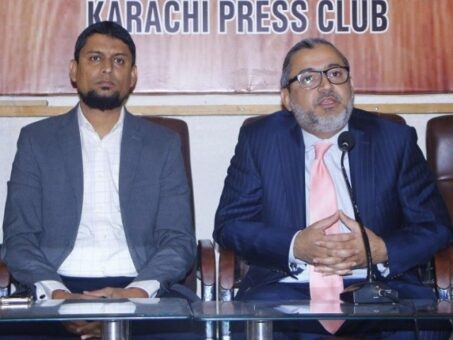
In a media briefing on Wednesday, Imran Ahmed, CFO of Engro Fertilizers, highlighted that food inflation is one of the biggest challenges being confronted by the Government. However, food inflation is not unique to Pakistan as global food prices have jumped by 34 percent between July 2020 and June 2021, owing to a surge in oil prices, supply chain disruptions and unfavorable weather conditions. Reports suggest that globally the food prices have soared to its highest point in a decade and that has translated locally, where the prices have even been adversely impacted by rupee devaluation on top of global price increases.
He stressed that urea prices do not have any impact on food inflation as only 2.6 per cent of farmers wallet is spent on urea. According to calculations, every Rs 50/bag increase in urea price has an impact of only 1 paisa on the price of a ‘roti’. The impact of a Rs 50/bag increase in urea price on other agri commodities like rice, sugar, maize, potato, tomato and banana is all within 10 paisas per KG.
The local fertilizer industry has shielded farmers from a steep rise in international urea prices as domestically produced urea is currently priced at 2012 level. Urea is available in Pakistan at a significant discount of 81 percent, equivalent to Rs 7500/bag, compared to the international rates. As a result, farmers are getting an annualized benefit in excess of Rs 350 billion and the country is expected to save $3 billion in import substitution during 2021.
He commended the PTI Government for its vision to transform the agriculture sector of Pakistan and supportive policies that enabled the fertilizer sector to reduce urea prices by Rs 400/bag last year. Imran declared that in the absence of a strong local fertilizer industry, Pakistan would have faced at best massive urea shortages like India where landed urea imports are costing as much as $1000 / ton, or even more dire an all-out food emergency as currently being experienced in Sri Lanka.
Imran pointed out that the real issue being faced by the local farmers is the global hike in DAP prices by over 100 per cent that has reflected locally as well as majority of DAP demand is met through imports. To promote balanced mix of fertilizers for higher crop productivity, the Government must urgently provide the farmers relief by implementing the much-promised DAP subsidy. Currently, the subsidy on DAP is being extended only by the Government of Punjab. The Federal Government should convince and mobilize other provincial governments to immediately allocate funding for phosphatic fertilizer subsid for Rabi 2021-22.
It has been widely recommended by the farming community that the Government should increase the subsidy amount to Rs 2,000/bag in view of the current prices of DAP. Further, the subsidy should not be restricted to number of bags, but instead be based on land holding and recommended dose for the farmers.
For the now commenced Rabi season, the Government has very prudently agreed to proceed with disbursement of the subsidy through the usual method of stickers/vouchers. The Government is to be recognized for its adaptability realizing that given the longer than expected duration for the complete roll out of the Kissan Card system, the proven voucher process should be continued for providing timely relief to farmers. The multi-featured Kissan Card is expected to be fully implemented and scaled up by the next season.
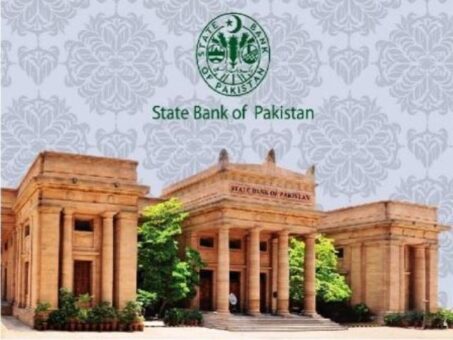
KARACHI: The State Bank of Pakistan (SBP) has announced a sharp decline in net profit by 34 per cent to Rs761 billion in fiscal year 2020/2021 as compared with Rs1,164 billion in the preceding fiscal year.
The Board of Directors of the State Bank of Pakistan on October 26, 2021 approved the Annual Performance Review on the working of the Bank and its subsidiaries and the financial statements for the year ended June 30, 2021, the SBP said on Friday.
FY21 remained a particularly challenging year as the global economy adjusted to the economic and financial challenges posed by the COVID pandemic, including multiple waves of virus outbreak and ensuing containment measures.
Amid such testing times, however; Pakistan’s economy rebounded strongly compared to the previous fiscal year as well as in comparison with the targets set for FY21 at the beginning of the fiscal year.
SBP’s supportive monetary policy stance including quantitative measures to inject liquidity in a timely manner, supplemented by fiscal policy measures, provided a targeted, dynamic and well-coordinated policy response to COVID.
These measures helped address the imminent liquidity and solvency concerns of businesses and households that had been emerging since the virus outbreak in March 2020 and supported the better than anticipated economic performance during the FY21.
The economic growth rebounded to 3.94 percent during the year, well above the target set for the FY21 of 2.1 percent and COVID induced contraction of 0.47 percent in FY20. The inflation also moderated to 8.9 percent in FY21 – well within the target range of 7-9 percent announced by SBP. Similarly other key macro-economic balances including current account, fiscal balance and the country’s foreign reserves improved during the FY21.
SBP’s quantitative measures were well targeted, well diversified across beneficiaries and temporary in nature; and in aggregate provided liquidity support of around 5.0 percent of GDP. To ease off the challenging business environment, SBP swiftly introduced concessional refinance schemes to prevent layoffs (Rozgar Scheme); facilitate healthcare institutions to upscale their facilities (Refinance Scheme to Combat COVID); and encourage firms to undertake long-term investments (under the Temporary Economic Refinance Facility).
Export related procedural requirements were relaxed to counter the limited mobility amidst unfolding national lockdowns and scope for concessionary Export Finance Scheme (EFS) was expanded. In addition, SBP allowed bank’s loan restructuring and loan deferment for firms including SMEs and households.
Furthermore, the anchoring of inflation expectations, despite some upward pressures from supply management issues and surge in international commodity prices, allowed the Monetary Policy Committee (MPC) to keep the policy rate unchanged throughout the year.
The adoption of forward guidance on Monetary Policy by SBP since January 2021 played a major role in reducing short-term policy uncertainty for stakeholders.
Pakistan’s external indicators also improved significantly in FY21 as SBP’s foreign exchange grew more than 40 percent and the country’s current account deficit plummeted to a 10-year low – mainly because of record high worker’s remittances and export receipts.
While market determined exchange rate improved export competitiveness, the financial incentives announced by SBP and the government for remittance processors under the Pakistan Remittance Initiative (PRI) encouraged the use of formal banking channels for remitting funds by emigrants, which paved the way for increasing inward remittance to USD 29.4 billion during the year.
With regards to Payments Infrastructure of the country, SBP undertook major initiatives aimed at financial inclusion, digital on-boarding of customers, enabling remote banking, providing digital modes of investments to customers through banking channels and improving payment systems efficiency.
First, SBP in collaboration with Government and Commercial Banks launched Rohan Digital Account (RDA), allowing non-resident Pakistanis to open and operate bank accounts remotely with banks in Pakistan, invest in Naya Pakistan Certificates (NPCs), stock market, mutual funds, real estate and to purchase cars for their family members.
The initiative was well received by Pakistani diaspora as by end June 2021, USD 1.56 billion have been received via 181,556 RDAs. This influx of foreign exchange has positively supported the country’s balance of payment position. SBP’s second major undertaking in the payments sphere, is the launch of first use case of Raast-a state-of-the-art, interoperable and secure payment platform that enables consumers, merchants and government entities to exchange funds in a seamless, instant and cost-effective manner. Both the developments in the payment systems domain will have a lasting impact on Pakistan’s banking landscape as well as external account.
Financial inclusion remained top strategic priority at SBP, in line with the vision of National Financial Inclusion Strategy. During FY21, SBP’s special focus remained on rural, underserved and unbanked areas, while issuing licenses for opening of new branches of commercial and microfinance banks.
With regards to credit disbursement, SBP had a renewed focus on underserved economic segments, especially housing and construction finance, agriculture finance, and finance for micro, small and medium enterprises.
Moreover, the third five-year strategic plan for the Islamic banking industry was issued by SBP in April 2021 to set a strategic direction and strengthen the existing growth momentum of industry.
With respect to its regulated entities, SBP during FY21 implemented Risk Based Supervision Framework- a forward-looking framework that would allow the SBP to pursue a coherent risk-based approach through proactive identification of risks, and take timely mitigation measures to ensure financial stability in the country.
To achieve its broad strategic goals and strengthen the organizational efficiency, SBP took major initiatives during FY21 aimed at workforce rationalization, attaining gender diversity, automation of process workflows, strengthening cyber security and risk management framework and improving transparency through enhanced communication with external stakeholders.
KARACHI: Oil and Gas Development Company Limited (OGDCL) on Friday announced its financial result, posting a profit after tax (PAT) of Rs33.629 billion during the first quarter ended September 30, 2021.
The profit of the company has surged by 44 per cent when compared with the net profit of Rs23.344 billion in the first quarter of the last fiscal year.
The company declared earnings per share at Rs7.82 for the quarter under review as compared with Rs5.43 in the same quarter of the last year.
Alongside the result, the company announced an interim cash dividend of Rs 1.75/share for the first quarter of fiscal year 2021/2022 (Rs 2.00 in 1QFY21).
According to Arif Habib Research, topline clocked-in at Rs71,531 million in 1QFY22 against Rs56,347 million in same period last year (SPLY), up by 27 per cent YoY, on the back of i) a massive 70 per cent YoY jump in oil prices, and ii) 4 per cent YoY growth in oil production. Whereas, gas production plummeted by 10 per cent YoY during the quarter. On a sequential basis, net sales ascended by 14 per cent given 9 per cent QoQ growth in oil prices along 2 per cent QoQ higher oil production.
The exploration costs declined by 23 per cent YoY arriving at Rs 2,283 million in 1QFY22 given dry well (Bago Phulphoto) reported during the quarter compared to three dry wells (Jun-01, Umair North West and Jatoi-01) incurred in SPLY. Whereas on QoQ basis, exploration costs plunged by 65 per cent given two drys (Washuk-01 and Kambir) and higher seismic activity incurred in 4QFY21.
Other income in 1QFY22 settled at Rs 10,878 million versus Rs 5,958 million in SPLY, significantly up 83 per cent YoY, amid exchange gain on foreign currency tagged with higher income from cash and cash balances. Similarly, other income on QoQ basis climbed up by 89 per cent due to USD appreciation against Rs.
The company booked effective taxation at 36 per cent in 1QFY22 vis-à-vis 31 per cent in 1QFY21.
KARACHI: Gul Ahmed Textile Mills Ltd. (GATM) on Friday declared over 67 per cent growth in after tax profit for the quarter ended September 30, 2021.
According to the financial results shared with the Pakistan Stock Exchange, the textile unit declared Rs1.167 billion as profit after tax for the first quarter (July – September) 2021 as compared with profit after tax of Rs697 million in the same quarter of the last fiscal year.
The company declared earnings per share at Rs2.73 for the period under review as compared with Rs1.63 in the same period of the last fiscal year.
The sales of the company increased to Rs24.64 billion during the quarter ended September 30, 2021 as compared with Rs20.32 billion in the same quarter of the last year.
The textile unit declared gross profit at Rs5.04 billion for July-September 2021 as compared with Rs3.69 billion in the corresponding period of the last fiscal year.
The board of directors of Gul Ahmed Textile Mills Limited in its meeting held on October 28, 2021 approved the financial results. The board has not recommended any cash dividend, bonus shares or right shares.