
Karachi, June 11, 2025 – In a major policy shift to improve tax compliance and documentation of the economy, the Finance Bill 2025 has proposed strict restrictions on various financial transactions for ineligibles — individuals or entities that have failed to file annual income tax returns despite having taxable income.
(more…)Category: Taxation
Pakistan Revenue delivers the latest taxation news, covering income tax, sales tax, and customs duty. Stay updated with insights on tax policies, regulations, and financial developments in Pakistan.
-

Finance Bill 2025 proposes minimum rental income benchmark
Karachi, June 11, 2025 – The Finance Bill 2025 has proposed a significant amendment to the Income Tax Ordinance, 2001, by introducing a minimum fair market value benchmark for rental income derived from commercial properties.
(more…) -
FBR’s tax collection target revised down to Rs11.90 trillion for FY25
Islamabad, June 10, 2025 – The federal government has officially revised downward the tax collection target for the Federal Board of Revenue (FBR) for the current fiscal year 2024-25, lowering it to Rs11.90 trillion from the earlier target of Rs12.97 trillion. This downward revision reflects the challenges faced in meeting revenue goals amid ongoing economic pressures.
(more…) -

Pakistan introduces carbon levy at Rs2.50 per liter for FY26
Islamabad, June 10, 2025 – In a landmark move toward environmental sustainability and fiscal reform, the Government of Pakistan has officially introduced a carbon levy on petroleum products for the first time in its history.
(more…) -

Finance Bill 2025: Salient Features of Federal Excise Duty
Islamabad, June 10, 2025 – The Federal Board of Revenue (FBR) has released a summary of significant changes to the Federal Excise Act, 2005, introduced through the Finance Bill 2025. These amendments are part of broader fiscal reforms aimed at improving tax compliance, curbing tax evasion, and streamlining enforcement mechanisms.
(more…) -

Finance Bill 2025: Salient Features of Income Tax Ordinance
Islamabad, June 10, 2025 – As part of the ongoing fiscal reforms, the Federal Board of Revenue (FBR) has unveiled major amendments to the Income Tax Ordinance, 2001 through the Finance Bill 2025.
(more…) -
Finance Bill 2025: Salient Features of Changes in Sales Tax Act
Islamabad, June 10, 2025 – The Federal Board of Revenue (FBR) has announced a comprehensive set of amendments to the Sales Tax Act, 1990 under the newly proposed Finance Bill 2025.
(more…) -
Finance Bill 2025: Salient Features of Customs Duties
Islamabad, June 10, 2025 – The Federal Board of Revenue (FBR) has unveiled the salient features of the Finance Bill 2025, focusing extensively on reforms and amendments in the Customs sector under the Customs Act, 1969.
(more…) -

KCAA raises alarm over worsening container backlog at KICT
Karachi, June 10, 2025 – The Karachi Customs Agents Association (KCAA) has issued a strong statement expressing serious concern over the escalating backlog of import containers at the Karachi International Container Terminal (KICT), warning of mounting delays, financial losses, and deteriorating service standards that are hampering trade operations.
(more…) -
FBR reports Rs1.80tr petroleum sales tax exemption in FY25
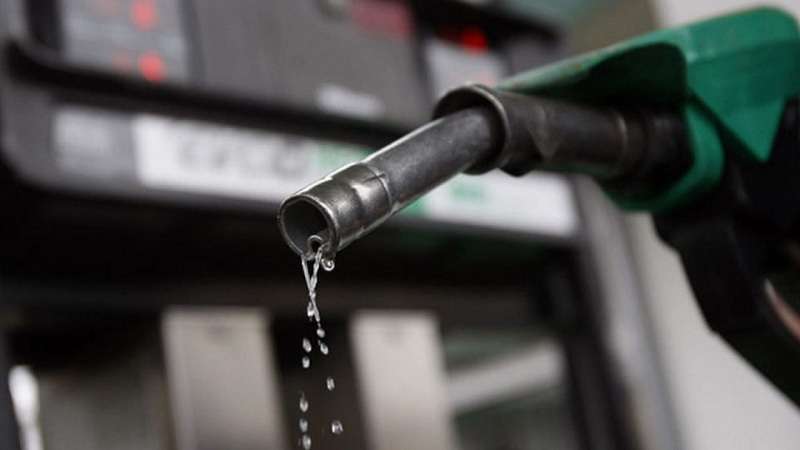
Islamabad, June 10, 2025 – The Federal Board of Revenue (FBR) has granted substantial sales tax exemptions on petroleum products during the fiscal year 2024–25, amounting to a staggering Rs1.80 trillion.
This figure marks a sharp increase of 34.23% compared to Rs1.34 trillion in sales tax exemptions recorded during the previous fiscal year, according to the recently released Economic Survey of Pakistan.
The FBR’s sales tax exemption policy continues to focus heavily on petroleum products to mitigate the impact of rising fuel prices on the general public. Of the total Rs1.80 trillion exemptions, approximately Rs1.50 trillion were provided on the local supply of petroleum products. This reflects a 19% growth over the Rs1.26 trillion in similar exemptions recorded in FY 2023–24.
More striking, however, is the increase in sales tax exemption at the import stage. The exemption granted on imported petroleum products surged by a massive 270%, reaching Rs300 billion in the current fiscal year, compared to just Rs81 billion in the prior year. This substantial growth underscores the government’s effort to maintain price stability by easing the tax burden on imported fuels.
Despite these generous sales tax exemptions, the government has pursued an aggressive strategy in collecting petroleum levies. According to official data released by the Ministry of Finance, petroleum levy collections reached Rs834 billion during the first nine months (July–March) of FY 2024–25, registering a 16% increase from the Rs720 billion collected during the same period last year.
The petroleum levy remains a vital source of non-tax revenue, helping the government bolster its fiscal capacity. Unlike sales tax, which is partially waived to provide relief, the petroleum levy is imposed directly and uniformly, ensuring consistent revenue generation.
The federal government’s dual strategy—offering sales tax exemption on petroleum products while simultaneously increasing petroleum levies—reflects a balancing act aimed at sustaining public relief without compromising on much-needed revenue. This approach continues to shape Pakistan’s fiscal policy in the energy sector as it seeks to maintain economic stability amid global price fluctuations.