Category: Top stories

Find top stories in this section. Pakistan Revenue brings you the latest and most important news from Pakistan and around the world, keeping you informed with key updates and insights.

  • SBP raises benchmark interest rate by 100 basis points to 16pc

    SBP raises benchmark interest rate by 100 basis points to 16pc

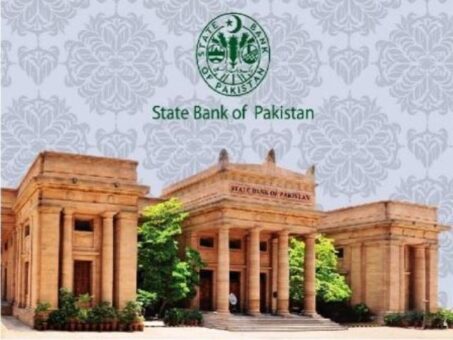
    KARACHI: State Bank of Pakistan (SBP) on Friday raised the benchmark interest rate by 100 basis points to 16 per cent owing to inflationary pressure and risks to financial stability.

    The SBP said that the monetary policy committee in its meeting on November 25, 2022 decided to raise the policy rate by 100 basis points to 16 per cent.

    This decision reflects the MPC’s view that inflationary pressures have proven to be stronger and more persistent than expected. It is aimed at ensuring that elevated inflation does not become entrenched and that risks to financial stability are contained, thus paving the way for higher growth on a more sustainable basis.

    READ MORE: SBP keeps policy rate unchanged at 15% amid economic deceleration

    Amid the on-going economic slowdown, inflation is increasingly being driven by persistent global and domestic supply shocks that are raising costs. In turn, these shocks are spilling over into broader prices and wages, which could de-anchor inflation expectations and undermine medium-term growth. As a result, the rise in cost-push inflation cannot be overlooked and necessitates a monetary policy response.

    The MPC noted that the short-term costs of bringing inflation down are lower than the long-term costs of allowing it to become entrenched. At the same time, curbing food inflation through administrative measures to resolve supply-chain bottlenecks and any necessary imports remains a high priority.

    READ MORE: SBP keeps benchmark rate unchanged at 15% amid rising inflation

    Since the last meeting, the MPC noted three key domestic developments. First, headline inflation increased sharply in October, as the previous month’s administrative cut to electricity prices was unwound. Food prices have also accelerated significantly due to crop damage from the recent floods, and core inflation has risen further.

    Second, a sharp decline in imports led to a significant moderation in the current account deficit in both September and October. Despite this moderation and fresh funding from the ADB, external account challenges persist. Third, after incorporating the Post-Disaster Needs Assessment of the floods and latest developments, the FY23 projections for growth of around 2 percent and a current account deficit of around 3 percent of GDP shared in the last monetary policy statement are re-affirmed. However, higher food prices and core inflation are now expected to push average FY23 inflation up to 21-23 percent.

    READ MORE: Poll sees no policy rate change in August 22, 2022 meeting

    Economic activity has continued to moderate since the last MPC meeting on account of transient disruptions from floods and on-going policy and administrative measures. In October, most demand indicators showed double-digit contraction on a yearly basis—including sales of cement, POL, and automobiles.

    On the supply side, electricity generation declined for the fifth consecutive month, falling by 5.2 percent (y/y). In the first quarter of FY23, LSM production was flat relative to last year, with only export-oriented sectors contributing positively. In agriculture, latest estimates suggest sizeable output losses to rice and cotton crops from the floods which, together with tepid growth in manufacturing and construction, will weigh on growth this year.

    READ MORE: Pakistan hikes key policy rate by 125 basis points to 15%

    The current account deficit continued to moderate during both September and October, reaching $0.4 and $0.6 billion, respectively. Cumulatively, the current account deficit during the first four months of FY23 fell to $2.8 billion, almost half the level during the same period last year. This improvement was mainly driven by a broad-based 11.6 percent fall in imports to $20.6 billion, with exports increasing by 2.6 percent to $9.8 billion.

    On the other hand, remittances fell by 8.6 percent to $9.9 billion, reflecting a widening gap between the interbank and open market exchange rate, normalization of travel and US dollar strengthening. On the financing side, inflows are being negatively affected by domestic uncertainty and tightening global financial conditions as major central banks continue to raise policy rates. The financial account recorded a net inflow of $1.9 billion during the first four months of FY23, compared to $5.7 billion during the same period last year. Looking ahead, higher imports of cotton and lower exports of rice and textiles in the aftermath of the floods should be broadly offset by a continued moderation in overall imports due to the economic slowdown and softer global commodity prices.

    As a result, the current account deficit is expected to remain moderate in FY23, with FX reserves gradually improving as anticipated external inflows from bilateral and multilateral sources materialize. If the recent decline in global oil prices intensifies or the pace of rate hikes by major central banks slows, pressures on the external account could diminish further.

    Despite the budgeted consolidation for FY23, fiscal outcomes deteriorated in Q1 relative to the same period last year. The fiscal deficit increased from 0.7 to 1 percent of GDP, with the primary surplus declining from 0.3 to 0.2 percent of GDP.

    This deterioration was largely due to a decline in non-tax revenues and higher interest payments. At the same time, growth in FBR tax revenues more than halved to 16.6 percent during the first four months of FY23. In response to the floods, the government has implemented a number of relief measures for the agriculture sector, including mark-up subsidies for farmers and the provision of subsidized inputs.

    The floods could make it challenging to achieve the aggressive fiscal consolidation budgeted for this year, but it is important to minimize slippages by meeting additional spending needs largely through expenditure re-allocation and foreign grants, while limiting transfers only to the most vulnerable.

    Maintaining fiscal discipline is needed to complement monetary tightening, which would together help prevent an entrenchment of inflation and lower external vulnerabilities. 

    In line with the slowdown in economic activity, private sector credit continued to moderate, increasing only by Rs86.2 billion during Q1 compared to Rs226.4 billion during the same period last year

    This deceleration was mainly due to a significant decline in working capital loans to wholesale and retail trade services as well as to the textile sector in the wake of lower domestic cotton output, and a slowdown in consumer finance.

    Headline inflation rose by almost 3½ percentage points in October to 26.6 percent (y/y), driven by a normalization of fuel cost adjustments in electricity tariffs and rising prices of food items. Energy and food prices rose by 35.2 and 35.7 percent (y/y), respectively. Meanwhile, core inflation increased further to 18.2 and 14.9 percent (y/y) in rural and urban areas respectively, as rising food and energy inflation seeped into broader prices, wages and inflation expectations.

    The momentum of inflation also picked up sharply, rising by 4.7 percent (m/m). As a result of these developments, inflation projections for FY23 have been revised upwards. While inflation is likely to be more persistent than previously anticipated, it is still expected to fall toward the upper range of the 5-7 percent medium-term target by the end of FY24, supported by prudent macroeconomic policies, orderly Rupee movement, normalizing global commodity prices and beneficial base effects.

    The MPC will continue to carefully monitor developments affecting medium-term prospects for inflation, financial stability, and growth.

  • Tax cases involving Rs2,612 billion stuck up in litigation: FBR

    Tax cases involving Rs2,612 billion stuck up in litigation: FBR

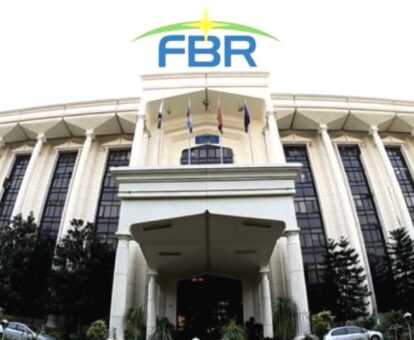
    ISLAMABAD: Federal Board of Revenue (FBR) on Thursday said that around 88,317 cases involving Rs2,612 billion were stuck up and pending with different courts.

    The latest date is based on October 31, 2022.

    READ MORE: FTO directs probe into benami transactions by Millat Tractors

    Among these pending cases, 75,021 cases involving Rs2,382 billion are related to Inland Revenue Service whereas 13,296 cases involving Rs229.7 billion are to the Customs department, according to break up figures, as on October 31, 2022. Out of the Inland Revenue cases, 5,386 cases involving Rs 370 billion are pending in Lahore High Court whereas 3,271 cases of Rs 95 billion are with the Supreme Court of Pakistan.

    READ MORE: FTO directs country-wide crackdown against smuggled vehicles

    Likewise, 2,580 cases of Rs 212 billion are with Sindh High Court, 1,095 cases of Rs 180 billion in Islamabad High Court, 380 cases of Rs 9 billion in Peshawar High Court whereas 62,298 cases of Rs 1513 billion were pending with Appellate Tribunal.

    On the other hand, among the Customs cases, 203 of Rs1.4 billion related are pending with Islamabad High Court whereas 5,468 cases of Rs 145.8 billion are with the Sindh High court.

    READ MORE: FTO directs stop unlawful recovery from taxpayers’ bank accounts

    Similarly, 548 cases of Rs 5.2 billion are pending with Lahore High Court, 676 cases of Rs 2 billion in Peshawar High Court and 58 cases involving Rs2.5 billion in Baluchistan High Court whereas, 4,911 cases of Rs72.7 billion were pending in Appellate Tribunal Customs.

    It is pertinent to mention here that the Senate Standing Committee of Finance and Revenue in its recent meeting held on November 23 had given the FBR fifteen days to submit the details of cases pending in various courts of the country.

    READ MORE: FTO investigates tax collection through electricity bills

    The Chairman of the committee, Senator Saleem Mandviwala had expressed concern over the delay in tax cases which he said was causing huge revenue losses. He had asked the finance ministry to analyze these cases and bring out the reasons for the delay in decision.

  • Pakistan official reserves fall to around 1 ½ months import coverage

    Pakistan official reserves fall to around 1 ½ months import coverage

    KARACHI: Pakistan’s official foreign exchange reserves have declined significantly, now covering only one and a half months of import payments, as per data released by the State Bank of Pakistan (SBP) on Thursday.

    (more…)
  • PKR slumps to dollar amid SBP tight monitoring

    PKR slumps to dollar amid SBP tight monitoring

    KARACHI: Pakistani Rupee (PKR) slumped against the US dollar on Thursday amid tight monitoring of the State Bank of Pakistan (SBP) related to currency transactions.

    The exchange rate recorded a decline of 11 paisas in rupee value to end at PKR 223.92 against the dollar from previous day’s closing of PKR 223.81 in the interbank foreign exchange market.

    READ MORE: Rupee fails to maintain recovery; dollar gains to PKR 223.81

    Currency experts said that political uncertainty and weak economic indicators had pressured the exchange rate. They said that a day earlier an international report pointed out that Pakistani rupee was on the risk.

    It is important to note that the SBP took various measures to prevent unnecessary outflow of the greenback for giving support the local unit.

    These measures included tight monitoring on the exchange companies by checking day to day affairs related to transactions.

    READ MORE: Rupee beats dollar after seven sessions to end at PKR 223.42

    Besides, the SBP also imposed restrictions to limit the cash foreign currency up to $5,000 for taking out Pakistan per person per visit.

    The currency experts said that the measures taken by the SBP were not enough as Pakistan’s external sector was facing huge challenges.

    Latest investment data released by the State Bank of Pakistan (SBP) revealed the foreign direct investment plunged by 52 per cent in first four months of the current fiscal year.

    The current account deficit recorded contraction in the first four months of the current fiscal year it swelled when compared with the previous month.

    Pakistan needs foreign inflows on urgent basis to avoid balance of payment crisis. The foreign exchange reserves of Pakistan fell sharply during past few months making it difficult for the government to fulfill its foreign repayment commitments.

    READ MORE: Dollar rises for 7th straight session, reaches to PKR 223.66

    Foreign exchange (forex) reserves of Pakistan were at $13.796 billion by week ended November 11, 2022 as compared with $13.721 billion a week ago i.e. November 04, 2022.

    The country’s foreign exchange reserves hit all-time high of $27.228 billion on August 27, 2021. Since then the foreign exchange reserves have declined by $13.432 billion.

    READ MORE: Rupee plummets on mounting default risk; dollar advances to PKR 223.17

    The official foreign exchange reserves of the State Bank nominally increased by $3 million to 7.96 billion by week ended November 11, 2022 as compared with $7.957 billion a week ago.

    The foreign exchange reserves held by the central bank witnessed a record high at $20.146 billion by week ended August 27, 2021. Since then the official reserves of the SBP dropped by $12.185 billion.

  • FTO directs probe into benami transactions by Millat Tractors

    FTO directs probe into benami transactions by Millat Tractors

    ISLAMABAD: Federal Tax Ombudsman (FTO) has directed the Federal Board of Revenue (FBR) to launch probe into huge benami transactions made by M/s. Millat Tractors Limited (MTL).

    The FTO, in a case against Millat Tractors for making supplies on fake and flying invoices and obtaining refunds on such invoices, asked the FBR to direct Director General Anti-Benami Initiative to probe the incidence of Benami transactions in tractors manufacturing sector.

    According to the findings of the FTO, the evident from contents of the complaints, the bookings of tractors are made by commercial dealers who themselves are not the growers/farmers rather they are only carrying on the purchase and sales of tractors for profit/commission motive.

    READ MORE: FTO directs country-wide crackdown against smuggled vehicles

    “Tractors purchased in this manner are invoiced in the names of unrelated persons and mostly used for purposes other than agriculture i.e. industry, trolleying bricks & construction material, digging of land (housing societies), cleaning of garbage etc. so refund in such cases is inadmissible.

    “Thus most of the sales tax invoices are issued in the names of benami farmers/dummy growers. This scenario is perfect benami arrangement which has already been prohibited under Benami (Transactions) Prohibition Act, 2017.”

    According to the complaint the complainant highlighted that he had booked 1001 agriculture tractors from MTL on 21-06-2022, paying in advance full consideration amounting to Rs.1,252,851,600/-including 5 per cent sales tax (under serial number 25 of the 8th Schedule of the Sales Tax Act, 1990), through ninety-one (91) pay orders.

    However, MTL only delivered 47 tractors to the complainant in the month of June 2022 and failed to deliver the remaining 954 tractors even after expiry of 60 days.

    The complainant said MTL is involved in various bogus transactions like purchasing of fake invoices against which input tax is claimed by MTL, wherein, neither goods are physically exchanged nor payments are properly made from business accounts of genuine buyers in contravention of Section 73 of Sales Tax Act, 1990, resulting gigantic losses to national exchequer of billions of rupees with the connivance of FBR Officials. Thus the input tax claimed by MTL is also required to be probed by FBR through appropriate orders of Honourable FTO.

    READ MORE: FTO directs stop unlawful recovery from taxpayers’ bank accounts

    The FTO in its findings observed that following core issues need detailed deliberations:

    I. Sales Tax Invoicing under law vis-à-vis Pakistan’s Tractor Manufacturing Sector Invoicing is the cardinal concept in Pakistan’s Sales Tax regime. Section 2 (40) of Sales Tax Act, 1990 defines that “tax invoice “means a document required to be issued under section 23; and section 23 further elaborates

    “23. Tax Invoices.–

    (1) A registered person making a taxable supply shall issue a serially numbered tax invoice at the time of supply of goods containing the following particulars, in

    Urdu or English language,] namely: –

    (a) name, address and registration number of the supplier; [

    (b) name, address and registration number of the recipient

    (c) date of issue of invoice;”

    A. The above definition clearly denotes two parties in a sales taxable transaction: Supplier and the Recipient i.e. buyer and the seller or the payer and payee. Thus a valid tax invoice must incorporate the ordained particulars of both parties. However when the instant complaint is analyzed, admittedly payer remains Shahzad Riaz, the complainant but as per invoices issued by MTL, 47 unrelated persons have been shown as the payers who have neither made the booking of tractors through the authorized dealer, nor made any payment, nor maintain any business relationship with the payer and nor owned by the real payer/complainant Shahzad Riaz.

    “The case appears to be classic example wherein goods are delivered to one person and invoices are issued to the other/dummy/fictitious persons.”

    Authorized representatives of MTL confirmed that like all other local tractor manufacturers MTL also book sale of tractors through authorized dealers and invoices are issued as per details of buyers provided by the said dealers.

    MTL’s stance that the dealer in question had obtained 47 CNICs from the complainant and submitted onwards to MTL is not only unsubstantiated it is against the legal provisions as well. When the payment through 91 pay orders made by the complainant is directly being received and credited to MTL’s A/Cs then there remains no ambiguity about the payer, especially when 47 tractors were delivered by MTL to the complainant. If for a while MTL’s argument that invoices are issued in the names of buyers whose CNICs are conveyed by the authorized dealers then the following issues may crop up;

    READ MORE: FTO investigates tax collection through electricity bills

    i. If the consideration is paid by one person and invoice is issued in the name of some other person and the real beneficiary remains the former; it tantamounts to a tailor made ” Benami Transaction”, cognizable under Benami (Transactions) Prohibition Act, 2017.

    ii. Such an arrangement would shield the true particulars of real payer/investor by portraying the made up particulars of an unrelated person whose CNIC has been misused to conceal the transactions made by the real payer. Investments made and profits earned by the beneficiaries thus remain concealed and untaxed.

    iii. Such an arrangement has neither any legal backing nor fits in the parameters of section 23 of ST Act, 1990.

    iv. MTL’s assertion that this practice is prevalent in the whole tractors manufacturing sector doesn’t carry weight if the practice in question is against the clear provisions of law and it only encourages benami transactions.

    v. The above referred scheme at the best conceals the true particulars of payers and at the worst aims at defrauding the national exchequer by camouflaging transactions made by commercial entities, persons in the garb of engineered purchases attributed to fake growers/farmers. On one hand it conceals commercial transactions made by non growers/farmers and on the others it paves the way for the filing, processing, sanctioning and issuance of bogus sales tax refunds by the tractor manufacturing companies.

    READ MORE: President Alvi rejects FBR plea in maladministration cases

    vi. MTL’s invoicing is plagued with serious flaws. Apart from the instant case in another under investigation case, (COMPLAINT NO.3858/SKT/IT/202, Dated: 29.08.2022 RO, Sialkot) the Complainant Abaid Ullah, P.O Ghondal Miani Awan, Tehsil & District Sialkot had booked a tractor on 03.06.2022 after making full and final consideration of Rs.1.953 million, inclusive of chargeable sales tax. When the Complainant approached MTL for delivery of tractor in July, 2022 the authorized dealer further demanded an amount of Rs.0.245 million quoting revised taxes on agricultural machinery w.e.f. 01.07.2022 and the Complainant had to deposit Rs.0.245 million. When the complaint was investigated by FTO Regional office Sialkot it was revealed that as the Sales Tax was waived for growers/farmers w.e.f. 1st July, 2022 therefore the sales invoice dated 22.07.2022 issued by the M/s. Millat Tractors Ltd. also reveals that no sales tax has been charged through said invoice and whole amount of Rs.2.198 million was accounted for price value of tractor. The questions which need to be explained by MTL are;

    — where has gone the sales tax charged at the time of booking; and why it was not declared & deposited by MTL while filing tax return for Tax period June, 2022;

    — how sales tax component was made part of the price finally charged;

    — why the authorized dealer has made alleged revised taxes as an excuse for additional charge when actually ST was waived in the cases of growers/farmers.

    The above referred case reveals another material fact that whenever any booking is made by a genuine grower/farmer through authorized dealers, the payment through banking instruments is made by the buyer/grower himself and invoice is issued in his own name. Such genuine instances are clearly distinguishable from the bulk of sales wherein payment is received from someone else and invoices are issued in the names of names lenders/benamidars.

    vii. Thus from the above discussions clearly indicate the “neglect, inattention, incompetence, inefficiency and ineptitude of tax authorities, who though claim to be conducting audits and monitoring of MTL yet thus far failed to unearth this patently illegal invoicing system, which is not only detrimental to the interest of revenue rather it it defeats the intent of legislation to facilitate small growers/farmers.

    II. Time of Supply

    Like tax invoices, time of supply is also an integral aspect of sales tax regime. Section 2 (44) of ST Act, 1990 duly defines “time of supply”, in relation to,–

    (a) a supply of goods, other than under hire purchase agreement, means the time at which the goods are delivered or made available to the recipient of the supply

    (b) a supply of goods under a hire purchase agreement, means the time at which the agreement is entered into; and

    (c) services, means the time at which the services are rendered or provided; Provided that in respect of sub clause ( a) ,(b) or (c), where any part payment is received, –

    (i) for the supply in a tax period, it shall be accounted for in the return for that tax period; and

    I. In the instant case though full price of 1001 tractors, inclusive of chargeable Sales Tax at that point of time was paid by the complainant in June, 2022, yet this transaction was not accounted for by MTL while filing the sales tax return for the month of June, 2022. When MTL was confronted on this account their AR’s 1st response was that time of supply is linked with delivery of goods and as booked tractors were not delivered therefore there was no need to declare the same in June 2022.

    But when enquired about non declaration 47 tractors in the return of June, 2022, which were admittedly delivered in the month of June, 2022, AR had no explanation to offer. Similarly though AR is of the view that time of supply is strictly linked with delivery of goods yet he couldn’t offer any plausible reason when the aforesaid proviso was referred which obligates

    “Provided that in respect of sub clause ( a) ,(b) or (c), where any part payment is received;

    (i) for the supply in a tax period, it shall be accounted for in the return for that tax period;.”

    According to AR this proviso is redundant in the face of main provisions of law but he failed to substantiate his assertion. His next argument was that the said proviso only covers cases where part payment is made: once again an over simplistic interpretation of law. If law is applicable on part payment, how would it ignore the incidence of full payment?

    II. Moreover the AR has failed to provide any explanation as to how and under which provision of law sales tax component of payment received by MTL can be retained by the supplier for an indefinite period and how sales tax paid by the buyer can be adjusted against price differential, if any by supplier on its own without disclosing this fact in the relevant sales tax return. Thus by non declaration of whole transaction and nonpayment of sales tax recovered against 1001 tractors from the payer/complainant MTL has contravened sales tax Act and LTO Lahore failed to take any suo moto cognizance of this glaring default.

    III. Departmental ineptitude can be judged from the fact that even when the department was informed (by sharing the complaint) that the respondent company has received advance payment amounting to Rs. 1,252,851,600/- including 5% sales tax from the complainant and was bound to declare this sales transaction in the tax period of June 2022, surprisingly, even after the receipt of this information the department failed to incorporate the definition of time of supply under section 2(44) of the Sales Tax Act, 1990 in the notice dated 16-08-2022, issued to MTL, specifically for the month of June 2022.

    Thus as per law the respondent company was bound to declare the sales against advance (received in full) for supply of tractors in the month of June 2022 but they failed to do so in violation of section 2(44) of the Sales Tax Act, 1990 read with section 3, 23, 26 and 73 of the Sales Tax Act, 19990. LTO Lahore failed to discharge its duties diligently in this regard.

    III. Payment of KIBOR plus 3%

    Regarding payment of KIBOR plus 3% for failure to deliver tractors within 60 days under SRO 837(I)/2020 dated 30-06-2020, it is evident that 1001 tractors were booked on 21.06.2022 against full payment including 5% sales tax though 91 pay order by the complainant and the respondent No. 1 was to deliver the same within 60-days of the booking but he only delivered 47 tractors to the complainant though authorized dealer of the respondent company. Revision of prices apart the violation of aforesaid SRO is evident.

    IV. Violations of SRO 363(I)/2012 dated 19th April 2012 and SRO 563(I)/2022 dated 29th April 2022

    These SROs are related to refund to agriculture tractors manufacturers and therefore, due diligence is required while issuing refund, but respondent No. 2 has also not been able to verify the genuineness/authenticity of supply chain under section 2(33A) of the Sales Tax Act, 1990 read with section 7, 8 and 73 of the Act, ibid.

    The FTO asked the FBR to direct Chief Commissioner Inland Revenue, LTO Lahore to conduct exhaustive review of the instant case so as to ensure that Section 2(4) and Section 23 of Sales Tax Act, 1990 and all relevant SROs governing tractor manufacturing sector are implemented.


  • Rupee fails to maintain recovery; dollar gains to PKR 223.81

    Rupee fails to maintain recovery; dollar gains to PKR 223.81

    KARACHI: Pakistani Rupee (PKR) failed to maintain recovery against the US dollar on Wednesday as the interbank foreign exchange market ended at PKR 223.81 to the dollar.

    The exchange rate recorded a decline of 39 paisas to end at PKR 223.81 to the dollar from previous day’s closing of PKR 223.42 in the interbank foreign exchange market.

    READ MORE: Rupee beats dollar after seven sessions to end at PKR 223.42

    A day earlier, the local currency recovered 24 paisas to the dollar after making a losing streak for seven consecutive sessions.

    Currency experts said that the rupee was under immense pressure due to higher dollar demand for import and corporate payments.

    Besides, lack of inflows and foreign investment also made it difficult to the government to meet foreign payment obligations.

    READ MORE: Dollar rises for 7th straight session, reaches to PKR 223.66

    Previously, the five-year Credit Default Swap (CDS) of the country reached to record high of 92 showing inability of the government to repay its debts.

    Although last Saturday, Finance Minister Ishaq Dar assured the foreign investors that Pakistan would manage to repay its obligations in-time.

    Latest investment data released by the State Bank of Pakistan (SBP) revealed the foreign direct investment plunged by 52 per cent in first four months of the current fiscal year.

    The current account deficit recorded contraction in the first four months of the current fiscal year it swelled when compared with the previous month.

    READ MORE: Rupee plummets on mounting default risk; dollar advances to PKR 223.17

    Pakistan needs foreign inflows on urgent basis to avoid balance of payment crisis. The foreign exchange reserves of Pakistan fell sharply during past few months making it difficult for the government to fulfill its foreign repayment commitments.

    Foreign exchange (forex) reserves of Pakistan were at $13.796 billion by week ended November 11, 2022 as compared with $13.721 billion a week ago i.e. November 04, 2022.

    READ MORE: Rupee devaluation continues; dollar reaches PKR 222.67

    The country’s foreign exchange reserves hit all-time high of $27.228 billion on August 27, 2021. Since then the foreign exchange reserves have declined by $13.432 billion.

    The official foreign exchange reserves of the State Bank nominally increased by $3 million to 7.96 billion by week ended November 11, 2022 as compared with $7.957 billion a week ago.

    The foreign exchange reserves held by the central bank witnessed a record high at $20.146 billion by week ended August 27, 2021. Since then the official reserves of the SBP dropped by $12.185 billion.

  • FBR extends date for providing deemed property income details till December 31

    FBR extends date for providing deemed property income details till December 31

    ISLAMABAD: Federal Board of Revenue (FBR) has extended the date for providing details of deemed income of immovable property up to December 31, 2022, where annual returns have already filed.

    In this regarding the FBR issued SRO 2052(I)/2022 on November 22, 2022 to introduce draft amendments to Income Tax Rules, 2002. Through the draft rules, the FBR proposed that a form which required details of income from immovable properties under Section 7E of the Income Tax Ordinance, 2001 can be filed up to December 31, 2022.

    Prior to this the FBR issued SRO 1891 (I)/2022 on October 13, 2022 to launched the form and directed taxpayers to submit the same along with the annual income tax returns up to October 31, 2022. Although the date for filing annual income tax return for tax year 2022 has been extended up to November 30, 2022 but taxpayers are facing difficulties in fulfilling the requirement envisaged in the form.

    It also created a legal complication as many returns for tax year 2022 were filed prior to issuance of the form making it difficult for the taxpayers to make changes in their forms.

    In the latest SRO, the FBR stated: “Provided that where return has been furnished prior to coming into force of notification No. SRO 1891(I)/2022, dated October 13, 2022, the form specified in the said notification shall be furnished separately by December 31, 2022.”

    On October 27, 2022, Karachi Tax Bar Association (KTBA) after the issuance of the SRO 1891, sent a communication to the FBR chief apprising about the challenges in filling 7E details.

    The KTBA had pointed out that the issue of property values for the purpose of Section 7E of the Ordinance i.e. Deemed Income on Capital Assets.

    “It is recalled that we stressed the need for incorporating the values given under the forty-two (42) notification (SROs) issued by the FBR in the month of March 2022 for property valuations under Section 68 of the Ordinance in the IRIS.

    “It was recommended that those valuation tables were to be incorporated in the back end working of the income tax return in the IRIS after which the calculation of tax under Section 7E could be calculated automatically by the system, based on the description of property incorporated by the taxpayer in its wealth statement.

    “It is re iterated that had this been done, it would ensure swift and correct computation of 20% tax on 5% value under Section 7E of the Ordinance and would avoid any standard deviation therefrom.

    A NEW 7E ANNEXURE:

    We would now like to invite your kind attention towards a “new set of requirement” which has been ventured in the IRIS and what now has become a bigger concern in context of Section 7E i,e, the new 7E Annexure. This annexure has lately been introduced in IRIS on 13th October 2022. We at the KTBA hold a considered view that it is unnecessarily a detailed format for a taxpayer or his advisor to fill and that too in these last days of tax returns filing.

    Uncalled for Details:

    The new annexure contains all the possible and imaginable categories of properties one could have. A basic list is being reproduced hereunder:

    i.              Agricultural Property

    ii.             Commercial Property

    iii.            Industrial Property

    iv.           Residential Property

    v.            Educational Property

    vi.           Health Property

    vii.          Natural Property

    viii.         Public Property

    ix.           Religious Property

    x.            Mixed Use Property

    Your office would appreciate that apart from the first four (04) categories, the rest of the six (06) are not only unheard of in the domestic culture or tax laws of the country but these are not even owned by an individual in the first place. What is worrisome is that there are duplications and triplications to be filled in for the same property, which will surely give rise to issuance of uncalled for show cause notices by the department. The rational, therefore, needs to be thrashed out.

    Fields for Property Details:

    The Annexure incorporated vide SRO 1892 of 2022 dated 13th October 2022, with its fine details may have either been designed bespoke or borrowed from external source but only suitable to be made applicable where there is plenty of days and manhours left with to work on the same, not only fifteen (15) days and that too where these details do not add any value to the information.

    The details of properties which have been required to be filled in, are details consisting of the following, which, your office would acknowledge, are completely irrelevant for purpose of valuation of property under Section 68 of the Ordinance.

    i. Town Area of property

    ii. Tehsil of Property

    iii. Age of property

    These are superfluous fields which have been required to be filled without any impact but have been made mandatory fields as without filling which one cannot move forward in IRIS and cannot proceed to file return. This is a serious deterrence.

    Needless to mention that the size of the property and size of the built up or covered area with the name of City and location in the city are the only necessary data for valuation of property under the Ordinance as that is what is precisely needed not the town and tehsil, which is other as well is a cumbersome detail to be extracted.

    Details for Exempt Properties:

    It also merits a mention that above cumbersome details have been required to be punched in even in cases where there would not arise any liability on account of Section 7E or where the properties of the taxpayer are exempted from the purview of the provision. We understand that submission of details of the following exempted properties should also be exempted, which will actually be a facilitation in filing of return at least for those who do not have to pay this 1% tax;

    1.            Single self-owned property

    2.            Self-owned business properties

    3.            Self-owned agriculture land under cultivation

    4.            Fair market value of property less than Rupees 25 Million

    5.            Rented Properties

    6.            Properties purchased during the year with tax deposited CPR under Section 236K.

    Valuations of Properties and Position of Valuation SROs

    As for the valuation tables and the valuation SROs, it is critical for us to apprise your office that picking up the value from the SROs is not as easy as has recently been spelt out by the FBR. There are altogether forty-two (42) notifications (SROs) for the purpose, which were issued in the month of March 2022.

    Out of these forty-two (42) SROs, twenty-eight (28) have been amended to date. Upon finding the applicable SRO for any city the portal provides you with the latest one. One consequently would need to search and recheck for the older SRO once again on the website. This is certainly time taking and painstaking exercise.

    Secondly if a certain SRO has been amended, there is no amended SRO available in the cache, consequent to which the propensity to commit an error by taking the valuation from the older SRO gets certain.

    In order to avoid such an impending consequence, the FBR should provide the final amended SRO of valuation failing to which the taxpayer will have to keep switching from older SRO to amended SRO or will commit the suspected error. This goes without saying as how much time consuming this exercise can become besides being tedious and painstaking.

    Size of Notifications

    It should not loose the sight of the regulator that apart from the amended Notifications, there are few SROs, which are unusually lengthy and detailed. This makes the job of the taxpayers even more arduous to keep sifting the pages to find for the precise location of his property therein. It would be worthwhile to enlist hereunder few of these:

    i.              Bahawalnagar is of 191 pages

    ii.             Bahawalpur is of 51 pages

    iii.            Multan is of 4,593 pages

    iv.           Faisalabad is of 4,712 pages

    v.            DG Khan is of 4,722 pages

    vi.           Quetta is of 28 pages

    vii.          Lahore is of 31 pages

    The above have been quoted for giving few instances as to the ordeal your taxpayer will have to go through for filing your requirements, which is by any stretch of rational thinking is unwarranted.

    Timing of Introduction of 7E Annexure:

    And all of this has fallen due merely in the last fifteen days of October. Your office would appreciate that the timing of introduction of the 7E Annexure requires reconsideration. The Tax Return and their other Annexure were though introduced withing the legal time frame on June 30, however, the 7E Annexure was introduced on September 3rd, 2022, vide SRO 1829 of 2022 in draft form and finalized and uploaded on IRIS just after 10 days on Sep 13th, 2022 vide SRO 1891 of 2022. This is not less than three and a Half (3.5) months late.

    REQUEST FOR A TUTORIAL AND DEMO PRESENTATION

    Based on the forgoing it would be appropriate for us at the Bar to place genuine request in your office to kindly direct either the field formation or the relevant IT team to prepare at least a tutorial or to say a Demo Presentation for the basic level assistance of the taxpayers. The same can be placed on the website.

  • Rupee beats dollar after seven sessions to end at PKR 223.42

    Rupee beats dollar after seven sessions to end at PKR 223.42

    KARACHI: Pakistani Rupee made a recovery on Tuesday after falling for seven straight sessions against the dollar in interbank foreign exchange market.

    The exchange rate recorded an appreciation of 24 paisas in rupee value to end at PKR 223.43 to the dollar from previous day’s closing of PKR 223.66 in the interbank foreign exchange market.

    READ MORE: Dollar rises for 7th straight session, reaches to PKR 223.66

    It is important to note that rupee recovery was surprising in the wake of adverse economic indicators.

    The five-year Credit Default Swap (CDS) of the country reached to record high of 92 showing inability of the government to repay its debts.

    Although last Saturday, Finance Minister Ishaq Dar assured the foreign investors that Pakistan would manage to repay its obligations in-time.

    READ MORE: Rupee plummets on mounting default risk; dollar advances to PKR 223.17

    Latest investment data released by the State Bank of Pakistan (SBP) revealed the foreign direct investment plunged by 52 per cent in first four months of the current fiscal year.

    The current account deficit recorded contraction in the first four months of the current fiscal year it swelled when compared with the previous month.

    Pakistan needs foreign inflows on urgent basis to avoid balance of payment crisis. The foreign exchange reserves of Pakistan fell sharply during past few months making it difficult for the government to fulfill its foreign repayment commitments.

    READ MORE: Rupee devaluation continues; dollar reaches PKR 222.67

    Foreign exchange (forex) reserves of Pakistan were at $13.796 billion by week ended November 11, 2022 as compared with $13.721 billion a week ago i.e. November 04, 2022.

    The country’s foreign exchange reserves hit all-time high of $27.228 billion on August 27, 2021. Since then the foreign exchange reserves have declined by $13.432 billion.

    READ MORE: Dollar climbs to PKR 222.41 amid foreign payment demand

    The official foreign exchange reserves of the State Bank nominally increased by $3 million to 7.96 billion by week ended November 11, 2022 as compared with $7.957 billion a week ago.

    The foreign exchange reserves held by the central bank witnessed a record high at $20.146 billion by week ended August 27, 2021. Since then the official reserves of the SBP dropped by $12.185 billion.

  • Probe initiated into tax information leaks of COAS family members

    Probe initiated into tax information leaks of COAS family members

    Islamabad: The Federal Finance Ministry has launched a probe into the unauthorized disclosure of tax information pertaining to the family members of General Qamar Javed Bajwa, Chief of Army Staff (COAS), a statement confirmed on Monday.

    (more…)
  • Dollar rises for 7th straight session, reaches to PKR 223.66

    Dollar rises for 7th straight session, reaches to PKR 223.66

    KARACHI: US dollar continued to make gain for seventh straight session against the Pakistani Rupee (PKR) on Monday and reached PKR 223.66 in the interbank foreign exchange market.

    The exchange rate recorded a decrease of 49 paisas in rupee value to end at PKR 223.66 to the dollar as compared with last Friday’s closing of PKR 223.17 in the interbank foreign exchange market.

    The rupee witnessed the seventh consecutive day decline against the greenback.

    READ MORE: Rupee plummets on mounting default risk; dollar advances to PKR 223.17

    The latest depreciation in rupee was recorded as five-year Credit Default Swap (CDS) of the country reached to an alarming level of 79 per cent showing inability of the government to repay its debts.

    Although last Saturday, Finance Minister Ishaq Dar assured the foreign investors that Pakistan would manage to repay its obligations in-time.

    However, latest investment data released by the State Bank of Pakistan (SBP) revealed the foreign direct investment plunged by 52 per cent in first four months of the current fiscal year.

    READ MORE: Rupee devaluation continues; dollar reaches PKR 222.67

    Although the current account deficit recorded contraction in the first four months of the current fiscal year it swelled when compared with the previous month.

    Pakistan needs foreign inflows on urgent basis to avoid balance of payment crisis. The foreign exchange reserves of Pakistan fell sharply during past few months making it difficult for the government to fulfill its foreign repayment commitments.

    READ MORE: Dollar climbs to PKR 222.41 amid foreign payment demand

    Foreign exchange (forex) reserves of Pakistan were at $13.796 billion by week ended November 11, 2022 as compared with $13.721 billion a week ago i.e. November 04, 2022.

    The country’s foreign exchange reserves hit all-time high of $27.228 billion on August 27, 2021. Since then the foreign exchange reserves have declined by $13.432 billion.

    READ MORE: Dollar end up to PKR 221.91 in interbank on November 15, 2022

    The official foreign exchange reserves of the State Bank nominally increased by $3 million to 7.96 billion by week ended November 11, 2022 as compared with $7.957 billion a week ago.

    The foreign exchange reserves held by the central bank witnessed a record high at $20.146 billion by week ended August 27, 2021. Since then the official reserves of the SBP dropped by $12.185 billion.