Category: Top stories

Find top stories in this section. Pakistan Revenue brings you the latest and most important news from Pakistan and around the world, keeping you informed with key updates and insights.

  • Last date June 30, 2022 to exchange prize bonds

    Last date June 30, 2022 to exchange prize bonds

    KARACHI: The bearer prize bonds of various denominations will not be exchangeable or convertible after June 30, 2022, which is the last date set by the government.

    The federal government has extended the last date for converting or exchanging the bearer prize bonds up to June 30, 2022.

    The State Bank of Pakistan (SBP) issued a circular on March 30, 2022 to extend the date up to June 30, 2022 for exchanging or converting the bearer prize bonds including denominations of Rs40,000/- Rs25,000/-, Rs15,000/- and Rs7,500.

    Earlier, the last date for exchanging the bearer prize bonds was March 31, 2022.

    READ MORE: SBP directs banks to accept bearer prize bonds

    The SBP instructed the banks to accept requests for encashment / conversion / redemption of cited denominations from general public till June 30, 2022.

    “Further, the banks shall submit branch / region wise consolidated data of cited denomination national prize bonds held by them on last date i.e. June 30, 2022 latest by July 04, 2022, as per the instructions stipulated in aforementioned CMD Circulars.

    READ MORE: Prize bond (bearer) holders given 3 months to document

    The finance ministry launched the withdrawal of the unregistered prize bonds in a phased manner. The federal government on June 24, 2019, announced to discontinue the circulation of Rs40,000 denomination national prize bonds. Similarly, on December 10, 2020, the government announced to discontinue the circulation of Rs25,000 denomination prize bonds. In April 2021, the finance ministry announced that national prize bonds of denominations Rs7,500 and Rs15,000 shall not be sold.

    Since June 2019 the government repeatedly extended the date for exchanging the bearer bonds. Previously, the last date for exchanging the unregistered bonds was December 31, 2021.

    READ MORE: History of Prize Bonds in Pakistan

    The government is aiming to document the bearer bonds so the exchanging the unregistered bond with cash has been prohibited. The ministry of finance issued various procedure to convert the bond without exchanging with the cash.

    The bonds can be converted to premium prize bonds (registered) of denomination of Rs25,000 and Rs40,000 (subject to the adjustment of differential amount) through 16 field offices of State Bank of Pakistan (SBP) Banking Services Corporation (BSC), and branches of six commercial banks i.e. National Bank of Pakistan, Habib Bank Limited, United Bank Limited, MCB Bank Limited, Allied Bank Limited, and Bank Alfalah Limited.

    READ MORE: Income tax on prize bonds, lottery winning

    The bonds can be replaced with Special Saving Certificates/Defence Saving Certificates through the 16 field offices of SBP Banking Services Corporation, authorized commercial banks, and the National Savings Center.

    The bonds will only be encashed by transferring the proceeds to the bonds holder’s bank account through the 16 field offices of SBP BSC as well as the authorized commercial bank branches and to the Saving Accounts at National Savings Centers.

  • Dollar hits historic high against rupee, ends near Rs210

    Dollar hits historic high against rupee, ends near Rs210

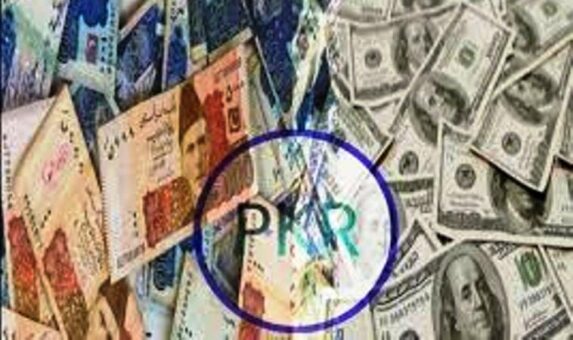
    KARACHI: The US dollar closed near Rs210, a new record high against the Pakistan Rupee (PKR) on Monday amid falling foreign exchange reserves and demand for import payments.

    The exchange rate recorded a decline of Rs1.21 in rupee value to end at Rs209.96 to the dollar from last Friday’s closing of Rs208.75 in the interbank foreign exchange market.

    READ MORE: Rupee collapses to fresh low against dollar to Rs208.75

    According to data released by the State Bank of Pakistan (SBP) a day earlier, the official reserves of the central bank had declined to provide about one month import cover.

    The official foreign exchange reserves of the State Bank of Pakistan (SBP) fell by $241 million to $8.985 billion by week ended June 10, 2022 as compared with $9.226 billion a week ago i.e. June 03, 2022.

    The present level of the SBP’s reserves showed that the central bank has import cover for around only one months.

    Pakistan’s import bill for the month of May 2022 recorded at $6.777 billion, according to Pakistan Bureau of Statistics (PBS).

    The latest foreign exchange reserves of the SBP showed it fell around 2½ years low. Previously, the foreign exchange reserves held by the central bank were seen at $9.233 billion on December 6, 2019.

    The foreign exchange reserves held by the central bank witnessed a record high at $20.146 billion by week ended August 27, 2021.

    READ MORE: Pakistan’s central bank reserves shrink to one month import cover

    Since touching the peak the central bank’s foreign exchange witnessed a continuous decline. The official reserves of the SBP fell around $11.16 billion by week ended June 10, 2022 from touching the peak on August 27, 2021.

    The country is facing serious balance of payment crisis during the past many months. The foreign exchange reserves of the central bank have seen a constant decline.

    The country was expecting inflows from various sources but so far those were not materialized so far. The country also making all efforts to resume IMF program to obtain about $ 1 billion next tranche under Extended Fund Facility (EFF).

    It is pertinent to mention that the government had twice increased the prices of petroleum products since May 26, 2022 in order to satisfy the International Monetary Fund (IMF) for the release of next tranche of about $1 billion. Another increase was seen on June 15, 2022.

    The government on May 26, 2022 decided partially withdraw the subsidy to get the next tranche of the IMF, the rupee sharply made gains against the dollar. The local unit made a recovery of Rs4.42 against the dollar during the past five sessions.

    READ MORE: Free-fall in rupee continues, dollar touches new high at Rs206.46

    The rupee remained under pressure against the greenback during the current fiscal year. The State Bank of Pakistan (SBP) has taken various measures to support balance of payment and the local currency. However, the measures ended in a failure to help the rupee to recover losses.

    The SBP on May 23, 2022 announced a sharp increase in policy rate by 150 basis points to 13.75 per cent from 12.25 per cent.

    Recently the government announced a complete ban on imports to support balance of payment and help the rupee to stabilize. But all these measures appeared in failure as the exchange rate yet again deteriorated today massively.

    READ MORE: Rupee’s erosion continues as dollar closes at Rs205.16

  • Pakistan announces massive tax reduction for salaried persons

    Pakistan announces massive tax reduction for salaried persons

    KARACHI: Pakistan has announced massive tax reduction for salaried persons in the budget 2022/2023. The country announced federal budget 2022/2023 on June 10, 2022 and announced massive reduction in tax on the income of salaried person, which may be applicable from July 01, 2022.

    Through Finance Bill, 2022 the tax slabs have been reduced to seven from 12. Besides, bringing down the number of slabs, the country also provided massive tax relief in payment of tax.

    READ MORE: Pakistan reduces salary tax slabs to 7 in budget 2022/23

    According to PwC A F Ferguson & Co. the persons falling in various tax slabs will save tax amount in tax year 2022-2023.

    Following is the comparison in proposed salary taxes and existing taxes calculated by PwC A F Ferguson&Co.

    READ MORE: Massive cut in subsidies to curtail current expenditures

    Amount in Rupees

    Annual taxable incomeExisting taxProposed tax(Saving) / Excess tax
    600,000 – – Nil
    1,200,00030,000100(29,900)
    2,400,000180,00084,000(96,000)
    3,600,000390,000234,000(156,000)
    6,000,000895,000654,000(241,000)
    12,000,0002,345,0002,004,000(341,000)
    18,000,0004,845,0003,954,000(891,000)
    24,000,0005,645,0005,904,000259,000

    The finance bill proposed following income slabs and rate of tax for salaried persons for tax year 2022/2023:

    READ MORE: Petroleum levy to generate Rs750 billion

    S#Taxable IncomeRate of Tax
    (1)(2)(3)
    1.Where taxable income does not exceed Rs. 600,0000
    2.Where taxable income exceeds Rs. 600,000 but does not exceed Rs. 1,200,000Rs. 100
    3.Where taxable income exceeds Rs. 1,200,000 but does not exceed Rs. 2,400,0007% of the amount exceeding Rs. 1,200,000
    4.Where taxable income exceeds Rs. 2,400,000 but does not exceed Rs. 3,600,000Rs. 84,000 + 12.5% of the amount exceeding Rs. 2,400,000
    5.Where taxable income exceeds Rs. 3,600,000 but does not exceed Rs. 6,000,000Rs. 234,000 + 17.5% of the amount exceeding Rs. 3,600,000
    6.Where taxable income exceeds Rs. 6,000,000 but does not exceed Rs. 12,000,000Rs. 654,000 + 22.5% of the amount exceeding Rs. 6,000,000
    7.Where taxable income exceeds Rs. 12,000,000Rs. 2,004,000 + 32.5% of the amount exceeding Rs. 12,000,000.”

    The existing income slabs and rate of tax for salaried persons:

    READ MORE: FBR assigned tax collection target of Rs7 trillion in 2022/2023

    1. Where taxable income does not exceed: Rs. 600,000 0%

    2. Where taxable income exceeds Rs. 600,000 but does not exceed Rs. 1,200,000: 5% of the amount exceeding Rs. 600,000

    3. Where taxable income exceeds Rs. 1,200,000 but does not exceed Rs. 1,800,000: Rs. 30,000 plus 10% of the amount exceeding Rs. 1,200,000

    4. Where taxable income exceeds Rs. 1,800,000 but does not exceed Rs. 2,500,000: Rs. 90,000 plus 15% of the amount exceeding Rs. 1,800,000

    5. Where taxable income exceeds Rs.2,500,000 but does not exceed Rs. 3,500,000: Rs. 195,000 plus 17.5% of the amount exceeding Rs. 2,500,000

    6. Where taxable income exceeds Rs. 3,500,000 but does not exceed Rs. 5,000,000: Rs. 370,000 plus 20% of the amount exceeding Rs. 3,500,000

    7. Where taxable income exceeds Rs. 5,000,000 but does not exceeds Rs. 8,000,000: Rs. 670,000 plus 22.5% of the amount exceeding Rs. 5,000,000

    8. Where taxable income exceeds Rs. 8,000,000 but does not exceeds Rs. 12,000,000: Rs. 1,345,000 plus 25% of the amount exceeding Rs. 8,000,000

    9. Where taxable income exceeds Rs. 12,000,000 but does not exceeds Rs. 30,000,000: Rs. 2,345,000 plus 27.5% of the amount exceeding Rs. 12,000,000

    10. Where taxable income exceeds Rs. 30,000,000 but does not exceeds Rs. 50,000,000: Rs. 7,295,000 plus 30% of the amount exceeding Rs. 30,000,000

    11. Where taxable income exceeds Rs. 50,000,000 but does not exceeds Rs. 75,000,000: Rs. 13,295,000 plus 32.5% of the amount exceeding Rs. 50,000,000

    12. Where taxable income exceeds Rs. 75,000,000 Rs. 21,420,000 plus 35% of the amount exceeding Rs. 75,000,000]

  • Pakistan decides 10% regulatory duty on petrol import

    Pakistan decides 10% regulatory duty on petrol import

    KARACHI: Pakistan has decided to impose regulatory duty at 10 per cent from July 01, 2022.

    The country presented its federal budget 2022/2023 on June 10, 2022 and proposed increase on regulatory duty on various imported goods.

    READ MORE: Penalty amount revised for late filing income tax returns

    The Finance Bill, 2022 suggested levying 10 per cent regulatory duty on import of motor spirit as against existing rate of zero percent.

    Experts at PwC A.F. Ferguson Chartered Accountants said that the notifications for amendments relating to regulatory duty and additional duty are yet to be issued. “The comments are based on ‘Salient Features’ issued with the finance bill,” they added.

    READ MORE: Advance tax on immovable property purchase enhanced to 250% for non-filers

    The government also proposed increase in regulatory duty from zero per cent to 10 per cent on other paper, paperboard, cellulose wadding and webs of cellulose fibers.

    Furthermore, the government planned to increase regulatory duty from 10 per cent to 20 per cent on optic fiber cables.

    The Finance Bill also proposed amendments in reduction of regulatory duties, which included:

    Regulatory duty has been proposed to be reduced as follows:

    Case hardening steel from 30 per cent to 20 per cent

    Chrome yellow from 15 per cent to 0 per cent

    The Finance Bill proposed reduction / concessions in customs duty:

    Customs Duty (CD) leviable on the import of following categories of items / sectors is proposed to be exempted for incentivizing the respective sectors:

    READ MORE: Pakistan massively increases taxation on motor vehicles

    – Machinery and capital goods for mechanization of farming including machinery pertaining to irrigation, drainage, harvesting, plant protection etc.

    – Specified raw materials used for manufacturing of LED lights, LED bulbs (including parts thereof) and brush ware.

    – 26 Active Pharmaceutical Ingredients for incentivizing Pharmaceutical manufacturers.

    – Raw materials for manufacture of first aid bandages.

    – Membranes for filtering / purifying water.

    – The drug ‘Grafalon’ and gadget ‘Irisvision’.

    – Raw materials of Ivy leaves extract powders.

    – Motor spirit.

    In addition to CD, Additional Customs Duty (ACD) is also proposed to be exempted on import of the following goods:

    – Raw materials imported by paper sizing industry and chlorinated paraffin wax industry and manufacturers of aluminum conductor composite cores.

    – Stamping foils for manufacturing of optic fiber cables.

    – Aluminum paste and powder imported by the Coating industry.

    – Guts, bladders and stomachs of animals.

    READ MORE: New rates of capital gain tax on disposal of securities

    Reduction in Customs Duty and Additional Customs Duty

    CD leviable on import of following goods is proposed to be reduced:

    – Specified categories of other woven fabrics and artificial flowers / foliage of other materials imported by manufacturers of footwear.

    – High-density fiber (HDF) boards of wood or other ligneous materials

    – Specified fibers of polypropylene.

    In addition to CD, ACD, leviable on import of following goods is also proposed to be reduced:

    – Direct and reactive dyes.

    – Glycerol crude and Glycerol for the coating industry.

    – Goods pertaining to Aluminum, polymers of ethylene, Biaxially Oriented Polypropylene (BOPP) used by the packing industry.

    – Adhesive, Epoxide resins, Filter media/ paper, Non-woven fabric media and Steel plates / sheets of prime quality imported by manufacturers of filters, other than automotive.

    READ MORE: Pakistan slaps 45% corporate tax on banks

    – Organic composite solvents and thinners imported by manufacturers of Dibutyl Orthophthalates.

    – Plywood, veneered panels & similar laminated wood, poly (methyl methacrylate) and cyanoacrylate.

    – Flavoring powders for food preparation for snacks manufacturers.

  • Total bank accounts in Pakistan grow to 66.13 million

    Total bank accounts in Pakistan grow to 66.13 million

    KARACHI: The number of bank accounts in Pakistan increased to 66.13 million by end of March 2022, showing a jump of 6.66 per cent when compared with 62 million bank accounts by end of same month last year, according to data released by the State Bank of Pakistan (SBP).

    It is interesting to note that the statistics showed the population grew much faster than increase in bank accounts. The SBP showed estimated population of the country at 227 million by end of March 2022 as compared with 212 million in the same period of the last year, showing a growth of 7.07 per cent.

    READ MORE: Internet banking posts 20% growth in 3Q: State Bank

    During past one year the number of total banks in the country is same at 44. However, the number of bank branches grew to 16,788 by end of March 2022 as compared with 16,223 by end of same month last year.

    The SBP presented following key highlights of Payment System Review for quarter ended March 30, 2022.

    One EMI, M/s China Mobile Pakistan Electronic Commerce Company (CMPECC), was granted commercial license in Q3-FY22.

    Number of POS machines reached to 96,975 while the number of payment cards declined slightly to 47.2 million from 48.7 million from the last quarter.

    READ MORE: SBP renews status of credit rating agencies

    E-banking volume and value grew by 2.6 per cent and 6.5 per cent respectively on Quarter-on-Quarter (QoQ) basis.

    The number of internet banking users reached 7.6 million recording QoQ growth of 10.6 per cent. These users conducted 38.3 million transactions amounting to PKR 2,906.9 billion amounting to a quarterly growth of 13.5 per cent by volume and 19.9 per cent by value.

    During the same quarter, 38.3 million POS transactions amounting to PKR 189.7 billion were conducted showing quarterly growth of 21.9 per cent by volume and 6.5 per cent by value.

    A total of 9.1 million e-commerce transactions amounting to PKR 27.0 billion were conducted digitally showing quarterly growth in value by 1.3 per cent though volume decline by -32.7 per cent.

    READ MORE: High tax may erode banks’ earnings up to 20%

    Number of ATMs increased by 1.1 per cent as compared to previous quarter. Value of ATM transactions amounted to PKR 2,437.0 billion of which 90.5 per cent transactions were related to cash withdrawals and 5.1 per cent related to Inter Bank Funds Transfer (IBFT).

    The number of mobile banking users declined by -1.0 per cent reaching to 12.0 million. Over 101.5 million transactions valuing around PKR 3,085.8 billion were conducted via mobile banking channels during the quarter, showing a growth of 8.1 per cent by volume and 5.4 per cent by value.

    Branch network of Banks and MFBs has reached to 16,788 branches, which includes 16,643 Real-Time Online Branches (RTOB), 48 manual branches and 97 overseas branches.

    Value of total RTGS (PRISM) transactions during the quarter amounted PKR 155.7 trillion of which PKR 106.2 trillion were related to Government Securities.

    READ MORE: Pakistan slaps 45% corporate tax on banks

  • Prices of essential items surge by 28% in Pakistan

    Prices of essential items surge by 28% in Pakistan

    ISLAMABAD: The prices of essential items have recorded 28 per cent increase Year on Year (YoY) by week ended June 16, 2022, Pakistan Bureau of Statistics (PBS) said on Friday.

    The surge in prices have been seen following the massive increase in prices of petroleum products by the government during last three rounds: first on May 27, 2022; second on June 02, 2022; and the last one on June 15, 2022.

    READ MORE: Prices of essential items rise by 20% on first POL rate jump

    However, the cumulative effect of inflation is expected to be seen in coming weeks.

    The latest Sensitive Price Indicator (SPI) based inflation for the week ended June 16, 2022 has shown massive increase in prices of essential items over the same week last year.

    Following are the rates that have witnessed increase during last one year:

    READ MORE: Pakistan’s headline inflation up by 13.8% in May 2022

    Onions (135.31 per cent), Diesel (132.61 per cent), Tomatoes (117.27 per cent), Petrol (110.16 per cent), Vegetable Ghee 1 Kg (81.76 per cent), Mustard Oil (80.88 per cent), Pulse Masoor (74.77 per cent), Cooking Oil 5 litre (71.52 per cent), Vegetable Ghee 2.5 Kg (68.47 per cent), LPG (60.97 per cent), Garlic (57.72 per cent), Washing Soap (52.73 per cent), Gents Sponge Chappal (52.21 per cent) and Chicken (51.11 per cent).

    There are some other essential items that have witnessed decline in prices on YoY basis:

    Chillies Powdered (43.42 per cent), Pulse Moong (18.06 per cent), Sugar (10.79 per cent), Electricity charges for Q1 (5.85 per cent) and Gur (3.35 per cent).

    READ MORE: Pakistan’s inflation sharply up by 13.4% in April 2022

    The comparison of prices of essential items on week on week basis, showed 3.38 per cent.

    Increase observed in the prices of food items Chicken (12.10 per cent ), Potatoes (6.89 per cent), Cooked Daal (5.90 per cent), Pulse Gram (5.29 per cent) and Cooked Beef (5.19 per cent),non-food items Diesel (28.91 per cent), Gents Sponge Chappal (26.76 per cent), Gents Sandal (15.40 per cent), Petrol (11.43 per cent), Electricity Charges for Q1 (6.63 per cent) and Cigarettes (6.27 per cent), with joint impact of (2.53 per cent) into the overall SPI for combined group of (3.38 per cent).

    On the other hand, decrease observed in the prices of Onions (5.20 per cent), Wheat Flour (2.19 per cent), LPG (1.32 per cent), Bananas (0.83 per cent), Gur (0.45 per cent) and Sugar (0.02 per cent).

    READ MORE: Pakistan’s headline inflation increases by 12.7% in March

  • Pakistan to stay on FATF grey list till onsite visit

    Pakistan to stay on FATF grey list till onsite visit

    BERLIN: Pakistan will stay on the grey list despite making compliance to all the action plans set by the Financial Action Task Force (FATF). An onsite visit to Pakistan is required to verify the implementation of the country, a statement issued on Friday by the watchdog said.

    However, Pakistan has not been officially removed from the FATF’s grey list.

    READ MORE: FATF retains Pakistan in grey list; admits progress

    The watchdog said that FATF will “monitor the COVID-19 situation and conduct an on-site visit at the earliest possible date”.

    The FATF officials will hold a press briefing shortly on the outcomes of the four-day plenary session of the watchdog that reviewed Pakistan’s action plans.

    READ MORE: Pakistan urges FATF to take action against Indian plot

    A government official had earlier said in a conversation with the BBC that matters will take seven to eight months to settle even after Pakistan has made its way out of the watch list as the FATF team will visit Pakistan for an inspection.

    READ MORE: Pakistan likely to exit from FATF’s grey list

    Pakistan had launched a massive diplomatic effort to get off the FATF grey list. Minister of State for Foreign Affairs Hina Rabbani Khar, who is also the chair of Pakistan’s National FATF Coordination Committee, is leading the Pakistan delegation at the plenary meeting that started on June 14, 2022.

    READ MORE: Pakistan complies with 31 requirement of FATF

  • Foreign Investment into Pakistan plunges by 59% during 11MFY22

    Foreign Investment into Pakistan plunges by 59% during 11MFY22

    KARACHI: Total foreign investment into Pakistan has declined by 59 per cent to $1.59 billion during first 11 months (July – May) of fiscal year 2021/2022, according to data released by the State Bank of Pakistan (SBP) on Friday.

    The inflows of foreign investment into the country were $3.85 billion during the corresponding period of the last fiscal year.

    READ MORE: Foreign investment falls by 57% in 10MFY22: SBP

    Total foreign private investment recorded a 12.5 per cent decline to $1.22 billion during 11 months of the current fiscal year as compared with $1.39 billion in the same months of the last fiscal year.

    Foreign Direct Investment (FDI), the major component of the foreign private investment, fell by 5 per cent to $1.68 billion during the months under review as compared with $1.6 billion in the corresponding period of the last fiscal year.

    READ MORE: Foreign investment into Pakistan surges by 131%

    The portfolio investment, the other component of the foreign private investment, has recorded a fall of 32.3 per cent during the period. The investment in the capital market recorded an outflow of $378 million during July – May 2021/2022 as compared with outflow of $286 million in the same period of the last fiscal year.

    READ MORE: Foreign investment surges by 176% during July – January

    The inflow in debt securities under foreign public investment was $367 million during first 11 months of the current fiscal year as compared with $2.46 billion in the same months of the last fiscal year.

    READ MORE: Pakistan’s foreign investment surges by 73% in 5 months

  • Rupee collapses to fresh low against dollar to Rs208.75

    Rupee collapses to fresh low against dollar to Rs208.75

    KARACHI: The Pakistan Rupee (PKR) collapsed to another record low against the US dollar to close at Rs208.75 at interbank foreign exchange market on Friday.

    The exchange rate recorded a fall of Rs1.08 in rupee value to end at Rs208.75 from last day’s closing of Rs207.67, the previous record low of rupee, in the interbank foreign exchange market.

    READ MORE: Dollar touches new peak of Rs207.67 at interbank closing

    Currency experts said that the foreign exchange reserves had declined to critically low, which created panic in the market. Besides, high oil prices and rise in commodity prices globally also pushed dollar demand for import payments.

    According to data released by the State Bank of Pakistan (SBP) a day earlier, the official reserves of the central bank had declined to provide about one month import cover.

    READ MORE: Pakistan’s central bank reserves shrink to one month import cover

    The official foreign exchange reserves of the State Bank of Pakistan (SBP) fell by $241 million to $8.985 billion by week ended June 10, 2022 as compared with $9.226 billion a week ago i.e. June 03, 2022.

    The present level of the SBP’s reserves showed that the central bank has import cover for around only one months.

    Pakistan’s import bill for the month of May 2022 recorded at $6.777 billion, according to Pakistan Bureau of Statistics (PBS).

    The latest foreign exchange reserves of the SBP showed it fell around 2½ years low. Previously, the foreign exchange reserves held by the central bank were seen at $9.233 billion on December 6, 2019.

    The foreign exchange reserves held by the central bank witnessed a record high at $20.146 billion by week ended August 27, 2021.

    READ MORE: Free-fall in rupee continues, dollar touches new high at Rs206.46

    Since touching the peak the central bank’s foreign exchange witnessed a continuous decline. The official reserves of the SBP fell around $11.16 billion by week ended June 10, 2022 from touching the peak on August 27, 2021.

    The country is facing serious balance of payment crisis during the past many months. The foreign exchange reserves of the central bank have seen a constant decline.

    The country was expecting inflows from various sources but so far those were not materialized so far. The country also making all efforts to resume IMF program to obtain about $ 1 billion next tranche under Extended Fund Facility (EFF).

    It is pertinent to mention that the government had twice increased the prices of petroleum products since May 26, 2022 in order to satisfy the International Monetary Fund (IMF) for the release of next tranche of about $1 billion. Another increase was seen on June 15, 2022.

    READ MORE: Rupee’s erosion continues as dollar closes at Rs205.16

    The government on May 26, 2022 decided partially withdraw the subsidy to get the next tranche of the IMF, the rupee sharply made gains against the dollar. The local unit made a recovery of Rs4.42 against the dollar during the past five sessions.

    The rupee remained under pressure against the greenback during the current fiscal year. The State Bank of Pakistan (SBP) has taken various measures to support balance of payment and the local currency. However, the measures ended in a failure to help the rupee to recover losses.

    The SBP on May 23, 2022 announced a sharp increase in policy rate by 150 basis points to 13.75 per cent from 12.25 per cent.

    Recently the government announced a complete ban on imports to support balance of payment and help the rupee to stabilize. But all these measures appeared in failure as the exchange rate yet again deteriorated today massively.

  • Pakistan’s central bank reserves shrink to one month import cover

    Pakistan’s central bank reserves shrink to one month import cover

    KARACHI: The official reserves of Pakistan’s central bank have declined to provide about one month import cover, according to official data released on Thursday.

    The official foreign exchange reserves of the State Bank of Pakistan (SBP) fell by $241 million to $8.985 billion by week ended June 10, 2022 as compared with $9.226 billion a week ago i.e. June 03, 2022.

    READ MORE: SBP’s forex reserves slip 2½-year low to $9.226 billion

    The present level of the SBP’s reserves showed that the central bank has import cover for around only one months.

    Pakistan’s import bill for the month of May 2022 recorded at $6.777 billion, according to Pakistan Bureau of Statistics (PBS).

    The latest foreign exchange reserves of the SBP showed it fell around 2½ years low. Previously, the foreign exchange reserves held by the central bank were seen at $9.233 billion on December 6, 2019.

    The foreign exchange reserves held by the central bank witnessed a record high at $20.146 billion by week ended August 27, 2021.

    READ MORE: SBP’s forex reserves fall two-year low to $9.72 billion

    Since touching the peak the central bank’s foreign exchange witnessed a continuous decline. The official reserves of the SBP fell around $11.16 billion by week ended June 10, 2022 from touching the peak on August 27, 2021.

    The country is facing serious balance of payment crisis during the past many months. The foreign exchange reserves of the central bank have seen a constant decline.

    The falling foreign exchange reserves also put pressure on the local currency. The Pakistani Rupee (PKR) is also depreciating to record low against the US dollar on daily basis.

    The rupee fell to a fresh historic low at Rs207.67 to the dollar at interbank foreign exchange closing on June 16, 2022.

    READ MORE: Moody’s changes Pakistan’s outlook to negative

    The country was expecting inflows from various sources but so far those were not materialized so far. The country also making all efforts to resume IMF program to obtain about $ 1 billion next tranche under Extended Fund Facility (EFF).

    The total foreign exchange reserves of Pakistan have declined to around three-year low at $14.94 billion by week ended June 10, 2022. Previously, the foreign exchange reserves of the country were seen at $14.86 billion by week ended July 19, 2019.

    The country’s foreign exchange reserves have fallen by $233 million to $14.943 billion by week ended June 10, 2022 as compared with $15.176 billion a week ago i.e. June 03, 2022.

    READ MORE: Pakistan’s headline inflation up by 13.8% in May 2022

    The country’s foreign exchange reserves hit all-time high of $27.228 billion on August 27, 2021. Since then the foreign exchange reserves have declined by $12.285 billion.

    The foreign exchange held by commercial banks however slightly up by $8 million to $5.958 billion by week ended June 10, 2022 as compared with $9.226 billion a week ago.