Category: Top stories

Find top stories in this section. Pakistan Revenue brings you the latest and most important news from Pakistan and around the world, keeping you informed with key updates and insights.

  • Policy rate may rise as T-Bill yields increase sharply

    Policy rate may rise as T-Bill yields increase sharply

    KARACHI: The cut-off yield of treasury bills (T-Bills) increased sharply in an auction held on Wednesday indicating an expected rise in policy rate in upcoming monetary policy announcement scheduled for April 19, 2022.

    “In today’s [April 06, 2022] treasury bills auction, cut-off yields increased by 60 – 80 basis points,” according to analysts at Topline Securities.

    READ MORE: SBP receives 20 applications for digital bank licenses

    The government raised Rs645 billion through auction of treasury bills against the target of Rs600 billion and maturity of Rs674 billion, according to results announced by the State Bank of Pakistan (SBP).

    The key policy rate has been kept unchanged at 9.75 per cent in the last Monetary Policy Statement (MPS) on March 08, 2022. However, the cut-off yields of government securities have shown much higher rate against the policy rate.

    READ MORE: State Bank enhances frequency of MP reviews to eight

    The cut-off yields of 3-, 6- and 12-month papers increased by 80 basis points, 75 basis points and 60 basis points, respectively. The yields in three-month treasury bill increased to 12.80 per cent from 11.9999 per cent. Similarly, yields in six-month and 12-month papers have increased to 13.25 per cent from 12.50 per cent and 13.2999 per cent from 12.70 per cent, respectively.

    READ MORE: Key policy rate goes up to 9.75%; SBP raises 250bps in less than month

    The latest auction of treasury bills witnessed aggressive participation from the banks. The SBP received bids worth Rs911 billion against the target of Rs600 billion.

    However, the central bank accepted bids worth Rs645 billion at maturity of Rs674 billion.

    READ MORE: SBP decides to keep policy rate unchanged at 9.75%

  • Dollar tops PKR 186.13 at interbank closing

    Dollar tops PKR 186.13 at interbank closing

    KARACHI: The US dollar ended at Pakistan Rupee (PKR) 186.13, a new historic high of the foreign currency, at closing of interbank foreign exchange market on Wednesday.

    (more…)
  • Dollar crosses PKR 186 in midday interbank trading

    Dollar crosses PKR 186 in midday interbank trading

    KARACHI: The US dollar crossed the level of 186 to Pakistan Rupee (PKR) during midday trading at interbank foreign exchange market on Wednesday.

    The dollar/rupee parity is at Rs186.10 to the dollar. The foreign currency has gained 87 paisas so far when compared with last day’s closing of Rs185.23.

    READ MORE: Dollar continues record spree against PKR; hits 185.23

    The rupee fell non-stop against the dollar for the last 15 trading sessions. The local currency recorded Rs178.51 at interbank closing on March 11, 2022 and since then the dollar’s made gain Rs6.72 at the closing.

    The local unit recorded a decline of Rs27.69 or 17.58 per cent against the dollar since start of the current fiscal year. The rupee was at Rs157.54 to the dollar on June 30, 2021 and fell to Rs185.23 to the dollar on April 05, 2022.

    READ MORE: Dollar makes new top at Rs184.09

    The recent fall may be attributed to significant fall to foreign exchange reserves. Pakistan’s foreign exchange reserves have depleted by $2.88 billion in a week to $18.554 billion by week ended March 25, 2022, State Bank of Pakistan (SBP) said on Thursday.

    The foreign exchange reserves of the country were $21.44 billion by week ended March 18, 2022.

    This is seventh consecutive week when the country’s foreign exchange reserves have witnessed consistent decline. The liquid foreign exchange reserves of Pakistan have declined by $5.167 billion since February 04, 2022, when the reserves were at $23.721 billion.

    READ MORE: Rupee continues falling spree; dollar at Rs183.48

    The ballooning current account deficit escalated the dollar value. Pakistan’s current account deficit ballooned to $12 billion during first eight months (July – February) 2021/2022 against a surplus of $994 million in the corresponding months of the last fiscal year.

    Although the current account deficit narrowed to $545 million in February 2022 as compared with the deficit of $2.53 billion in January 2022, scheduled external repayments are still a threat to balance of payment.

    READ MORE: Rupee falls to new historic low to dollar at 182.64

    The trade deficit widened by 70 per cent to $35.39 billion during first nine months (July – March) 2021/2022 as compared with the deficit of $20.8 billion in the corresponding months of the last fiscal year.

    The exports of the country recorded an increase of 24.67 per cent to $23.3 billion during first nine months of the current fiscal year as compared with $18.7 billion in the same months of the last fiscal year.

    Meanwhile, import bill registered an increase of 48.63 per cent to $58.69 billion during July – March 2021/2022 as compared with $39.49 billion in the corresponding period of the last fiscal year.

  • FBR raises steel valuation amid high commodity prices

    FBR raises steel valuation amid high commodity prices

    ISLAMABAD: The Federal Board of Revenue (FBR) on Tuesday increased the valuation of steel products considering rising commodity prices in the international markets.

    The FBR has fixed the valuation of steel products for the collection of sales tax, instead of the prevailing rates in the open market.

    The fixed valuation is the minimum price on which sales tax is to be collected on the supply of steel products.

    The FBR issued SRO 489(I)/2022 on April 05, 2022.

    Previously, the FBR issued SRO 1465(I)/2021 dated November 15, 2021 in this regard. The FBR issued SRO 985(I)/2021 dated August 04, 2021, to introduce the valuation for collection of sales tax at 17 per cent on supply of steel products.

    The FBR enhanced the valuation to Rs164,037 per metric ton from Rs153,000 per metric ton on the supply of steel bars and other long profiles.

    READ MORE: FBR increases valuation of steel products

    The value has been increased to Rs133,813 metric tons from Rs131,000 per metric ton on supply of steel billets.

    However, the value of steel ingots has been kept unchanged at Rs126,000 per metric ton for the collection of sales tax.

    The value of ship plates has been increased to Rs129,584 per metric tons from Rs126,000 per metric ton for collection of sales tax.

    The value of other re-rollable iron and steel scrap has been increased to Rs125,688 per ton from Rs119,000 per metric ton for the purpose of sales tax.

    The FBR further said that in case notified value of supply of the goods is higher than the value fixed, the value of goods shall be the value at which the supply is made.

  • FBR issues list of 185 retailers for mandatory integration

    FBR issues list of 185 retailers for mandatory integration

    ISLAMABAD: The Federal Board of Revenue (FBR) on Tuesday issued a list of 185 retailers for mandatory integration with online tax system.

    The FBR directed the retailers to integrate with the online tax system by April 10, 2022 in order to avoid harsh action.

    The revenue body issued Sales Tax General Order No. 11 of 2022 asking Tier-1 retailers for integration with FBR’s Point of Sale (POS) system.

    READ MORE: FBR issues list of 1,358 retailers for mandatory POS

    The FBR said that the Finance Act, 2019 added sub-section 6 to section 8B of the Sales Tax Act, 1990 whereby a Tier-1 retailer, who did not integrate its retail outlet in the manner prescribed under sub-section 9A of Section 3 of the Sales Tax Act, 1990 during a tax period, its adjustable tax for that period would be reduced by 15 per cent. The figure of 15 per cent has been raised to 60 per cent through Finance Act, 2021.

    The FBR further said that in order to operationalize the important provision of law, a system-based approach has been adopted whereby all Tier-1 retailers, who are liable to integrate but have not yet integrated, with effect from July 2021 (sales tax return filed in August 2021) are to be dealt with as per the procedure laid down in STGO No. 1 of 2022 issued on August 3, 2021.

    READ MORE: Prize scheme on invoices issued by retailers

    As per latest the STGO a list of 185 identified Tier-1 retailers has been issued allowing them to integrate with FBR’s system by April 10, 2022 and the procedure of exclusion from the list of 185 identified retailers shall apply as laid down in Para 2 of STGO 1 of 2022 dated August 03, 2021.

    The FBR said upon filing of sales tax return for the month of February 2022 for all notified Tier-1 retailers having yet integrated, their input tax claim would be disallowed as above, without any further notice or proceedings, creating tax demand by the same amount.

    READ MORE: FBR decides penal action against defaulting retailers

  • Dollar continues record spree against PKR; hits 185.23

    Dollar continues record spree against PKR; hits 185.23

    KARACHI: The US dollar’s record making 15-day spree against Pakistan Rupee (PKR) continued on Tuesday as the exchange rate ended Rs185.23 in interbank foreign exchange market.

    The rupee fell by Rs1.14 paisas to close at Rs185.25 to the dollar from previous close of Rs184.09 on April 01, 2022 in the interbank foreign exchange market.

    The rupee fell non-stop against the dollar for the last 15 trading sessions. The local currency recorded Rs178.51 at interbank closing on March 11, 2022 and since then the dollar’s made gain Rs6.72.

    READ MORE: Dollar makes new top at Rs184.09

    The local unit recorded a decline of Rs27.69 or 17.58 per cent against the dollar since start of the current fiscal year. The rupee was at Rs157.54 to the dollar on June 30, 2021 and fell to Rs185.23 to the dollar on April 05, 2022.

    The recent fall may be attributed to significant fall to foreign exchange reserves. Pakistan’s foreign exchange reserves have depleted by $2.88 billion in a week to $18.554 billion by week ended March 25, 2022, State Bank of Pakistan (SBP) said on Thursday. The foreign exchange reserves of the country were $21.44 billion by week ended March 18, 2022.

    READ MORE: Rupee continues falling spree; dollar at Rs183.48

    This is seventh consecutive week when the country’s foreign exchange reserves have witnessed consistent decline. The liquid foreign exchange reserves of Pakistan have declined by $5.167 billion since February 04, 2022, when the reserves were at $23.721 billion.

    The ballooning current account deficit escalated the dollar value. Pakistan’s current account deficit ballooned to $12 billion during first eight months (July – February) 2021/2022 against a surplus of $994 million in the corresponding months of the last fiscal year.

    READ MORE: Rupee falls to new historic low to dollar at 182.64

    Although the current account deficit narrowed to $545 million in February 2022 as compared with the deficit of $2.53 billion in January 2022, scheduled external repayments are still a threat to balance of payment.

    The trade deficit widened by 70 per cent to $35.39 billion during first nine months (July – March) 2021/2022 as compared with the deficit of $20.8 billion in the corresponding months of the last fiscal year.

    READ MORE: Rupee deteriorates record low to dollar at 182.34

    The exports of the country recorded an increase of 24.67 per cent to $23.3 billion during first nine months of the current fiscal year as compared with $18.7 billion in the same months of the last fiscal year.

    Meanwhile, import bill registered an increase of 48.63 per cent to $58.69 billion during July – March 2021/2022 as compared with $39.49 billion in the corresponding period of the last fiscal year.

  • Dollar hits PKR 184.35 in intraday trading

    Dollar hits PKR 184.35 in intraday trading

    KARACHI: The US dollar hit a new record high at Pakistan Rupee (PKR) 184.35 during intraday trading at interbank foreign exchange market on Tuesday.

    The market opened after three days (two weekly holidays + bank holiday) and witnessed dollar demand.

    The rupee fell so far 26 paisas against the dollar. The local unit ended at Rs184.09 to the dollar on April 01, 2022 in interbank foreign exchange market. It was the highest level of the dollar by closing of interbank market.

    READ MORE: Dollar makes new top at Rs184.09

    The rupee fell non-stop against the dollar for the last 14 trading sessions. The local currency recorded Rs178.51 at interbank closing on March 11, 2022 and since then the dollar’s Bull Run was unabated.

    The recent fall may be attributed to significant fall to foreign exchange reserves. Pakistan’s foreign exchange reserves have depleted by $2.88 billion in a week to $18.554 billion by week ended March 25, 2022, State Bank of Pakistan (SBP) said on Thursday. The foreign exchange reserves of the country were $21.44 billion by week ended March 18, 2022.

    READ MORE: Rupee continues falling spree; dollar at Rs183.48

    This is seventh consecutive week when the country’s foreign exchange reserves have witnessed consistent decline. The liquid foreign exchange reserves of Pakistan have declined by $5.167 billion since February 04, 2022, when the reserves were at $23.721 billion.

    READ MORE: Rupee falls to new historic low to dollar at 182.64

    The ballooning current account deficit escalated the dollar value. Pakistan’s current account deficit ballooned to $12 billion during first eight months (July – February) 2021/2022 against a surplus of $994 million in the corresponding months of the last fiscal year.

    Although the current account deficit narrowed to $545 million in February 2022 as compared with the deficit of $2.53 billion in January 2022, scheduled external repayments are still a threat to balance of payment.

    READ MORE: Rupee deteriorates record low to dollar at 182.34

  • Pakistan’s March trade deficit widens by only 5.5%

    Pakistan’s March trade deficit widens by only 5.5%

    ISLAMABAD: Pakistan’s trade deficit in the month of March 2022 increased by only 5.5 per cent due to higher growth of exports during the month.

    According to data released by Pakistan Bureau of Statistics (PBS) on Monday, the exports recorded a growth of 16 per cent to $2.74 billion in March 2022 as compared with $2.36 billion in the corresponding month of the last year.

    READ MORE: Pakistan’s trade deficit widens to $32 billion in 8MFY22

    On the other hand, import bill registered an increase of 10 per cent to $6.19 billion in the month of March 2022 as compared with $5.63 billion in the same month of the last year.

    Therefore, the trade deficit for the month of March 2022 was recorded at $3.45 billion as compared with the deficit of $3.27 billion in March 2021, showing an increase of 5.5 per cent.

    Overall the trade deficit widened by 70 per cent to $35.39 billion during first nine months (July – March) 2021/2022 as compared with the deficit of $20.8 billion in the corresponding months of the last fiscal year.

    READ MORE: Pakistan’s trade deficit widens by 92% in seven months

    The exports of the country recorded an increase of 24.67 per cent to $23.3 billion during first nine months of the current fiscal year as compared with $18.7 billion in the same months of the last fiscal year.

    Meanwhile, import bill registered an increase of 48.63 per cent to $58.69 billion during July – March 2021/2022 as compared with $39.49 billion in the corresponding period of the last fiscal year.

    READ MORE: Pakistan’s trade deficit swells by 100% in 1HFY22

    The balance of trade registered a deficit of 11.63 per cent to $3.45 billion in March 2022 as compared with the deficit of $3.09 billion in February 2022.

    The exports recorded a decline of 3 per cent to $2.74 billion in March 2022 as compared with $2.82 billion in February 2022.

    However, import bill recorded 4.72 per cent increase to $6.19 billion in March 2022 when compared with $5.9 billion in the previous month of 2022.

    READ MORE: Pakistan’s trade deficit widens by 112% to $20.59 billion

  • Risks to reforms as national assembly dissolved

    Risks to reforms as national assembly dissolved

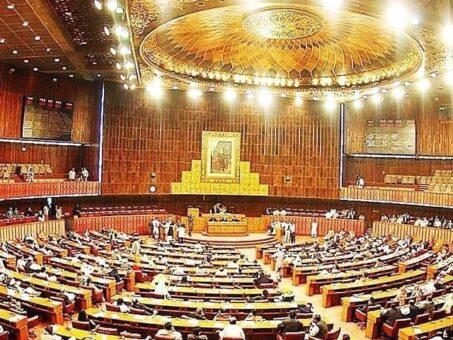
    Pakistan’s political saga took a surprising turn over the weekend as Pakistan’s President approved the dissolution of the National Assembly on the Prime Minister’s advice, analysts at KASB Research said.

    Imran Khan then announced early elections, likely within the next 3 to 6 months. Most notably, the Supreme Court of Pakistan (SCP) has scheduled a hearing on the Suo Moto notice taken by the CJP over the incident. Any parliamentary actions thereafter will be subject to the court’s orders.

    A credit-negative event for Pakistan’s economy:

    READ MORE: Pakistan’s headline inflation increases by 12.7% in March

    The decision to dissolve the national assembly is likely a credit-negative event for the economy. Considerable risks to announced reforms have arisen, including fiscal reforms and planned revitalization of the energy sector. Moreover, concerns of delays in the upcoming federal budget will drive sentiments of further delays in the IMF tranche’s approval. With SBP’s reserves falling to a 15 months low level of 12.1 billion (import cover: nine weeks), risks to Pakistan’s credit outlook have greatly heightened.

    The scenario is evidenced by the rising international bond yields of Pakistan securities, whose yields have surged past 16 per cent compared to 5 per cent a few months prior. Moreover, Pakistan’s CDS spreads have also crossed the 10 per cent mark, a rise of 6pps from a month prior. Month to date, foreign investors have offloaded USD 28 million worth of equities, and we expect potential outflows to gain pace in the coming weeks as the political situation unfolds.

    READ MORE: Pakistan’s weekly forex reserves deplete by $2.88 billion

    Secondary market yields and currency likely to rise further:

    We expect secondary market yields of domestic securities to face additional upside pressure as macroeconomic risks heighten. Yields were already on a sharp upwards trajectory following the rise in global commodity prices, rising risks to external accounts, and falling foreign currency reserves. Rising domestic yields will likely translate to increased lending rates. Moreover, external account imbalances amidst the commodity upcycle, coupled with expected delays in the IMF tranche, will likely keep the Pak Rupee under pressure.

    Sectors dependent on policy reforms will likely underperform:

    We highlight risks to sectors whose performance outlook hinged on the planned policy reforms. These risks are particularly weighted towards Pakistan’s energy sector, which is presently plagued with considerable inefficiencies. We had earlier highlighted our preference for the sector on account of the planned reforms to uplift the industry, including significant actions to curb the circular debt growth.

    Key risks to the energy sector emerging:

    1) Oil and Gas Exploration: The WACOG bill was introduced to alleviate the cash flow crunch of the sector originating from the sale of gas. With expected delays in the implementation of the WACOG bill, which has faced harsh criticism from the opposition, we expect the cash flow woes of the sector to continue for a sustained period.

    READ MORE: Ukraine crisis, political unrest major threats to economy

    2) Oil and Gas Marketing: The WACOG bill was also expected to alleviate the cash flow issues of the OMC sector, particularly PSO. Moreover, planned reforms to ease the circular debt, including a distribution network uplift, may also face delays, further exacerbating the industry’s cash flows.

    3) Independent Power Producers: The IPPs were also expected to benefit from actions to curb the circular debt. Most notably, the sector’s collections have considerably worsened after the recent surge in global energy prices. While the government had plans to set up a Revolving Account of PKR 50bn to ensure timely clearance of overdue bills, any delays on this front will continue to keep the sector’s cash flows under pressure.

    READ MORE: IMF to agree on Pakistan’s industrial promotion package

    4) Refineries: The improving outlook on refineries was largely dependent on the approval of a long-term refinery policy, which was expected to attract investments of up to USD 10.0bn. We project significant delays in the policy’s approval and expect the sector to continue underperforming over the medium term.

    Macroeconomic hedged sectors to fare better:

    As highlighted in one of our previous reports (Pakistan Strategy – USD hedged stocks a shield against macroeconomic heads), we prefer industries capable of weathering the macroeconomic headwinds including Textiles and Technology. These industries have a relative shield against rising interest rates and currency weakness.
  • Erstwhile FATA/PATA units to get exemption on quota

    Erstwhile FATA/PATA units to get exemption on quota

    ISLAMABAD: The Federal Board of Revenue (FBR) has decided to allow tax exemption to industries located in erstwhile FATA/PATA on the basis quota determined against installed capacity.

    An important meeting held in FBR Headquarter on April 01, 2022, (Friday). Chairman FBR Dr. Muhammad Ashfaq Ahmed reviewed progress regarding determination of quota for import of raw material on the basis of installed capacity for the industrial units located in erstwhile FATA/PATA.

    READ MORE: March collection up over 20% amid political unrest: FBR

    The participants of meeting were informed that out of total 140 units of steel , oil and ghee, plastics and textile etc. in erstwhile FATA/ PATA identified for joint survey for determination of manufacturing capacity, reports about 58 units have been sent to the FBR, while reports of 20 more units were in the pipeline.

    The Director General IOCO stated that the survey and reports on the remaining units will be completed in couple of weeks. Chairman FBR directed that exercise/survey to determine the installed capacity needed to be completed by April 15, 2022 positively.

    READ MORE: Pakistan needs to introduce laws to tax crypto income

    It was also decided that exemptions under Sixth Schedule of Sales Tax Act, 1990 and Income Tax Ordinance, 2001 will not be available to industrial units beyond their quota determined on the basis of their installed capacity after April 15, 2022.

    It was reported that some of industrial units were delaying the exercise on frivolous grounds. However, such units will not be allotted any quota to import raw materials after completion of the exercise.

    Chairman FBR reiterated that the business community should play its positive role to complete this survey so that misuse of exemption of taxes in these areas could be discouraged and thus a level playing field may be ensured to industries located in all parts of the country.

    READ MORE: Tax slabs reduction may be considered: FBR chairman

    It is pertinent to mention that at the time of merger of erstwhile Federally Administered Tribal Areas/Provincially Administered Tribal Areas in Khyber Pakhtunkhwa in 2018, tax exemptions had been granted to these areas for 5 years up to June 30, 2023.

    Currently several industrial units located in these areas are manufacturing different goods including Iron & Steel, Plastic, Ghee, Textile, Plastic etc.

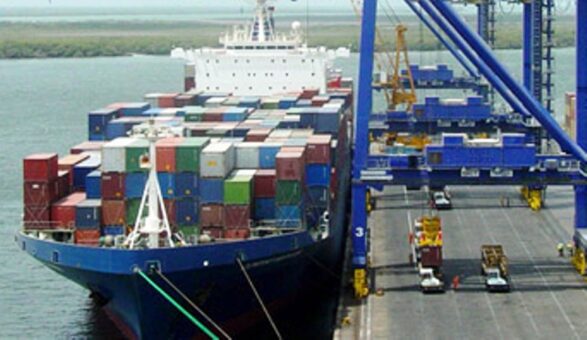
    These units import raw material through sea port at Karachi without payment of Sales Tax and Income Tax. However, these units are required to sell the finished goods only in the newly merged Districts of erstwhile FATA/PATA and not in the tariff areas/other Districts of the Province or in other Provinces.

    READ MORE: Withholding tax should be on income: FBR Chairman

    To frustrate and prevent the misuse of facility of exemption of taxes on the import of raw materials by these units, different measures are being taken by FBR including escort of containers from Azakhail Dryport to the location of the concerned unit.

    The meeting was attended by Member IR Operations, Member IR Policy, Member Customs Policy, Director General Input Output Coefficient Organization (IOCO), Chief Commissioner Peshawar, Chief Collector Khyber Pakhtunkhwa, concerned Collector Customs, Commissioner IR, Director IOCO and other senior officers of FBR.