Category: World

This section brings you news reports from around the world, covering global events, politics, economy, and more. Stay informed with the latest international updates and developments.

  • Emirates pavilion to welcome visitors of Expo 2020 Dubai

    Emirates pavilion to welcome visitors of Expo 2020 Dubai

    KARACHI: Expo 2020 Dubai’s must-see aviation attraction is gearing up to open its doors to the public on October 01, 2021.

    Located in the Opportunity District, and within walking distance of the Al Wasl Dome, the Emirates Pavilion offers a preview for the future of commercial aviation, reframing the role that science and technology will play in the next 50 years of air travel, as it welcomes visitors to experience two floors of interactive multi-sensory installations.

    From today, visitors to Expo 2020 Dubai can plan their visit to the Emirates Pavilion and book their preferred date and time slots in advance.

    Construction on the Emirates Pavilion began in March 2019 and was completed in June 2021. During its design and construction phases, the Emirates Pavilion followed a number of sustainability principles, using non-hazardous, regional, reusable and recyclable materials in its overall structure, and incorporated different design solutions to reduce energy and water consumption.

    The Emirates Pavilion’s towering four storey design and façade are modelled around an aircraft’s wings taking flight, with 24 aluminium cladded fins that curve around two sides of the building structure. The Emirates Pavilion’s exterior lighting includes an 800 metre LED system, which illuminates in vibrant colours at night.

    The interior’s bright, ultramodern design lets in ample natural light and serves as a backdrop for the immersive experiences, and can welcome 120 people an hour.

  • Gerry’s dnata awarded handling for Gulf Air in Pakistan

    Gerry’s dnata awarded handling for Gulf Air in Pakistan

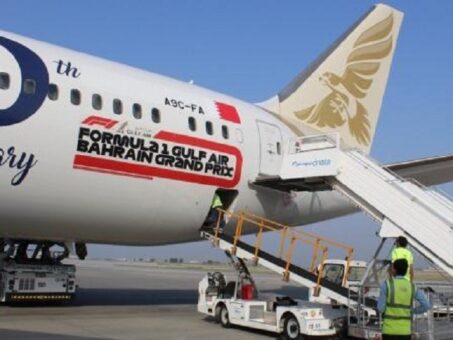
    KARACHI: Gerry’s dnata, Pakistan’s leading ground services provider, has been awarded a multi-year contract by Gulf Air, the national carrier of the Kingdom of Bahrain.

    The partnership will see Gerry’s dnata provide quality and safe ground, passenger and cargo handling services to the airline at six airports in Pakistan, including Karachi, Lahore, Islamabad, Peshawar, Multan and Faisalabad.

    Syed Haris Raza, CEO of Gerry’s dnata, said: “We are proud to be the ground handler of choice for Gulf Air in Pakistan. We consistently invest in infrastructure, cutting-edge technologies and training to deliver the best possible services for our customers.

    “Our new contract is a vote of confidence in our quality offering, and a testament to our team’s hard work and commitment to safety and service excellence. We look forward to a long-standing partnership with the airline.”

    In recent years Gerry’s dnata has significantly invested in facilities, equipment, training and technology, while continually expanding its operations in Pakistan.  Gerry’s dnata’s investments include a state-of-the-art import cargo centre at Jinnah International Airport (KHI) in Karachi. The 72,000 square feet facility is equipped with the latest technologies ensuring safe and efficient handling and storage of all types of cargo. Offering uncompromised temperature-controlled handling and storage solutions to airline customers, the GDP-certified facility has played a key role in the safe handling of COVID-19 vaccines, rapid test kits and other essential goods.

    Gerry’s dnata also expanded its operations at Allama Iqbal International Airport in Lahore (LHE) and opened a new export cargo terminal. The expansion nearly tripled the company’s cargo handling capacity in Lahore, supporting customers and their customers in increasing fruit export from the region.

    The excellent quality of Gerry’s dnata’s services is underpinned by the constant growth of its customer base. Having won over 10 new contracts in the past 18 months, Gerry’s dnata now serves over 30 scheduled and unscheduled airline customers at seven Pakistani airports.

  • IMF starts distributing largest ever $650 billion allocation

    IMF starts distributing largest ever $650 billion allocation

    Washington, DC: International Monetary Fund (IMF) on Monday started distribution of the largest ever allocation of $650 billion to provide additional liquidity to the global economic system.

    Ms. Kristalina Georgieva, Managing Director of the IMF made the following statement on Monday:

    “The largest allocation of Special Drawing Rights (SDRs) in history—about US$650 billion—comes into effect today. The allocation is a significant shot in the arm for the world and, if used wisely, a unique opportunity to combat this unprecedented crisis.

    “The SDR allocation will provide additional liquidity to the global economic system – supplementing countries’ foreign exchange reserves and reducing their reliance on more expensive domestic or external debt. Countries can use the space provided by the SDR allocation to support their economies and step up their fight against the crisis.

    “SDRs are being distributed to countries in proportion to their quota shares in the IMF. This means about US$275 billion is going to emerging and developing countries, of which low-income countries will receive about US$21 billion – equivalent to as much as 6 percent of GDP in some cases.

    “SDRs are a precious resource and the decision on how best to use them rests with our member countries. For SDRs to be deployed for the maximum benefit of member countries and the global economy, those decisions should be prudent and well-informed.

    “To support countries, and help ensure transparency and accountability, the IMF is providing a framework for assessing the macroeconomic implications of the new allocation, its statistical treatment and governance, and how it might affect debt sustainability. The IMF will also provide regular updates on all SDR holdings, transactions, and trading – including a follow-up report on the use of SDRs in two years’ time.

    “To magnify the benefits of this allocation, the IMF is encouraging voluntary channeling of some SDRs from countries with strong external positions to countries most in need. Over the past 16 months, some members have already pledged to lend US$24bn, including US$15 billion from their existing SDRs, to the IMF’s Poverty Reduction and Growth Trust, which provides concessional loans to low-income countries. This is just a start, and the IMF will continue to work with our members to build on this effort.

    “The IMF is also engaging with its member countries on the possibility of a new Resilience and Sustainability Trust, which could use channeled SDRs to help the most vulnerable countries with structural transformation, including confronting climate-related challenges. Another possibility could be to channel SDRs to support lending by multilateral development banks.

    “This SDR allocation is a critical component of the IMF’s broader effort to support countries through the pandemic, which includes: US$117 billion in new financing for 85 countries; debt service relief for 29 low-income countries; and policy advice and capacity development support to over 175 countries to help secure a strong and more sustainable recovery.”

  • Google announces vaccine requirement for its officials

    Google announces vaccine requirement for its officials

    Google is the first big tech company to announce a vaccine requirement for returning to its offices. The decision may push other tech companies to follow with similar moves.

    Google will now require employees who work in its offices to be fully vaccinated and is pushing back its start date for when they need to report back to the office in response to the highly contagious delta variant spreading across the United States and around the world.

    Google made the announcement in a note sent to employees from CEO Sundar Pichai on Wednesday.

    In it, Pichai says the company has seen high vaccination rates for Google employees so far and that is why it is comfortable in bringing workers back into the office.

    Currently, there are some early volunteers who are already working at various Google campuses.

    “For those of you with special circumstances, we will soon be sharing expanded temporary work options that will allow you to apply to work from home through the end of 2021,” said Pichai in the note.

    In the spring, Apple, Google, Facebook and Amazon started rolling out their return-to-office plans which largely involved a hybrid approach — three days of work in the office and two at home, starting for most employees in the fall.

    For the most part, wearing masks was not going to be a requirement for vaccinated in-office workers at most companies, and getting vaccines was not mandated. Now the companies’ plans appear to going through another round of revisions.

    Apple was the first company to change its fall 2021 return-to-office date, announcing in July that workers would not be required back until October instead of the previously announced date in September.

  • Get $100 for coronavirus vaccination

    Get $100 for coronavirus vaccination

    New York City Mayor Bill de Blasio has announced to pay $100 for people to get vaccinated against the coronavirus.

    New Yorkers, who get their first vaccine dose, starting Friday at a city-run vaccination site will get a $100 incentive, the mayor announced Wednesday.

    News reports quoted De Blasio as saying the $100 will make a “big impact, particularly in a world in which more and more things are going to be determined by whether you’re vaccinated or not.”

    “We wanted to supercharge it by saying we’ll give you extra, direct personal incentive to get this done now.”

    Residents and city employees will receive a $100 prepaid debit card, said Rachel Loeb, president of the New York City Economic Development Corporation.

    Residents can immediately redeem the card digitally, or receive a physical debit card.

    The incentive is the latest the mayor has announced to get the city vaccinated. De Blasio said Wednesday that 9,902,097 doses have been administered.

    Fifty-nine percent of the city’s population has received one dose of a coronavirus vaccine, according to data from the city, while 54 percent have been fully inoculated.

    •             AFL-CIO backing vaccine requirement for workers

    •             Biden expected to announce vaccine requirement for federal workers…

    On Monday, de Blasio said that all city employees would need to be fully vaccinated or undergo frequent coronavirus testing by September 13.

    The mayor said that while vaccine mandates are a “crucial part” of the solution, mandates work well with incentives. 

    “We’ve talked the last few days about mandates, and there’s no question in my mind that mandates are a crucial part of the solution, and we’ll keep working on those. But we also still believe in incentives. Incentives help immensely. Both go well together,” de Blasio quoted as saying.

  • UN appoints tax committee, includes FBR Member

    UN appoints tax committee, includes FBR Member

    United Nations Secretary-General António Guterres has appointed 25 distinguished tax experts from around the world to serve as members of the United Nations Committee of Experts on International Cooperation in Tax Matters for the term 2021 to 2025.

    (more…)
  • Bitcoin recovers after yesterday’s crash

    Bitcoin recovers after yesterday’s crash

    KARACHI: Bitcoin has recovered on Wednesday after witnessed a decline below $30,000 a day earlier.

    The bitcoin on Wednesday bounced back above $34,000 mark to trade as high as $34,367 in early morning trading. It last changed hands at $33,641.27, up 3 per cent on the day, according to CNBC.com

    Smaller rivals also surged, with ether rising 6 per cent to $2,014 and XRP up 9 per cent at a price of 64 cents. The reason for the moves higher was not clear, but cryptocurrencies are known for their volatility.

    Bitcoin had a solid start to the year, rallying to an all-time high of almost $65,000 ahead of crypto exchange Coinbase’s blockbuster debut and as institutional investors appeared to be warming to it.

    But the world’s biggest digital coin has been on a roller-coaster ride since, almost halving in value amid a slew of negative news.

    In China, authorities have been clamping down on bitcoin mining, the power-intensive process for validating transactions and generating new bitcoins. Over the weekend, Beijing’s crackdown on crypto mining extended to the hydropower-rich Sichuan province.

  • Bitcoin plunges below $30,000; other cryptocurrencies mirror crash

    Bitcoin plunges below $30,000; other cryptocurrencies mirror crash

    LONDON: Bitcoin on Tuesday plunged below $30,000 after a crackdown launched by Chinese central bank.

    Bitcoin made around 50 per cent losses since it hit an all time high in April this year.

    The cryptocurrency has suffered several price falls in recent days, having traded above $40,000 just one week ago.

    The world’s largest cryptocurrency dropped to $28,600, its lowest since early January, after giving up gains made during Asian hours. Its fall also pressured smaller coins such as ether.

    Bitcoin tumbled 11 per cent on Monday, its largest one-day drop in over a month, with losses of nearly 30 per cent in the last week alone almost wiping out gains for the year-to-date. It was last down 2.3 per cent at $30,896.

    The sell-off was sparked by the People’s Bank of China urging China’s largest banks and payment firms to crack down harder on cryptocurrency trading, the latest tightening of restrictions on the sector by Beijing.

    Crypto exchanges were effectively pushed out of China by a 2017 rule change, but over-the-counter platforms based overseas have sprung up to receive payment from people based in China and buying cryptocurrencies on their behalf.

    Independent.co.uk reported that several other leading cryptocurrencies have mirrored bitcoin’s latest crash, including Ethereum (ether), Cardano (ada) and dogecoin.

    The market-wide crash took the overall market cap of all cryptocurrencies combined below $1.2 trillion for the first time since February. Half a trillion dollars has been wiped from the market in the last seven days alone.

  • IMF, WTO call for lifting restriction on medical supplies

    IMF, WTO call for lifting restriction on medical supplies

    KARACHI: Kristalina Georgieva, Manaing Director, International Monetary Fund (IMF) and Roberto Azevêdo, Director General, World Trade Organization on Friday jointly called for governments to refrain from imposing export and other trade restrictions on key medical supplies and food and to quickly lift those put in place since the start of the year.

    Statements issued by IMF and WTO and received here said that as our members grapple with their response to the global health and economic crisis, we call for more attention to the role of open trade policies in defeating the virus, restoring jobs, and reinvigorating economic growth.

    In particular, we are concerned by supply disruptions from the growing use of export restrictions and other actions that limit trade of key medical supplies and food.

    Trade has made cutting-edge medical products available throughout the world at competitive prices. Last year global imports of crucial goods needed in the fight against COVID-19, such as face masks and gloves, hand soap and sanitizer, protective gear, oxygen masks, ventilators, and pulse oximeters, totalled nearly $300 billion.

    Recognizing the importance of this trade, governments have taken dozens of measures to facilitate imports of COVID-related medical products—cutting import duties, curbing customs-clearance processes, and streamlining licensing and approval requirements.

    The world bodies said they welcomed these actions.

    Accelerating imports of critical medical supplies translates into saving lives and livelihoods. Similar attention should be paid to facilitating exports of key items like drugs, protective gear, and ventilators.

    Anticipating governments’ need to address domestic crises, WTO rules allow for temporary export restrictions “applied to prevent or relieve critical shortages” in the exporting country.

    We urge governments to exercise caution when implementing such measures in the present circumstances.

    Taken collectively, export restrictions can be dangerously counterproductive. What makes sense in an isolated emergency can be severely damaging in a global crisis. Such measures disrupt supply chains, depress production, and misdirect scarce, critical products and workers away from where they are most needed. Other governments counter with their own restrictions.

    The result is to prolong and exacerbate the health and economic crisis—with the most serious effects likely on the poorer and more vulnerable countries.

    To ramp up the production of medical supplies, it is essential to build on existing cross-border production and distribution networks.

    Both the bodies are concerned by the decline in the supply of trade finance. Adequate trade finance is important to ensure that imports of food and essential medical equipment reach the economies where they are most needed.

    Our institutions are tracking developments and engaging with key suppliers of trade finance.

    In addition to restrictions on medical goods, curbs on some food items are starting to appear, despite strong supply. The experience in the global financial crisis showed that food export restrictions multiply rapidly across countries and lead to ever greater uncertainties and price increases. We are also concerned that if critical agricultural workers are not able to move to where the harvest is, crops could rot in the fields. Where new cropping seasons are starting, planting could be hampered, lowering both domestic and international supplies and increasing food insecurity. We urge governments to address these challenges in a safe and proportionate manner.

    Amid the unfolding global financial crisis, global economic leaders in 2008 jointly committed to refrain for a year from new import, export, and investment restrictions.

    This pledge helped to avoid widespread trade restrictions that would have worsened the crisis and delayed recovery—just as trade restrictions deepened and prolonged the Great Depression of the 1930’s.

    A similarly bold step is needed today. We call on governments to refrain from imposing or intensifying export and other trade restrictions and to work to promptly remove those put in place since the start of the year. The WTO and the G20 offer two forums for global policy coordination on these important matters.

    History has taught us that keeping markets open helps everyone – especially the world’s poorest people. Let’s act on the lessons we have learned.


  • Global trade may fall up to 32 percent on COVID-19 disruption: WTO

    Global trade may fall up to 32 percent on COVID-19 disruption: WTO

    KARACHI: World trade is expected to fall by between 13 percent and 32 percent in 2020 as the COVID 19 pandemic disrupts normal economic activity and life around the world, said a statement issued by World Trade Organization (WTO) on Wednesday.

    The wide range of possibilities for the predicted decline is explained by the unprecedented nature of this health crisis and the uncertainty around its precise economic impact.

    But WTO economists believe the decline will likely exceed the trade slump brought on by the global financial crisis of 2008‑2009.

    Estimates of the expected recovery in 2021 are equally uncertain, with outcomes depending largely on the duration of the outbreak and the effectiveness of the policy responses.

    “This crisis is first and foremost a health crisis which has forced governments to take unprecedented measures to protect people’s lives,” WTO Director-General Roberto Azevêdo said.

    “The unavoidable declines in trade and output will have painful consequences for households and businesses, on top of the human suffering caused by the disease itself.”

    “The immediate goal is to bring the pandemic under control and mitigate the economic damage to people, companies and countries. But policymakers must start planning for the aftermath of the pandemic,” he said.

    “These numbers are ugly – there is no getting around that. But a rapid, vigorous rebound is possible. Decisions taken now will determine the future shape of the recovery and global growth prospects. We need to lay the foundations for a strong, sustained and socially inclusive recovery. Trade will be an important ingredient here, along with fiscal and monetary policy. Keeping markets open and predictable, as well as fostering a more generally favourable business environment, will be critical to spur the renewed investment we will need. And if countries work together, we will see a much faster recovery than if each country acts alone.”

    Trade was already slowing in 2019 before the virus struck, weighed down by trade tensions and slowing economic growth. World merchandise trade registered a slight decline for the year of ‑0.1 percent in volume terms after rising by 2.9 percent in the previous year. Meanwhile, the dollar value of world merchandise exports in 2019 fell by 3 percent to US$ 18.89 trillion.

    In contrast, world commercial services trade increased in 2019, with exports in dollar terms rising by 2 percent to US$ 6.03 trillion. The pace of expansion was slower than in 2018, when services trade increased by 9 percent.