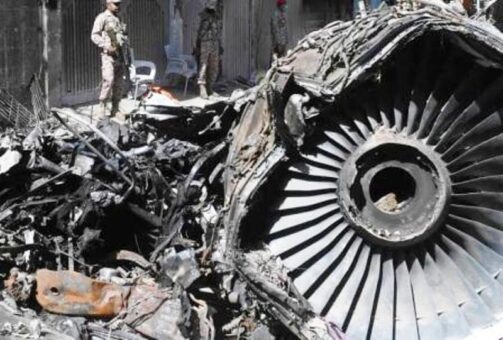
Islamabad, December 20, 2025 — In a landmark judgment, the Court of the Additional District Judge-III (West), Islamabad, has rejected an appeal filed by Airblue and upheld the airline’s liability in the 2010 plane crash, ordering it to pay Rs5.415 billion in compensation to the families of eight victims.
Presided over by Dr. Rasool Bukhsh Mirjat, the court also imposed an additional penalty of Rs1 million on Airblue for deliberately delaying the legal proceedings, terming the prolonged litigation unjustified and harmful to the bereaved families.
The case relates to Airblue Flight 202, a domestic service operating from Karachi to Islamabad, which crashed on July 28, 2010, during its final approach to Benazir Bhutto International Airport. The Airbus A321-231 (registration AP-BJB) slammed into the Margalla Hills amid adverse weather conditions, killing all 152 people on board — including 146 passengers and six crew members — in what remains Pakistan’s deadliest aviation disaster.
Investigations by the Pakistan Civil Aviation Authority (CAA) classified the incident as a controlled flight into terrain (CFIT). The probe identified pilot error as the primary cause, citing descent below the minimum safe altitude, deviation from standard operating procedures during a circling approach, and poor cockpit resource management. Challenging weather conditions, including heavy rain and low cloud cover, further compounded the risks. Subsequent court observations also highlighted lapses by air traffic control that contributed to the unsafe environment before the crash.
The verdict marks a major breakthrough in a legal battle that has dragged on for more than a decade. Many families had previously been compelled by the airline to accept first-tier liability payments after signing release documents. However, a few families continued their fight for what they termed fair and lawful compensation.
Legal experts believe the ruling could set a significant precedent for aviation liability and passenger compensation cases in Pakistan, reinforcing accountability in the country’s civil aviation sector.