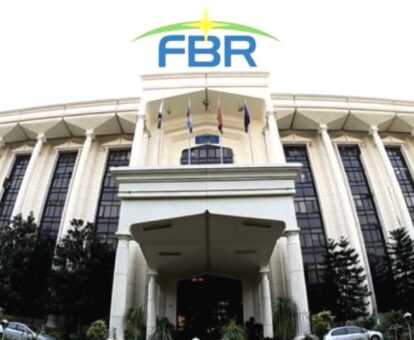
Islamabad, February 13, 2026 — The Federal Board of Revenue (FBR) has reported a sharp Rs83.58 billion decline in tax collection under profit on debt during the first seven months (July–January) of FY26, primarily due to a steep cut in the benchmark interest rate that significantly reduced returns on bank deposits and government securities.
According to provisional FBR figures, tax collection from profit on debt fell to Rs238.36 billion in 7MFY26, compared to Rs322 billion in the same period of the previous fiscal year, marking a 26 percent year-on-year drop.
January Sees Steepest Fall
The downturn intensified in January 2026, when tax receipts from profit on debt plunged by 38 percent to Rs41 billion, down from Rs66 billion in January last year. Officials described the January slump as the sharpest monthly decline recorded so far in FY26.
Interest Rate Cuts Hit Withholding Tax Revenue
FBR sources attributed the sharp contraction in revenue mainly to the aggressive monetary easing cycle by the State Bank of Pakistan (SBP). Over the past year, the SBP has slashed the policy rate from 22 percent to 10.50 percent, sharply reducing profit payouts on deposits, savings instruments, and government securities.
As profit rates declined, the withholding tax collected on profit on debt — a key non-salary revenue stream — also shrank considerably, directly impacting overall tax receipts.
Tax Collection Under Section 151
The FBR collects advance income tax on profit on debt under Section 151 of the Income Tax Ordinance, 2001. Under this provision, tax is deducted at source when profit or yield is paid on:
• National Savings Schemes and Post Office Savings Accounts
• Bank deposits and accounts maintained with financial institutions
• Government securities issued by federal, provincial, or local governments
• Bonds, certificates, debentures, and other financial instruments
The tax is deducted at rates specified in the First Schedule of the Income Tax Ordinance, after adjusting for applicable Zakat deductions.
Revenue Pressures Mount
The decline in this major revenue head has added to fiscal pressures at a time when the government is striving to meet ambitious tax targets under ongoing economic reforms. Analysts warn that sustained low interest rates could continue to suppress withholding tax receipts from savings and investments.
However, policymakers argue that lower interest rates are crucial to revive economic activity, boost investment, support businesses, and accelerate GDP growth, even if they temporarily reduce certain tax inflows.