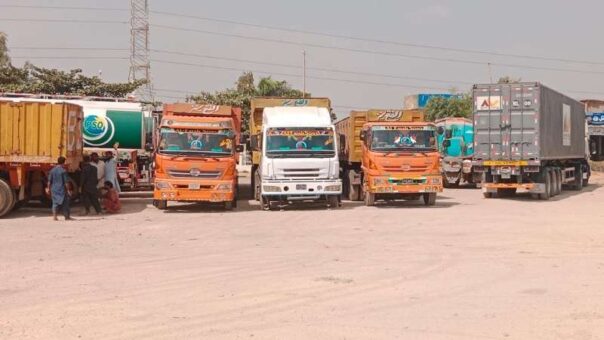
KARACHI, December 12, 2025 — Leading trade and industrial bodies have issued urgent warnings as the nationwide strike by goods transporters enters another day, halting cargo movement across Pakistan and triggering what they describe as an approaching “full-scale economic emergency”.
The Karachi Chamber of Commerce and Industry (KCCI) and the S.I.T.E. Association of Industry (SAI) have jointly sounded the alarm that the suspension of goods transport has disabled supply chains, stranded thousands of containers, and brought production in key industrial sectors to the brink of collapse.
KCCI: Pakistan Facing Unprecedented Trade and Industrial Crisis
KCCI President Rehan Hanif expressed grave concern over the crisis, warning that the standstill in goods movement is pushing Pakistan toward an unprecedented trade and industrial meltdown. He said import and export consignments remain stuck at ports, highways, and industrial zones, creating disruptions that could cause “severe, long-lasting, and extremely costly” damage to the economy.
Hanif said the halt in transportation has blocked the supply of raw materials to factories and prevented the dispatch of finished products to domestic and international markets. Exporters, he noted, are already facing order cancellations, demurrage, detention charges, and production losses—particularly in textiles, food, pharmaceuticals, and essential commodities.
“Pakistan’s economy is already under immense pressure due to high costs, weak demand, and liquidity constraints. At a time when every dollar matters, we simply cannot afford a total blockade of goods movement,” he stressed.
He urged the federal and provincial governments to immediately intervene, engage transport associations, and finalize a mutually acceptable solution, calling the situation “a national emergency for trade, industry, and the survival of businesses.”
SAI: High-Speed Railway Freight Services Needed to Prevent Future Disruptions
Echoing these concerns, SAI President Ahmed Azeem Alvi said the strike has placed the country’s industrial supply chain under unbearable pressure. He warned that recurring transport strikes have deeply damaged the national economy and no group should have the power to destabilize essential goods movement.
Alvi urged the government to revive and expand railway freight operations, including the launch of high-speed cargo trains between Karachi and major cities, which he said could significantly cut transportation time and costs.
“The strike has brought export and import cargo to a standstill. Exporters are unable to meet delivery deadlines promised to international buyers, raising the risk of cancellations,” he said.
He added that stranded containers are accumulating heavy demurrage and detention charges, creating additional financial strain on businesses. Without timely supply of raw materials, industrial production could grind to a complete halt, triggering a nationwide ripple effect, he warned.
Call for Immediate Government Action
Both KCCI and SAI urged the government to prioritize resolution of the strike through urgent negotiations with transporter associations. They stressed that restoring uninterrupted cargo movement is essential to stabilize the economy, protect millions of jobs, and safeguard Pakistan’s credibility in global markets.
They warned that even a short continuation of the deadlock could lead to financial losses in the billions and severely compromise Pakistan’s export commitments.